

The global copper industry will need approximately $332 billion in new investment in mining projects by 2050 to prevent a large-scale shortage of the metal, which could reach 20 million tonnes per year, or 44% of projected demand. This is stated in the Transition Metals Outlook 2026 study by analytical company BloombergNEF (BNEF), published on October 20, 2026.
According to the forecast, the global copper market could face a deficit as early as 2028, as the expansion of mining capacity lags behind consumption growth. The main drivers of increasing demand will be the electrification of transport, modernization of power grids, industrial development, and infrastructure construction.
BNEF analysts expect global copper consumption to increase by 61% by 2050 compared with 2026, reaching almost 46 million tonnes.
At the same time, demand for copper associated with the electrification of the economy will grow by 89%, to 23.3 million tonnes. Thus, these areas will account for more than half of global metal consumption.
Electric transportation will become the fastest-growing segment. Copper use in electric cars, electric trucks, buses, and related infrastructure will increase by 244%, reaching 11.4 million tonnes by the middle of the century.
Copper is essential for the production of electric motors, inverters, batteries, high-voltage wiring, and charging stations. In addition, the metal is widely used in construction, industrial equipment, electrical grids, and consumer electronics.
According to BloombergNEF estimates, existing global copper ore reserves are sufficient to meet long-term needs, but the problem lies in the insufficient pace of developing new deposits and expanding existing operations.
The average period from the start of project development to the commissioning of a new copper mine is approximately 17 years. As a result, even with the necessary $332 billion in investment, the metal shortage could persist until at least 2043.
Additional challenges arise from declining copper grades in mined ore, rising production costs, and insufficient funding for geological exploration in previous years.
Without new capital investment, global copper supply could decline by 14.5%, from 30 million tonnes in 2026 to 25.7 million tonnes in 2050. The development of copper scrap recycling will partially offset the decline in primary production but will not be able to completely eliminate the projected shortage.
Chile, according to BloombergNEF’s forecast, will retain its status as the largest producer of primary copper. However, production in the country could decline from 5.8 million tonnes in 2026 to 4.8 million tonnes in 2050.
Despite the decline in absolute production volumes, Chile’s share of global primary copper production could increase from 24% to 28%, as reductions in other countries will be more significant.
Analysts warn that a prolonged copper shortage could lead to higher global prices and increased costs for energy equipment, electric transportation, and infrastructure projects. In certain segments, manufacturers may be forced to make greater use of alternative materials.
Martin Tengler, head of metals and mining research at BloombergNEF, noted that the situation regarding the supply of raw materials to the global economy has changed significantly compared with previous forecasts.
According to him, the development of new production capacity and improvements in battery technologies have reduced the risks of shortages of most energy transition metals. However, the main challenge is becoming ensuring the availability of the necessary materials in specific regions and at the required times.
At the same time, copper remains the main exception to the overall trend of improving forecasts.
According to Transition Metals Outlook 2026, nine of the ten metals and materials studied could potentially have sufficient production capacity by 2050, provided investment continues and depleted reserves are replaced.
In particular, global lithium consumption is expected to nearly triple, from 1.6 million to 4.8 million tonnes of lithium carbonate equivalent, while demand for graphite will more than double, from 3.3 million to 6.9 million tonnes.
At the same time, the increasing adoption of lithium iron phosphate batteries is reducing the expected need for nickel and cobalt compared with previous forecasts.
China continues to dominate the processing of energy transition metals. According to BloombergNEF, for eight of the ten materials studied, more than half of global processing capacity is concentrated in a single country, and for seven of these materials, that country is China.
The Experts Club analytical center has produced a video overview of the world’s largest copper-producing countries and a comparison of copper production from 1971 to 2025.

In January–August of this year, Ukrainian companies increased their imports of copper and copper products by 13.3% in monetary terms compared to the same period last year—to $139.044 million.
According to statistics released by the State Customs Service of Ukraine, exports of copper and copper products rose by 22.7% over the eight-month period, reaching $75.529 million.
In August, copper imports totaled $15.771 million, while exports totaled $9.646 million.
As previously reported, in 2025, Ukrainian companies increased imports of copper and copper products by 23.2% in monetary terms compared to 2024—to $173.453 million—while exports of copper and copper products rose by 17.7%—to $103.848 million.
Copper is widely used in electrical engineering, in the manufacture of pipes, for creating alloys, in medicine, and in other industries.
Previously, the Experts Club information and analytical center released a video on global copper production and leading producing countries – https://youtube.com/shorts/_h8iU50z8C0?si=a-XkgGEfeUxseQNa

Copper rose to a record high on Tuesday amid concerns over a shortage of the metal outside the U.S.
The price of three-month copper futures on the London Metal Exchange (LME) rose to $14,617 per metric ton, breaking the previous record set the day before. Since the start of this year, futures have risen 16%.
The most actively traded copper contracts on the Shanghai Futures Exchange rose 1.3% on Tuesday to 110,620 thousand yuan ($16,484) per metric ton, while during trading, prices rose to a high of 110,890 yuan per metric ton, the highest level since January 30.
Physical copper shipments continue to be redirected to the U.S., exacerbating shortages in markets outside the country, according to analysts at the Chinese brokerage firm Everbright Futures.
The flow of metal to the U.S. is driven by expectations that the country will impose tariffs on copper imports starting in 2027.
Copper inventories at Comex warehouses rose last week to a record 695,624 thousand metric tons. At the same time, an outflow of the metal is being recorded at warehouses registered with the LME, as well as with the Shanghai Futures Exchange.
The spot price of copper on the LME continues to exceed the price of the three-month contract, signaling limited supply of the metal in the short term.
Three-month zinc futures on the LME rose 0.54% to $4,005 per metric ton. Earlier, their price had climbed to a four-year high of $4,035 per metric ton.
Earlier, the Experts Club information and analytical center released a video on global copper production and leading producing countries – https://youtube.com/shorts/_h8iU50z8C0?si=a-XkgGEfeUxseQNa
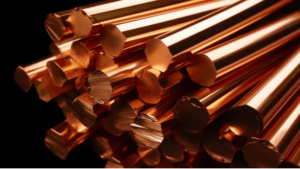
Copper prices continue to rise after reaching record highs at the close of the previous session.
Prices for three-month futures on the London Metal Exchange (LME) rose 0.5% on Tuesday to $14,349.5 per metric ton. On Wednesday, they rose another 0.5% to $14,415.5 per metric ton.
September copper futures on the Comex are trading at $6.73 per pound, which is 0.3% higher than the closing price on August 25.
The Chinese company Zijin Mining warned that flooding at a copper mine in the Democratic Republic of the Congo could lead to a reduction in the company’s production this year by 57,000 metric tons, which would put additional pressure on the market.
This year, the price of copper on the LME has risen by approximately 16% due to a significant increase in metal shipments to the U.S. and a reduction in inventories in other countries.
Earlier, the Experts Club information and analytical center released a video on global copper production and the leading producing countries – https://youtube.com/shorts/_h8iU50z8C0?si=a-XkgGEfeUxseQNa

According to Experts Club, copper prices ended the last trading week on an uptrend: on August 21, three-month contracts on the London Metal Exchange (LME) traded at around $14,230 per metric ton, gaining approximately 1.4% for the day.
The market was supported by a weaker U.S. dollar and statements by Chinese authorities regarding their intention to increase the role of government spending in stimulating domestic demand. China remains the world’s largest consumer of copper, so expectations of additional government spending traditionally provide support for the industrial metal’s prices.
Volatility remained high throughout the week. On Monday, the price of copper rose to $14,396 per metric ton—a six-month high. The rise was primarily driven by concerns over limited supply of available metal outside the U.S.
However, the situation then stabilized somewhat thanks to copper deliveries to LME warehouses. The premium of spot copper over the three-month contract narrowed from $436 per metric ton on Monday to about $55 by Friday, indicating an easing of supply tightness for immediate delivery.
At the same time, the fundamental risks of a shortage have not completely disappeared. In mid-August, a brief squeeze occurred on the LME: large long positions proved to be comparable to available exchange stocks, leading to a sharp rise in the price of metal for immediate delivery. After that, additional copper from the U.S. and Asia began arriving at exchange warehouses.
Signals from China remain mixed. The Yangshan premium, which reflects Chinese buyers’ demand for imported copper, rose by approximately 7% by the end of the week—to $93 per metric ton. At the same time, copper inventories at the Shanghai Futures Exchange rose by 28% over the week.
In the longer term, the market remains in a pronounced uptrend. Indicative copper prices as of August 21 were approximately 47% higher than a year ago.
The growth in demand is driven by the expansion of power grids, the construction of data centers, and the development of electric vehicles, solar, and wind energy, while it is difficult to rapidly increase copper production due to the long lead times required to bring new deposits online.
Earlier, the Experts Club information and analytical center published a short video on the dynamics of global copper production from 1970 to 2024. According to the data presented, Chile remained the largest producer in 2024 with 5.3 million metric tons, followed by the Democratic Republic of the Congo with 3.3 million metric tons and Peru with 2.6 million metric tons.
Watch the Experts Club video on global copper production – https://youtube.com/shorts/_h8iU50z8C0?si=dDXmg9cHOYbbGUaX
https://www.experts.news/posts/svitovi-tsiny-na-mid-znovu-zrostayut

In January–June of this year, Ukrainian companies increased their imports of copper and copper products by 14.2% in monetary terms compared to the same period last year, reaching $106.351 million.
According to customs statistics released by the State Customs Service of Ukraine, exports of copper and copper products rose by 11.6% over the six-month period, reaching $51.405 million.
In June, copper imports totaled $21.012 million, while exports amounted to $12.159 million.
As previously reported, in 2025, Ukrainian companies increased imports of copper and copper products by 23.2% in monetary terms compared to 2024—to $173.453 million—while exports of copper and copper products rose by 17.7%—to $103.848 million.
Copper is widely used in electrical engineering, in the production of pipes, for creating alloys, in medicine, and in other industries.
Previously, the Experts Club Information and Analytical Center released a video on global copper production and leading producing countries – https://youtube.com/shorts/_h8iU50z8C0?si=a-XkgGEfeUxseQNa



