
According to The Serbian Economist, the Croatian municipality of Legrad, located near the border with Hungary, has extended its program to sell municipal real estate for the symbolic price of 1 euro through 2026. The initiative aims to attract young families, restore neglected homes, and stem population decline.
The program includes several support mechanisms, including the sale of individual plots of land and houses for 1 euro, partial financing for construction and renovation, reimbursement of a portion of the cost of purchasing a first home, and the rental of municipal apartments with the option to purchase them later.
Under the program’s terms, young families and individual applicants who plan to establish their permanent residence within the municipality may purchase properties designated by the municipality for a symbolic price.
For most applicants, the age limit is set at 45 years. For certain categories of families with minor children, the age limit is raised to 55 years.
Participants must not own any other habitable housing, are required to register their residence in the community within the timeframes specified by the program, and must live there for at least 15 years.
The municipality has also provided financial support for construction and renovation. Compensation for project documentation costs can amount to up to 1,000 euros, and for building materials and labor—up to 5,000 euros, depending on the terms of the relevant competition.
Separately, partial reimbursement of costs for the purchase of a first home is provided. For residential buildings, support can reach 5,000 euros, and for land plots—2,000 euros.
According to local media reports, 10 houses and land plots have been sold since the program’s launch, and 65 families have received various forms of housing support.
The program has also attracted the attention of Croatian expatriates living abroad.
For foreigners, eligibility depends not only on the terms of the municipal program but also on Croatian real estate laws and the existence of legal grounds for long-term residence.
Legrad is located in Koprivnica-Križevci County in northern Croatia. The community’s economy is primarily based on agriculture, and its population has been declining for a long time.
The sale of real estate at a nominal price is part of a local demographic policy aimed at attracting young residents, revitalizing the housing stock, and supporting local businesses.
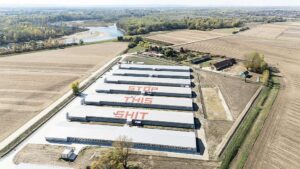
On October 13, 2026, activists from the international environmental organization Greenpeace staged a protest against a poultry farm complex owned by the Ukrainian agricultural holding MHP in the Veliki Pazuć area in northeastern Croatia, demanding that the project be halted due to potential environmental impacts on adjacent nature reserves.
According to Greenpeace Croatia, 12 activists climbed onto the roofs of three buildings at the poultry farm and unfurled a banner reading “Stop This Shit” covering a total area of about 500 square meters. At the same time, representatives of the Croatian environmental organizations Zelena akcija and Prijatelji životinja held a demonstration near the facility.
The protest is linked to the facility’s location within a UNESCO-recognized biosphere reserve near the border between Croatia and Hungary. Environmental organizations fear that intensive poultry farming could lead to soil, air, and water pollution from livestock waste.
According to Greenpeace, once it receives an operating permit, the facility will be able to raise approximately 1.8 million broiler chickens annually. Environmental activists estimate the potential volume of waste generated at approximately 1 million liters per year.
Of particular concern is the proximity of an ornithological reserve located approximately 320 meters from the complex. Representatives of environmental organizations believe that intensive poultry farming may pose additional risks to the environment and contribute to the spread of infectious diseases.
Dora Sivka, chair of the Croatian organization Zelena akcija, stated that the movement against the construction of large-scale poultry complexes unites ten local initiatives and enjoys the support of approximately 160 European nongovernmental organizations.
Protesters are demanding that trial operations at the facility be halted and that a final operating permit not be issued until environmental issues are resolved.
The conflict surrounding the poultry project has become part of a broader campaign against the expansion of industrial poultry farming in Croatia.
In April 2026, MHP officially abandoned its planned projects in the Sisak-Moslavina County following prolonged public protests. At the same time, investment projects in the poultry industry continue to be implemented in other regions of Croatia.
Environmental organizations link the growth of such projects to the expansion of the European poultry meat market. They advocate for stricter requirements regarding environmental impact assessments, waste management, and the location of large livestock facilities near nature conservation areas.
That said, Greenpeace’s statements regarding potential environmental pollution represent the environmental organization’s assessment. The materials presented do not confirm that pollution of the area has already occurred.
MHP is one of the largest poultry producers in Europe, an international agro-industrial group with operational assets in Ukraine and the countries of Southeast Europe. The group’s founder and majority shareholder is Ukrainian entrepreneur Yuriy Kosyuk. The company is engaged in crop farming, the production of compound feed, poultry farming, meat processing, and the production of food products. The group’s international business is expanding, in particular, through Perutnina Ptuj, which operates in the markets of the Balkan region.
Source: Greenpeace Croatia
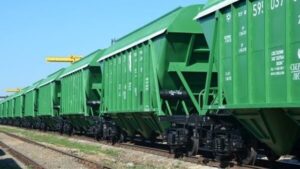
According to the Serbian business media outlet Parametar, a serious train accident occurred in Croatia on October 10 on the approach to the Meja station near Rijeka. Freight train No. 82318, operated by Transagent and carrying a grain cargo toward Rijeka, derailed.
According to official data from HŽ Infrastruktura, the accident occurred around 9:25 a.m. on the incoming track at Meja Station. Eleven cars derailed and ended up in a deep ravine. The locomotive and two other cars remained at the station. There were no injuries, but significant property damage was caused to the railway infrastructure, and the Plase–Meja section is closed to traffic.
The Croatian Agency for the Investigation of Incidents in Air, Maritime, and Rail Transport (AIN) has launched an investigation into the circumstances of the accident. The agency confirmed that a report of a serious incident was received on October 10 at approximately 9:25 a.m. and concerned the derailment of several cars of train No. 82318 on line M202.
According to the Croatian publication Novi list, 11 cars were loaded with grain, presumably of Ukrainian origin. However, an official statement from HŽ Infrastruktura confirms only the transport of grain and does not specify the country of origin of the cargo.
A preliminary theory under consideration is that the locomotive’s brakes failed.
The train belonged to the carrier Transagent Rail, part of the Transagent logistics group based in Rijeka. The company specializes in rail and multimodal freight transportation in Central and Southeastern Europe.
The investigation into this accident is ongoing. The exact causes of the derailment are to be determined by AIN experts.
Source: HŽ Infrastruktura, Croatian Agency for the Investigation of Accidents in Air, Maritime, and Rail Transport (AIN), Novi list.
According to the Serbian business media outlet Parametar, Croatia is claiming property worth over $2.7 billion located in Montenegro that remained there following the breakup of Yugoslavia. And this is by no means limited to the well-known training sailing ship “Jadran.”
This was stated by Croatian Minister of Foreign and European Affairs Gordan Grlić Radman during a visit to Montenegro. Zagreb has documentation regarding property that ended up on Montenegrin territory and was sold or transferred to other owners after the breakup of Yugoslavia.
Among these, the minister specifically mentioned military ships, submarines, and a military hospital.
The “Jadran” has become the most well-known part of the dispute. The training sailing ship was built in the 1930s and was used by the Yugoslav Navy. The vessel is currently in Montenegro, while Croatia insists on its return.
But the property dispute is only part of a much broader list of Zagreb’s demands on Podgorica.
The Croatian Ministry of Foreign Affairs lists the following among the unresolved issues:
– the return of the “Jadran” and the settlement of other property claims;
– compensation for former Croatian prisoners of the Morin camp;
– the search for 14 people who are still considered missing in action following the war of the 1990s;
– the investigation and prosecution of war crimes;
– the return of property belonging to Croatian families in Montenegro and the conclusion of protracted court proceedings;
– the preservation of a memorial plaque at the site of the former Morin camp;
– renaming the swimming pool in Kotor named after Zoran Hopčević;
– resolving the maritime border between the two countries.
These issues take on particular significance in light of Montenegro’s EU accession negotiations.
Croatia is already using its status as an EU member state to block the closure of certain negotiation chapters. In September, a planned intergovernmental conference had to be postponed after Zagreb refused to agree to the closure of several chapters.
Currently, Croatia is blocking the closure of chapters related to transport policy, foreign policy and security, the judicial system and fundamental rights, as well as justice, freedom, and security.
Podgorica hopes to conclude negotiations and become the 28th member of the European Union in 2028. However, this date is not guaranteed: the consent of EU member states is required for progress and final accession.
At the same time, Croatia is currently the main source of bilateral demands on Montenegro, which directly affect the negotiation process. There is currently no comparable official set of claims from other EU member states.
This creates a rather interesting situation: the closer Montenegro gets to the EU, the greater the significance of long-standing disputes dating back to the breakup of Yugoslavia.
And Croatia’s property claims, totaling more than $2.7 billion, are now becoming not only a matter of relations between Zagreb and Podgorica but also a potential factor capable of influencing the timing of Montenegro’s accession to the European Union.

According to the “Serbian Economist,” five EU countries—the Netherlands, Croatia, Estonia, Lithuania, and Latvia—have called for a pause before closing the remaining negotiation chapters with Montenegro, reports the Podgorica-based newspaper Dan, citing diplomatic sources in Brussels.
The Netherlands initiated the move, demanding further analysis of Montenegro’s compliance with European criteria and a more consistent application of established standards. Croatia and the three Baltic countries subsequently joined this position.
This has already affected the negotiation schedule. The EU–Montenegro intergovernmental conference scheduled for September—at which Podgorica had hoped to close new chapters—will not take place.
However, Brussels’ official line is more conciliatory. An EU representative stated that several countries have not yet completed their internal approval procedures, as many negotiation chapters are technically complex.
“The desire to make progress is there. The work is practically complete. It’s more a matter of timing than anything else,” the EU representative said.
The most optimistic scenario at the moment is that the next intergovernmental conference will be held in mid-October in Luxembourg.
Montenegro remains the candidate that has made the most progress in the EU accession process. The country has opened all 33 negotiation chapters, 18 of which have already been provisionally closed. The last conference took place on July 14, when Chapters 8 (“Competition Policy”) and 29 (“Customs Union”) were closed.
Croatia’s position remains a separate issue. In July, Zagreb refused to agree to the closure of Chapter 14, “Transport Policy,” primarily due to issues regarding cabotage and aviation permits. Croatia also continues to block Chapter 31, “Foreign Policy, Security, and Defense,” due to unresolved bilateral issues with Montenegro.
The Council of the EU officially confirms that Montenegro’s progress continues and that work on new negotiating positions is ongoing.
According to The Serbian Economist, the Office of Foreign Assets Control (OFAC) of the U.S. Department of the Treasury has extended a special license to the Croatian company JANAF, allowing it to continue transporting crude oil for the Serbian company NIS until September 30, 2026.
The company reported that it received the license extension with the assistance of the Croatian government and U.S. legal advisors. The authorization allows it to continue fulfilling its existing contract with NIS within the framework of the U.S. sanctions regime.
Thus, crude oil deliveries via the Adriatic Pipeline can continue for at least another month. The oil arrives by sea at the JANAF terminal in Omišalj on the island of Krk, after which it is transported via the pipeline system toward Serbia and used by the NIS refinery in Pančevo.
This decision is of critical importance for Serbia. The refinery in Pančevo is the country’s only large oil refinery and meets about 80% of the Serbian market’s demand for petroleum products. The facility’s design capacity is up to 4.8 million metric tons of crude processed per year.
NIS itself received a separate special license on August 28. It is also valid until September 30 and allows the company to continue oil refining, crude oil imports, financial transactions, technical maintenance, and other operations necessary to ensure a stable supply to the market.
The extension of the license is particularly important given the problems with alternative supply channels. Due to low water levels in the Danube, the capacity to import fuel by barge has been significantly reduced this summer. In July, fuel imports via this route amounted to only about a quarter of the planned volume, which has increased Serbia’s dependence on the Pančevo refinery and supplies via JANAF.
NIS and JANAF are bound by a three-year contract for the transportation of up to 10 million metric tons of crude oil, which remains in effect until December 2026. Actual supply volumes depend on the amount of oil that NIS purchases and delivers to the Omišalj terminal.
The main issue now concerns the change in NIS’s ownership structure. Hungary’s MOL is in talks with Gazprom Neft regarding the purchase of a 56.15% stake in the company. A potential deal is seen as a long-term way to remove NIS from U.S. sanctions. OFAC has also issued separate temporary licenses to facilitate the negotiations.
U.S. sanctions against NIS took full effect in October 2025 due to Russian control over the company. Since then, OFAC has repeatedly issued temporary licenses, allowing Serbia to maintain the refinery’s operations and oil shipments through Croatia for the duration of negotiations regarding the sale of the Russian stake.
https://t.me/relocationrs/3564



