
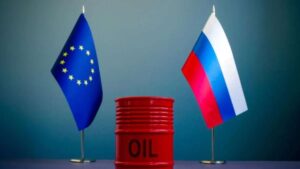
The European Union has established a legal framework allowing member states to sell Russian oil that was previously seized and confiscated in the course of cracking down on sanctions evasion.
The relevant provision is included in EU Council Regulation No. 2026/1848 of July 23, 2026, which formalized the 21st package of sanctions against Russia. The document states the need to enable national competent authorities to safely dispose of shipments of Russian oil that they seize and confiscate. Disposing of the cargo may include selling it to third parties.
However, the new provision does not grant EU authorities the automatic right to stop any tanker simply because it is transporting oil of Russian origin. First, the state must have legal grounds to detain the vessel and confiscate the cargo—for example, a violation of the sanctions regime, the absence of a valid flag, the provision of false documents, or other violations of European, national, or international law.
The new regulation primarily specifies what authorities may do with the cargo after its lawful confiscation. Once the confiscation procedure is complete, the former owner does not automatically receive the right to the proceeds from the sale of the cargo. However, the regulation does not establish a uniform procedure for distributing the proceeds across all EU countries, nor does it provide for their automatic transfer to Ukraine. Such decisions will depend on national legislation and the specific case.
According to Euractiv, the measure is primarily aimed at cargo from vessels used to circumvent EU oil sanctions. The option to sell the cargo is intended to address a practical problem: confiscated oil must be unloaded, stored, and safely sold, which entails significant costs and environmental risks.
The mechanism is part of the 21st EU sanctions package, adopted on July 23. The package also increases pressure on the Russian oil sector, traders, and the shadow fleet, and suspends the automatic review of the price cap on Russian oil until July 15, 2027.
In practice, the new rule may make it easier for EU member states to take action against vessels suspected of circumventing sanctions. However, each detention and confiscation must have a separate legal basis, and the owners of the vessels and cargo will be able to challenge such decisions in national and international courts.
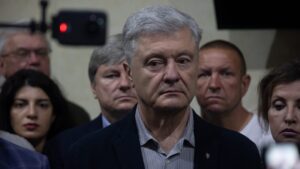
The Administrative Court of Cassation, a division of the Supreme Court, denied the petition filed by People’s Deputy and fifth President of Ukraine Petro Poroshenko to lift the sanctions imposed by a decision of the National Security and Defense Council.
The panel of judges announced this decision on Friday.
As previously reported, on February 13, 2025, Ukrainian President Volodymyr Zelenskyy signed a decree on the NSDC’s February 12 resolution “On the Application of Personal Special Economic and Other Restrictive Measures (Sanctions).” According to the annex to the document, sanctions were imposed against five individuals: Poroshenko, Igor
Kolomoyskyi, former owner of Finance and Credit Bank Konstantin Zhevago, former co-owner of PrivatBank Gennadiy Bogolyubov, and former lawmaker Viktor Medvedchuk.
Poroshenko appealed the sanctions to the Supreme Court. On April 17, the court began hearing the lawsuit in the presence of Ukrainian members of parliament, as well as diplomats from the European Union delegation and representatives of the embassies of Germany, Poland, Austria, Sweden, Lithuania, and Denmark. Poroshenko’s representatives emphasize that the sanctions were imposed unlawfully against a Ukrainian citizen residing in the country, while only Russia considers him a “terrorist.” Consequently, there are no legal grounds for the sanctions.
On May 19, it was reported that the European Court of Human Rights (ECHR) had accepted Poroshenko’s case for consideration. According to the politician’s defense attorney, Ilya Novikov, the lawyers filed two additional complaints: the first challenging the sanctions, and the second alleging a violation of the reasonable time limit for proceedings.
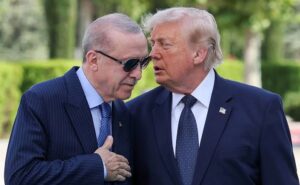
U.S. President Donald Trump said Washington will lift sanctions against Turkey that were imposed because Ankara purchased Russian S-400 air defense missile systems.
“We will lift the sanctions,” Trump told reporters on Tuesday in Ankara, responding to a question about the measures imposed against Turkey under the CAATSA law.
The statement came at the start of Trump’s meeting with Turkish President Recep Tayyip Erdogan on the sidelines of the NATO summit in Ankara.
The U.S. imposed sanctions on Turkey in 2020 after Ankara purchased Russian S-400 air defense systems. Washington also excluded Turkey from the F-35 fighter jet program, stating that the use of Russian systems poses risks to American aircraft.
Trump also said that the U.S. would make a decision regarding the possible sale of F-35s to Turkey. According to Reuters, the U.S. administration is ready to support such a deal, but legal and congressional obstacles have not yet been fully resolved.
For Turkey, the lifting of sanctions and a possible return to the F-35 issue would represent a significant breakthrough in relations with the U.S. This is also a sensitive issue for NATO, as Ankara remains one of the alliance’s key members, but its purchase of Russian S-400 systems in recent years has been one of the main sources of friction in its relations with Washington.
The NATO summit in Ankara is taking place against the backdrop of the alliance’s efforts to demonstrate increased defense spending and strengthened military-industrial cooperation. The meeting between Trump and Erdogan has become one of the summit’s central bilateral meetings, as it concerns not only sanctions but also future deliveries of U.S. weapons to Turkey.

The European Commission proposes new sanctions against Russia in the areas of finance and cryptocurrencies: for the first time, a complete ban on crypto-asset services in third countries is being proposed, and new banks have been added to the list.
European Commission President Ursula von der Leyen announced this on Tuesday in Brussels while unveiling the 21st package of sanctions against Russia.
“My second point concerns financial and cryptocurrency restrictions. We are expanding our banking transactions to include 31 Russian banks and up to 20 crypto firms or platforms and oil traders in third countries that have served Russian organizations and individuals subject to sanctions or circumvented our measures,” she said.
It is also proposed to impose a complete ban on crypto-asset services in third countries. “This will be a powerful deterrent for hosting platforms in countries that help Russia circumvent our sanctions,” von der Leyen emphasized.
BANKS, CRYPTOCURRENCY, EUROPEAN COMMISSION, RUSSIA, SANCTIONS
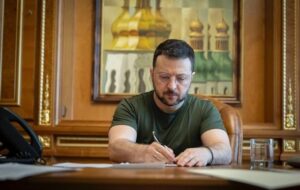
Ukrainian President Volodymyr Zelenskyy has signed two decrees enacting decisions by the National Security and Defense Council of Ukraine to align sanctions with those of the European Union, according to the president’s press service.
“The synchronization of EU sanctions under the 20th package covers 120 individuals and organizations and imposes economic sanctions targeting key sectors of the Russian economy. Some of them are already subject to Ukrainian sanctions. Today’s decision applies to an additional 16 Russian citizens and 31 companies from Russia, Belarus, the UAE, Kyrgyzstan, Kazakhstan, Uzbekistan, and the temporarily occupied territory of Ukraine,” the statement reads.
Among the individuals are heads of Russian strategic enterprises, state-funded institutions, units of the Russian army, and entities serving Russia in our temporarily occupied territories.
The list also includes Russian defense industry enterprises, manufacturers of electronic warfare equipment, software, and drone components, as well as companies involved in oil, gas, and gold extraction. In particular, restrictions have been imposed on the Russian manufacturer of aerospace products and drone components, LLC
“Atlant Aero,” as well as on the Russian manufacturer of communication systems and components for UAVs and missiles, LLC “Irz-Zvyazok.”
Sanctions have been imposed on companies from the UAE that sell machine tools and laboratory equipment, chemical products, and spare parts for commercial aircraft, as well as on an oil exporter in Belarus.
Ukraine has also imposed restrictive measures on three Russians: Prosecutor Lyudmila Balandina, who was involved in systematic repression and human rights violations against individuals who supported Ukraine or criticized the Russian government; Judge Dmitry Gordeev, also implicated in repression, who issued politically motivated rulings against opposition figures and human rights defenders; and Russian editor and propagandist Maria Sittel, who systematically disseminated disinformation.
Sanctions have also been imposed on 19 Iranian citizens, 7 Sudanese citizens, and 11 Iranian companies involved in Iran’s ballistic missile and drone programs.
“We continue to coordinate sanctions regimes with the EU and our partners. We expect further pressure on Russia and all those who help it sustain its aggression. We are already finalizing joint work on draft EU and partner-state sanctions decisions, including the 21st sanctions package,” noted Vladyslav Vlasyuk, the President’s Advisor and Representative on Sanctions Policy.
The UK Treasury’s Office of Sanctions has expanded the list of sanctioned companies from Georgia as part of sanctions imposed against Russia, adding three crypto companies to the list, the UK government announced.
“The new measures also target 18 companies and individuals linked to A7. The group uses a Kyrgyz bank suspected of facilitating payments for the network, as well as a major global cryptocurrency exchange that we believe has transferred over $1.5 billion to the Kremlin’s coffers. We are also targeting three Georgian companies that operate exchanges focused on Russia to circumvent sanctions,” according to a statement on the UK government’s website.
According to the document, sanctions have been imposed on Georgia-registered companies providing crypto wallet and cryptocurrency exchange services: Arvix LLC, Rapira Group LLC, and Aifory LLC.
Earlier reports indicated that on Tuesday, UK authorities added 18 individuals and companies to the sanctions list, which Russia allegedly uses to circumvent sanctions previously imposed by London.
A statement released by the UK Treasury notes that “cryptocurrency and illicit financial networks used by Russia to circumvent UK sanctions are under close scrutiny.”
“The new sanctions also target the A7 network, which actively uses Kyrgyzstan’s financial systems to redirect funds into the Russian economy,” the document states.
The measures against crypto companies mark the second instance of the UK government imposing sanctions on Georgian legal entities. Earlier, it was reported that on February 24, the UK government imposed sanctions against the Georgian TV companies Imedi TV and PosTV as part of a package of sanctions against Russia.



