

The Republic of South Africa has included Ukraine in the list of countries whose citizens can apply for an Electronic Travel Authorisation (ETA) to enter the country, the Embassy of Ukraine in the Republic of Mozambique reported.
The innovation allows Ukrainian citizens to submit an application remotely without personally visiting the South African embassy or a visa center. The applicant must register in the electronic system, complete the application form, upload the necessary documents and a photograph.
According to the Ukrainian diplomatic mission, after submission of a complete package of documents, the application should be processed within no more than 24 hours.
At the current stage, ETA is available to Ukrainians for trips to South Africa for tourism or private purposes. The maximum duration of stay under such an authorisation is up to 90 days.
The issued electronic entry authorisation can be used within 180 days from the date of issuance.
An application can be submitted on the official website of the Department of Home Affairs of the Republic of South Africa: South African ETA. The official system confirms the possibility of applying for an Electronic Travel Authorisation online.
At the same time, at the initial stage, ETA cannot be used at all border crossing points. Entry with an electronic authorisation is available through four international airports in the country: O. R. Tambo International Airport in Johannesburg, Cape Town International Airport, Lanseria International Airport and King Shaka International Airport in Durban.
These airports are equipped with the necessary systems for checking electronic authorisations and passengers’ biometric data.
The embassy recommends that Ukrainians additionally check the current ETA requirements and the conditions for entry into South Africa before traveling, as the procedure for using the electronic system may change as it is further implemented.
The introduction of ETA significantly simplifies the organization of tourist and private trips by Ukrainians to South Africa, since previously obtaining permission required going through the traditional visa procedure.

According to Experts.news, Ukrainian citizens planning to travel abroad or return to the country with their pets must prepare veterinary documents in advance, verify that the animal has a microchip and a valid rabies vaccination, and in some cases, also provide the results of an antibody test, the Embassy of Ukraine in the Slovak Republic reported.
As diplomats note, the movement of an animal is considered non-commercial if it is not for the purpose of sale or transfer to another owner. For such trips, the main requirements include identification of the animal via a microchip, a valid rabies vaccination, an international veterinary certificate, and a veterinary passport of the prescribed format. Typically, no more than five animals may be transported as part of a non-commercial movement.
Additional requirements must be taken into account for trips from Ukraine to EU countries. As of April 22, 2026, updated rules for the non-commercial movement of pets from third countries will be in effect in the European Union. For Ukraine, the basic requirements have not changed significantly: a dog, cat, or ferret must be microchipped, have a valid rabies vaccination, and, as a rule, a test result confirming sufficient levels of antibodies to the rabies virus.
An important detail concerns the sequence of procedures. The microchip must be implanted before the rabies vaccination or on the day of vaccination. At the time of the initial vaccination, the animal must be at least 12 weeks old, and such a vaccination typically becomes valid for travel no earlier than 21 days afterward.
For Ukrainian animals entering the EU, a rabies antibody titer test is required. The State Service of Ukraine for Food Safety and Consumer Protection recommends drawing blood for analysis no earlier than 30 days after vaccination and taking into account the mandatory waiting period of at least 90 days before obtaining the necessary travel documents. The test itself must be conducted in an EU-approved laboratory.
If the test has already yielded a positive result, it does not need to be repeated for each trip, provided that the animal is revaccinated in a timely manner before the previous vaccination expires.
An international veterinary certificate must be obtained before crossing the border. For entry into the EU from a third country, it is valid for 10 days from the date of issuance until the document and identification checks are completed at an official point of entry. After passing inspection, the certificate may be used for further travel within the EU for up to six months or until the rabies vaccination expires—whichever comes first.
When crossing the EU’s external border with an animal, you must do so through state-designated Travellers’ Points of Entry, where authorized services can verify the animal’s documents and identification. Before traveling through Slovakia, Poland, Hungary, or Romania, it is advisable to check in advance whether the chosen border crossing is authorized for entry with pets.
Starting in 2026, another important detail has been introduced. If the animal is accompanied not by the owner but by a person authorized by the owner, the trip may be considered non-commercial only if the owner crosses the border no more than five days before or after the animal. A written declaration must be attached to the documents. Otherwise, stricter rules governing the commercial transport of animals may apply.
Ukraine has also changed the format of the veterinary passport. A new template, approved by Order No. 1366 of the Ministry of Agrarian Policy dated February 28, 2025, has been in effect since March 1, 2026. However, previously issued veterinary passports remain valid and do not need to be replaced.
The veterinary passport is issued by a state or authorized veterinarian after examining the animal and entering information regarding its identification, vaccinations, and other necessary preventive measures. For now, this document is issued in paper form in Ukraine.
Specific requirements may vary depending on the country of destination. For example, to import dogs into Finland, Ireland, Malta, Northern Ireland, and Norway, additional treatment against the tapeworm Echinococcus multilocularis is required, administered by a veterinarian within the specified time frame prior to entry.
A veterinary inspection is also conducted when the animal returns to Ukraine. Only clinically healthy animals accompanied by the owner or an authorized person and meeting the established requirements are permitted for import. Requirements regarding identification, vaccination, and veterinary documentation apply to dogs, cats, and ferrets. Separate rules apply to animals under 16 weeks of age.
If more than five dogs, cats, or ferrets are being transported, such a trip may be considered non-commercial only in certain cases—for example, to participate in exhibitions, competitions, or training sessions. In such cases, the animals must be older than six months, and the owner must confirm their registration for the relevant event.
The State Service of Ukraine for Food Safety and Consumer Protection recommends starting to prepare for travel with a pet several months in advance, especially if the animal has not yet received a rabies vaccination or undergone a laboratory antibody test. It is essential to check the specific rules for both the country of first entry and the final destination, as they may vary depending on the route, species, and age of the animal.
Source: Embassy of Ukraine in the Slovak Republic, State Service of Ukraine for Food Safety and Consumer Protection, European Commission.

New fares for single rides on public transit will take effect in Kyiv on July 15—a single ride on the metro, bus, tram, trolleybus, or funicular will cost 30 UAH.
Mayor Vitali Klitschko signed the corresponding order on July 7; the document was published on the Kyiv City State Administration’s website on Friday, July 10.
At the same time, discounts are available on “multi-ride passes” depending on the number of trips: 1–9 trips—30 UAH; 10–19 trips—28.90 UAH; 20–29 trips—27.80 UAH; 30–39 trips—26.60 UAH; 40–49 trips—25.50 UAH; 50 trips – 25 UAH.
Starting August 1, a 60-UAH ticket will also be available, allowing for an unlimited number of transfers within 90 minutes.
Tickets purchased before July 14 are valid until September 14. After that, any unused balance will be automatically credited as a cash equivalent to the transit card.
As previously reported, five petitions on the Kyiv City Council website calling for a halt to fare increases on the capital’s public transit system until the end of martial law had already garnered the number of votes required for consideration, but most of them were rejected by city authorities.
On May 18, the Kyiv City State Administration announced plans to update public transit fares. Specifically, the cost of a single trip will depend on the number of trips purchased on the transit card. Specifically, for 1–9 trips, the fare will be 30 UAH; for 10–19 trips, 28.90 UAH; for 20–29 trips, 27.80 UAH; for 30–39 trips, 26.60 UAH; for 40–49 trips, 25.50 UAH; and for 50 trips, 25 UAH. Monthly passes are also available, with the cost of a single trip amounting to approximately 23.3–23.6 UAH. Discounted rates remain in effect for students and schoolchildren: students will pay 50% of the monthly pass price; schoolchildren will ride for free during the school year and receive a 75% discount in the summer. Separately, there are plans to introduce a transfer ticket for 60 UAH, which will allow unlimited transfers between the metro and surface transit within 90 minutes.
Fares in the capital have not been adjusted since 2018. Starting January 1, 2022, there were plans to raise public transit fares to 20 UAH, and to 12 UAH for holders of the “Kyiv Card.”
At the end of 2021, Klitschko assured the public that public transit fares would not increase until the end of the heating season. In 2023, city officials stated that they had no intention of raising public transit fares until the end of the war. In September 2025, Klitschko stated that although public transit in Kyiv is subsidized, the city is looking for ways to avoid raising fares.

Join UP!, an international travel brand founded in Ukraine, is shifting its business model from a traditional tour operator to a vertically integrated comprehensive travel service—Join Up! Travel Universe, the company’s press office told Interfax-Ukraine.
“We are moving to a new stage—creating the brand image of Join Up! Travel Universe, a vertically integrated model that combines all key elements of travel into a single seamless system centered on the customer. Our goal is to move beyond selling individual services and instead manage the entire customer experience: from the inspiration to travel to returning home from the trip,” commented Join Up! co-founder Alina Alba.
The change in the business model also means a change in the approach to the company’s development. While the growth strategy was previously focused primarily on scaling, the focus is now shifting to development “from within”: multi-service capabilities, quality control of the travel experience, and a seamless customer experience where all touchpoints are integrated into a single system (an omnichannel approach) to deliver the necessary service.
The foundation of the vertically integrated model will be: strategic airline partner SkyUp, our own DMCs (destination management companies that serve tourists in vacation destinations), traditional travel agencies (B2B sales), travel shops (offline B2C sales points), and direct online sales via the website. Consumers will be offered package and dynamic tours, hotel bookings, airline tickets, excursions, events, activities, vehicle rentals, and more.
This structure will enable Join Up! to better control quality at every stage of the customer journey and create a cohesive, predictable, and personalized travel experience. The new model also makes it possible to adapt travel solutions more quickly to changes in customer behavior and market conditions, as well as to attract a new audience—people who are accustomed to planning their own trips and organizing the entire travel process.
The new travel planning format will also allow travelers to literally “build” their vacation like a construction set and view all trip details in one place—in the mobile app or web version of the platform.
The updated platform is already available to users, though new services will be added gradually so that customers can receive personalized travel solutions tailored to their needs, budget, and lifestyle. For agents, this transformation opens up new opportunities to expand their product lineup, improve the customer experience, and attract a new audience that values a diverse range of services and seamless interaction.
In addition to transforming its business model, the Join Up!™ brand is updating its visual identity across all official digital platforms.
Over the past 15 years, Join Up! has evolved from a travel agency and local tour operator into an international travel brand. The company is currently represented in Poland, the Czech Republic, Estonia, Latvia, Lithuania, Romania, Ukraine, Kazakhstan, and Moldova. Since its inception, the brand has served more than 8 million tourists across all markets and developed a partner network of nearly 10,000 travel agencies, according to internal data.
As reported, the travel company Join UP! LLC was established in 2013. The ultimate beneficiaries are Yuriy and Oleksandr Alby.
The company’s authorized capital is UAH 72.671 million.
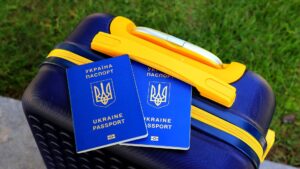
The Cabinet of Ministers of Ukraine has lifted all restrictions on border crossings for all women without exception, regardless of their positions, Prime Minister Yulia Sviridenko announced.
“The government is lifting restrictions on border crossings for all women without exception, regardless of their positions in state authorities, local self-government bodies, state-owned enterprises, and courts,” Sviridenko wrote on her Telegram channel.
As previously reported, in early May, the government lifted restrictions on travel abroad for a specific category of female officials. At that time, it was noted that the changes did not apply to the highest-ranking state officials, key heads of state authorities and their deputies, specifically members of the Cabinet of Ministers, the leadership of ministries and central executive bodies, the Office of the President of Ukraine, the Secretariat of the Verkhovna Rada of Ukraine, the National Security and Defense Council (NSDC), the Security Service of Ukraine (SBU), the National Bank, as well as to members of parliament, judges of the Supreme Court and the Constitutional Court of Ukraine, prosecutors of the Office of the Prosecutor General, and heads of state-owned enterprises and state bodies whose jurisdiction extends throughout the territory of Ukraine.
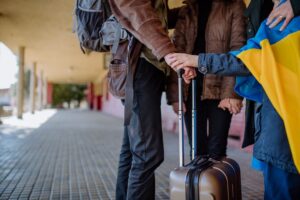
The Ukrainian Foreign Ministry urges citizens to refrain from traveling to Israel and Iran due to the escalating security situation in the Middle East and the threat of missile attacks.
This was reported by the Consular Service Department of the Ukrainian Foreign Ministry on Facebook on Saturday.
Due to the escalating security situation in the Middle East and the threat of missile attacks, the Ukrainian Foreign Ministry recommends that Ukrainian citizens refrain from traveling to Israel until the situation stabilizes. It also reminds citizens of the current recommendation to leave Iran, which was announced in early January.
Citizens who are already in countries in the region are advised to remain vigilant, closely follow official reports, and always carry identification documents with them.



