
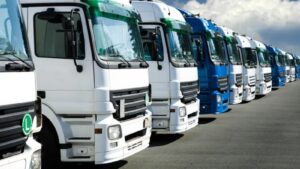
In September 2026, 1,457 new trucks and specialty vehicles were added to Ukraine’s fleet, which is 31% more than in September of last year, according to a report by “Ukravtoprom” on its Telegram channel.
Compared to August of this year, demand for these vehicles increased by 39%.
“This is a record monthly result for this market segment since January 2022,” the association noted.
Renault remains the market leader with 422 units, a 69% increase from a month ago.
Fiat took second place, increasing sales by 76% compared to August 2026—to 118 units—while Mercedes-Benz came in third, with 114 registrations compared to 121 in August.
Next were Hyundai with 93 units and Volkswagen with 90 units (neither was among the top five in August).
As previously reported, in September of last year, the top five were Renault, Ford, Citroën, MAN, and Scania, with sales rising by 6% compared to September 2024—to 1,068 units.
According to data from “Ukravtoprom,” over the first nine months of 2026, the growth rate of sales of trucks and specialty vehicles accelerated to 17% compared to the same period last year, reaching 10,083 thousand new vehicles (for January–August, the sales growth rate was 14%).
As reported, citing data from “Ukravtoprom,” registrations of new trucks and specialty vehicles in 2025 fell by 5% compared to 2024—to nearly 12,300 vehicles.

Starting October 1, 2026, a new electronic toll system called TollRo will go into effect in Romania for freight vehicles with a maximum authorized mass exceeding 3.5 metric tons, according to the National Company for Road Infrastructure Administration of Romania (CNAIR).
The new system will apply to vehicles designed for the transport of goods with a maximum authorized mass exceeding 3.5 metric tons. For the purposes of TollRo, mixed-use vehicles will be treated as commercial vehicles.
Unlike the traditional vignette system, the fee for heavy freight vehicles will be based on actual use of the road infrastructure.
The fee amount will depend, in particular, on the distance traveled, the vehicle category, and its environmental characteristics. Thus, for international carriers that regularly transit through Romania, the cost of using the road network will increasingly depend on the specific route and the truck’s characteristics.
To administer the payments, Romania has established the STRR electronic toll collection system, which will operate through the national SETRE platform.
The introduction of TollRo is also significant for Ukrainian international trucking companies, as Romania is one of the key road routes for Ukrainian exports and imports to the EU, as well as for the transit of goods to Central and Southeastern Europe.
Accordingly, transportation companies using trucks weighing more than 3.5 metric tons in Romania must take the new road toll model into account when calculating transportation costs after October 1.
CNAIR clarifies that August 31, 2026, was the deadline for establishing the necessary STRR and TollRo infrastructure, while the actual collection of the new tolls, in accordance with the law, begins on October 1.
The next step will be the integration of the Romanian system with similar systems in other European Union countries. According to Romanian law, interoperability via the European Electronic Toll Service (EETS) is scheduled to begin on January 15, 2027.
The transition to distance-based tolling is in line with a general trend in the EU, where road tolls for heavy commercial vehicles are increasingly linked to actual infrastructure use and the environmental performance of vehicles.
Official information about the system’s launch and its operating rules is available on the SETRE National Electronic Registry platform.

In Romania, a new electronic road toll system called TollRo will take effect on October 1, 2026, for freight vehicles with a maximum allowable weight exceeding 3.5 metric tons, according to the National Company for Road Infrastructure Administration of Romania (CNAIR).
The new system will apply to vehicles intended for freight transport with a maximum authorized mass exceeding 3.5 metric tons. For the purposes of TollRo, mixed-use vehicles will be treated as freight vehicles.
Unlike the traditional vignette system, the fee for heavy freight transport will be based on actual use of the road infrastructure.
The amount of the fee will depend, in particular, on the distance traveled, the vehicle category, and its environmental characteristics. Thus, for international carriers that regularly transit through Romania, the cost of using the road network will increasingly depend on the specific route and the truck’s specifications.
To administer the charges, Romania has established the STRR electronic toll collection system, which will operate via the national SETRE platform.
The introduction of TollRo is also significant for Ukrainian international trucking companies, as Romania is one of the key road routes for Ukrainian exports and imports to the EU, as well as for the transit of goods to Central and Southeastern Europe.
Accordingly, transportation companies using trucks weighing more than 3.5 metric tons in Romania must take the new road toll model into account when calculating transportation costs after October 1.
CNAIR clarifies that August 31, 2026, was the deadline for establishing the necessary STRR and TollRo infrastructure, while the actual collection of the new tolls, in accordance with the law, begins on October 1.
The next step will be the integration of the Romanian system with similar systems in other European Union countries. According to Romanian law, interoperability via the European Electronic Toll Service (EETS) is scheduled to become operational on January 15, 2027.
The transition to distance-based tolling is in line with a general trend in the EU, where road tolls for heavy commercial vehicles are increasingly linked to actual infrastructure use and the environmental performance of vehicles.
Official information about the system’s launch and its operating rules is available on the SETRE National Electronic Registry platform.

Imports of trucks to Ukraine from January through August 2026 declined by 1.1% in monetary terms compared to the same period in 2025—to $627.5 million, according to statistics from the State Customs Service.
According to the published data, imports of these vehicles rose by 13.5% in August compared to August 2025, reaching $80.1 million.
As in the previous year, the largest number of trucks in January–August were imported from Poland, but imports from that country fell by 24%—to $98.8 million—and its share of total truck imports decreased to 15.74% from 20.5%.
Germany became the second-largest supplier of trucks to Ukraine, with exports totaling $88.4 million; in January–August 2025, it had not been among the top three suppliers.
Imports from Italy, which also was not among the top three truck suppliers a year ago, totaled $68.9 million (nearly 11%).
In January–August of last year, the top three truck suppliers were Poland, France, and the United States.
Imports of trucks from all other countries during this period increased by 20.5%—to $371.4 million.
At the same time, according to statistics, Ukraine exported only $2.17 million worth of trucks over the eight-month period, mostly to Turkey, while a year ago, exports totaled nearly $4 million—also primarily to Turkey.
As previously reported, in 2025, imports of trucks into Ukraine increased by 5.5% compared to 2024—to $999.5 million, with the largest volumes coming from France—$169.2 million (42.8% more than the year before last), Poland—$162.7 million (-14.7%), and the United States—$109 million (+2%).
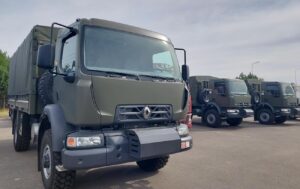
In August 2026, 1,050 new trucks and specialty vehicles were added to Ukraine’s fleet, which is 20% less than in July of this year, according to a report by “Ukravtoprom” on its Telegram channel.
At the same time, compared to August of last year, demand for these vehicles increased by 12%.
Renault remains the market leader with 250 units, which is 47 fewer vehicles than a month ago.
Mercedes-Benz took second place, with 121 registrations compared to 114 in July. Volkswagen came in third with 100 units (it was not among the top five in July).
Next were Citroën with 85 units (117 units in July 2026) and FIAT with 67 units (107 units).
As previously reported, last August the top five were Renault, Citroën, Peugeot, Toyota, and Hyundai, and sales fell by 14% compared to August 2024—to 937 units.
According to data from “Ukravtoprom,” overall sales growth for trucks and special-purpose vehicles from January through August 2026 slowed to 14% compared to the same period last year, reaching 8,626 new vehicles (sales growth stood at 15% for January through July).
As reported, citing data from “Ukravtoprom,” registrations of new trucks and specialty vehicles in 2025 fell by 5% compared to 2024—to nearly 12,300 vehicles.
In July 2026, 1,206 new trucks and specialty vehicles were added to Ukraine’s fleet, which is 41% more than in July 2025 and 8.3% more than in June of this year, according to a report by Ukravtoprom on its Telegram channel.
Renault remains the market leader with 297 units, surpassing its June 2026 figure by 50 vehicles.
Citroën ranks second with 117 units (up by 5 units), and Mercedes-Benz ranks third with 114 units (it did not make the top five in June).
Rounding out the top five are Fiat with 107 units (7 more cars) and MAN with 97 units.
As previously reported, last July’s top five were Citroën, Renault, Hyundai, Peugeot, and Mercedes-Benz, with car sales rising by 2% compared to July of the previous year, to 971 units.
According to “Ukravtoprom,” overall, from January through July 2026, the growth rate of sales of trucks and specialty vehicles accelerated to nearly 15% compared to the same period last year, reaching 7,576 new vehicles (for January through June, the sales growth rate was 11%).
As previously reported, according to “Ukravtoprom,” registrations of new trucks and specialty vehicles in 2025 fell by 5% compared to 2024—to nearly 12,300 vehicles.



