
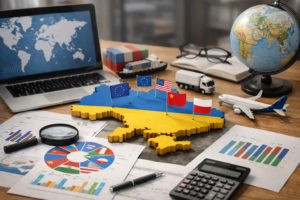
Trade in Ukrainian goods in 2025 remained highly concentrated and with a pronounced import bias, according to a study by the Experts Club analytical center on the top 50 trading partners as of December 31, 2025.
As noted in the study, the top ten countries account for about two-thirds of total trade, with China alone accounting for almost a fifth of turnover. Experts Club founder Maxim Urakin emphasizes: “The overall picture is consistent with the aggregated statistics for 2025: Ukraine’s imports are estimated at about $84.8 billion, exports at about $40.3 billion, and trade turnover at about $125.1 billion.”

China has become Ukraine’s largest partner in terms of trade turnover in the TOP-50 sample – $21.04 billion, with imports of $19.23 billion and exports of $1.82 billion, resulting in a negative balance of $17.41 billion. Urakin believes that “there will be no quick solutions to balance the trade deficit with China without strengthening Ukraine’s industrial export positions” and suggests focusing on localizing part of the supply chains for Ukrainian needs, contract manufacturing, and expanding agricultural and food exports with deeper processing.
Poland ranked second in terms of trade turnover with $13.02 billion, followed by Germany with $9.06 billion, Turkey with $8.95 billion, and the US with $5.69 billion. Commenting on the European direction, Urakin draws attention to the risks of regulation: “The risk factor here is not so much economic as regulatory and political… the issue of quotas and restrictions periodically returns to the agenda.” In his opinion, the key to expanding presence in the EU market is “quality of entry” — standards, traceability, certification, and integration into value chains.
The study also notes the role of markets where Ukraine has a positive trade balance, as well as the importance of trade hubs and logistics. In particular, among the areas that could potentially provide rapid growth with reduced logistics costs and stable maritime routes, the countries where exports already exceed imports stand out, as well as European logistics hubs through which part of Ukraine’s flows pass.
Speaking about the prospects for 2026, Experts Club highlights as key factors the conditions of access to EU markets, institutional agreements with regional partners, and logistics, including the security of sea routes. “The most applicable growth points for Ukraine are a combination of markets with an already positive balance and instruments that reduce barriers: agreements, standardization, and logistics,” Urakin concluded.

Kernel, one of Ukraine’s largest agricultural holdings, reported EBITDA of $103 million in October-December 2026 fiscal year (FY, July 2025-June 2026), down 13% from the same period last year, according to a report on Friday.
According to the report, consolidated revenue in the second quarter of FY 2026 amounted to $1 billion 98 million, which is 4% less than in the second quarter of FY 2025, but compared to the previous quarter, revenue grew by 33% thanks to an increase in sales of grain, vegetable oils, and meal as the harvest campaign gained momentum and export activity accelerated.
Kernel noted that the loss from changes in the fair value of biological assets in the second quarter of FY 2026 amounted to $43 million, compared to $33 million in the second quarter of FY 2025.
The cost of goods sold increased by 28% compared to the previous quarter, mainly reflecting higher costs of goods for resale and raw materials used, as well as a 55% increase in delivery and handling costs due to higher insurance premiums amid increased Russian attacks on civilian vessels during the reporting period.
As a result, gross profit decreased by 20% year-on-year to $126 million, reflecting lower profitability in the infrastructure, trading, and oilseed processing segments.
At the same time, Kernel managed to reduce general and administrative expenses by 26% to $55 million, reflecting a decrease in payroll-related expenses.
The company’s net profit for October-December 2025 amounted to $13 million, which is 2.3 times less than in October-December 2025. It is noted that the group incurred financial expenses of $21 million, which is 21% more than in the previous quarter, mainly due to an increase in expenses related to the extension and modification of lease agreements, while other expenses in the second quarter of FY 2026 reached $20 million, mainly due to an increase in the Group’s social expenses.
It is noted that Kernel received an operating profit before working capital changes of $113 million in the second quarter of FY 2026, which is 2.3 times more than in the previous year. The strong growth mainly reflects a low comparative base, as the previous year’s result was significantly affected by non-cash trading gains recognized by Avere.
According to the report, changes in working capital resulted in a cash outflow of $249 million in the second quarter of FY 2026, to $331 million, primarily due to an increase in inventories of $209 million, to $644 million, as well as the temporary allocation of a portion of liquidity to liquid securities.
“This reflects a normalization of seasonal purchasing patterns as the company resumed its typical inventory build following the harvest in the first half of the fiscal year. The previous season was atypical due to slower sales by farmers and a smaller grain harvest, which limited inventory accumulation and distorted the normal working capital cycle,” the document says.
It is specified that stocks related to the oilseed processing segment increased by 23% compared to the previous quarter, to $348 million, thanks to growth in sunflower seed and vegetable oil stocks. Grain stocks grew more sharply, 2.3 times compared to the previous quarter, to $296 million, as the group accumulated corn and other grains during the peak harvest season.
In physical terms, edible oil volumes by weight increased by 8% compared to the previous quarter, to 106,000 tons, while sunflower seed stocks reached 334,000 tons. Grain stocks, mainly corn, wheat, and soybeans, increased 2.6 times compared to the previous quarter, to 1.6 million tons.
Net cash flow used in investing activities amounted to $145 million during October-December 2025: the outflow consisted mainly of $120 million invested in financial assets as part of the group’s liquidity management strategy and $25 million in capital expenditures, mainly related to the reconstruction of the transshipment terminal in Chornomorsk, agricultural equipment, backup power equipment, and grain railcars.
As of the end of 2025, Kernel’s total debt amounted to $782 million, up 8% from the previous quarter. The increase was mainly due to more active use of credit lines to finance seasonal working capital requirements.
Net debt increased 3.4 times compared to the previous quarter to $451 million, while the leverage ratio as of December 31, 2025, decreased to 1.1 times net debt to EBITDA.
Overall, in the first half of FY 2026, consolidated revenue decreased by 1% compared to the same period in FY 2025, to $1 billion 924 million, EBITDA decreased by 14%, to $247 million, and net profit decreased by 33%, to $119 million.
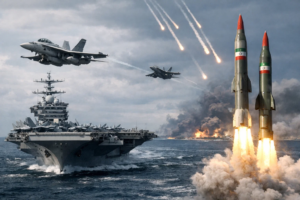
The gap in defense spending is extremely large: in 2024, the US spent about $997 billion, Israel about $46.5 billion, and Iran about $7.9 billion (SIPRI estimate).
The picture is different when it comes to human resources: the US has an active armed forces strength of around 1.32 million (estimate for 2025), Israel has regular forces of around 169,000 with extensive reliance on reserves, and Iran has around 610,000 active personnel (estimates citing IISS).
The key difference lies in “projection of force” and technological structure. The US remains the only country with a comparable set of tools for a long-term campaign far from its own territory, including a fleet of 11 nuclear aircraft carriers and supply, intelligence, and refueling infrastructure.
Israel, with significantly fewer resources, compensates for this with the quality of its air force and layered air defense and missile defense systems. In particular, Israel operates and is expanding its fleet of F-35Is (Adir), and its defense architecture includes Iron Dome, David’s Sling, and the upper echelon Arrow (Arrow-3).
Iran, in turn, is betting on asymmetric responses: missile and drone capabilities, distributed infrastructure, IRGC forces, and pressure through a network of allied non-state actors. According to US estimates, Iran has the largest arsenal of ballistic missiles in the Middle East; some reports also note long-term plans to develop long-range systems.
Finally, the “nuclear factor” works differently for the participants. SIPRI lists Israel as one of nine states possessing nuclear weapons (in the absence of official confirmation from Tel Aviv), while Iran does not officially possess nuclear weapons, and there is controversy over the scope and control regime of its nuclear program.

Personnel
Iran: approximately 610,000 active personnel, approximately 350,000 reservists (IISS estimate, Military Balance 2025).
Israel: 169,500 active personnel and 465,000 reservists (IISS, Military Balance 2023, according to Al Jazeera).
United States: total “authorized strength” for FY2026 – over 1.3 million (Army 454,000, Navy 334,600, Air Force 320,000, Marine Corps 172,300, Space Force 10,400, Coast Guard 50,000).
Conclusion based on “simple arithmetic”: the US has approximately 2.2 times more active personnel than Iran, and the US plus Israel have approximately 2.5 times more (but it is important to note that the US “theatrically available” force in the region is usually significantly smaller than the total number).

Land forces: tanks and artillery
Tanks: Iran – more than 1,500 main battle tanks; Israel – 2,200+ tanks.
The ratio of Israel to Iran is about 1.5:1 in terms of numbers.
Artillery systems: Iran – nearly 7,000 artillery systems (from towed guns to MLRS); Israel – 530 artillery systems (including self-propelled, towed, MLRS, and mortars in one summary).
In terms of the number of artillery systems, Iran appears to be significantly “heavier” (about 13:1), but this does not equate to an advantage in accuracy, reconnaissance, and counter-battery warfare.
In public reports, the US often cites not “all tanks in storage” but the structure of combat brigades: the US Army has 11 armored brigades (ABCT) in active service and 5 in the National Guard; each ABCT has 87 Abrams tanks. This gives a total of 1,392 Abrams tanks in the ABCT (not counting other places of service and reserves).

Aviation: a key advantage for the US
Iran: about 250 combat-ready aircraft (IISS).
Israel: 339 combat-ready aircraft, including 309 fighters/attack aircraft (the summary also provides the structure of the F-16, F-15, and F-35 fleet).
US: US Air Force alone (excluding Navy carrier-based aircraft and Marine Corps aircraft) – 2,027 fighter/attack aircraft in Total Force and 1,430 in Active Force; total Air Force fleet (Total Force) – 5,003 aircraft as of the end of FY2024.
In terms of combat aircraft, this means that the US Air Force’s fighter/attack class is approximately eight times greater than Iran’s estimated combat-capable aircraft, and Israel’s is approximately 35-40% greater than Iran’s in the same combat-capable category.

Navy: US – ocean power, Iran – betting on asymmetry
According to IISS estimates, Iran is building its maritime strategy around asymmetry – mines, anti-ship missiles, speedboats, and small submarines. It is separately noted that the Iranian Navy has more than 100 small high-speed attack boats.
The US has a different “base”: the size of its battle force is 293 ships as of October 1, 2025, and the minimum number of “at least 11 active aircraft carriers” is enshrined in law.
The US submarine component (official Navy fact files): approximately 24 Los Angeles-class submarines in service, 3 Seawolf-class and 24 Virginia-class, plus 14 Ohio-class strategic SSBNs; it is separately noted that 4 SSBNs have been converted to SSGNs.

50.5% of Ukrainians said they had not seen any improvements after the medical reforms (in particular, the introduction of the National Health Service), 24.7% reported improvements, and another 24.8% were undecided.
At the same time, 64% of respondents said they had encountered unofficial payments in medical institutions, and 52.2% considered the medical system to be corrupt (another 44.3% considered it to be “partially corrupt”). This is according to the results of a survey conducted by the research company Active Group using the SunFlowerSociology online panel.
Active Group Director Oleksandr Pozniy noted that against the backdrop of more critical assessments of the reform, people often separate their trust in a particular doctor from their trust in the system as a whole.
“We can say that family doctors, especially those who have been specifically and consciously chosen, are trusted. It is quite a common situation when people may not trust the system, but trust a specific doctor they know. At the same time, reform exists when it changes everyday experience, and although some changes have taken place, there is still dissatisfaction with this reform,” he said at a press conference at the Interfax-Ukraine agency on Friday.

According to the study, Ukrainians most often assess the state of the healthcare system as “average” (54.6%), “rather poor” (18.7%), or “very poor” (7.2%); 2.9% said “very good” and 16.7% said “rather good.”
At the same time, the level of trust in family doctors remains relatively high: 29.5% of respondents said they completely trust them, 61.9% said they partially trust them, and 8.6% said they do not trust them.
The survey also identified problems with access to medical care and resources at the local level. In particular, 23.8% of respondents believe that it is “very easy” to get a consultation with a family doctor, 55.1% say it is “easy,” 18.1% say it is “difficult,” and 2.9% say it is “very difficult.” Only 10.1% responded that their local hospital has “enough” modern equipment and medicines, 45.8% said “somewhat enough,” and 32.4% said “no.”
In addition, according to respondents, the wait time for an appointment with a specialist exceeds one month in 11.5% of cases, lasts 2–4 weeks in 19.8% of cases, 1–2 weeks in 28.4% of cases, and up to one week in 40.2% of cases.
Active Group founder Andriy Yeremenko attributed some of the negative assessments to the scale of direct household expenses.

“In fact, we see that more than 90% pay for treatment in one way or another, although medicine is formally free. If you don’t have insurance, you still pay — either for medicine or for procedures. Therefore, the issue of financial accessibility remains key for most families,” he said.
According to the survey results, in 2024–2025, 68.2% of respondents said they paid for medical services or medicines themselves on a regular basis, 25.1% said they did so occasionally, and 6.7% said they did not pay.
At the same time, 20.9% reported spending more than 20% of their family budget on medicine, another 23.2% spent 11-20%, 39.8% spent 5-10%, and 16.1% spent less than 5%.
Maksym Urakin, PhD in Economics and founder of the Experts Club information and analytical center, commenting on the survey data, said that high proportions of healthcare costs affect not only well-being but also economic stability.

“As an economist, I want to emphasize that medicine is an integral part of a country’s economic stability, and when healthcare costs erode family budgets, it affects consumption and people’s ability to recover. In international monitoring methodology, it is considered catastrophic if a person spends more than 10% of their budget on medicines. And here we see a sign of a serious financial burden,” he stressed.
Separately, participants drew attention to the dynamics of medicine prices and the effectiveness of compensation mechanisms. Thus, 52.3% of respondents said that the prices of medicines they buy regularly had “increased significantly,” 43.9% said they had “increased slightly,” 3.6% said they had “remained unchanged,” and 0.2% said they had “decreased.”
Regarding the state program for reimbursement of the cost of medicines, 13.1% of respondents said they use it, 70.6% said they do not use it, and another 16.3% said they have heard of it but have not used it. Among those who received medicines under the program, 24.7% said they received them free of charge, and 75.3% said they paid extra.
Grigory Soloninka, a member of the board of the Kyiv Regional Organization “VULT” and professor at the Kyiv Medical University, believes that the pandemic and full-scale war have significantly influenced the perception of the reform, but there are also “positive elements.”

“To a certain extent, there are reforms: there are positive aspects and there are negative aspects. But this negativity was largely influenced, first of all, by the pandemic, then by the war — that is, our reforms began, perhaps, at the wrong time. But there are positives from these reforms, and we see that there is a good program for people over 40, screening,” he said.
The survey also separately assessed the impact of the war on the availability of medical services: 48.1% of respondents reported that they felt access had deteriorated due to the war, 36.9% said no, and 15% were undecided. Respondents identified the outflow of medical personnel (60.3%) as the most acute problem in healthcare during wartime, followed by the destruction of infrastructure (22.7%) and a shortage of medicines (13.4%).
The survey was conducted on February 11–12, 2026, using a self-administered questionnaire, with a sample of 1,000 respondents aged 18 and older throughout Ukraine, excluding temporarily occupied territories. The theoretical statistical error is up to 3.1% with a 95% confidence level.
ACTIVE GROUP, EXPERTS CLUB, Pozniy, SOCIOLOGY, SOLONINKA, SURVEY, URAKIN
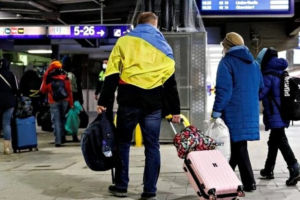
Ukrainians are currently receiving temporary protection in the European Union regardless of gender and age, and this arrangement has been extended until March 27, 2027, said European Commission spokesman Markus Lammert, commenting on discussions in member states about granting protection to Ukrainian men of conscription age.
“As far as I remember the rules for granting temporary protection, they make no distinction between women, children, and men of conscription age,” Lammert said at a briefing in Brussels on Friday.
When asked whether the EU should accept Ukrainian men of conscription age during the war in Ukraine and whether there is indeed a discussion at the European level about their temporary protection, given that the issue has been raised by the Luxembourg government and the Ukrainian authorities, the European Commission representative replied: “I am not aware of any discussion in Luxembourg. I can say that temporary protection is what we have decided at the EU level and at the level of member states until March 27 next year. The current rules remain in force, and that is all I can say at this point.”
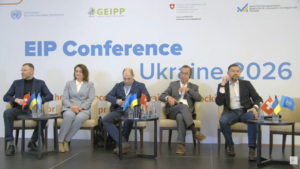
The key event of the year in sustainable industrial development – the Annual Eco-Industrial Parks (EIP) Conference in Ukraine 2026 – has officially commenced in Kyiv. This year, the focus is on supporting Ukraine’s green recovery by attracting financing for the development of EIPs. Participants include government officials, international partners, donor organizations, business representatives, industrial park operators, banks, investment institutions, and industry associations.
Eco-industrial parks must become a key instrument for Ukraine’s green reconstruction and its practical integration into the European economic space. This was stated by Taras Kachka, Deputy Prime Minister for European and Euro-Atlantic Integration of Ukraine, during his opening remarks. He emphasized that the theme of this year’s conference has strategic importance, as Ukraine is simultaneously navigating multiple complex processes: defending the state against Russian aggression and undergoing a profound economic transformation.
“Recovery cannot mean a return to the pre-war economic model. We are building a new industrial foundation – technological, competitive, and fully integrated into the European economic space, aligning with high standards and the principles of the global sustainable development goals,” noted Taras Kachka. “In this context, eco-industrial parks are not just an infrastructural tool; they are a new model for organizing a truly modern domestic industry. They allow us to combine industrial modernization with decarbonization, resource efficiency, the circular economy, and compliance with EU ESG criteria.”
The Deputy Prime Minister pointed out that the negotiation process for Ukraine’s accession to the European Union requires practical industrial integration. This specifically involves adaptation to the Carbon Border Adjustment Mechanism (CBAM), the EU financial taxonomy, sustainability reporting standards, and supply chain due diligence requirements.
“This is a new economic reality. Eco-industrial parks create an environment where Ukrainian enterprises can meet these requirements systematically, rather than fragmentarily,” he added.
The EIP Conference in Ukraine 2026 is a flagship national event held within the framework of the “Global Eco-Industrial Parks Programme II: Country level intervention in Ukraine” (GEIPP-II Ukraine). The program is implemented by the United Nations Industrial Development Organization (UNIDO) with financial support from Switzerland through the State Secretariat for Economic Affairs (SECO) in close cooperation with the Ministry of Economy, Environment and Agriculture of Ukraine.
The conference agenda features six panel discussions. Participants are exploring the formation of a favourable policy framework for park development, ESG principles as a tool for green recovery, and investment mobilization through financial institutions. Special attention is given to market opportunities, industrial symbiosis, and the benefits of EIPs for resident companies and service providers.
“The growth dynamics of industrial parks in Ukraine is impressive: in the last year alone, the number of operational sites has nearly doubled. Now, our main task within the GEIPP-II program is to ensure their full financial and institutional readiness for green transformation. We are helping businesses prove in practice that environmental sustainability, resource efficiency, and industrial symbiosis lead directly to lower operational costs and increased attractiveness for investors,” stated Christian Susan, UNIDO Industrial Development Officer.
An Industrial Parks Exhibition is operating alongside the Conference to showcase the best investment practices in Ukraine.
The broadcast of the Conference is available on Facebook at: https://www.facebook.com/geippukraine/live_videos/. YouTube: livestream in Ukrainian or livestream in English.
Photos from the Conference download here.
Background Information:
An eco-industrial park is an innovative format for industrial parks where businesses utilize alternative energy sources, approach waste management rationally, and optimize water usage. EIPs are more competitive, attractive for investments, and resilient to risks.
Ukraine has significant potential in establishing eco-industrial parks to support the green transition, post-war recovery, and alignment with European environmental standards.
By the end of 2025, industrial parks in Ukraine demonstrated rapid development: the total number of registered facilities reached 118, with 27 appearing last year alone (mostly driven by private business initiatives). The most crucial indicator was the nearly twofold increase in the number of actively operating sites -from 21 to 37. The geographical leaders in the number of parks remain the Lviv, Kyiv (which ranked first in new registrations), and Zakarpattia regions. Currently, residents are actively expanding production: 22 enterprises are already operational within the parks, and another 15 are under construction, focusing on agricultural processing, the food and woodworking industries, and mechanical engineering.
The GEIPP Ukraine project is part of the Global Eco-Industrial Parks Programme (GEIPP), implemented by UNIDO in seven countries and funded by the Government of Switzerland through the State Secretariat for Economic Affairs (SECO). The main beneficiary of the project is the Ministry of Economy, Environment and Agriculture of Ukraine.



