
The volume of capital investments in Ukraine in 2025 increased by 25.2% compared to 2024 and amounted to UAH 669.3 billion, the State Statistics Service reported on Tuesday. It is noted that the main source of financing for capital investments last year remained the own funds of enterprises and organizations, which accounted for 71.2% of the total volume.
The agency specified that the share of the state budget amounted to 7%, local budget funds to 6.4%, household funds for housing construction to 5.7%, bank and other borrowed financing to 5.1%, while funds from foreign investors accounted for only 0.1%.
A significant share of capital investments was directed to industry — 38.7% of the total amount of investments (UAH 259.1 billion); transport, warehousing, postal and courier activities — 10.8% (UAH 72.3 billion).
As reported, capital investments in Ukraine in 2024 increased by 35% to UAH 534.4 billion.
CAPITAL INVESTMENTS, State Statistics Service, UKRAINIAN ECONOMY

On April 18–19, 2026, the international conference Breast Weekend 3.0 will take place in Uzhhorod, dedicated to breast surgery — plastic, aesthetic, and oncoplastic reconstructive surgery. The event will be held at the Old Continent hotel in the city center and will become the seventh event of the educational project Live Surgery Transcarpathian.
The international status of the conference is confirmed by the participation of foreign speakers. Among the announced and confirmed speakers are plastic and reconstructive surgeon Petros Christodoulou (Prague, Czech Republic), plastic and reconstructive surgeon Anna Lukyanova (Düsseldorf, Germany), as well as Ukrainian specialists Serhii Derbak and Denys Pomynchuk.

The Breast Weekend 3.0 program is focused on modern approaches in breast surgery. The organizers’ announcements mention lectures, clinical cases, and professional dialogue in the fields of oncoplastic surgery, reconstruction, and aesthetic breast surgery. Separate announced topics include breast fat grafting techniques, inframammary fold formation, as well as the analysis of practical clinical cases and modern European approaches in reconstructive and aesthetic surgery.
The key goal of the conference is to unite Ukrainian and foreign specialists around practical exchange of experience, raising the standards of breast surgery, and integrating the Ukrainian professional community into the international educational context. The organizers position the event as a platform for live professional communication, learning from real clinical examples, and discussing solutions applicable in the daily practice of a surgeon.
Live Surgery Transcarpathian is an educational project under the patronage of Lita Plus Clinic; it already has seven organized events, more than 95 speakers, and over 120 presentations to its credit.
Lita Plus is a plastic surgery and aesthetic medicine clinic in Uzhhorod founded in 2018 by plastic surgeon Serhii Derbak.
UPRADAS (Ukrainian Association of Plastic, Reconstructive and Dermatologic Aesthetic Surgery and Oncoplastic Mammology) is the first Ukrainian association uniting plastic surgeons, reconstructive surgeons, dermatologic surgeons, and oncoplastic mammologists; the organization develops postgraduate education, international cooperation, and the raising of professional standards.
Interfax-Ukraine is the media partner of the conference.
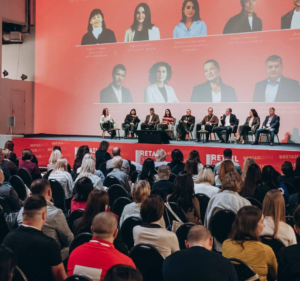
On April 22–23, 2026, Kyiv will host FMCG Expo 2026—a large-scale industry congress bringing together over 500 manufacturers, retailers, distributors, and experts from the FMCG market.
The event will bring together representatives of companies that are currently shaping the market and demonstrating growth even amid instability. Among the companies whose speakers have already confirmed their participation are:
Roshen, Mars Ukraine, MHP, Auchan, EVA, Novus, Silpo, Rukavichka, Berta Group, SAV ORBICO, Biosphere, Kormotech, NIQ, MAUDAU, Kyiv BKK, Nizhyn Canning Plant, Molokiya, ALVIVA GROUP, Biotus, IDNT, and other industry leaders.

Key topics of the program
• Effective interaction between manufacturers and retailers
• Portfolio management and margin optimization
• Category development and growth drivers
• Brand scaling and the role of packaging
• Business model transformation
• Data-driven approach in sales
• Production and logistics efficiency
A separate section of the event will be dedicated to an exhibition area, where companies will present new products, innovative solutions, services, and technologies for the FMCG business.
You can participate not only as a visitor but also as an exhibitor, presenting your latest innovations to a professional audience and potential partners.
Why You Should Attend
✔ 500+ decision-makers
✔ 2 days of concentrated business content
✔ Networking with key market players
✔ Opportunity to showcase your solutions in the exhibition area
Registration is open on the official website:
FMCG Expo 2026 is an event for those who want to not just adapt to the market, but grow alongside it.
Interfax-Ukraine is the official media partner of the congress.
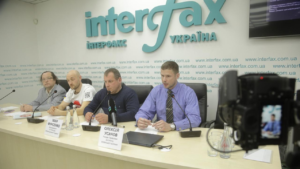
Holding elections in Ukraine during the active phase of hostilities is impossible for security and legal reasons, but preparations for the first post-war elections must begin in advance, as the country will have to resolve a range of issues related to voting by the military, Ukrainians abroad, internally displaced persons, and residents of de-occupied territories, participants in a press conference at the Interfax-Ukraine agency said on Thursday.
Oleksiy Usachov, chairman of the board of the Ukrainian Politics Institute, noted that the topic of elections has long been at the center of public debate, and recent months have only intensified the sense of political activism. According to him, the impression of preparations for possible early elections is reinforced by the activation of the Central Election Commission and the work of parliamentary groups on possible changes to the electoral law.

“The issue of elections, possible elections, must be considered through the prism of two planes — their necessity and their possibility. Because war is a process that is ongoing in Ukraine. It should also be remembered that no elections in Ukraine have been held during the active phase of military operations in all the years of independence,” Usachov stressed.
At the same time, he warned against attempts to rewrite the rules to suit the political situation. In his opinion, one of the chronic problems of the Ukrainian electoral system remains the desire of each new government to adapt legislation to its own interests, which creates additional risks for confidence in the future electoral process.
“The main drawback of the electoral system in Ukraine is the constant change in legislation for each election, for each government, that is, the adjustment of legislation to the needs that politicians have identified for themselves in their political careers. And this is a great danger,” Usachov said.
He also drew attention to the need for technological protection of the expression of will. According to Usachov, Ukraine already has digital identification tools, but any technological solutions can only work if there is a high level of trust, professional administration, and no possibility of political manipulation.
“The main thing is that politicians do not juggle their capabilities and do not try to falsify elections and rig votes in their favor through electronic systems. Protecting votes and citizens during voting, and ensuring the safety of citizens, is an important priority,” he said.
Ivan Fursenko, vice president of the NGO Congress of Local Self-Government of Ukraine, in turn, stressed that even after the cessation of hostilities, the country will not be able to move to the electoral process immediately. According to him, professional communications suggest a minimum of three months after the cessation of hostilities, but he believes that this is not enough time.

“The preliminary minimum period that has been announced is three months after the cessation of hostilities. But I am deeply convinced that it is absolutely impossible to hold elections within three months. It will take at least six months,” Fursenko added.
He explained that the key challenges remain the organization of voting abroad, the participation of military personnel, and the lack of complete certainty regarding the electoral infrastructure. Fursenko recalled that before the full-scale war, voting abroad was mainly conducted at diplomatic and consular missions, but now the number of Ukrainians in European countries is so large that this resource is no longer sufficient.
“Even in Poland, the Czech Republic, and Germany, new polling stations need to be opened. We do not understand how to open them, because the legislation of some countries prohibits the holding of elections of other states on the territory of non-diplomatic institutions. If this work is not done, we will deprive a large number of Ukrainian citizens of their constitutional right to vote and be elected, and this will reduce the legitimacy of the entire electoral process,” he stressed.
Another set of problems, according to Fursenko, is the participation of military personnel in elections, both as voters and as potential candidates. He noted that this requires separate legal mechanisms that will simultaneously guarantee the right to vote and not undermine the logic of national defense.
Ihor Bondarchuk, chairman of the board of the Stop Corruption NGO, said that there are already signs of political activation in the regions, which can be interpreted as preparation for a potential election campaign. According to him, some politicians have returned to more active work in their constituencies, and civil society must closely monitor whether this activity turns into covert campaigning using administrative or financial resources.
“We are seeing a certain transformation, with political forces becoming more active and PR campaigns surrounding this. This is the first indicator. Therefore, it is not just discussion that is important, but also control and, in some cases, legislative regulation,” said Bondarchuk.
He stressed that the public sector must be prepared to monitor abuses right from the start of the upcoming election process. According to him, the Stop Corruption network in the regions makes it possible to quickly receive signals about the potential use of shadow funds, administrative resources, and other non-transparent mechanisms of political work.

“Our organization has 98 territorial divisions throughout Ukraine, so we can receive information from each region in real time. On our part, the issue is more about exposing and stopping abuses that are already taking place,” Bondarchuk said.
The head of the League of Energy Development of Ukraine, Oleksandr Golizdra, also spoke out against holding elections during the war, stressing that social solidarity remains a key condition for the country’s stability at present. In his opinion, full-fledged electoral competition during the war inevitably weakens this solidarity, but this does not negate the need to prepare amendments to the legislation now.
“Elections during wartime are impossible because one of the main themes of our struggle against the enemy is solidarity. And what kind of solidarity can there be when political forces and candidates compete with each other personally? But this does not negate the need to prepare changes to the legislation,” Golizdra said.

He separately emphasized the need for increased public control if the country does decide to move toward greater digitization of electoral procedures. In his opinion, this should not be a one-time oversight, but rather the professional and systematic participation of civil society organizations, volunteer networks, and trained observers in the development and control of new procedures.
Summing up the discussion, the participants agreed that Ukraine does not have a ready-made model for automatically transferring foreign experience, as the war has created unprecedented conditions for the state and the electoral system. At the same time, they stressed that preparations for post-war elections cannot be postponed: the state, parliament, CEC, civil society, journalists, and international partners must already be working on solutions that will allow elections to be held legitimately, safely, and with the widest possible participation of citizens.
ELECTIONS IN UKRAINE, IHOR BONDARCHUK, OLEKSANDR HOLIZDRA, OLEKSII USACHOV, ІВАН ФУРСЕНКО
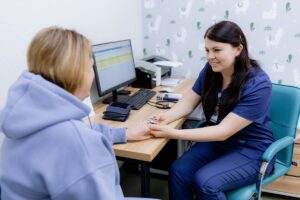
More than 11% of Ukrainians never visit a doctor, while almost 10% do so more than 10 times a year.
According to the results of a survey conducted by the research company Active Group and the Experts Club analytical center in early February, 41.3% visit doctors 1-2 times a year, 27.2% – 3-5 times, and 10.4% – 6-10 times.

“The group of people who do not visit doctors at all requires a separate study of the reasons, which may include financial barriers, mistrust, and psychological burnout,” said Alexander Pozniy, director and co-founder of the research company Active Group.
He drew attention to the fact that most respondents visit a doctor once or twice a year, but noted that there may be different reasons for this.
“We need to ask the question, why is this so: because our people are so healthy, or because people cannot go to the doctor or do not trust doctors. But this is a question for the medical professionals themselves,” he said.

Pozniy also noted that according to the survey results, “family doctors are accessible to the majority of the population, especially in cities,” while access to specialists, especially for rural populations and populations in small or remote communities, raises questions “primarily due to the lack of the necessary number of specialists.”
For his part, Grigory Soloninka, a member of the board of the public organization “Kyiv Regional Organization of the All-Ukrainian Medical Society” (VUO), professor of the Department of Internal and Occupational Diseases at the Kyiv Medical University, noted that “we need to return to the issue of rural medicine and, perhaps, make certain changes so that the rural population does not receive fewer services than the urban population.”

“If we take a remote village, then, perhaps, there is a problem with getting to a narrow specialist and receiving specialized medical care,” he said.
For his part, Experts Club founder Maxim Urakin noted that “medicine is part of the country’s economic stability, and when medical expenses erode family budgets, it affects consumption, savings, and people’s ability to work and recover.”
“In Ukraine, almost a quarter of the population spends up to 20% of their family budget on medicine, and one in five spends more than 20%. If we translate this into the language of economic financial analysis, then from the point of view of international methodology, the fact that a person spends more than 10% of their budget is catastrophic. In other words, we see a sign of a serious financial burden,” he said.

The study was conducted on the SunFlowerSociology online panel on a representative sample on February 11-12, 2026. The survey involved 1,000 respondents from a representative sample in all regions of Ukraine, except for the temporarily occupied territories.
ACTIVE GROUP, EXPERTS CLUB, Pozniy, SOCIOLOGY, SOLONINKA, SURVEY, URAKIN, Єременко





