

According to the results of a joint study by Active Group and Experts Club, Ukrainians view Germany, France, the United Kingdom, and Lithuania most favorably, while China and Hungary receive significantly lower ratings, despite their importance in Ukraine’s foreign trade.
“The modern international economy is not just about foreign trade figures, but also about reputation, trust, political proximity, humanitarian presence, and a sense of partnership at the societal level. It is precisely within this framework that both Ukraine’s trade ties and the work of foreign embassies in Ukraine’s information and public spheres should be evaluated,” noted Maksym Urakin, founder of the Experts Club information and analytical center, at a press conference at the Interfax-Ukraine agency on Thursday.
Urakin also cited Ukraine’s overall foreign trade figures for 2025. According to his data, total trade turnover exceeded $125 billion, of which nearly $85 billion was accounted for by imports and about $40 billion by exports, while the trade deficit in goods amounted to approximately $44.5 billion. He noted that this indicates the continued high openness of the Ukrainian economy even amid the war, but at the same time highlights its significant dependence on foreign supplies.
As noted during the presentation, China remains Ukraine’s largest trading partner in terms of trade turnover. At the same time, it is trade with China that creates the largest trade imbalance for Ukraine, as out of $20 billion in total trade, about $19 billion is accounted for by imports, while Ukrainian exports amount to only about $1.8 billion.

“In essence, nearly 39–40% of Ukraine’s entire annual trade deficit is attributable to China. This is a classic example of asymmetric trade: Ukraine sells resources and buys goods with high added value,” Urakin emphasized.
According to him, Ukraine has a different type of relationship with Poland. Poland remains a key neighbor, a logistics hub, an important political ally, and at the same time the largest market for Ukrainian exports. Total trade with Poland exceeds $13 billion, but here too, Ukraine’s trade balance remains negative—at nearly minus $3 billion. At the same time, as noted by participants at the press conference, Poland is not merely a sales market but a bridge connecting Ukrainian producers with the European Union market.
A similar situation is observed in trade with Germany, Turkey, and the United States. According to data presented at the press conference, trade turnover with Germany amounts to about $9 billion, with Turkey—nearly $9 billion, and with the United States—nearly $6 billion, with Ukraine having a negative balance in all three cases. Urakin emphasized that the U.S. market is particularly important, as the significance of the United States for Ukraine is determined not only by trade volumes but also by the role of the United States as a security, financial, technological, and political partner.
At the same time, as noted during the presentation, the most advantageous markets for Ukraine in terms of a positive trade balance are Egypt, Moldova, the Netherlands, Spain, Lebanon, Algeria, Iraq, Libya, Kazakhstan, and the United Arab Emirates.

“Ukraine achieves the best results where it has a strong position in the agricultural sector and where the Ukrainian export offering is well-suited to the respective market. Future improvements in the trade balance lie in the transition to products with higher added value in those markets where Ukraine already has a presence and is proving itself to be a stable partner,” he said.
The sociological part of the study, presented at the press conference, showed that Ukrainians demonstrate the highest levels of positive attitude toward Germany—77.4%, Lithuania—75%, France—74%, the United Kingdom – 74%, Sweden – 72.5%, Japan – 71.8%, Italy – 70%, and the Czech Republic – 67%. Ratings for Spain, Greece, Bulgaria, Poland, and Turkey also remain high. At the same time, 56% of respondents view Poland positively, compared to 14.7% negative ratings, and 55% view Turkey positively, compared to 5.6% negative ratings.
China, however, presents a different picture: 23% of respondents expressed a positive attitude toward it, while 42% expressed a negative one. Assessments of Hungary were even more critical: only 18.6% held a positive view, compared to 52% who held a negative one. 44.1% of respondents view the United States positively, while 24.7% view it negatively.
Oleksandr Pozniy, director of the research company Active Group, emphasized that this is the second study in the series, allowing for tracking the dynamics of public perceptions. According to him, this is not only about the emotional perception of other countries but also about a factor increasingly linked to foreign economic relations, security, and the image of a partner country within Ukrainian society.
“The ratings of some countries have deteriorated slightly compared to the previous survey. In the case of the United States, this could have been influenced by changes in American policy following the arrival of the new president and the corresponding media coverage,” Pozniy noted.
The participants in the press conference paid particular attention to cases where a country’s economic importance does not align with how it is perceived emotionally in Ukraine. Responding to questions from the audience, Pozniy cited China as an example—a country that is viewed quite negatively but remains Ukraine’s largest trading partner. Similarly, he noted, there are cases where a country, such as Iraq, has a positive trade balance with Ukraine, yet attitudes toward it remain reserved or negative.
Olga Bezrukova, Ph.D. in Sociology and head of the Kyiv branch of the Sociological Association of Ukraine, emphasized that public opinion during wartime is particularly sensitive to external factors, and therefore such measurements must be considered within a specific temporal context. “Attitudes toward a country should be viewed as attitudes toward the country as a whole, and they are shaped by Ukrainians’ perception of that country as a strategic partner in achieving peace in Ukraine. The second component is attitudes toward its representatives and citizens, which are based either on personal experience or on the experiences of friends, colleagues, and family members,” she explained.
According to Bezrukova, social media, the political context, cultural stereotypes, and everyday perceptions acquired through socialization play an important role in shaping these assessments. This, in particular, may explain the high proportion of neutral responses regarding certain countries about which Ukrainians have insufficient personal experience or information in the public sphere. She also drew attention to the influence of stereotypes on attitudes toward some countries in the Muslim world, even though, from an economic standpoint, some of them are important partners for Ukraine.

Maksym Urakin noted that foreign missions should communicate with Ukrainian society not in abstract diplomatic language, but in the language of tangible benefits—through jobs, investments, humanitarian projects, educational programs, and logistical opportunities. He also called on diplomatic missions to work more actively not only in Kyiv but also in the regions, and to link their countries’ images not only to political support for Ukraine but also to tangible participation in reconstruction, energy, industry, agricultural processing, healthcare, and education.
“If society sees a massive flow of imports coming into the country but does not see a corresponding flow of investment, technology, or localized production, a sense of imbalance arises. And this directly affects the emotional perception of the partner. That is why countries with a large trade surplus with Ukraine should pay particular attention to the reputational aspect of their presence in the Ukrainian market,” added Urakin
In summary, the participants of the press conference emphasized that the study’s findings could be useful for businesses, government institutions, and Ukraine’s international partners alike. In their view, public opinion can influence economic policy, consumer behavior, and even the perception of goods and services from various countries, and thus becomes a crucial element of today’s foreign economic reality. Oleksandr Pozniy noted that the world is not “black and white” for Ukrainians, and the large proportion of neutral assessments regarding a number of countries indicates caution and a desire for balanced judgment rather than indifference.
The survey was conducted in March 2026; sociologists analyzed Ukrainians’ attitudes toward 50 countries that are among Ukraine’s largest trading partners. The study was conducted using a self-administered questionnaire on an online panel; 800 respondents participated, and the stated margin of error does not exceed 3.5%.
You can view the full presentation of the study by clicking the link.
ACTIVE GROUP, ECONOMICS, EXPERTS CLUB, Pozniy, SOCIOLOGY, URAKIN, БЕЗРУКОВА
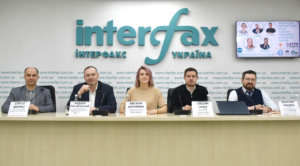
International support, the development of vocational education, and the rapid implementation of practice-oriented educational solutions are critically important for maintaining the competitiveness of Ukraine’s agricultural sector, which, despite the war, remains a key source of foreign exchange earnings and one of the drivers of the economy, stated participants at the press conference “International Partnership for the Development of Education in Ukraine’s Agricultural Sector.”
During the discussion, speakers emphasized that the agricultural sector is increasingly facing a shortage of personnel, the need for staff retraining, adaptation to new EU standards, and demand for modern digital knowledge—from post-harvest grain processing to artificial intelligence technologies in agricultural production.
Maksym Urakin, founder of the Experts Club information and analytical center and deputy director of the Interfax-Ukraine agency, emphasized that under current conditions, the development of education in the agricultural sector is directly linked to issues of the country’s economic stability.
“Today, Ukraine’s economy depends to a significant extent on assistance from international partners, and this must be stated plainly. But Ukraine cannot build its future solely on external support, so we need industries that generate foreign exchange revenue, sustain employment, and form the tax base, and the agricultural sector remains precisely such a sector,” he emphasized at a press conference at the Interfax-Ukraine agency on Tuesday.

According to Urakin, one example of such a practical partnership is the launch of the online course “Application of Artificial Intelligence Technologies in Agricultural Production,” implemented by Experts Club in collaboration with AgriAcademy at the initiative of the EBRD as part of food security support programs. He emphasized that solutions allowing Ukrainian farmers not just to talk about innovation but to translate it into concrete business tools are particularly important.
“The goal of this course is to shift the conversation about artificial intelligence from the level of abstractions to the level of concrete business solutions. Today, Ukraine needs a new system for training farmers—one that is more technologically advanced, systematic, and combines international best practices, business expertise, and applied tasks,” noted Urakin.
In turn, Oksana Yurchenko, project coordinator at the FAO Investment Center in Ukraine, emphasized that the labor shortage in the agricultural sector is a chronic problem that has not disappeared either after the pandemic or amid a full-scale war, and therefore, accessible remote learning formats are becoming one of the few realistic ways to quickly improve workers’ qualifications.
“The shortage of skilled workers in the agricultural sector has been, is, and will continue to be one of the key challenges. It is often difficult for farm workers to attend in-person training due to their schedules and the remote locations of their farms, so the industry needs accessible, practical, and flexible training that can be completed without taking time off from work,” she noted.

Yurchenko noted that the AgriAcademy platform was created in response to a request from major agribusinesses and international partners for systematic training for the sector amid the war. According to her, the platform already hosts over 40 courses, which are developed in collaboration with businesses, Ukrainian and international experts, and adapted to the sector’s current needs. Particular emphasis is placed not only on crop production but also on livestock farming, where requirements for biosecurity, animal health, welfare, and compliance with European standards have risen sharply.
“If we look at the number of diplomas and certificates issued by the AgriAcademy platform, we’re already talking about over 3,500 documents. At the same time, the number of registered students who are still taking courses or plan to complete their studies is approximately three times higher, which indicates a steady growth in interest in the platform,” Yurchenko reported.
She also noted that as of January 1, 2026, mandatory animal welfare requirements will apply to all agricultural enterprises that keep animals, and therefore the demand for specialized training will only increase. According to the expert, the courses on the platform are not yet legally mandatory, but they are effectively becoming an important practical tool for the correct interpretation and implementation of new regulations at enterprises.
Rodion Rybchynskyi, Director of the “Flour Millers of Ukraine” Association and a grain sector expert at the UN FAO, noted that the staffing problem affects not only agricultural production but the entire agri-food sector, including processing and the food industry, where automation of many processes cannot yet replace human labor.
“The labor shortage in the food industry is even more acute today than in agricultural production itself. Unmanned combines or tractors can already be used in the fields, but no one has figured out how to produce bread, grains, pasta, or other food products without people, so the issue of staff quality and knowledge is the number one challenge here,” he added.
Rybchynskyi emphasized that in the context of European integration, food industry enterprises must not only seek out employees but also quickly upgrade their qualifications in accordance with new regulations, technological requirements, and quality standards. That is why, he said, educational platforms such as AgriAcademy must develop in parallel with formal education.

The expert also noted that a course on post-harvest processing and grain storage is already available on the platform, and a course on processing grain crops is expected to be released soon. At the same time, as the expert emphasized, the main goal of such programs is to provide specialists with a solid foundation, without which innovation is impossible.
Maksym Hopka, head of the “AgroKebeti PRO: Grains and Oilseeds” project at the UCAB association, stated that retraining, short applied programs, and training with a practical component are currently among the most effective tools for addressing the labor shortage in the agricultural sector.

“Today, the agricultural sector in Ukraine is facing a serious labor shortage, so rapid, practice-oriented educational solutions are becoming crucial. Our approach is not just about training, but about developing a new quality of human capital for the agricultural sector by combining theory, practice, and direct interaction with businesses,” he noted.
According to Hopka, nearly 984 people registered for training under one of the programs, and 552 have already completed it. Some participants also completed the practical component, after which some graduates found employment or continued working in a related field within the industry. He noted that special attention in such programs was given to internally displaced persons, youth, people with disabilities, and war veterans.
Gopka also emphasized that it is important not only to create new educational products but also to ensure their close connection with higher education institutions. He reported that, as part of educational projects, more than seven memorandums have already been signed with leading agricultural universities, and certain programs are being implemented as supplements to master’s degree courses with the involvement of business representatives and foreign educational partners.
Serhiy Shylko, founder of TATFooD and a recruitment media agency, commenting on the situation in the labor market, noted that for employers in the current conditions, the main challenge is not simply finding a specialist, but the ability to retain an employee by offering them stability, clear working conditions, and opportunities for professional development.

“Today, success in the agri-food business is determined not by the search for the perfect specialist, but by the ability to become an integral part of a person’s life, providing them with stability and a sense of purpose. A production technologist must now serve as both a mentor to line staff and a process manager, so training platforms should help adapt specialists to new working conditions,” he said.
Shilko also emphasized the importance of the concept of lifelong learning and noted that the market already needs programs that employees can complete alongside their work, without a prolonged interruption in the production cycle. In his view, public and private initiatives in this area should not duplicate one another but rather address different segments of demand—from blue-collar professions to modern digital competencies, which are currently lacking even in formal retraining programs.
During the discussion, the speakers also focused on the state of academic education. They noted that the traditional system of workforce training in many cases is no longer keeping pace with the pace of change in the industry, particularly due to a weak material base, low teacher salaries, and a lack of sufficient resources for laboratories and modern equipment. At the same time, as the participants noted, it is precisely the alliance of business, universities, and professional associations that can become the model capable of producing tangible results.
Rodion Rybchynskyi cited examples of involving faculty from specialized Ukrainian universities in developing and teaching courses, as well as business collaboration with universities in creating modern laboratories, particularly at specialized higher education institutions. Participants in the press conference agreed that without such a partnership, a full-scale renewal of the workforce for the agricultural sector would be impossible.
A separate topic was the issue of potentially bringing foreign workers to Ukraine amid a labor shortage. Representatives of the processing sector noted that there is already some demand for such workers, but in practice, it often runs into obstacles due to immigration laws and organizational challenges. At the same time, according to Oksana Yurchenko’s assessment, while such a scenario is partially feasible for processing and certain production sectors, it is unlikely to become widespread in the livestock segment.
Overall, the participants of the press conference concluded that, given the war, demographic pressures, and tougher competition in foreign markets, the agricultural sector can no longer rely solely on traditional approaches to workforce training. In their view, international partnerships, digital educational platforms, short practical programs, business involvement in training, and the modernization of academic education should form the basis of a new workforce model for Ukrainian agribusiness.
AGRO, EXPERTS, EXPERTS CLUB, FAO, Flour Mills of Ukraine, GRAIN, MAXIM GOPKA, MAXIM URAKIN, RECRUITING, RODION RYBCHINSKY; AGROKEBETI PRO, SERGEY SHILKO, TATFOOD, ОКСАНА ЮРЧЕНКО

In 2025, China retained its position as the world’s leading shipbuilder across three key indicators — production (ships delivered), new orders and order backlog — according to the Ministry of Industry and Information Technology of the People’s Republic of China, as reported by the Experts Club information and analysis centre.
Below is the ranking of the largest shipbuilding nations for 2025 by each indicator (different sources use different units — deadweight tonnage (DWT or total cargo capacity of a vessel), compensated gross tonnage (CGT) and gross tonnage (GT), therefore the figures are compared primarily as shares and the ranking of countries) .

1) Output (ships delivered) in 2025, DWT — top by volume:
1. China — 53.69 million tonnes of deadweight, +11.4% y/y, 56.1% of global output.
2. South Korea – estimated based on market structure; according to Clarksons Research, South Korea’s share of production in 2025 is around 27%.
3. Japan – estimated; share around 14%.
For reference: based on China’s share, global output in 2025 can be estimated at approximately 95.7 million DWT (calculation based on a 56.1% share).
2) New orders in 2025 – top countries:
1. China – 35.37 million CGT, 63% of global new orders.
2. South Korea – 11.6 million CGT, around 21%.
3. Japan – 2.8 million CGT, around 5%.
4. Other countries – a total of around 6.7 million CGT (the remainder of the global volume of 56.43 million CGT).
3) Order book at the end of 2025, DWT – top countries:
1. China – 274.42 million DWT, +31.5% y/y, 66.8% of the global order book.
2. South Korea – 2nd place; industry reviews estimate Korea’s share of the orderbook at approximately 18%.
3. Japan – 3rd place; the Japanese orderbook is estimated at 40.7 million DWT.

On 26 March, the Parkovy Exhibition and Convention Centre hosted the 2026 Investment and Construction Congress, as well as the REM Awards and ‘Interior of the Year. Real Estate 2026’ ceremonies, which brought together 4,033 participants – developers, investors, architects, and representatives from government and business.
According to the organisers, this year’s congress was dedicated to the role of real estate and development as tools for economic growth, Ukraine’s recovery and the transformation of the urban environment.
The event featured an official opening attended by representatives of state and city authorities, as well as a press conference entitled “Urban Environment Development Strategy: Me, You, Society”, which set the tone for the event. The programme also included a panel discussion titled “The Property Market in 2026”, a discussion on the interaction between developers and estate agents, a session on factors driving property value growth, and a discussion on urban planning reform.

According to the organisers, the key takeaways from the congress were the market’s transition from a phase of adaptation to the formation of a new model, the growing role of development in the country’s reconstruction, a shift in focus from square metres to the quality of the environment, and the increasing importance of trust, reputation and human capital for companies in the sector.
The evening part of the event included the presentation of awards to the winners of the REM Awards and the ‘Interior of the Year 2026’ competition, as well as a charity auction and a special performance by Valery Kharchyshyn, frontman of the band ‘Druga Rika’.
The general partner of the event was ‘Creator-Bud’, the premium partner was Europzol, and the general media partners were ‘Interfax-Ukraine’ and ‘Focus’. The event was organised by the DMNTR media group.
Details about the congress and a photo report have been published on the event’s official website.
Interfax-Ukraine is the official information partner of the event.

An analysis of the Bulgarian real estate market conducted by the Open4business portal showed that the growth in housing prices in Bulgaria has slowed, but foreign demand remains significant.
The pace of housing price growth in Bulgaria began to slow after a very strong surge throughout 2025, although the market itself remains in a growth phase. According to data from the National Statistical Institute of Bulgaria (NSI), housing prices rose by 15.1% year-over-year in the first quarter of 2025, by 15.5% in the second quarter, and by 15.4% in the third quarter, indicating that the rate of price increases remains high but is no longer accelerating.
An additional factor driving growth in 2025 was the expectation of Bulgaria’s transition to the euro on January 1, 2026. As early as the end of 2025, Bulgarian media and market participants explicitly noted that some buyers were expediting their decisions specifically in anticipation of the currency change, which spurred activity in the housing market.
Foreigners continue to play a significant role in the Bulgarian real estate market, particularly in resort and coastal locations. However, it is important to note that complete official Bulgarian government statistics on homebuyers by citizenship for 2025–2026 are not publicly available. The most frequently cited recent breakdown of foreign demand is based on data from the Bulgarian Real Estate Association and market surveys. According to these estimates, in 2024–2025, the most active foreign buyers included citizens of the United Kingdom, Germany, Greece, Israel, Romania, Turkey, Italy, Russia, Ukraine, and Poland.
According to the same market data, Ukrainians rank among the top 10 foreign homebuyers in Bulgaria. Their demand is driven both by relocation due to the war and by investment interest, primarily in properties on the Black Sea coast and in tourist regions. Among the most sought-after destinations are Varna, Burgas, Nessebar, as well as the mountain resorts of Bansko and Pamporovo.
The market continues to be supported by a price base that is relatively low by EU standards. Even after the recent growth, Bulgaria remains one of the most affordable housing markets in the European Union, which continues to attract foreign capital and sustain demand for apartments both for personal use and for rental purposes.
In the near term, the most likely scenario appears to be a further slowdown in price growth rather than a sharp decline. While the market grew at double-digit rates in 2025, a transition to moderate growth—roughly in the range of 5–7% per year—seems more realistic for 2026. This forecast is based on the already noticeable slowdown in growth rates, the high-base effect, and the fact that the euro has already been introduced and a significant portion of speculative demand was likely realized in advance.

The Norwegian government is tightening its rules regarding refugees from Ukraine: men aged 18 to 60, with some exceptions, will no longer be granted temporary protection in the country; this change will take effect shortly (Relocation).
“Since the fall of 2025, too many people have arrived in Norway, especially young men. Norway has already accepted the largest number of Ukrainians in Scandinavia, and Norwegian municipalities are reporting strain on the service delivery system and a shortage of housing. “That is why we are tightening the restrictions,” said Minister of Justice and Emergency Situations Astrid Hansen. “We also consider it important that as many people as possible remain in Ukraine to join the defense effort and support the functioning of Ukrainian society,” she added.
The change in regulations will mean that men aged 18 to 60 will no longer be covered by the temporary collective protection mechanism, under which temporary residence permits are granted based on a group assessment. Those applying for asylum will have their applications processed in the usual manner.
The government has provided for certain exceptions to these stricter requirements.
“First, they will apply only to new applicants and will not affect those who already have temporary collective protection in Norway. The stricter requirements will also not apply to minors or men over 60 years of age, men who have documented proof of exemption from military service or are clearly unable to perform it, or individuals evacuated under the medevac program. An exception is also made for men who are the sole caregivers for accompanying children or children in Norway. This applies only to the child’s father or another close family member,” the government statement noted.



