
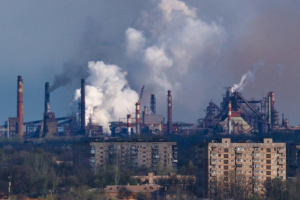
At the end of 2025, Ukraine ranked 95th out of 143 countries and territories in the global air pollution ranking published by the Swiss company IQAir. According to IQAir’s global press release, in 2025 only 14% of the world’s cities met the World Health Organization’s recommendation for an annual average PM2.5 concentration of no more than 5 micrograms per cubic meter, while 130 out of 143 countries and territories exceeded this benchmark.
The IQAir global release also notes that the five most polluted countries in the world in 2025 were Pakistan, Bangladesh, Tajikistan, Chad, and the Democratic Republic of the Congo. The most polluted city in the world was Lonhi in India, while the cleanest was New Woodville in South Africa.
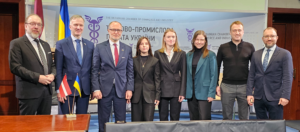
Latvia and relevant Ukrainian business and defense associations are deepening their cooperation in the defense industry sector. This was announced during the Latvian-Ukrainian Defense Forum 2026, which took place on March 23 in Kyiv at the premises of the Ukrainian Chamber of Commerce and Industry. The event culminated in the signing of a memorandum of understanding between the Latvian Ministry of Defense and a number of Ukrainian organizations, which provides for long-term cooperation, technology exchange, and state support for Ukrainian companies planning to enter or expand their operations in the Latvian market.
The forum was attended by government officials, diplomats, business representatives, and industry associations from both countries. The event was opened by Gennadiy Chizhikov, President of the Ukrainian Chamber of Commerce and Industry; Andris Spruds, Minister of Defense of Latvia; Serhiy Boev, Deputy Minister of Defense of Ukraine; and Andrejs Pildegovičs, Ambassador of Latvia to Ukraine. As the organizers noted, the forum was aimed not only at providing political confirmation of support for Ukraine but also at establishing practical mechanisms for cooperation between manufacturers, investors, and government institutions of the two countries.

On the Ukrainian side, the Ukrainian Council of Arms Manufacturers, the National Association of Defense Industries of Ukraine, the Federation of Employers of Ukraine, and “Technological Forces of Ukraine” joined the agreements. According to the Latvian side, the document is intended to serve as a tool for building a joint defense industry ecosystem that will combine the combat experience of Ukrainian manufacturers with Latvia’s technological and institutional potential. The Latvian Ministry of Defense emphasized that the memorandum provides for targeted state support for Ukrainian companies planning to launch or expand their operations in Latvia.
“The combat experience of the Ukrainian defense industry and Latvia’s technological potential are a powerful combination for joint development. The memorandum is not merely declarative but practical in nature and is intended to serve as a platform for creating innovative solutions that will strengthen the security of both countries and the capabilities of their armed forces,” noted Latvian Defense Minister Andris Spruds.
The Latvian Ministry of Defense also emphasized that the country aims to become a stable base for Ukrainian companies in Europe, while simultaneously developing its own industrial potential.
Gennadiy Chizhikov, President of the Ukrainian Chamber of Commerce and Industry, for his part, emphasized that deepening cooperation in the defense sector “strengthens our countries and industries.”
“The implementation of the agreements will take place with the participation of the Latvian Investment and Development Agency, as well as the Latvian Ministry of Economy and Ministry of Defense. This involves, in particular, promoting Ukrainian business in the Latvian market and supporting the development of a broader defense industry ecosystem,” he added.
The practical part of the forum included a bilateral business session and a panel discussion featuring Oleksandr Kamyshin, Advisor to the President of Ukraine on Strategic Issues; Vadym Yunyk, co-founder of Baltic Forces Hub; Ihor Fedirko, CEO of the Ukrainian Defense Industry Council; representatives of the Federation of Employers of Ukraine, Latvian business organizations, LIAA, DAIF Latvia, the Latvian Embassy in Ukraine, and private companies in the defense and technology sectors. This composition of participants indicates that the parties are striving to translate political support into concrete production, investment, and cooperation decisions.
Further confirmation of the practical nature of the visit came from the fact that the Latvian Investment and Development Agency had announced as early as the beginning of March a trade mission of Latvian defense and security companies to Kyiv for March 23–25, coinciding with the working visit of the Latvian Minister of Defense. The program included direct contacts with representatives of the Ukrainian defense sector and B2B meetings with potential partners. The forum in Kyiv thus became part of a broader effort to institutionalize Latvian-Ukrainian cooperation in the defense industry against the backdrop of the war and the growing role of this sector in the economies of European countries.
The event was organized by the Latvian Ministry of Defense, the Latvian Investment and Development Agency, and the Latvian Embassy in Ukraine, while the Ukrainian Chamber of Commerce and Industry served as a co-organizer, and the Ukraine Facility Platform acted as a partner for the forum. Given the content of the signed agreements, this is no longer merely a matter of Latvia’s political solidarity with Ukraine, but an attempt to establish a sustainable bilateral cooperation mechanism.
Interfax-Ukraine is the forum’s media partner.
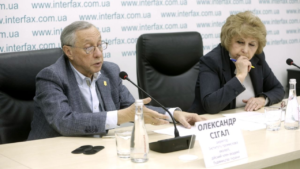
Climate change is already having practical consequences for Ukraine — from energy and agriculture to the condition of the Carpathian ecosystem and the prospects for winter tourism, experts from the Institute of Industrial Ecology and the Institute of Engineering Thermophysics of the National Academy of Sciences of Ukraine said. According to them, global warming in the Ukrainian region is manifesting itself more intensely than in a number of Western European countries, while Russia’s full-scale war is further increasing climate risks.
Corresponding Member of the National Academy of Sciences of Ukraine Nataliia Fialko stressed that the current climate crisis has already gone beyond the bounds of a purely scientific discussion and is directly affecting issues of security, energy and long-term state policy.
“In recent years, the threshold value of 1.5 degrees Celsius has already been reached. In 2023, this anomaly amounted to 1.54 degrees, in 2024 to 1.6, and in 2025 to 1.55. These are data from leading research centers and the World Meteorological Organization, which means humanity has already received a signal that global warming is moving toward its critical limit,” she said at a press conference at the Interfax-Ukraine agency on Thursday.
According to the scientist, the response to climate challenges must focus on decarbonization of the economy, energy efficiency and a transition to climate-neutral energy sources, including nuclear generation.
“The problem of climate security is directly linked to the decarbonization of the economy. And the latter, in turn, is determined by the transition to climate-neutral energy sources, and this concerns not only renewable energy, but also nuclear energy, which is very important for Ukraine. This problem is also linked to increasing energy efficiency overall and to the introduction of a circular economy,” Nataliia Fialko added.
In turn, Director of the Institute of Industrial Ecology and Full Member of the Academy of Construction of Ukraine Oleksandr Sihal noted that Ukraine already has domestic opportunities to reduce fossil fuel consumption, but this requires systematic modernization of heat supply infrastructure.
“If we look at the heating seasons in Ukraine over the past 20 years, we will see that they have already shortened by about 20%. That means we already need about 20% less fossil fuel even without additional measures. Then there is the block of energy efficiency, there is modernization of heating networks, there are individual heating substations, there is biomethane, the sun, the wind — all this makes it possible to significantly reduce the volumes of fossil fuel,” the scientist said.
The participants in the press conference paid special attention to the Carpathians, where, according to Oleksandr Sihal, climate change is already having a fully measurable effect. He noted that historical data, in particular Austrian observations, already record a significant temperature increase in the Carpathian region.
“According to Austrian data, since 1850 we have already seen a temperature increase of 2.4 degrees. If we interpolate this curve further, even without any acceleration of the process, then by 2050 we will have another 1.4–1.9 degrees of average increase. And this means not just a change in the average temperature, but an increase in imbalance — more very cold and very warm days and fewer stable moderate periods,” the expert added.

He emphasized that one of the most noticeable consequences of warming for the Carpathians has already been a reduction in the period of stable snow cover that can be used during the tourist season.
“If we are talking about our Carpathians, then already now the season when people can use snow for skiing holidays has shortened by 8–10 days. And if this process is not supported by artificial snow, this reduction will only continue to grow. We can already see that the snow disappears and then appears again, and these gaps have to be covered,” the scientist said.
At the same time, according to him, replacing natural snow with artificial snow will require significant water and electricity resources, which the country currently lacks under present conditions.
“To replace that same snow, 250–400 liters of water are needed for 1 cubic meter of snow, and in total, 3,000–4,000 cubic meters of water per hectare. In addition, the energy costs of producing artificial snow amount to 0.3–0.7 kilowatts per cubic meter, and if we calculate even minimal ski slopes, we are talking about millions of kilowatt-hours of electricity. In the situation Ukraine is currently in, we do not have such volumes of electricity, no matter how much money it might cost,” Oleksandr Sihal said.
According to the expert, this will inevitably affect the cost of recreation in the Carpathians as well.
“If we still want to preserve resorts in Ukraine, then we must be ready for the fact that for those who will отдыхать, this will mean additional costs. This may amount to between EUR100 and EUR800 for a vacation period of 10–20 days — in fact, this is how much will have to be paid to maintain such resort infrastructure. And if at some resorts, with the exception of Bukovel, which has sufficient water resources of its own, water also has to be transported, then all these costs will ultimately fall on the end consumer,” he stressed.
Nataliia Fialko also drew attention to the fact that for Ukraine the problem is even more acute than for some other European countries because of climate features and the consequences of the war.
“In Ukraine, global warming is taking place somewhat more intensely than in Western Europe, and this is primarily due to a drier climate. In addition, the situation is significantly affected by Russia’s full-scale invasion, which has led to a considerable increase in CO2 emissions. This is the so-called carbon footprint of war,” she said.

According to her, military actions have already become one of the main sources of additional climate pressure on Ukraine. In 2022, according to the scientist, military actions themselves, rather than energy or industry, became the main source of CO2 emissions, which caused emissions to rise by 23% immediately. Additional CO2 emissions from military actions in 2025 amounted to 77 million tonnes of CO2 equivalent, and for the period from February 2022 to February 2025 they totaled 175 million tonnes. The total related damage is estimated at $57 billion. The expert also outlined a broader list of risks that warming poses for states and societies.
“The main components of this problem include shortages of drinking water, food insecurity, soil degradation, competition for land, climate migration and energy vulnerability. In response, adaptive agriculture, international tools for resource management, energy decentralization and early warning systems are needed. And, what is especially important, armed forces and intelligence services must include climate forecasts in their strategic planning,” Fialko added.
Oleksandr Sihal expressed doubt about the possibility of quickly launching a separate state support program for ski resorts under wartime conditions and financial shortages, while at the same time naming the preservation of forests in the Carpathians as the first priority.
“The countries around us have similar problems, and the first piece of advice is not to cut down forests in the Carpathians. In fact, other countries are increasing forest cover, while Ukraine is cutting down century-old oaks and beeches. So we need to copy what is being done abroad and stop cutting down the Ukrainian Carpathians,” he concluded.
CARPATHIANS, CLIMATE CHANGE, NATALIIA FIALKO, OLEKSANDR SIHAL
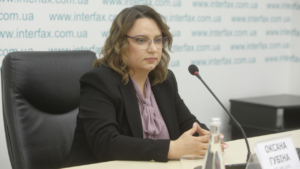
The automation of financial monitoring processes will become as standard for financial companies in the coming years as accounting systems or CRM solutions, according to AML.point CEO and adviser on RegTech projects at AI FINTECH, Oksana Hubina.
“We are convinced that in the coming years AML automation will become as standard for financial companies as accounting systems or CRM systems for sales, customer communications, and so on. Our goal is to make such technological solutions not an exception for certain large players, but an accessible working tool for the widest possible range of financial institutions,” she added at a press conference at the Interfax-Ukraine agency on Friday.
According to Hubina, the AML.point platform was created as a technological solution for automating financial monitoring processes in non-bank financial institutions, and was later adapted for a broader range of primary financial monitoring entities, including notaries, lawyers, accountants, and sellers of real estate and precious goods. She noted that the product idea emerged after the change in the market regulation architecture, when the National Bank of Ukraine became the mega-regulator for most financial institutions.
“Over the past years, the regulatory environment has changed very significantly. And while previously one could speak about separate standards for banks and non-bank financial institutions, now this boundary is gradually disappearing. What yesterday was common practice for the banking sector is today becoming mandatory or, at least, an expected standard for the non-bank market,” Hubina said.
She emphasized that today the requirements for non-bank institutions, in terms of responsibility and regulatory expectations, have already moved closer to banking standards, while key AML processes require systematic management and automation. This concerns, in particular, transaction recording, detection of suspicious activity, maintenance of financial monitoring registers, and reporting to authorized bodies.
Separately, the AML.point CEO drew attention to the platform’s functionality for generating and submitting reports to the State Financial Monitoring Service. According to her, when submitting information on a suspicious transaction, institutions currently need to enter more than 100 parameters in the electronic cabinet, whereas in the AML.point system most of them can be filled in automatically on the basis of already available data and then transmitted through API integration.
“As a result, the reporting process becomes much faster, more convenient, and less dependent on manual operations. This is not just an additional option, but a tool that significantly simplifies the daily work of responsible employees and helps reduce the risks of reporting errors,” Oksana Hubina added..

Among the platform’s other capabilities, the speaker named automated screening of clients and transactions against the sanctions lists of the National Security and Defense Council of Ukraine and international sanctions lists, lists of persons linked to terrorist activity, as well as databases of politically exposed persons. In addition, the system, according to her, allows the integration of data from registration aggregators and tracking of changes concerning companies and sole proprietors.
“A financial institution can not only comply with regulatory requirements, but do so systematically, accurately, and with lower resource costs,” the financial expert stressed.
At the same time, she emphasized that a technological solution cannot fully replace the responsible financial monitoring officer and is not a “panacea against fines,” since the result depends on the quality and consistency of the use of the tool.
Commenting on implementation, the AML.point CEO noted that for small companies the start of work with the system is simple and fast, while for large financial institutions with significant volumes of client data and transactions, deeper integration with internal IT systems may be required. At the same time, according to her, the SaaS delivery model makes it possible to plan automation costs flexibly.
Hubina also stated that the system is built in accordance with the requirements of the National Bank of Ukraine, while the company undergoes annual certification under the ISO 27001 standard and, when working with card data, complies with the PCI DSS standard. She separately emphasized that no state body has direct access to user data in the system, and information is transferred only in cases предусмотренных отчетностью и подачей уведомлений о подозрительных операциях.
According to the speaker, provided that suspicious activity indicators are configured correctly, the platform can also detect anomalous behavioral patterns in financial transactions and help specialists identify potentially risky activity within the scope of the data recorded in the system.

The Experts Club analytical center has released a new video study devoted to the dynamics of public debt of countries around the world in relation to GDP in 1950-2025. The visualization shows how the debt burden in different economies has changed over the past 75 years – from post-war recovery and debt crises to the pandemic and the current stage of expensive borrowing. The final slide focuses on the situation in 2025, when Ukraine, according to the international methodology used in the study, also entered the group of 20 countries with the highest debt burden.
The study is based on IMF DataMapper and World Economic Outlook data for October 2025 using the general government gross debt indicator. According to IMF estimates, the global level of public debt in 2025 reached 96.8% of world GDP, while for advanced economies the average figure was 111.8% of GDP. This means that the debt burden remains systemically high not only in vulnerable countries, but also in the world’s largest economies.
According to the data used in the video, in 2025 the countries with the highest debt burden included primarily Sudan, Japan, Singapore, Greece, Bahrain, the Maldives, and Italy. The same group also included the United States, France, and Canada, while Ukraine, with an indicator of about 108.6-110% of GDP, also found itself in the upper part of the global anti-ranking and, according to these estimates, entered approximately the first dozen countries by the debt-to-GDP ratio. For comparison, the database for 2025 indicates a level of 108.6% of GDP for Ukraine, 128.7% for the United States, 119.6% for France, 138.3% for Italy, and 226.8% for Japan; in summary international tables based on the same IMF estimates, similar values appear, where Ukraine is shown at around 110% of GDP.
For Ukraine, this result is especially indicative. According to IMF DataMapper, in 2025 the total public debt of the general government sector reached 108.6% of GDP. VoxUkraine, analyzing the same IMF database, notes that this is the highest level for the entire observation period for Ukraine. At the same time, the Ministry of Finance of Ukraine reported that state and state-guaranteed debt at the end of 2025 amounted to 98.4% of GDP. The difference is explained by methodology: IMF international comparisons use the broader general government gross debt indicator, so it is precisely this indicator that is suitable for the global ranking shown in the Experts Club study.
“Our study shows not just the size of the debt, but the country’s place in the global system of risks. In Ukraine’s case, entry into the group of countries with the highest debt burden is a direct consequence of the war, the large-scale need for budget financing, and dependence on external support. But at the same time, it is also a reminder that after the end of the war one of the key challenges will be not only the recovery of the economy, but also the building of a long-term debt management strategy,” noted Experts Club founder and PhD in Economics Maksym Urakin.
In a broader context, the video demonstrates that high debt is no longer an exception only for crisis states. Among the countries with the largest debt burden today are both economies with prolonged structural imbalances and developed states with deep domestic capital markets. That is why the comparison of 1950 and 2025 shows the main shift: the debt model has become the norm of the global economy, while the issue of debt sustainability now depends not only on its size, but also on the cost of servicing, GDP growth rates, the structure of creditors, and the state’s ability to maintain investor confidence.
For Ukraine, based on the 2025 data, the main conclusion of the study is that the country has already crossed the psychological threshold of 100% of GDP according to the international methodology and entered the global group of the most highly indebted states. This does not mean an automatic debt crisis, but it does mean that the issue of post-war fiscal sustainability, restructuring of liabilities, the cost of new financing, and acceleration of economic growth will be among the central topics of economic policy in the coming years.




