

In July 2026, Ukrainian pulp and paper companies increased paper and cardboard production by 5.2% compared to July of last year, reaching 55,300 metric tons, according to data from the UkrPapir association.
Compared to June of this year, production rose by 5.3%.
The main driver was cardboard production, which increased by 11.2% year-over-year to 43,560 metric tons. In particular, the output of packaging cardboard, including paper for corrugating, rose by 16% to 36,360 metric tons.
At the same time, paper production in July fell by 12.5% compared to July 2025, to 11,740 metric tons.
The bulk of this was base paper for sanitary and hygiene products—10,620 metric tons, which is 9.2% less than a year earlier. Production of writing and printing paper nearly halved, falling to 64 metric tons.
Production of corrugated cardboard boxes totaled 50.06 million square meters, which is 2.5% less than in July of last year.
Despite mixed trends in individual product categories, the industry continued to grow in monetary terms. The value of commercial output from enterprises that submitted data to the association reached 3.056 billion UAH in July, an increase of 28.8% year-over-year and 3.3% compared to June.
The “UkrPapir” statistics include, in particular, the Kyiv Cardboard and Paper Mill, the Trypillya Packaging Plant, the Kokhavyn Paper Mill, “VGP” (TM “Ruta”), “Poninkivska KPF-Ukraine,” and the Lviv-based “Cardboard and Paper Company.” The association does not publish figures for individual enterprises due to wartime risks.

Ukrainian insurance companies specializing in life insurance collected 3.6 billion UAH in insurance premiums in January–July 2026, which is 11.7% higher than the figures for the same period in 2025.
According to the website of the National Association of Insurers of Ukraine (NASU), 570.7 million UAH in insurance premiums were collected in July—the highest figure so far this year—indicating that the public is willing to invest in their own future even amid macroeconomic uncertainty.
Furthermore, according to NASU, the active expansion of client portfolios through new contracts is an important indicator of growth. Specifically, first-year premiums increased by nearly 13% compared to June’s figures.
NASU also notes that over the first seven months of 2026, payouts made by life insurers rose by 39% compared to the same period in 2025. This trend is entirely predictable, as companies are now systematically and consistently returning funds under long-term contracts concluded as far back as 15–20 years ago.
NASU also reports that for the first seven months of 2026, the ranking of life insurers by premiums written is as follows: MetLife Insurance Company – 1.887 billion UAH, TAS Insurance Company – 617.7 million UAH, Grave Life – 373.9 million UAH, “PZU Life” – 241.6 million UAH, “Arks Life” – 213.3 million UAH.
Ranking by payouts: “MetLife” – 427.1 million UAH; TAS Insurance Company – 322.1 million UAH; “Grave Ukraine Life Insurance” – 284.3 million UAH; “Unica Life” – 108.7 million UAH; PZU Life – 53.5 million UAH.
As previously reported, as of August 1, 2026, there were 10 life insurance companies operating in Ukraine.

According to Fixygen, the British fintech startup Revolut has launched the EURR, a stablecoin pegged to the euro, Bloomberg reports, citing a company statement. The issuer of the EURR is Bridge, a company owned by the American firm Stripe. Bridge will also own and manage the assets backing this stablecoin.
Initially, it will be available to a limited number of Revolut customers in Denmark, Poland, and Portugal, and later this year, the startup plans to expand access to other markets in the European Economic Area (EEA).
EURR will be integrated into the Revolut app and will allow users to exchange euros for cryptocurrency—and vice versa—directly on the blockchain.
The company calls this launch the first step in its stablecoin strategy, which includes the launch of tokens pegged to other currencies as well.
“Revolut started by eliminating hidden fees and barriers to currency exchange,” the company said in a statement. “Now we’re doing the same with cryptocurrency.”
The financial news and analysis platform Finance Magnates, citing official documents, reports that EURR was launched on August 20 and is marketed as Revolut Euro. According to the report, the stablecoin is available in the Revolut retail app and on the Revolut X cryptocurrency exchange. As of Tuesday, only 374 EURR were in circulation, backed by reserves of 374 euros.
Revolut was founded in 2015 in London by Mykola Storonskyi (a graduate of the Moscow Institute of Physics and Technology and the Russian Economic School) and Vladislav Yatsenko. The company serves over 80 million retail and 800,000 business customers worldwide. It operates as a bank in more than 30 countries.
In 2024, Revolut became Europe’s most valuable private tech company, with a valuation of $45 billion, and last year it reaffirmed this status by increasing its valuation to $75 billion.
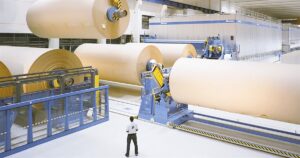
According to Experts.news, Ukrainian companies significantly increased their production of notebooks, toilet paper, and wallpaper in July 2026, according to data from the UkrPapir Association of Pulp and Paper Industry Enterprises.
Notebook production reached 28.36 million units, which is 34.5% more than in July 2025. Compared to June of this year, output increased by a factor of 4.4.
Production of toilet paper rolls rose by 9.8% year-over-year, reaching 52.48 million rolls.
At the same time, production of 100% cellulose toilet paper reached 23.68 million rolls, an increase of nearly 23% compared to July of last year.
The wallpaper market also continued its recovery. In July, Ukrainian companies produced 1.63 million standard pieces of wallpaper, which is 12.8% more than a year earlier and 7.5% more than in June.
In this segment, the association has statistics from the largest manufacturer—the company “Slavyanski Wallpaper—KFTP.”
Production of paper towels in rolls also increased by 1.6% year-over-year—to 5.14 million rolls. At the same time, production of 100% cellulose table napkins fell by more than half—to 1.5 million packs.
Overall, the volume of commercial output by companies in the industry reached 3.06 billion UAH in July, which is 28.8% more than in July 2025.
Thus, in the pulp and paper industry, the most notable growth in July was seen not only in packaging board but also in certain consumer paper products.
Original source: the “UkrPapir” Association.
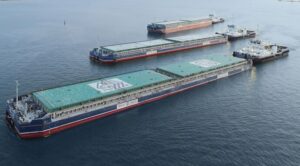
Nibulon Joint Venture LLC proposes introducing a transitional mechanism for assigning and confirming the qualifications of river fleet specialists, which, according to its estimates, will make it possible to increase shipments through the Danube export corridor by 100,000 metric tons per month, the company’s press service reported, citing Logistics Director Serhiy Kalkutin.
“Nibulon” could deploy an additional 12 tugboats on the Danube, but this would require resolving the issue of retraining and processing the necessary paperwork for approximately 30 specialists. And we are not the only ones facing this limitation. “If a workable mechanism is created to attract qualified specialists on an industry-wide scale, the Danube corridor will be able to transport up to an additional 100,000 metric tons of cargo per month,” the press service quoted Kalkutin as saying.
He explained that shipowners have a technically ready fleet but are unable to fully staff their crews or put additional vessels into service due to a shortage of qualified crew members.
As noted in the statement, “Nibulon” proposes introducing a temporary transitional mechanism for certifying and confirming the qualifications of inland waterway fleet specialists and for them to obtain the necessary documents until the full transition to European regulations is complete. This, in particular, will allow specialists with the necessary training and experience to complete the paperwork required to work on the Danube more quickly.
Kalkutin emphasized that additional shipments via the Danube corridor will make it possible to support purchases from agricultural producers, ensure the inflow of foreign exchange earnings, and increase the resilience of Ukraine’s export system.
“Nibulon” proposed that the relevant government agencies, together with industry representatives, develop a transitional solution that would allow for the recruitment of the necessary number of qualified specialists to work on inland waterways while complying with requirements for professional competence and navigation safety.
As reported, according to the Ministry of Agrarian Policy, from August 1 to 18, Ukraine exported 900,000 metric tons of agricultural products, of which about 45% were exported via the Danube region.
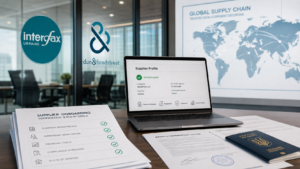
Ukrainian companies seeking to become suppliers to international corporations face formalized supplier onboarding procedures. For a large customer, receiving a commercial offer is not enough — it must unambiguously identify the legal entity, verify its owners, banking details, country of registration, and basic risks.
As a result, transparent business identification is becoming one of the practical barriers to Ukrainian suppliers entering global procurement chains. A company may meet technical requirements but lose time because of discrepancies in its name, address, registration data, or international profile.
“A supplier to a large corporation must not only be competitive but also easy to verify. The procurement officer must quickly understand exactly which legal entity stands behind the offer, who controls it, and whether the data match across different systems. For Ukrainian business, this is one of the elements of professional preparation for working with global clients,” said Maksym Urakin, Director of Development and Marketing at Interfax-Ukraine, Head of the D&B–Interfax-Ukraine business unit, PhD in Economics.
Before registering in a supplier system, a company should verify its official English-language name, legal address, information about its director and owners, contact details, banking information, and international identifiers. If a D-U-N-S Number has already been assigned, it should ensure that the profile linked to it is up to date.
For an international corporation, such standardization reduces the risk of duplicate suppliers, fraud, erroneous payments, and sanctions violations. For a Ukrainian company, it speeds up the customer’s internal procedures.
Dun & Bradstreet works with a global system of business identification and corporate data used in supplier management, due diligence, and procurement processes. In Ukraine, the relevant services and support are provided by D&B – Interfax-Ukraine.
For Ukrainian manufacturers, IT companies, engineering enterprises, and service providers, a transparent business profile can become one of the basic tools for integration into the procurement chains of international groups.
Dun & Bradstreet is an international provider of business data and analytical solutions whose history began in 1841. D&B works with company data worldwide and provides tools for business identification, counterparty verification, assessment of credit and commercial risks, compliance, and supply chain management.
The official representative of Dun & Bradstreet in Ukraine is the Interfax-Ukraine News Agency. The specialized D&B – Interfax-Ukraine unit provides Ukrainian companies with access to international business data, helps verify foreign counterparties, and supports work with D&B tools.
Questions can be submitted through the specialized D&B resource — dnb.ua, by email at Urakin@interfax.kyiv.ua, or by phone at +38 (044) 270-65-74.



