
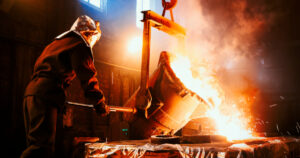
India continues to strengthen its position as the world’s second-largest steel producer and is gradually closing the gap with China, according to data from the World Steel Association (Worldsteel) published on September 24, 2026.
From January through August 2026, Indian steelmakers produced 115.9 million metric tons of steel, a 6% increase compared to the same period last year. During the same period, China’s production fell by 3.1% to 651.9 million metric tons.
According to Open4Business calculations based on Worldsteel data, India produced approximately 109.3 million metric tons of steel in the first eight months of 2025, while China produced approximately 672.8 million metric tons. Thus, the absolute gap between the two largest producers over the year narrowed from approximately 563 million to 536 million metric tons, or by nearly 5%.
The ratio of production volumes is also shifting in India’s favor. While China produced about 6.2 times more steel than India from January through August of last year, that figure fell to about 5.6 times in 2026.
This trend continued in August. India increased its steel output by 4.6% year-over-year—to 14.8 million metric tons—while production in China fell by 3.7%—to 74.6 million metric tons. (World Steel Association)
India also more than doubles the output of the United States, which ranks third among the world’s largest producers. U.S. steelmakers produced 57.5 million metric tons of steel from January through August, increasing output by 5.5%. Japan produced 54 million metric tons, Russia—43.8 million metric tons, and South Korea—42.8 million metric tons.
Thus, India’s output over the eight-month period is already roughly double that of the U.S. and more than double that of Japan.
India accounted for about 9.5% of all steel produced by the 70 countries that provide statistics to Worldsteel, while China’s share was about 53% and the U.S.’s was about 4.7%. These 70 countries accounted for approximately 98% of global steel production in 2025.
The difference is particularly noticeable against the backdrop of the industry’s overall stagnation. From January through August, global steel production fell by 0.7% to 1.225 billion metric tons, while India continued to show steady growth. In August, global production declined by 1.2% year-over-year to 144.2 million metric tons.
Vietnam remains another fast-growing Asian producer. Over the eight-month period, it increased its output by 29.1%—to 20.6 million metric tons—with growth reaching 36.4% in August alone. Overall, however, steel production in Asia and Oceania has declined by 0.9% since the beginning of the year—to 906.4 million metric tons—primarily due to trends in the Chinese market.
China, meanwhile, maintains a huge lead and remains the undisputed leader in the global steel industry. However, the diverging trends of the two largest producers indicate a gradual increase in India’s share of the global steel industry.
Original source: World Steel Association — August 2026 crude steel production

According to Experts Club, Vietnam is showing the highest growth rates in steel production among the world’s top ten countries, as evidenced by data published on September 24 by the World Steel Association.
In August 2026, the country produced approximately 2.7 million metric tons of steel, increasing output by 36.4% compared to August of last year.
From January through August, production reached 20.6 million metric tons, rising by approximately 29% year-over-year. This represents the highest growth rate among the world’s largest producers.
Based on cumulative results, Vietnam is already among the top ten global steel producers, closing in on Brazil in terms of production volume; Brazil produced 21.8 million metric tons over the same eight-month period.
By comparison, the world’s largest producer—China—reduced production by 3.1% to 651.9 million metric tons over the same period, while India increased its output by 6% to 115.9 million metric tons. The United States increased production by 5.5%, Turkey by 6.8%, and Germany by 6.3%.
As a result, the global steel market is becoming increasingly heterogeneous: despite an overall 0.7% decline in production from January through August, certain Asian markets continue to rapidly expand their capacity and production volumes.
The difference is particularly noticeable within Asia. In August, production across the Asia-Pacific region fell by 1.4% due to a decline in output in China, while India and Vietnam continued to grow.
As of the end of August, countries in Asia and Oceania accounted for 106.7 million metric tons of the 144.2 million metric tons of global output, or about 74% of global steel production.
On September 24, PJSC “National Energy Company ”Ukrenergo” announced a tender for insurance of leased property.
According to the Prozorro electronic government procurement system, the estimated cost of the services is 199,900 UAH.
The deadline for submitting bids is October 12.

French actress, singer, and writer Marina Vlady died on September 24, 2026, at the age of 88. Her family informed AFP of her death. According to the actress’s children, she died at her home surrounded by her loved ones.
Marina Vlady, whose real name was Katerina Marina Vladimirovna Polyakova-Baidarova, was born on May 10, 1938, in Clichy, near Paris, to a family of immigrants from the Russian Empire. Her father, Vladimir Polyakov-Baidarov, was an opera singer, and her mother, Militsa Enwald, was a ballerina. All four daughters of the family pursued careers in the arts. The actress chose the stage name “Vlady” in honor of her father, Vladimir.
Vlady began acting in films as a child. One of her first notable roles was in André Cayatta’s film *Avant le déluge* (1954), after which the 16-year-old actress received the French Suzanne Bianchetti Award as a promising young performer.
During the same period, she starred alongside Marcello Mastroianni in Giuseppe De Santis’s film *Days of Love* (*Giorni d’amore*, 1954). Her leading role in the Franco-Swedish film *The Witch* (*La Sorcière*, 1956) brought her widespread popularity in Europe.
One of Vlada’s most famous works was the film adaptation of Madame de La Fayette’s novel *The Princess of Clèves* (*La Princesse de Clèves*, 1961), directed by Jean Delannoy. It was her portrayal of the Princess of Clèves that became one of the actress’s most recognizable roles in French cinema.
International professional recognition came in 1963. For her role in Marco Ferreri’s film *L’ape regina* (*Le Lit conjugal*), Marina Vladi received the Cannes Film Festival award for Best Actress.
In the 1960s and 1970s, the actress worked with a number of leading European directors. She appeared in Orson Welles’ *Chimes at Midnight* (1965), Jean-Luc Godard’s *Two or Three Things I Know About Her* (1967), Bertrand Tavernier’s *Que la fête commence* (1975), and Jacques Ruffio’s drama *Sept morts sur ordonnance* (1975). According to various estimates, Vlady appeared in more than 80 feature films during her career, and when television work is included, her on-screen legacy was even greater.
A special place in Marina Vlady’s biography is occupied by her relationship with the poet, actor, and singer-songwriter Vladimir Vysotsky. They met in Moscow in 1967 and married in 1970. Their marriage lasted until Vysotsky’s death in July 1980.
Because Vladi lived primarily in France and Vysotsky in the USSR, they spent a significant portion of their married life apart. The actress regularly visited him in the Soviet Union.
After Vysotsky’s death, Vladi did a great deal to preserve his memory. In 1987, she published an autobiographical book titled *Vladimir, or The Interrupted Flight*, dedicated to their relationship, their life together, and the poet’s final years. The book was later adapted for the stage.
Vladi was involved in more than just film. She acted in theater, performed as a singer—including recording songs with her sisters—and was also actively engaged in literary pursuits. In total, she wrote 13 books—novels, memoirs, and autobiographical works. In 2005, her memoir *24 Images Second* was published.
Marina Vlady remains one of the most prominent figures in French and European cinema of the second half of the 20th century, having combined popular cinema, art-house films, theater, music, and literature throughout her career.

Hong Kong remains the least affordable metropolis for homebuyers among the cities surveyed by UBS: a skilled service sector worker needs about 15 years’ worth of annual income to purchase a 60-square-meter apartment near the city center.
These figures are contained in the UBS Global Real Estate Bubble Index 2026, published on September 22.
More than ten years’ income is also required to purchase a similar apartment in Tokyo, Paris, London, and Seoul.
UBS also notes a high burden on buyers’ incomes in Singapore, Lisbon, Zurich, Geneva, São Paulo, Munich, Sydney, Milan, and New York.
At the other end of the ranking are Miami and Dubai. A 60-square-meter apartment there costs roughly five times the annual income of a skilled worker.
However, a relatively lower ratio of real estate prices to wages does not necessarily mean affordable housing. In the U.S. and Canada, affordability is further limited by high mortgage rates, bank requirements, and other costs of homeownership.
According to UBS’s calculations, compared to 2021, the average skilled worker in the cities surveyed can now afford about one-third less living space on their income.
Separately, UBS compared real estate prices to rent. The highest ratio was recorded in Zurich: the cost of an apartment is equivalent to approximately 46 years of rent. In Geneva, the ratio is about 40 years, while in Munich, Frankfurt, and Hong Kong, it exceeds 30 years.
A high ratio of purchase price to rent may indicate that investors are anticipating further significant price increases. If such expectations wane, the risk of property value losses increases, notes UBS.
Kyiv was not included in this study.
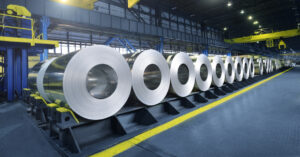
Ukrainian steel mills produced 277,000 metric tons of steel in August 2026, which is 2.3 times less than in August of last year, when output totaled 649,000 metric tons.
Compared to July of this year, when 457,000 metric tons of steel were produced, August’s figure fell by another 39.4%.
Amid this sharp drop in output, Ukraine fell to 33rd place among the 70 steel-producing countries tracked by World Steel, the global steel industry association.
As recently as July 2026, Ukraine was ranked 26th, and in August 2025, it held the 21st position.
Thus, in just one year, the country lost 12 positions in the monthly global ranking.
At the same time, the results for the first eight months look better than those for August. From January through August 2026, Ukraine produced 4.30 million metric tons of steel, which is 12.5% less than the 4.91 million metric tons produced during the same period last year.
In terms of cumulative production over eight months, Ukraine ranks 24th in the world.
By comparison, for the full year of 2025, Ukraine produced 7.41 million metric tons of steel—2.2% less than in 2024—and ranked 21st among global producers.
Thus, August became one of the weakest months for the Ukrainian steel industry in 2026: production was 40% lower than in July and less than half of last year’s level.
The decline in Ukraine is occurring much faster than the global trend: in August, global steel production fell by only 1.2%, to 144.2 million metric tons, and for January–August, by 0.7%, to 1.225 billion metric tons.



