
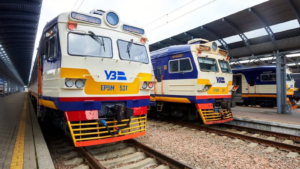
Ukrainian transport companies may receive compensation amounting to 10–15% of their investments in the modernization of vehicles and equipment to meet European Union standards, according to Gabriel Blanc, head of the working group on Ukraine’s reconstruction at the European Commission’s Directorate-General for Enlargement and Eastern Neighborhood.
According to “Interfax-Ukraine”, this mechanism applies to companies that take out loans from Ukrainian banks and invest in technologies that meet EU standards.
“We have what is known as a cashback mechanism: if a company takes out a loan from a Ukrainian bank and invests in technologies that meet EU standards, we can offer a refund of 10–15% of the investment amount,” Blanc noted during the event “Regional Business Dialogues on European Integration: The Transportation Sector” in Lviv.
According to him, Ukraine has currently fully implemented less than 10% of EU transport rules and standards, and has partially implemented less than half. Key tasks include harmonizing social and market regulations in the road transport sector, strengthening enforcement of compliance, and developing inspection and investigation bodies for rail and water transport.
Among the investments that Ukrainian carriers may need to make in order to operate according to European standards, Blanc cited the installation of second-generation smart tachographs, the purchase of Euro 6-compliant vehicles, and compliance with driver working time requirements. He noted that for small and medium-sized enterprises, such costs can be substantial, especially during wartime.
At the same time, the European Commission views this modernization as an investment in Ukrainian businesses’ future access to the EU transport market and their long-term competitiveness.
Support for transportation companies can be provided both directly to large Ukrainian enterprises and through banks. Currently, the ten largest Ukrainian banks are utilizing risk-sharing mechanisms, which helps reduce credit risks, particularly for small businesses, enterprises in frontline regions, and relocated companies.
The total portfolio under the risk-sharing mechanism already exceeds EUR 6 billion. The EU plans to further scale up financing programs for Ukrainian companies that are investing in bringing their operations into compliance with European standards.




U.S. Federal Reserve has presented two draft rules that establish a new regulatory framework for the issuance of payment stablecoins by U.S. banks and other organizations under the Fed’s supervision.
The drafts were published on September 24, 2026, as part of the implementation of the previously enacted GENIUS Act. The Fed has opened them for public comment.
The first draft requires that issued payment stablecoins be fully backed by eligible reserve assets.
Such reserves may include, in particular, short-term U.S. Treasury bonds and other high-quality liquid assets.
The Fed also proposes establishing standardized capital requirements for issuers, which must cover the credit and operational risks associated with the issuance of digital money.
Separate requirements are proposed for companies that provide custody services for stablecoin reserve assets. The regulator also intends to clarify which stablecoin transactions banks under its supervision are permitted to conduct.
The second draft regulates the procedure for banks to obtain authorization to issue payment stablecoins.
A bank intending to launch its own stablecoin will be required to submit a business plan, financial information, and other documents to the regulator. The draft also outlines the procedure for reviewing applications, handling appeals, and making final decisions.
Federal Reserve Board member Michael Barr stated that the regulatory framework must ensure that a stablecoin can be reliably redeemed at face value even under conditions of financial market stress or if the issuer itself faces difficulties.
According to him, restrictions on the structure of reserves and uniform capital requirements are important elements of the new system; however, the final rules will require further refinement following public comment.
The comment period for the drafts will end 60 days after their publication in the Federal Register.
The rules are being developed amid the rapid growth of stablecoins’ role in international payments. According to a recent Chainalysis study, the volume of cross-border transfers in stablecoins in the 12 months ending in June 2026 increased by 77.5%—from $124.2 billion to $220.3 billion.
At the same time, the average transaction size was approximately $3,000, which, according to Chainalysis, indicates that stablecoins are being actively used for money transfers, payments to suppliers, and the movement of personal savings—not just for institutional trading.
The introduction of full-fledged federal regulation could be one of the key steps in integrating stablecoins into the traditional U.S. financial infrastructure.

According to Fixygen, the cryptocurrency market ended the week of September 19–25 with significant gains: Bitcoin rose to approximately $84,000, Ethereum to $2,670, and the total market capitalization of digital assets approached $3 trillion. At the same time, one of the week’s major developments was the sharp return of institutional capital to U.S. Bitcoin ETFs, while U.S. regulators accelerated the development of rules for stablecoins and tokenized securities.
According to CoinGecko data as of September 25, Bitcoin was trading at approximately $84,000–84,400, having gained about 10% over seven days. Ethereum hovered around $2,670 and rose by approximately 9% over the week. The total market capitalization of the cryptocurrency market was about $2.97–2.98 trillion, with a daily trading volume of about $107 billion. Bitcoin accounted for about 56.8% of the market capitalization, while Ethereum accounted for about 11%.
For comparison: in Fixygen’s previous weekly review dated September 18, Bitcoin was trading at around $78,1 thousand, Ethereum at around $2,51 thousand, and the market capitalization was estimated at approximately $2.77 trillion. Thus, the market gained about $200 billion in market capitalization over the week.
At the start of the current period, Bitcoin was trading at around $80,000–$81,000, but on September 21–22, it accelerated its growth and briefly rose above $87,000. According to CoinGecko, on September 21, the price reached approximately $86,600, and on September 22, it was around $86,200. Subsequently, the market partially corrected and moved into a consolidation phase near $84,000.
One of the key drivers was U.S. spot Bitcoin ETFs. On Monday, September 21, they recorded $998.95 million in net inflows—the highest daily figure in nearly 11 months. BlackRock’s IBIT attracted $381.4 million, ARK 21Shares’ ARKB—$289.1 million, and Fidelity’s FBTC—$238.8 million.
This result stands in stark contrast to the previous week, when Bitcoin ETFs ended the week with a symbolic positive balance of $6.2 million, thanks solely to an inflow of $433 million during the final trading session. Ethereum ETFs, on the other hand, recorded a net outflow of about $140 million, ending a four-week streak of inflows.
The growth occurred despite tight monetary policy. On September 16, the U.S. Federal Reserve raised its benchmark rate by 25 basis points, to a range of 3.75–4%. However, the market reacted less negatively to the Fed’s forecast of further rate hikes than investors had feared, and by September 18, Bitcoin had rebounded above $80,000.
Among the major altcoins, XRP and Solana continued to show strong momentum. During this period, XRP rose from approximately $1.40 on September 18 to $1.53–1.54 as of September 25, while Solana, after surging above $110, ended the period at $117. At its peak on September 21–22, SOL approached $119.
Just as important as price movements was the acceleration of the industry’s institutionalization. The U.S. Securities and Exchange Commission (SEC) launched a five-year pilot program called the Innovation Exemption, which allows for the trading of tokenized U.S. stocks directly through blockchain infrastructure, provided certain requirements are met. A tokenized stock must grant the investor the same rights as the corresponding traditional security, including the right to dividends and voting.
The next regulatory step was the Federal Reserve’s publication on September 24 of two proposed rules for issuers of payment stablecoins under the GENIUS Act. One of the drafts requires stablecoins to be fully backed by eligible highly liquid assets, including short-term U.S. Treasury securities, as well as capital and risk management requirements. The second draft establishes the procedure for banks to obtain authorization to issue payment stablecoins.
On the same day, the CFTC clarified the rules for the use of blockchain by regulated participants in the U.S. derivatives market. The updated guidance permits the use of tokenized forms of eligible assets and blockchain technologies to meet certain record-keeping requirements.
Traditional exchange infrastructure also continues to expand its work with digital assets. On September 22, the CME Group announced its intention to launch Bitcoin Cash and Uniswap futures, including standard and Micro contracts, starting October 19. In the first half of 2026, the average daily trading volume of CME cryptocurrency futures and options was 279,800 contracts with a notional value of approximately $8.3 billion per day.
Another structural trend is the growing use of stablecoins beyond speculative trading. According to a new Chainalysis study published on September 23, the global volume of measurable cryptoeconomic activity for the 12 months ending in June 2026 declined by only 1.6%, to approximately $9.4 trillion, despite a significantly steeper decline in market capitalization during that period. Cross-border stablecoin flows, according to the company’s estimates, rose by 77.5% to $220.3 billion. In its new Global Cryptocurrency Adoption Index, Chainalysis also ranks Ukraine among the countries with the highest levels of digital asset adoption.
On certain blockchains, payments in stablecoins have already reached the scale of traditional payment infrastructure. Recently, approximately $150–190 billion in stablecoin transfers have been flowing through the Tron network each week, and the number of transactions is approaching 100 million per week.
At the same time, the week ended with a reminder of the technological risks that persist in the crypto industry. The Bitget exchange reported an attack that resulted in the withdrawal of approximately $351.6 million from its “hot” and “warm” wallets. According to CEO Gracy Chen, the private keys were not compromised: the attackers interfered with the backend infrastructure and used forged transaction data. The exchange stated that its cold wallets remained secure.
Regulatory risks have not gone away either. On September 24, New York state authorities filed a lawsuit against Polymarket’s U.S. division, accusing the prediction markets platform of conducting unlicensed gambling activities.
Thus, according to Fixygen’s assessment, the main outcome of the week was the market’s shift from simple price stabilization to a broader recovery in institutional demand. Bitcoin rose in price by approximately 10% over seven days, market capitalization once again approached $3 trillion, and nearly $1 billion in daily inflows into the Bitcoin ETF served as the strongest signal of large capital’s return in recent months.
At the same time, the very structure of the crypto industry continues to evolve: tokenized stocks are being regulated in the U.S., the Fed is moving toward the practical implementation of legislation regarding stablecoins, the CME is expanding its lineup of regulated crypto derivatives, and stablecoins are increasingly being used as a standalone payment infrastructure.
In the coming week, the main factors driving the market will remain the stability of capital inflows into Bitcoin and Ethereum ETFs, the dynamics of U.S. Treasury yields, the market’s continued reaction to the Fed’s rate hike, Bitcoin’s movement near the $84,000–87,000 range, as well as developments in regulatory initiatives by the SEC, CFTC, and the Federal Reserve.

The Lviv region is preparing to sign an agreement to develop a feasibility study for the construction of the Warsaw–Rava-Ruska–Bryukhovychi–Lviv European-standard railway line.
According to “Interfax-Ukraine”, this was announced by Maksym Kozytskyi, head of the Lviv Regional Military Administration, during the forum “Regional Dialogues with Business on European Integration” in Lviv on September 24.
According to him, the new line is intended to provide a European-standard rail connection between Lviv and Warsaw. Options are being considered for the line to terminate either at Lviv’s main railway station or at the Sknylivsky station.
“An agreement on the development of a feasibility study is set to be signed soon. This feasibility study will be submitted to the railway authority, prepared in accordance with their technical specifications, and will cover a narrow-gauge connection between Lviv and Warsaw,” Kozytskyi noted.
Funding for the development of the feasibility study is planned to come from regional and local budgets.
Separately, the head of the Lviv Regional State Administration highlighted the extension of the European-gauge track to Uzhhorod as a promising project. In his view, this could partially relieve traffic at the road border crossings on the western border and create additional opportunities for the development of the Carpathian region.
Among other railway projects, Kozytskyi mentioned the already completed Nyzhankovychi–Khyriv–Smilnytsia line. According to him, the Ukrainian side has completed the necessary work, and the further launch of the route depends on agreements with the Polish side.
He also highlighted the need to expand certain sections of the Kyiv–Chop highway. The development of rail and road infrastructure, according to Kozytskyi, should strengthen the role of the Lviv region as one of Ukraine’s key logistics hubs.
The Warsaw–Lviv standard-gauge railway project is of particular importance for integrating Ukraine’s transportation system into the European network, as the standard track gauge in most EU countries is 1,435 mm, while Ukraine traditionally uses a 1,520 mm gauge.

The updated licensing requirements for motor carriers could take effect in Ukraine by the end of 2026, according to Volodymyr Golubosh, deputy head of the State Service of Ukraine for Transport Safety.
According to “Interfax-Ukraine”, the draft of the new licensing conditions was published by Ukrtransbezpeka on March 18. The agency then collected and reviewed proposals from stakeholders, and the finalized document was resubmitted for approval.
“We expect that after amendments are made to the legislation and the new procedure is approved, the updated conditions will take effect by the end of this year,” Golubosh said during the conference “Regional Dialogues with Business on European Integration: The Transportation Sector” in Lviv.
The changes are part of the harmonization of Ukrainian transportation legislation with European Union standards, specifically EU Regulations No. 1071, No. 1072, and No. 1073. According to a representative of Ukrtransbezpeka, Ukraine must fulfill the relevant European integration obligations by April 2027.
The draft amendments are being developed by Ukrtransbezpeka in collaboration with the Ministry of Community and Territorial Development. Its goal is to modernize the road transport licensing system and bring Ukrainian requirements in line with European market access rules.
The new approach stipulates that a license will confirm more than just a company’s formal right to provide transportation services. Carriers will also be required to demonstrate their ability to organize operations professionally and safely.
Specifically, the right to operate in the licensed road transport sector will be granted to companies and entrepreneurs who can demonstrate professional competence, financial capacity, and integrity.
The introduction of these criteria is intended to bring the operating rules for Ukrainian road carriers in line with the requirements of the EU’s single transport market and serve as one of the steps toward integrating Ukraine’s transport sector into the European space.
EUROPEAN INTEGRATION, LICENSE, ROAD TRANSPORT, TRANSPORTATION, UKRAINE



