
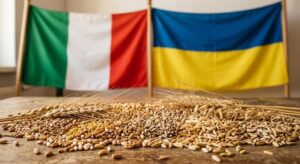
Italy is preparing the TERRA program, with a total budget of up to 105 million euros, aimed at expanding access to financing for Ukrainian micro, small, and medium-sized enterprises in the agri-food sector, according to the Ministry of Agrarian Policy and Food of Ukraine following negotiations with the Italian side.
The program was presented during a meeting between Deputy Minister of Agrarian Policy Denys Bashlyk and Davide La Cecilia, the Italian Minister of Foreign Affairs’ Special Representative for Ukraine’s Recovery. The parties identified support for small farmers and the development of agricultural cooperatives as key priorities for cooperation.
According to materials from the Italian Ministry of Foreign Affairs and International Cooperation, TERRA Ukraine—Transforming and Empowering Resilient and Responsible Agribusiness—consists of two main components.
Up to 100 million euros are planned to be allocated to financial instruments managed by the Italian state-owned financial institution Cassa Depositi e Prestiti (CDP). The funds are to be used to mitigate risks for Ukrainian financial intermediaries and expand lending to micro, small, and medium-sized enterprises in the agri-food sector. The financial component includes a counter-guarantee from the European Commission under the Ukraine Investment Framework.
An additional 5 million euros is earmarked for technical assistance and capacity building, with this part of the program to be implemented primarily in collaboration with the Food and Agriculture Organization of the United Nations (FAO).
The Italian side views TERRA not merely as a mechanism for providing financing. The program is intended to facilitate the modernization of Ukrainian agricultural enterprises, the adoption of European sanitary, environmental, and corporate standards, as well as the transition to a more sustainable model of agricultural production in line with the European Green Deal.
“For us, it is important not just to teach farmers to work together, but to create a practical model that will enable them to pool resources, produce large volumes of goods, and enter new markets. If this approach proves successful, it can be scaled up to all regions of Ukraine,” Bashlyk noted.
The Ukrainian side also hopes to draw on Italy’s experience in developing agricultural cooperation and bringing together small-scale producers for joint processing, logistics, and access to larger markets.
Italian Ambassador to Ukraine Carlo Formosa previously reported on September 3, 2026, that TERRA is being prepared as one of the new tools to support the Ukrainian agricultural sector. According to him, the program is primarily aimed at facilitating access to credit for agricultural SMEs.
At the same time, Italy is expanding its agricultural projects in the Odesa region. According to Italian officials, approximately 25 million euros have already been allocated in the region for agricultural projects, including the Pro.UKR programs, support for viticulture and winemaking through the FAO, and a 6-million-euro project to modernize irrigation systems in Tatarbunary and Kiliya. In addition, a 7-million-euro ROOTS project is being prepared between the Friuli-Venezia Giulia region and the Odesa region.
Ukraine and Italy have agreed to expedite the organizational decisions necessary for the practical launch of TERRA. Specific dates for the start of funding disbursements to Ukrainian agricultural enterprises and the terms for obtaining loans have not yet been publicly announced.
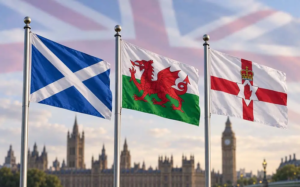
According to Experts.news, the leaders of the ruling nationalist parties in Scotland, Wales, and Northern Ireland signed a memorandum of cooperation in Cardiff on September 14, which affirms the right of their peoples to determine their own constitutional future and calls on the UK government to prepare for possible constitutional changes.
The document was signed by John Swinney, leader of the Scottish National Party (SNP) and First Minister of Scotland; Rhun ap Iorwerth, leader of Plaid Cymru and First Minister of Wales; and Michelle O’Neill, vice president of Sinn Féin and First Minister of Northern Ireland. Sinn Féin President Mary Lou McDonald also participated in the meeting.
However, the participants acted as leaders of their respective parties, not on behalf of the governments of Scotland, Wales, and Northern Ireland. This is particularly important in the case of Northern Ireland, where power is shared between Sinn Féin and the Democratic Unionist Party (DUP). Deputy First Minister Emma Little-Pengelly of the DUP stated that O’Neill does not have the authority to sign such documents on behalf of the Northern Ireland government.
The memorandum’s main political call was for the British government to “prepare for, plan, and facilitate constitutional changes in Wales, Scotland, and Northern Ireland.” The parties also reaffirmed the right of each of the three nations to determine their own future through democratic means.
However, the wording of the memorandum, as published by British media, does not contain the expected tougher demand for immediate referendums on secession from the United Kingdom. The focus is primarily on recognizing the principle of self-determination, establishing mechanisms for future constitutional changes, and ensuring that London does not block the democratic choice if sufficient support emerges within the regions themselves.
Sweeney stated that the United Kingdom is at a “turning point in constitutional change” and that the residents of each of the three territories must have the opportunity to determine their own future. Earlier, on September 10, he appealed to British Prime Minister Andy Bernam with a proposal to create a legal mechanism that would allow for a new referendum on Scottish independence if there were a sufficient public mandate.
On August 28, the Scottish government published a draft of a new referendum bill featuring the same question used in 2014: “Should Scotland be an independent country?” The bill is scheduled to be introduced in Parliament after receiving the necessary authorization from Westminster.
In Northern Ireland, the legal situation is different. The possibility of holding a vote on unification with Ireland is already provided for in the 1998 Belfast Agreement. The decision to call such a referendum is made by the British Secretary of State for Northern Ireland if he or she considers it likely that a majority of residents would support unification.
In Wales, there is no permanent legal mechanism for holding a referendum on independence. At the same time, the current Plaid Cymru government considers independence to be the ultimate goal, although Rhyn ap Iorwerth emphasizes that there is no specific timeline for such a vote yet and that the decision must depend on the position of the Welsh people themselves.
In addition to constitutional issues, the meeting participants agreed to expand cooperation in the economy, energy, relations with the European Union, and international politics. Nationalist parties believe that following Brexit and shifts in the political balance within the United Kingdom, Scotland, Wales, and Northern Ireland now share more common interests in their relations with London.
The summit was the first event of its kind since the 2026 elections, when nationalist and pro-self-determination parties simultaneously took the helm of the governments in Scotland, Wales, and Northern Ireland. However, the signed document does not yet have legal force and does not automatically trigger any referendum.
GREAT BRITAIN, NORTHERN IRELAND, REFERENDUM, SCOTLAND, WALES
In January–August 2026, Ukraine increased poultry meat exports by 12.5% compared to the same period last year—to 330,200 metric tons—while foreign exchange revenue from these exports decreased by 2.6%—to $697.9 million, according to the Ukrainian Poultry Farmers’ Union.
In August 2026, poultry meat exports totaled 40,600 metric tons, which is 1.5% less than in July (41,200 metric tons).
In monetary terms, August exports fell by 7.9% compared to July, to $82.2 million. The average export price for poultry meat in August was $2.02/kg, which is 20.9% lower than in August of last year. According to the Association, this is due to changes in the range of exported products and a decline in export prices on foreign markets.
The main buyers of Ukrainian poultry meat during the first eight months of 2026 were the Netherlands (20% of exports), the United Kingdom (11.7%), Slovakia (10.6%), and the UAE (6.4%).
EU countries accounted for 36% of total poultry meat exports during this period, or 118,900 metric tons. In monetary terms, the EU’s share amounted to nearly half of foreign exchange earnings—47%.
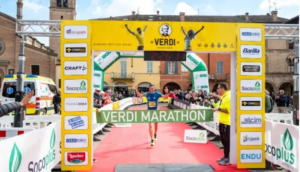
Swiss ultramarathon runner Frédéric Splendore plans to complete the Beyond Borders charity run—a journey of approximately 4,200 kilometers that he began in Monaco on July 24—in Ukraine on September 21, International Day of Peace.
As the athlete told the Open4Business editorial team, he expects to arrive in Lviv early in the morning on September 21, completing the walking portion of his journey across Europe. After that, Splendore and his support team plan to travel by camper van to Kyiv and visit Maidan Nezalezhnosti in the afternoon. Their departure from Ukraine is scheduled for September 22.
The main goal of the Beyond Borders project—known as “Courir pour Unir” (“Run to Unite”) in its French-language version—goes beyond mere athletic achievement. Splendor is using the run to draw attention to the consequences of the war in Ukraine and to raise funds to help Ukrainians affected by the conflict.
“This project isn’t just about sports or a record. It’s about using endurance to raise awareness, collect funds, and convey a universal message of peace and solidarity all the way to Ukraine,” said Splendor.
In total, the route spans approximately 4,200 km and passes through 13 European countries. On some days, the athlete covers 70–100 km. The project’s official website confirms that the goal of the journey is to arrive in Ukraine on September 21—International Day of Peace.
The first and most challenging stage of the route followed the Via Alpina through the Alps. Splendor covered about 2,000 km of the Alpine route and set a new men’s record for completing the route with team support—23 days, 11 hours, and 42 minutes. The result was recorded on August 16.
After completing the Alpine section, the athlete continued on for another approximately 2,200 km through Central and Eastern Europe toward Ukraine.
“When things got tough, I reminded myself that everything I’m going through is temporary and voluntary, whereas millions of Ukrainians have had no choice for many years and live with the consequences of war every day,” the athlete noted.
The charitable component of the project is being carried out through the Swiss association Au-delà de l’Effort. The funds raised are being directed to the Chaîne du Bonheur (Swiss Solidarity) fund to support Ukrainians affected by the war. The money is planned to be used, in particular, to rebuild destroyed buildings, assist internally displaced persons, and ensure access to education and medical care. According to the project, at least 95% of the funds raised will go directly to the fund for aid to Ukraine.
The campaign’s goal is to raise approximately EUR 140,000.
Frederick Splendor, 33, previously worked as a professional firefighter and a chemistry lab technician. He is the 2023 Swiss champion in the 100-km race and the 2024 national runner-up. His personal best in the marathon is approximately 2 hours and 22 minutes. In 2018, the athlete ran approximately 4,300 km on his own along the Pacific Crest Trail in the United States.
According to Splendor, arriving in Ukraine on International Day of Peace is meant to be a symbolic conclusion to his nearly two-month-long journey.
“I want to use running as a way to mobilize people, to remind Europeans that we must not turn a blind eye, and to show solidarity with a population that has been living with war for many years,” he noted.
Photo: ibelieveinyou.ch, Embassy of Ukraine in Hungary
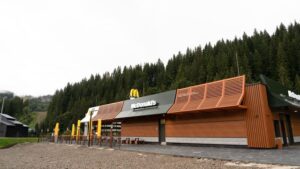
McDonald’s Ukraine Ltd., which operates the McDonald’s fast-food restaurant chain in Ukraine, has opened its first restaurant in Bukovel, in the village of Polianytsia, according to the company’s press office.
This is the 10th restaurant in the chain to open this year.
The restaurant, with an area of nearly 477 square meters, has about 280 seats. All of McDonald’s modern service channels will be available at the restaurant. Customers will be able to place orders at self-service kiosks in the dining area, use “McDrive,” or place orders in advance via the “Mobile Ordering” service in the McDonald’s app. The dining area is open daily from 7:00 a.m. to 11:00 p.m., and “McDrive” is open from 5:00 a.m. to 11:30 p.m.
As previously reported, all McDonald’s restaurants in Ukraine operate in compliance with enhanced safety protocols: during an air raid alert, the restaurant temporarily suspends operations so that employees and guests can proceed to the nearest shelter, and resumes service once the all-clear is given. Employees receive their full wages regardless of the time spent in the shelter during their shift.
The first McDonald’s restaurant in Ukraine opened on May 24, 1997, in Kyiv. Today, McDonald’s employs nearly 11,000 Ukrainians and operates 131 restaurants in 44 locations. Since the start of the full-scale invasion, the company has opened 43 new locations.
According to data from the OpenDataBot analytics system, McDonald’s in Ukraine generated 21.3 billion UAH in revenue in 2025, which was 26.6% higher than the figure for the same period last year. Net profit increased by 21.3% to 1.567 billion UAH. Last year, the company paid 3.5 billion UAH in taxes to the state budget.
McDonald’s in Ukraine is a founding partner and the largest corporate partner of the charity organization “Ronald McDonald House Ukraine.”
MCD Europe Limited (London, United Kingdom) is listed as the owner of the foreign direct investment entity “McDonald’s Ukraine Ltd.” with a 100% stake.
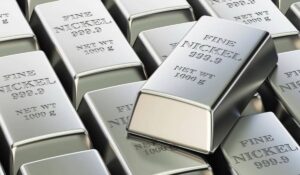
In January–August 2026, Ukraine increased imports of nickel and nickel products by 8.9% compared to the same period last year, reaching $15.811 million.
According to statistics released by the State Customs Service of Ukraine, nickel and nickel product imports totaled $1.967 million in August.
Exports of nickel and nickel products in January–August 2026 totaled $404,000, and in August, $34,000, compared to $746,000 for the first eight months of 2025.
As previously reported, Ukraine reduced imports of nickel and nickel products by 2.7% in 2025 compared to 2024, down to $26.011 million. Exports of nickel and nickel products totaled $1.420 million, compared to $602 thousand in 2024.
Nickel is used in the production of stainless steel and for nickel plating. It is also used in battery manufacturing, powder metallurgy, and chemical reagents.



