

Foreign and local investors have stepped up deals in Thailand’s hotel market, betting on buying properties in prime locations for subsequent renovation, upgrading, and “repositioning” in a more expensive segment, The Nation Thailand reported.
Colliers Thailand estimates that the value of hotel deals in the country could exceed 12 billion baht in 2026, while in 2025, about six hotels with 1,574 rooms were sold for a total of 10.14 billion baht, with the main locations of interest to investors being Bangkok, Phuket, Samui, Pattaya, Krabi, and Chiang Mai.
Colliers also points to the typical “investment profile” of such deals: investors are more likely to choose properties with an expected return of 6% per annum, buildings up to 10-15 years old, and hotels with more than 150 rooms in order to reduce capital expenditures and improve the economics of the project. Against the backdrop of a decline in the average occupancy rate across the country in 2025 to approximately 72%, hoteliers maintained and increased their rates, which supported RevPAR and interest in upgrading product quality.
Separately, JLL Hotels & Hospitality Group reported that 2025 was a record year for Thailand’s hotel transaction market, with total deal volume estimated at 26.4 billion baht, and investors increasingly considering reconceptualization projects and mixed formats, including hotels with branded residences.
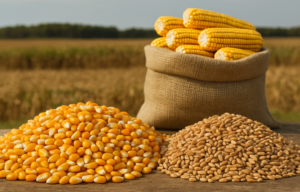
In its January inflation report, the National Bank of Ukraine increased its estimate for the grain and legume harvest in 2025 to 63.5 million tons from 61.5 million tons in its October report, while lowering its estimate for the oilseed harvest to 18.6 million tons from 19.3 million tons.
“The estimate for the oilseed harvest in 2025 has been revised downward by 0.7 million tons due to a slightly lower-than-expected soybean harvest and the inability to harvest part of the sunflower crop due to unfavorable weather conditions and the complex security situation in the regions where the crop is grown,” the document says.
This is the second such revision of estimates by the NBU: in last year’s July inflation report, it expected a grain harvest of 57.9 million tons and oilseeds of 21.0 million tons. In 2024, their harvest amounted to 56.2 million tons and 21.3 million tons, respectively.
The National Bank specified, with reference to data from the Ministry of Agrarian Policy, that as of the end of 2025, 89% of corn and 95% of grain and legume crops had been harvested. At the same time, thanks to significantly higher corn yields, the total harvest of grains and legumes exceeded the previous year’s figure: according to preliminary data from the Ministry of Agrarian Policy and Food, by 7.4% or 3% when compared with the final data from the State Statistics Service.
As for the 2026 harvest, the NBU maintained its forecast for grains at 62.9 million tons and lowered its forecast for oilseeds from 21.4 million tons to 20.9 million tons.
“In 2026–2027, the production volumes of grains and legumes (62.9 million tons and 63.5 million tons, respectively) will remain close to the current level and will grow more significantly in 2028 (65.0 million tons). Oilseed production will grow moderately in 2026–2028 (to 22 million tons at the end of the forecast period) amid a gradual improvement in productivity in the industry, but it will be held back by climate change in the southern regions, exacerbated by the destruction of the Kakhovka hydroelectric power plant, as well as security risks,” according to the National Bank.
At the same time, the NBU continues to assume that livestock farming will continue to make a negative contribution to the added value of agriculture due to the expected reduction in livestock numbers and pressure from production costs. However, this contribution will be less than previously expected due to the growth of poultry farming and the active recovery of pig farming after significant losses in 2024, according to the Inflation Report.
Despite the increase in harvest in 2025 compared to 2024, according to the Ministry of Agrarian Policy and Food, freight transportation for export in the fourth quarter of last year decreased by 23% y/y (compared to 34% y/y in the third quarter), primarily due to a further decline in maritime transport by 22% y/y (compared to 30% y/y in the third quarter).
As specified by the National Bank, rail transport decreased by 28% y/y (compared to 58% y/y in the third quarter), and road transport decreased by 42% y/y (compared to 53% y/y in the third quarter).
According to the State Statistics Service, the decline in freight turnover accelerated to 18% y/y on average in Q4 from 13% in Q3. Passenger turnover growth slowed to 0% y/y on average in Q4 (compared to an average growth of 7% in Q3).

The Directors Guild of America (DGA) recognized the documentary film “2000 Meters to Andriivka” by Ukrainian director and journalist Mstislav Chernov with its award, according to a post on the Facebook page of the Ukrainian State Film Agency on Sunday.
“The film chronicles the events of the war in Ukraine and focuses on the fighting during the Ukrainian counteroffensive. In the film, Mstislav Chernov and photographer Alexander Babenko follow Ukrainian soldiers, capturing the reality of life in the trenches, heavy fighting, and the personal stories of defenders on the front lines. The cameras convey the immediate experience of war — from tense combat episodes to personal moments,“ the statement said.
It is noted that this is Chernov’s second DGA award. The director previously received this award for the documentary film ”20 Days in Mariupol.”
“The Directors Guild of America Award is yet another confirmation of the international recognition of Ukrainian documentary cinema and the world community’s attention to the events of the war in Ukraine,” the State Film Agency noted.

Ukrposhta plans to launch parcel delivery agent points in cafes, shops, and other service locations at the end of the first quarter of 2026, the company’s CEO Ihor Smelyansky told Interfax-Ukraine.
“They sign a contract with us for parcel delivery, and we pay them for each delivery. In other words, this does not entail any capital expenditures or expensive repairs. After all, the most effective thing is to quickly expand the network so that it is convenient and profitable for our customers to receive parcels,” Smelyansky explained.
The CEO of Ukrposhta added that the project is currently in the testing phase, and residents of Kyiv can already receive parcels at nine pilot locations.
“Of course, we will monitor the quality to ensure that the quality of parcel delivery is maintained and that all the rules that must be followed are followed. And we will continue to attract new partners,” Smelyansky emphasized.
Separately, the company plans to install about 1,000 parcel machines in early 2026, as well as update its mobile app, which will allow customers to manage their parcels in a way that is convenient for them, including redirecting shipments to other branches or parcel machines.
Earlier, in a comment to the agency, Ukrposhta reported that in 2026 it plans a large-scale modernization of its network of branches throughout the country.
Currently, the company has more than 6,000 branches and 26,000 service points throughout Ukraine.
In the fourth quarter of 2025, Ukrposhta received a net profit of UAH 257.9 million, which is 69.2% more than in the same period in 2024, due to additional income from the sale of the company’s property, which amounted to UAH 168 million.
The national postal operator increased its revenue in the fourth quarter by UAH 10.7 million compared to the same period in 2024, to UAH 3 billion 601.6 million.

Logistical constraints related to the war are leading to a redistribution of corn imports to the European Union in favor of alternative suppliers, with Ukraine’s share in the 2025/26 season declining significantly, according to a review by S&P Global Commodity Insights (Platts).
According to S&P Global Market Intelligence Global Trade Analytics Suite (GTAS), corn imports to the EU in the 2024/25 marketing year amounted to 18.79 million tons, compared to 19.83 million tons in 2023/24, and GTAS forecasts an increase in imports to 21 million tons in 2025/26.
S&P notes that, on average over five years, Ukraine remained the dominant supplier of corn to the EU, supplying about 9.7 million tons per year (53.5% of imports), but in the 2025/26 marketing year (July-June), the structure of supplies changed: Brazil’s share grew to 40%, the US’s share rose to 28.3%, while Ukraine’s share fell to 22.4%.
Market participants reported delays in receiving contracted Ukrainian corn, which led buyers to switch more actively to Brazil and the US. Market participants cited the EU-Mercosur trade agenda as an additional factor in choosing the origin of products.
Spain, the Netherlands, and Italy remain among the largest corn importers in the EU. According to the European Commission, Spain imported 7.2 million tons in 2024/25 MY (7.6 million tons in 2023/24), the Netherlands imported 3.3 million tons (2.6 million tons), and Italy imported 2.8 million tons (2.1 million tons).
At the same time, Spain, as a price-sensitive market, has recently switched to more competitively priced American corn, while Ukrainian corn was relatively expensive amid high demand from Turkey, the review says.
Platts price benchmarks for February 3: feed corn ex-works Tarragona (Spain) – €213/t with loading between February 3 and March 5, Ukrainian corn – $223/t FOB POC (Odessa-Pivdenny-Chernomorsk ports) with loading between March 3 and 17, Brazilian corn – $210.81/t FOB Santos with loading in August.

Ukraine has received 300 generators as part of support from the Southeast European Cooperative Initiative (SECI), Deputy Prime Minister for Recovery and Minister for Communities and Territories Development Oleksii Kuleba reported.
“The total capacity of the batch is 1.6 MW, the cost is more than EUR 417 thousand,” Kuleba wrote on Telegram.
According to him, the generators will be delivered to Kyiv, Odesa, Sumy, Kherson, Mykolaiv, and Lviv. Priority will be given to hospitals, maternity hospitals, schools, kindergartens, and other social infrastructure facilities.
SECI (Southeast European Cooperative Initiative) is a regional cooperation format of Southeast European countries; in 1999, a relevant SECI cooperation agreement was signed on the prevention of and fight against transborder crime.
The operational center created within SECI (the SECI Center) has, since October 7, 2011, operated as SELEC (Southeast European Law Enforcement Center) — an international treaty-based organization that pools police and customs resources to counter transborder organized crime.
Participating countries (SELEC member states): Albania, Bosnia and Herzegovina, Bulgaria, Greece, Hungary, Moldova, Montenegro, North Macedonia, Romania, Serbia, and Turkey.
SELEC’s headquarters is located in Bucharest (the Palace of the Parliament of Romania).



