

According to Open4business, the Kharkiv, Dnipropetrovsk, and Mykolaiv regions accounted for about half of all new enforcement proceedings related to utility debts initiated in Ukraine during the first half of 2026.
The highest number of new cases was recorded in the Kharkiv region—22,171 thousand, or about 20% of the national total, according to a study by Opendatabot published on August 3.
The Dnipropetrovsk region ranked second with 19,636 thousand cases, accounting for 18% of new utility debt cases.
The Mykolaiv region came in third with 12,841 thousand cases, or about 12% of the total.
In total, 54,648 thousand enforcement proceedings were initiated in these three regions—slightly more than half of the 108,561 thousand new cases across Ukraine.
The statistics specifically account for enforcement proceedings, not individual consumers. Multiple cases may be opened against a single person, for example, for heating, water, gas, or electricity.
As of early July 2026, there were 829,768 thousand utility debts listed in the Unified Register of Debtors. Sixty-five percent of the enforcement proceedings initiated during the first half of the year remained open and unpaid.
Dnipropetrovsk Oblast, Kharkiv Oblast, Mykolaiv Oblast, UKRAINE, Utility debt
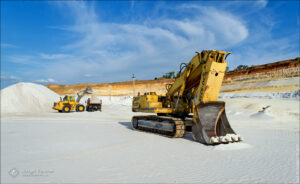
PJSC “Novoselivsky Mining and Processing Plant” (NGZK, Kharkiv Oblast) saw its net profit decline by 7.8% in January–June of this year compared to the same period last year—to 12.480 million UAH from 13.536 million UAH.
According to the company’s interim report, available to the agency “Interfax-Ukraine,” revenue from ordinary activities for this period rose by 7.4%—to 112.440 million UAH.
Retained earnings as of the end of June 2026 amounted to 116.772 million UAH.
As previously reported, NGZK posted a net loss of 4.441 million UAH in January–March of this year, whereas in the same period last year it reported a net profit of 3.677 million UAH; revenue from ordinary operations for that period was 36.067 million UAH (47.396 million UAH).
According to the annual report, NGZK increased its net profit to 20.170 million UAH in 2025 from 18.938 million UAH in 2024. At the same time, revenue from ordinary operations for this period increased compared to 2024, rising to 190.631 million UAH from 168.553 million UAH.
In 2024, NGZK increased its net profit by 6.1% compared to 2023—to 18.938 million UAH, while net revenue rose by 11.6% to 168.553 million UAH.
The Novoselivsky Mining and Processing Plant was established in 2000. It is engaged in the extraction of sand, gravel, and clay.
According to data from the National Securities and Stock Market Commission for the first quarter of 2026, Silica Holding LLC (Ukraine) owns 94.8205% of the public joint-stock company.
The authorized capital is 21.25 million UAH.
KHARKIV REGION, Novoselivsky Mining and Processing Plant, PROFIT, REVENUE, sand

In Ukraine, from January through June 2026, 108,561 thousand new enforcement proceedings were initiated due to arrears in housing and utility services, according to data from the Unified Register of Debtors published by Opendatabot on August 3.
70,206 thousand cases remain open and unpaid, or 65% of those initiated this year. They account for about 9% of all utility debts currently recorded in the registry.
In total, as of early July, the Unified Register of Debtors contained 829,768 thousand cases related to utility debt. For comparison: in November 2025, there were 794,604 thousand; in July 2024, 701,051 thousand; and in January 2021, 344,565 thousand.
Thus, over five and a half years, the number of utility debt entries has increased by approximately 2.4 times.
About 62% of the cases in the registry are formally closed, but this does not necessarily mean that the debt has been repaid. An enforcement officer may close a case due to the impossibility of collection or for other reasons, while the debt record remains in the registry.
Some cases have remained open for more than nine years. Among the oldest cases are a heating debt owed by a resident of the Chernihiv region and a debt for water supply and sewer services owed by a resident of the Lviv region.
However, the number of enforcement proceedings does not equal the number of unique debtors: multiple cases may be opened against a single person regarding different services or periods of debt.
The Unified Register of Debtors contains information on individuals and legal entities against whom enforcement proceedings have been initiated. You can check for an entry through the state register or the Opendatabot service.
debtor, enforcement proceedings, REGISTER, UKRAINE, Utility debt

In January–June 2026, PJSC “Poltava Poultry Farm” increased its net profit by 82.9% compared to the same period in 2025, reaching 19.07 million UAH.
According to the company’s disclosure in the National Securities and Stock Market Commission (NSSMC) disclosure system, its net revenue from product sales rose by 20.9% to 545.9 million UAH.
According to the financial statements, the company’s gross profit for the first half of the year increased by 12.9% to 190.2 million UAH, while operating profit rose by 82.9% to 23.3 million UAH.
As of June 30, 2026, the assets of Poltava Poultry Farm PJSC totaled 1.079 billion UAH, compared to 1.068 billion UAH at the beginning of the year. Equity rose to UAH 1.035 billion from UAH 1.016 billion, while current liabilities decreased to UAH 44.5 million from UAH 51.7 million.
In its interim management report, the company noted that during the reporting period it maintained a stable level of production, fulfilled its obligations to partners, and no significant adverse events that could affect its financial or operational stability were recorded. Among the main risks, the company cites the continuation of the war, logistical difficulties, inflationary pressure, exchange rate fluctuations, and rising energy prices.
Poltava Poultry Farm PJSC was registered in August 1998. Its primary activity is poultry farming. The company is also engaged in the production of poultry meat and meat products, as well as the cultivation of grain and oilseed crops. Its production facilities are located in the village of Stasi, Poltava Oblast. According to the Unified State Register, the company’s ultimate beneficial owners are Ruslan Urdzik, Bohdan Yesipov, Volodymyr Troyan, Serhiy Semenyachenko, Andriy Milovanov, and Mykhailo Zhikharev.
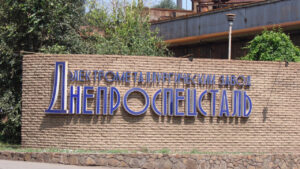
PJSC “Dniprospetsstal Electrometallurgical Plant” (Zaporizhzhia) reported a fourfold increase in its net loss for January–June of this year compared to the same period last year—rising to 728.629 million UAH from 180.048 million UAH.
According to the company’s interim report, available to the agency “Interfax-Ukraine”, revenue from ordinary operations for this period decreased by 21.5%—to 2,205.763 million UAH.
The accumulated loss as of the end of June 2026 amounted to 6,935.497 million UAH.
As previously reported, in the first quarter of 2026, Dniprospetsstal saw its net loss increase 3.9-fold compared to the same period last year, reaching 510.751 million UAH. Revenue from ordinary operations for this period decreased by 21.4%—to 957.475 million UAH from 1 billion 217.961 million UAH.
According to the 2025 report, the company’s net loss last year increased by 22.1% compared to 2024—to 711.015 million UAH from 582.427 million UAH. At the same time, revenue from ordinary operations for this period decreased by 6.2%—to 5,330.967 million UAH from 5,686.039 million UAH.
“Dniprospetsstal” is Ukraine’s sole manufacturer of long products and forgings made from special steel grades: stainless steel, tool steel, high-speed steel, bearing steel, structural steel, as well as heat-resistant nickel-based alloys.
According to the National Securities and Stock Market Commission’s data for the first quarter of 2026, its shares are held by Wenox Holdings Ltd. (47.1128%), Boundryco Ltd. (11.0131%), Gazaro Ltd. – 16.5197%, Crascoda Holdings – 6.6826%, and Middleprime Limited – 9.7901% (all based in Cyprus).
It was previously reported that in May 2008, the international investment and consulting group EastOne sold its approximately 30% stake in Dniprospetsstal, which had previously been held under the group’s mandate. The plant’s new shareholders are linked to VS Energy International, whose beneficial owners include several Russian entrepreneurs.
According to the report, in May 2023, pursuant to a decision by the National Security and Defense Council of Ukraine (NSDC) dated May 12, 2023, personal economic sanctions were imposed on the ultimate beneficial owner of PJSC “Dniprospetsstal.”
The authorized capital of the PJSC amounts to 49.720 million UAH.
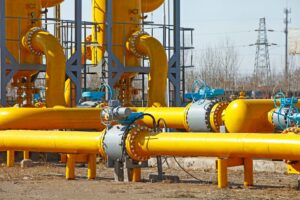
According to Interfax-Ukraine, the relative level of gas reserves in European storage facilities has reached its lowest value on this date in recorded history.
Previously, the all-time low for storage levels at this time of year was recorded in 2021 (the pandemic impacted the industry’s capacity). However, since the start of the injection season, the 2026 trend has steadily been closing the gap with the previous record low.
The average level of gas reserves in Europe’s underground storage facilities reached 57.11% at the end of the gas day on August 1, according to data from Gas Infrastructure Europe (GIE), the association of European gas infrastructure operators. The reserve level on the same date in 2021 was slightly higher—57.28%. A day earlier, the figures were different: as of July 31, 2026, the level stood at 56.88% (higher), while as of July 31, 2021, it was 56.83% (lower).
Natural gas storage levels in Europe are a key indicator for the global gas market. The total capacity of the EU’s storage system is 109 billion cubic meters of active gas. Collectively, Europe has become the largest importer in the global LNG market. Gas Infrastructure Europe brings together operators active in the transportation and storage of natural gas, as well as LNG. The statistical database covers the operation of underground natural gas storage infrastructure since 2011, and the receipt and regasification of LNG since 2012. Gas days in the European gas industry are counted starting at 6:00 a.m. Central European Time (CET).
Renewable sources are expected to contribute to the EU’s energy balance. Since the beginning of August 2026, wind power in Europe has been meeting an average of 10% of electricity demand, according to the WindEurope association. A year ago, in August 2025, the contribution of wind power plants stood at 14%.
Europe is also actively importing liquefied natural gas (LNG). However, in August 2026, gas imports from abroad are down 7% compared to last year’s level. LNG imports in August 2026 may drop to 6.9 million metric tons.
The spot price for “next-day” delivery at the benchmark European TTF hub closed at $696 per 1,000 cubic meters on Friday, up from an average of $626 in July.



