
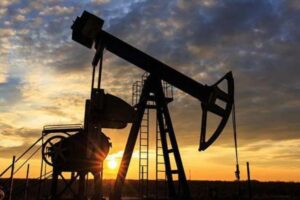
The seven OPEC+ countries that have voluntarily cut production beyond the quotas set for all countries (Saudi Arabia, Russia, Iraq, Kuwait, Kazakhstan, Algeria, and Oman) have decided to increase their oil production quotas in September by 188,000 barrels per day, according to an OPEC press release.
With this decision, the “Seven” have completed the return to the market of volumes previously cut as part of the second phase of voluntary restrictions, totaling 1.65 million bpd. The first phase—amounting to 2.2 million bpd—was “phased out” in September 2025.
Consequently, by the end of 2026, the previously approved quotas will apply to all member countries of the alliance without any restrictions, and the alliance’s total permitted production level will be 36.206 million bpd.
The leaders of the agreement—Saudi Arabia and Russia—will be able to increase production next month by 62,000 b/d, to 10.478 million b/d and 9.949 million b/d, respectively. Iraq is entitled to increase production by 26,000 b/d, to 4.431 million b/d; Kuwait—by 16,000 bpd, to 2.676 million bpd; Kazakhstan—by 10,000 bpd, to 1.628 million bpd; Algeria—by 6,000 bpd, to 1.007 million bpd; Oman – by 5,000 bpd, to 841,000 bpd.
Previously, the OPEC+ “volunteers” had stated that the cuts could be reinstated either fully or partially, depending on market conditions. However, this remark is absent from the current press release.
Despite the conclusion of the latest cycle of voluntary cuts, the OPEC+ “Seven” will continue to hold monthly meetings, the press release states. The next one is scheduled for September 6.
To increase production quotas for all OPEC+ countries, a meeting of ministers from all alliance countries must be scheduled—the next one is currently set for November 29. This decision could be made by the OPEC+ Monitoring Committee, which also met on August 2 but did not adopt a corresponding resolution. Its next meeting will take place on October 4.
Meanwhile, OPEC+ countries are currently discussing a new methodology for determining maximum production capacity, which will serve as the basis for setting production quotas in 2027—for now, quotas for all countries are set through the end of 2026. It was expected that the methodology would be approved in September so that quotas for 2027 could be determined at the November meeting.
Since March, the Gulf countries that are members of OPEC+ have been unable to increase production in line with their quotas because Iran has blocked the Strait of Hormuz, through which approximately 20 million barrels per day of oil and petroleum products from the Persian Gulf were flowing to the global market. Russia is also significantly behind its quota.

Restrictions on truck traffic have been imposed in Kyiv due to the heat wave, according to the capital’s Patrol Police.
“To preserve the road surface, trucks are prohibited from traveling when the air temperature reaches +28 degrees Celsius or higher. The ban applies to vehicles with a gross vehicle weight exceeding 24 metric tons and an axle load exceeding 7 metric tons,” the police stated in a message on their Telegram channel on Sunday.
It is noted that drivers can wait out the hot period at temporary parking areas in highway shoulders and near roadside service facilities.
A separate announcement will be made regarding the lifting of the restriction.
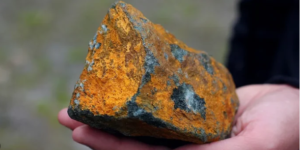
The “Sukha Balka” mine (Kryvyi Rih, Dnipropetrovsk Oblast), part of Oleksandr Yaroslavskyi’s DCH Group, reduced its net loss by 68.5% in January–June of this year compared to the same period last year, down to 77.849 million UAH.
According to the company’s interim report, available to the Interfax-Ukraine news agency, revenue from ordinary operations during this period decreased by 1.7% to 1,359.399 million UAH.
Retained earnings as of the end of June 2026 amounted to 1,771.898 million UAH.
As previously reported, in January–March 2026, the Sukha Balka mine reduced its net loss by 28.4% compared to the same period in 2025—to 91.534 million UAH from 127.857 million UAH. Revenue from ordinary activities decreased by 9.1%—to 616.301 million UAH from 678.241 million UAH.
In 2025, the mine reported a loss of 420.199 million UAH on revenue from ordinary activities of 2 billion 690.771 million UAH. It ended 2024 with a net loss of 333.856 million UAH, while 2023 closed with a net profit of 114.837 million UAH. In 2022, net profit fell by a factor of 2.7 compared to 2021—to 487.878 million UAH from 1 billion 326.460 million UAH.
The “Sukha Balka” Mine is one of the leading enterprises in Ukraine’s mining industry. It extracts iron ore using underground mining methods. The mine complex includes the Yuvileina Mine and the Frunze Mine. Frunze.
The average number of full-time employees at the enterprise is 1,172.
In May 2017, the DCH Group acquired the mine from the Evraz Group.
According to the National Securities and Stock Market Commission’s data for the first quarter of 2026, Yaroslavsky directly owns 77.4193% of the mine’s shares, while Artem Aleksandrov, a resident individual, owns 15.4938%.
The authorized capital of PrJSC “Sukha Balka” is 41.869 million UAH, and the par value of a share is 0.05 UAH.
LOSS, Mine, ORE, REVENUE, SUKHA BALKA
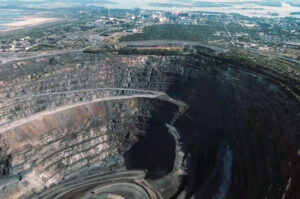
Yeristovsky Mining and Processing Plant LLC (YMPP, Horishni Plavni, Poltava Oblast), a subsidiary of the mining company Ferrexpo, whose majority shareholder is Konstantin Zhevago, reduced its net loss by 21.9% in January–June of this year compared to the same period last year—to 629.283 million UAH from 805.243 million UAH.
According to the company’s interim report, which is available to the Interfax-Ukraine news agency, revenue from ordinary operations for this period fell by a factor of 5.5—to 1,326.967 million UAH from 7,274.247 million UAH.
The uncovered loss as of the end of June 2026 amounted to 1,190,199 million UAH.
As previously reported, in January–March of this year, YEGZK reduced its net loss by 11.7% compared to the same period last year—to 330,780 million UAH from 374,477 million UAH; while revenue from ordinary operations for this period fell by a factor of 14.7—to 400.753 million UAH from 5 billion 898.156 million UAH.
The official report for 2025 has not yet been published. At the same time, YEGZK reported a net loss of 879.341 million UAH for January–September 2025, whereas in the same period of 2024, it had reported a profit of 514.369 million UAH. Revenue for this period decreased by 45.3%—to 8 billion 124.766 million UAH. Retained earnings as of the end of September 2025 amounted to 171.842 million UAH.
According to YouControl, YEGZK’s net loss in 2025 totaled 1 billion 488.580 million UAH, while revenue amounted to 8 billion 773.725 million UAH.
In 2024, the LLC reported a net profit of 1 billion 84.107 million UAH, compared to 1 billion 832.538 million UAH in 2023.
Yeristivsky Mining and Processing Plant LLC extracts both high- and low-grade iron ore. The LLC was registered on July 14, 2008. As of December 31, 2024, the company had 1,797 employees (compared to 1,789 in 2023).
According to the annual report, as of December 31, 2024, Ferrexpo AG (Switzerland) held a 99.999% stake in Yeristivsky GZK LLC, while Ferrexpo Service LLC (Ukraine) held a 0.001% stake.
It is noted that Ferrexpo AG, which is wholly owned by Ferrexpo plc (the ultimate parent company), exercises control over Ferrexpo Service LLC. A stake of less than 50% in Ferrexpo plc is ultimately held by Minso Trust, whose beneficiaries are Konstantin Zhevago and his immediate family members, and which was established to manage the stake in the Ferrexpo group of companies.
The authorized capital of YEGOK LLC is 8 billion 263.698 million UAH.

PJSC “United Mining and Chemical Company” (UMCC, UMCC Titanium) increased its net loss 2.5-fold in January–June of this year compared to the same period last year—to 745.401 million UAH from 295.030 million UAH.
According to the company’s interim report, which is available to the agency “Interfax-Ukraine,” revenue from ordinary operations for this period rose by 34.8%, to 1,117.088 million UAH.
The accumulated loss as of the end of June stood at 3,515.530 million UAH.
As previously reported, OGHK doubled its net loss in the first quarter of 2026 compared to the same period last year—to 411.235 million UAH from 203.236 million UAH. Revenue from ordinary operations for this period rose to 331.342 million UAH from 239.604 million UAH in the first quarter of 2025.
In 2025, the company reported a net loss of 2 billion 118.156 million UAH, whereas in 2024 it posted a profit of 17.009 million UAH, with revenue from ordinary operations amounting to 1,510.751 million UAH (in 2024 – 2,851.180 million UAH).
In 2025, the total number of employees at OGHK was 4,443, including 3,031 at VGMK and 1,194 at IGZK.
“Cement Ukraine” LLC, controlled by NEQSOL Holding, acquired OGHK at an auction on October 9, 2024, for 3 billion 938 million 351.58 UAH. On November 19, 2024, the State Property Fund of Ukraine (FGIU) and Cement Ukraine LLC entered into Agreement No. 217 for the sale and purchase of a 100% stake in OGHK. On May 29, 2025, the Antimonopoly Committee of Ukraine granted approval for the concentration. On June 10, 2025, “Cemin Ukraine” LLC became the owner of 100% of the company’s shares. “Cemin Ukraine” LLC is part of the international NEQSOL group of companies, with the ultimate parent company NEQSOL Holding B.V. (Netherlands), owned by Azerbaijani citizen Nasib Hasanov.
OGHK has two subsidiaries—the Vilnohirsk Mining and Metallurgical Plant (VGMK, Dnipropetrovsk Oblast) and the Irshansk Mining and Processing Plant (IGZK, Zhytomyr Oblast). OGHK’s main activities include open-pit mining of titanium ores, as well as the production and wholesale trade of titanium ore concentrates (zircon, ilmenite, rutile, disten-sillimanite, staurolite, and quartz sand).
According to data from the National State Treasury for the first quarter of 2026, “Cemin Ukraine” LLC owns 100% of OGHK’s shares.
The authorized capital of OGHK PJSC is 1.994 billion UAH, and the par value of a share is 1 UAH.

The business confidence index for Ukraine’s construction market rose by 4 percentage points (pp) in the third quarter of 2026 compared to the second quarter, reaching “minus” 21.1%, according to the State Statistics Service (State Statistics Service). According to a survey of construction companies conducted by the agency, the assessment of the current volume of orders improved by 6.3 p.p. to “minus” 35.2%. Thus, 60% of the surveyed companies assessed their current order volume as normal for the season, while 38% assessed it as insufficient.
Sixty-one percent of respondents expect prices for their services to rise by the end of the third quarter of this year. Only 2% of respondents forecast a decrease in the cost of construction work, while 36% do not expect any changes in pricing policy.
According to State Statistics Service data, the companies participating in the survey have an average of six months’ worth of orders, which corresponds to the pre-war level at the beginning of 2022.
The State Statistics Service notes that in the third quarter of 2026, the construction sector will be negatively affected by labor shortages (53.6%), financial constraints (47.9%), insufficient demand (20.7%), and other factors (42.3%).
About 25% of the surveyed companies expect a reduction in their workforce in July–September, while 56% believe their workforce will remain unchanged, and 19% forecast an expansion of their workforce.
According to the State Statistics Service, 43% of respondents reported an increase in the volume of construction work completed in the previous quarter, while 22% reported a decrease.
The survey showed that 98% of Ukrainian construction companies find it quite difficult to predict future business trends.
The statistical data does not include territories temporarily occupied by the Russian Federation or parts of territories where hostilities are (or were) taking place.
BUSINESS EXPECTATIONS, CONSTRUCTION MARKET, State Statistics Service, UKRAINE



