
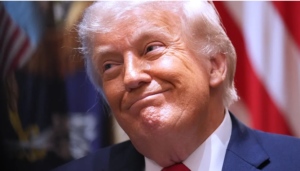
The administration of U.S. President Donald Trump is considering the possibility of introducing refundable security deposits of up to $100,000 for certain foreign nationals applying for immigrant visas and green cards through U.S. consulates abroad.
The proposal is being developed by the U.S. Department of State in collaboration with the Department of Homeland Security. A final decision has not yet been made, and official regulations and a list of applicant categories have not been published. The amount of the bond under discussion may be determined on a case-by-case basis and could be either lower or higher than the estimated $100,000.
It is expected that the requirement will initially be tested on citizens of a limited number of countries. The bond could be posted either by the applicant themselves or by relatives or sponsors residing in the U.S.
According to The Wall Street Journal, the money is planned to be returned after the immigrant obtains U.S. citizenship. Naturalization is typically possible no earlier than five years after obtaining permanent resident status. Thus, a significant amount of money may remain frozen for several years.
The State Department stated that it is reviewing existing authorities that allow it to require financial guarantees from certain applicants. The stated goal of the initiative is to confirm that a prospective immigrant has the means to support themselves and will not become dependent on public assistance.
U.S. law allows for the denial of a visa to a foreign national whom a consular officer deems a potential recipient of public assistance. The assessment takes into account the applicant’s age, health, education, professional skills, financial resources, and family status.
Current federal regulations already provide for the possibility of issuing an immigrant visa after a bond is posted, provided that it eliminates the risk of the applicant being deemed a potential financial burden on the government. Such a bond may be released after naturalization, permanent departure from the United States, or the foreign national’s death, provided the conditions have not been violated.
The proposed mechanism should not be confused with the existing pilot bond program for B-1/B-2 tourist and business visas. Under this program, certain applicants from countries with high rates of visa violations may be required to post a refundable bond of up to $15,000.
The introduction of a $100,000 bond could significantly limit access to family-based immigration for applicants with low to moderate incomes. Immigrant visas are most commonly issued to spouses, parents, children, and other relatives of U.S. citizens or permanent residents.
For now, this is only a proposed initiative. Applicants are not required to post such a bond until an official decision is published and they receive a corresponding request from a U.S. consulate.
U.S. President Donald Trump stated that the agreement on rare earth resources concluded with Ukraine provides the United States with access to Ukraine’s mineral resources and may prove more beneficial than the amount of U.S. aid provided.
“We’ve signed an agreement on rare earth elements… We have a signed contract. As for rare earth resources, we can go in there at any time. We can take practically whatever we want. It was a pretty good deal,” Trump said in an interview with Voice of Real America.
According to the U.S. president, Ukraine is “very rich” in rare earth resources, and the value of the agreement, in his view, could significantly exceed the amount of U.S. aid.
He suggested that the cost of access to these resources could exceed $300 billion, but the contract is still profitable and Washington will “get its money back.”
An analysis of rare earth elements is available on the YouTube channel of the Experts Club think tank – https://youtu.be/UHeBfpywpQc?si=CWejQ_1mj5Si5DwD

According to Fixygen, the cryptocurrency market ended the week of July 27–August 1 mostly lower amid the U.S. Federal Reserve’s cautious stance, volatile inflows into exchange-traded funds, and weak earnings reports from Coinbase, the largest U.S. crypto exchange.
As of August 1, Bitcoin was trading at around $63,000, down from approximately $65,300 at the start of the week. Thus, the leading cryptocurrency lost about 3.6%.
Ethereum rose to nearly $1,950 at the start of the week but then also came under pressure. Most of the major altcoins were unable to sustain a steady upward trend, as investors preferred to reduce their positions in riskier assets. Solana largely remained within the $70–76 range throughout the week.
The main macroeconomic event of the week was the U.S. Federal Reserve meeting on July 28–29. The Fed kept the target range for the federal funds rate at 3.5–3.75%. At the same time, the regulator noted that inflation remains above the 2% target, particularly due to rising energy prices and other consequences of the conflict in the Middle East. An additional hawkish signal came from the fact that three members of the Federal Open Market Committee voted to raise rates by 0.25 percentage points.
For cryptocurrencies, this means that expensive dollar liquidity will persist. With high interest rates, investors receive attractive yields on government bonds and money market instruments, which limits the inflow of capital into Bitcoin and altcoins.
The market had been hoping for at least some softer rhetoric from the Fed, so the lack of a signal regarding an imminent rate cut was one of the reasons for Bitcoin’s decline in the second half of the week.
U.S. spot Bitcoin ETFs ended the week with a combined net outflow of about $61.5 million. On Monday and Tuesday, investors withdrew $11.6 million and $49.7 million, respectively. On Wednesday, the funds recorded an inflow of $32.1 million, and on Thursday, $233.1 million. However, on Friday, $265.4 million was withdrawn again. This pattern indicates that there is no sustained institutional demand yet. Positive inflows last for one or two days, after which they are followed by comparable or even larger outflows.
Friday’s outflow from BlackRock’s IBIT fund was particularly notable at $122.7 million. $54.8 million was withdrawn from Fidelity’s FBTC, and $52.6 million from Grayscale’s GBTC.
Until Bitcoin ETFs return to a steady inflow of funds, a price recovery above the nearest resistance levels will be difficult.
Coinbase’s financial results put additional pressure on the market. The largest public crypto exchange in the U.S. reported its third consecutive quarterly loss. Following the release of the report, Coinbase’s stock price fell, and analysts noted challenging conditions for cryptocurrency trading and a lack of clarity regarding the timeline for a recovery in trading volumes.
Declining activity among retail investors is one of the main risks for the market. Despite Coinbase’s share of cryptocurrency trading rising to 10.3%, overall market volumes remain weak.
At the same time, the company continues to reduce its reliance on spot trading fees and is expanding its business in stablecoins, derivatives, digital asset custody, and blockchain infrastructure. However, this is more of a long-term positive factor and does not yet offset the decline in speculative activity.
One of the week’s trends was investors’ continued tendency to focus on the largest and most liquid digital assets. When macroeconomic risks intensify, capital typically flows out of smaller tokens faster than out of Bitcoin. As a result, altcoins may decline even if the price of Bitcoin remains relatively stable.
Ethereum maintains fundamental support thanks to the network’s use in decentralized finance, asset tokenization, and infrastructure projects. However, for a sustainable recovery, it needs a rebound in demand across the entire crypto market and stabilization of Bitcoin.
Solana and other highly volatile assets may experience short-term spikes, but without an increase in liquidity, such movements are likely to remain unsustainable.
The base case scenario for early August remains Bitcoin’s consolidation within the $60,000–$66,000 range. The nearest support zone is the $62,000–$63,000 range. However, $60,000 remains the key psychological and technical threshold. A resurgence of geopolitical tensions or continued outflows from ETFs could lead to a retest of this level.
A sustained move below $60,000 would increase the likelihood of a decline toward the $55,000–58,000 range. For this scenario to play out, a combination of several negative factors would be required: a further strengthening of the dollar, rising U.S. Treasury yields, significant outflows from ETFs, and a deterioration in stock markets.
For Bitcoin to resume its upward trend, it must return above the $64,700–$66,000 range. In this case, the next targets could be $68,000 and $70,000.
A positive scenario is possible provided there is a return of steady capital inflows into Bitcoin ETFs, a reduction in geopolitical risks, and the release of weak U.S. economic data, which would reinforce expectations of future Fed policy easing.
If the market stabilizes, Ethereum may attempt to climb back above $1,900. However, should Bitcoin fall to $60,000, pressure on Ethereum and most altcoins will intensify.
Thus, in early August, the market will most likely remain volatile and dependent primarily on inflows into U.S. ETFs, U.S. macroeconomic data, and the situation in the Middle East. There is no clear signal yet that the correction has ended, but Bitcoin holding the $60,000 level will support the possibility of a further recovery.
Bitcoin is the largest cryptocurrency by market capitalization, created in 2009. Ethereum is the second-largest digital currency and serves as the underlying asset for the Ethereum smart contract network.
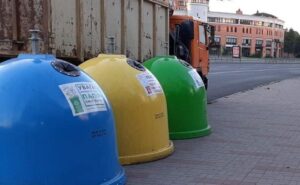
The Antimonopoly Committee of Ukraine (AMCU) announced that it had uncovered a long-standing cartel conspiracy in the capital’s household waste collection services market, as well as the manipulation of the results of a 2021 tender for the procurement of these services, and decided to fine the municipal enterprise (ME) “Kyivkomunservice” and eight other companies a total of 313.3 million UAH.
According to the AMCU, “Kyivkomunservice,” Altfater Kyiv LLC, “Volodar–Roz” LLC, “Kyivspetstrans” PJSC, “Kramar Recycling” LLC, “Celtic” LLC, and “Spetskommuntechnika” LLC divided the market among themselves as part of a cartel agreement, thereby restricting other companies’ access to it.
For this, on July 31, the Committee’s board fined them a total of over 175.8 million UAH and ordered them to cease the aforementioned violations.
In another decision on the same day, the Board imposed a fine on the same municipal enterprise and four other companies from the previous list (Altfater Kyiv LLC, Volodar–Roz Firm LLC, “Celtic” LLC and “Spetskommuntechnika” LLC), as well as “Profpererobka” LLC and “Kramar Eco” LLC, for 137.5 million UAH for distorting the results of a 2021 tender—held pursuant to an order from the Kyiv City State Administration—to select a contractor for household waste collection services.
“It has been proven that the participants did not compete with one another for the right to perform the contract but had agreed in advance on the division of roles, resulting in the victory of one of them and the safeguarding of the economic interests of the others,” the AMCU stated in a press release on its website. According to the committee, proceedings in both cases began in June 2025.
In 2025, the municipal enterprise “Kyivkomunservice” increased its revenue by 4% to 875.3 million UAH, while its net profit decreased by 18.5% to 48.7 million UAH.

According to “Serbian Economist”, Ukraine ranked 28th among Serbia’s trading partners in the first half of 2026.
Total trade between the two countries amounted to 275.9 million euros, compared to 194.6 million euros a year earlier. Thus, trade volume increased by approximately 41.8%. This is according to data from the Republic of Serbia’s Statistical Office, published on July 31, 2026.
Serbian exports to Ukraine rose by 80.2% to 161.3 million euros. Imports of Ukrainian goods increased by 9% to 114.6 million euros.
As a result, Serbia shifted from a deficit of 15.6 million euros in the first half of 2025 to a surplus of 46.7 million euros in January–June 2026.
Ukraine accounted for 0.9% of Serbia’s total exports and 0.5% of its imports.
Despite rapid growth, the volume of trade remains modest compared to the potential of both countries. Serbia’s trade with Ukraine is nearly 19 times smaller than its trade with Germany and approximately 16 times smaller than its trade with China.
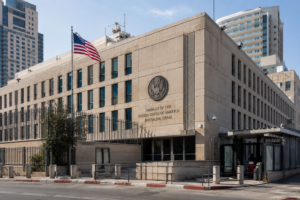
The US embassies in Israel and a number of other Middle Eastern countries have advised US citizens to consider leaving the region due to the risk of unforeseen escalation and possible disruptions to air travel.
“Due to heightened tensions in the Middle East, the security situation remains challenging, and the possibility of an unforeseen escalation persists,” according to warnings issued on 1 August by US diplomatic missions.
US citizens already in the region are advised to exercise increased caution and be prepared for flight cancellations, periodic airspace closures and other travel restrictions.
“Americans in the region should consider leaving or be prepared to leave in the event of an escalation,” the statement notes. Americans outside the Middle East are advised to seriously reconsider any plans to travel to or transit through the region.
Similar warnings have been issued by US embassies and diplomatic missions in Israel, Egypt, Jordan, Lebanon, Saudi Arabia, Qatar, Bahrain, Oman and Iraq. The diplomatic missions continue to provide routine consular and visa services.
The US Embassy in Jordan has additionally advised Americans to stay away from military bases in the country. The advisory also states that Iran and groups it supports may attack US interests and facilities abroad.
On 22 July, the US State Department issued a global travel advisory, urging Americans to exercise increased caution due to tensions in the Middle East. At that time, the department also warned of possible flight cancellations, airspace closures and disruptions at airports.
In other words, the US authorities have not ordered the mandatory evacuation of all citizens from Israel and other countries in the region. The advice is to make use of available commercial transport routes or to prepare an exit plan in advance in case the situation deteriorates further.



