
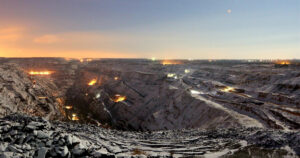
PJSC “Central Mining and Processing Plant” (CMPP, Dnipropetrovsk Oblast), a member of the Metinvest Group, reported a 17.8% reduction in its net loss for January–June of this year—to 940.865 million UAH from 1 billion 144.522 million UAH in the same period last year.
According to the company’s interim report, which is available to the “Interfax-Ukraine” agency, revenue from ordinary operations for this period increased by 11.8% to 9 billion 4.528 million UAH.
Retained earnings as of the end of June amounted to 2 billion 161.850 million UAH.
As previously reported, TsGZK’s net loss for the first three months of 2026 increased by 20.9%—to 468.466 million UAH from 387.594 million UAH in the same period last year. Revenue from ordinary operations for this period decreased by 3%—to 4.406260 billion UAH.
In 2025, TsGZK saw its net loss increase 5.3-fold, to 3,428.076 million UAH from 648.004 million UAH in 2024. At the same time, revenue from ordinary operations for the past year rose by 1%—to 15,988.004 million UAH.
The plant ended 2024 with a net loss of 648.004 million UAH, whereas in 2023 it amounted to 1 billion 326.661 million UAH. In 2022, the company saw its net profit drop by more than four times, to 2,117.831 million UAH from 8,919.978 million UAH in 2021. In 2020, TsGZK increased its net profit by 8.7% compared to the previous year, reaching 1.601 billion UAH.
TsGZK is one of Ukraine’s five largest producers of mining raw materials and specializes in the extraction and production of iron ore (concentrate and pellets). The average number of full-time employees is 3,360.
Metinvest B.V. owns 100% of the shares in TsGZK.
The authorized capital of PrJSC “TsGZK” is 296.635 million UAH, and the par value of each share is 0.25 UAH.
TsGZK is part of the Metinvest Group, whose major shareholders are PJSC “System Capital Management” (SCM, Donetsk) (71.24%) and the “Smart-Holding” group of companies (23.76%). The management company of the Metinvest Group is Metinvest Holding LLC.
“Ukrtelecom,” the country’s largest fixed-line operator, increased its total revenue by 12.6% in the first half of 2026 compared to the same period last year—to 2.78 billion UAH, while EBITDA rose by 50% to exceed 810 million UAH, according to a company press release on Friday.
“As it has throughout the full-scale war, Ukrtelecom continues to implement its strategic approach: not merely to restore damaged networks, but to replace outdated infrastructure with modern telecom and IT equipment to implement a new optical telecom architecture and a modern IT landscape for the company,” emphasized Yuriy Kurmaz, CEO of Ukrtelecom, in the press release.
According to him, as of today, the company has over 95,000 km of fiber-optic network and is continuing a large-scale modernization of its infrastructure across the country.
It is noted that the EBITDA margin has risen to more than 29%.
The number of new connections in the residential segment increased by 81% compared to the same period last year, while the figure for small and medium-sized businesses rose by 17%.
Ukrtelecom specified that, as of the end of the first half of 2026, 1,400 medical facilities and 2,000 educational institutions were connected to the fiber-optic network. Meanwhile, revenue from fiber-optic internet services in the first half of 2026 increased by 12.5% compared to the same period last year.
Among other things, the fixed-line operator reported that revenue from commercial leases for the first six months of 2026 exceeded 320 million UAH, representing growth of more than 20% compared to the same period in 2025.
The company added that, according to survey results, the net promoter score (NPS) for new fiber-optic subscribers of the fixed-line operator in the first half of 2026 was more than 70%.
Separately, the CEO of Ukrtelecom noted that the company is simultaneously building fiber-optic networks while restoring and modernizing infrastructure damaged by hostilities in frontline regions of the Kharkiv, Sumy, Kherson, Mykolaiv, and Dnipropetrovsk regions, as well as other regions of Ukraine.
It is noted that in the first half of 2026, the company paid nearly 800 million UAH in taxes and fees to budgets at all levels.
The fixed-line operator is expected to continue investing in the development of telecommunications infrastructure.
In January–March 2026, Ukrtelecom reported a consolidated net profit of 15.46 million UAH, compared to a net loss of 652.95 million UAH for the same period in 2025.
As previously reported, in 2025, Ukrtelecom increased its consolidated net loss by 24.6% compared to 2025—to 294.87 million UAH—while its net revenue grew by 3.2%—to 4.27 billion UAH.

In the first half of 2026, Ukrainians registered 30,488 thousand marriages online, or about 38% of the total, OpenDataBot reported on July 31, citing data from the Ministry of Justice. Thus, nearly four out of ten couples used the remote marriage registration procedure. In total, 79,516 thousand marriages were registered in Ukraine from January through June.
Digital offices for civil status registration are currently operating in Kyiv, Dnipro, and Lviv. These cities and their respective regions showed the largest increase in the number of registered marriages.
In Kyiv, the number increased by 38% compared to the first half of 2025; in the Dnipropetrovsk region, it increased 2.7-fold; and in the Lviv region, it increased 1.9-fold. OpenDataBot suggests that this trend is largely due to the spread of online registration.
The remote format is particularly important for military personnel, couples living in different cities or countries, and Ukrainians who are unable to visit a Civil Registry Office in person.
At the same time, in most other regions, the number of registered marriages decreased compared to the same period last year.
Civil Registry Office, marriage, ONLINE, REGISTRATION, UKRAINE
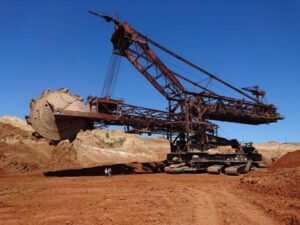
PJSC “Pokrovsky Mining and Processing Plant” (PGZK, formerly Ordzhonikidze Mining and Processing Plant, Dnipropetrovsk Oblast) increased its net loss by 30.3% in January–June of this year compared to the same period last year, reaching 194.190 million UAH.
According to PGZK’s interim report for the first six months of 2026, which is available to the Interfax-Ukraine news agency, revenue from ordinary operations for this period decreased by 29.5% to 374.943 million UAH. The accumulated loss as of the end of June 2026 amounted to 556.538 million UAH.
The report notes that the Nikopol Ferroalloy Plant and ZZF remain the company’s main customers at present. At the same time, PGZK continues to expand its sales geography by maintaining negotiations with potential foreign buyers. During the reporting period, foreign trade contracts were signed with partners from Georgia and Slovakia. Actual product shipments are currently being made to both countries.
In the second quarter of 2026, management identified the following key areas of focus: reducing and optimizing tax liabilities; improving energy efficiency by reducing specific energy consumption; optimizing the use of fuels and lubricants; improving the organizational structure and optimizing staffing levels; increasing revenue from ancillary activities, in particular the sale of ferrous and non-ferrous scrap metal and the provision of transportation and construction services; continuing to support the Armed Forces of Ukraine.
As reported, PGZK increased its net loss by 25.56% in January–March 2026 compared to the same period last year—to 114.678 million UAH from 91.322 million UAH; revenue from ordinary operations for this period decreased by 52.2%—to 133.646 million UAH.
In 2025, PGZK reduced its net loss by 47% compared to 2024—to 377.357 million UAH from 712.380 million UAH; income from ordinary activities for this period increased by 26%—to 1 billion 281.772 million UAH.
Four Cypriot companies—Profetis Enterprises Limited, Exseed Investments Limited, Clemente Enterprises Limited, and Alexton Holdings Limited (all based in Cyprus)—each own 24.3024% of the shares in the private joint-stock company.
The authorized capital of the private joint-stock company is 736.134 million UAH, and the par value of each share is 0.25 UAH.
EXPORTS, LOSS, MANGANESE, Pokrovsky Mining and Processing Plant, REVENUE
The Italian government’s call to restrict the application of Schengen rules to Spain following a mass migrant surge from Morocco into the Spanish city of Ceuta has received support from some European politicians but has drawn sharp criticism from Madrid and raised questions about the legal feasibility of such a move.
According to Spain’s Ministry of the Interior, approximately 50,000 people may have entered Ceuta beginning on the morning of July 30. The head of the local government, Juan Jesús Vivas, estimated the number of arrivals at 60,000. About half of them subsequently returned to Morocco voluntarily. According to various estimates, between 34 and 41 people died while attempting to cross the border.
Spain deployed military personnel and additional police units to Ceuta. Prime Minister Pedro Sánchez called the mass border crossing a violation of the country’s territorial sovereignty and announced that the return of individuals who had entered Spanish territory illegally would be expedited. Madrid stated that it is coordinating with Moroccan authorities.
Italian Prime Minister Giorgia Meloni stated that Rome is prepared to take extraordinary measures to protect its borders, including considering “suspending the Schengen Area with Spain.”
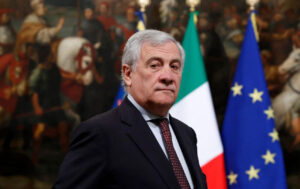
Italian Foreign Minister Antonio Tajani and Transport Minister Matteo Salvini also called for the reinstatement of border controls with Spain. Tajani linked the events in Ceuta to Madrid’s decision to legalize the status of hundreds of thousands of migrants who had previously been in the country without proper status.
Finnish Interior Minister Mari Rantanen supported the Italian initiative, stating that Spain had allegedly failed to fulfill its obligation to protect the Schengen Area’s external border. Danish Prime Minister Mette Frederiksen called for consideration of possible restrictions but did not announce a specific decision by her government.
Swedish Prime Minister Ulf Kristersson stated only that Stockholm is prepared to take the necessary measures if events in Ceuta begin to affect security or the migration situation in Sweden. This is not the same as supporting Spain’s exclusion from the Schengen Area.
As of the evening of July 31, there is no reliable official confirmation that Austria has specifically supported the exclusion or suspension of Spain’s Schengen membership. Therefore, reports of a coordinated position among all four countries cannot be fully confirmed.
At the same time, France has ordered stricter border checks with Spain. Such measures are legally permissible as a temporary reinstatement of internal border controls but do not imply Spain’s withdrawal from or exclusion from the Schengen Area.
Spanish Foreign Minister José Manuel Albares summoned the Italian ambassador in Madrid and called Tajani’s statements unacceptable.
“This statement is inappropriate coming from the foreign minister of a partner country and friend from whom we expect European solidarity, not partisan demagoguery,” Albares said.
Spanish authorities attribute the crisis to a false interpretation, spread by smugglers, of a Supreme Court ruling that restricted the immediate return of migrants detained at sea near Ceuta and Melilla.
Critics of the Italian initiative also point out that exploiting the migration tragedy for domestic political gain could fuel xenophobic sentiments and replace the necessary discussion on external border security with political statements that are impossible to implement in their proposed form.
Can Spain Be Excluded from the Schengen Area?
Current EU legislation does not provide for a separate procedure that would allow a single state or group of states to simply “exclude” another country from the Schengen Area.
The Schengen Borders Code allows member states to temporarily reintroduce border controls at their internal borders in the event of a serious threat to public order or internal security. The state must notify the European Commission and other Schengen members of this decision. Such controls must be a measure of last resort, temporary, and proportionate.
If serious and persistent deficiencies in the protection of the external border threaten the functioning of the entire Schengen Area, the Council of the EU, upon a proposal from the European Commission, may recommend that one or more countries reinstate internal border controls. The initial duration of such a decision is up to six months, and the total duration generally may not exceed two years. This does not constitute an exclusion of the state from the Schengen Area.
The special status of Ceuta and Melilla must be considered separately. Spain is already required to check the documents of passengers traveling by sea or air from these cities to mainland Spain or other Schengen Area countries. Therefore, entering Ceuta illegally does not, in and of itself, allow for uncontrolled movement throughout Europe.
Consequently, Italy, France, or other countries may temporarily intensify checks on passengers arriving from Spain. However, there is no legal procedure for unilaterally excluding Spain from the Schengen Area.
Calls for such a step are currently primarily political in nature and have not been formalized as an official proposal by the European Commission or a decision by the Council of the EU.
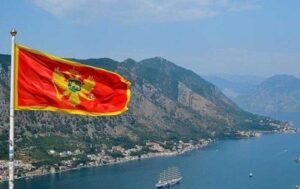
According to “Serbian Economist”, on July 30, the Montenegrin government approved a proposal to establish a mechanism for screening foreign investments that could affect the country’s security and the functioning of critical infrastructure.
The new rules have not yet taken effect. A separate law must be passed for them to be implemented.
Prior approval will be required from investors from countries outside the EU who acquire control or at least 10% of the capital or voting rights in companies operating in strategic sectors.
The review may cover the energy sector, ports, airports, railways, banks, payment systems, telecommunications, media, digital infrastructure, technology, food production, and critical raw materials.
Real estate will be subject to review only if it is associated with strategic facilities or located near critical, military, or government infrastructure. This initiative does not directly apply to ordinary apartment purchases by foreigners.
The government will have the authority to approve a transaction, impose additional conditions, or prohibit it entirely. Potential requirements include restrictions on access to confidential data, disclosure of information about ultimate owners, and sources of funding.
The preliminary review is expected to take up to 45 days. Concluding a transaction without authorization may result in a fine, restrictions on voting rights, or the mandatory sale of the acquired stake.
The initiative is part of Montenegro’s efforts to align its legislation with EU rules. The final terms will be determined after the law is drafted and adopted.
Formally, specific countries are not named in the initiative. However, in practice, the mechanism will be particularly important for investors from Russia, Serbia, and China. All three countries are outside the EU, and their capital is significantly represented in Montenegro’s economy.
The possible adoption of this law will, in one way or another, also affect Ukrainian investors. Ukraine ranks high in terms of the number of companies in Montenegro. According to the latest data from MONSTAT, in 2024 there were 1,069 enterprises with Ukrainian owners operating in the country, accounting for 3.6% of all active companies with foreign capital. This places Ukraine fourth, behind Russia, Turkey, and Serbia.
At the same time, Ukrainian investments are concentrated primarily in real estate and small companies. In 2023, the inflow of such investments amounted to 19.1 million euros, of which 15.2 million euros went toward real estate purchases.
Therefore, the impact of the new rules on Ukrainian businesses is likely to be limited. Routine purchases of apartments and the establishment of small companies should not automatically be subject to review. Permission will be required for investments in strategic sectors or projects related to critical infrastructure.
Source: Government of Montenegro



