
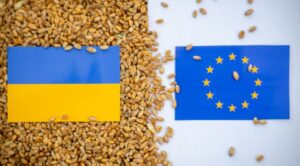
In 2025, Ukraine remained the fifth-largest supplier of organic products to the EU, although its export volume decreased by 14.3%—from 203,897 thousand to 174,701 thousand metric tons. Ukraine’s share of the EU’s total organic imports was 5.9%.
The largest suppliers were Ecuador with 434,970 thousand metric tons, China with 314,404 thousand metric tons, Peru with 220,333 thousand metric tons, and the Dominican Republic with 177,642 thousand metric tons. Ukraine ranked behind them.
Ukraine retained its top position in organic grain exports. In 2025, the EU imported 85,859 thousand metric tons of such products from Ukraine, accounting for 27.7% of European imports in this category.
In terms of oilseeds and protein crops, Ukraine ranked third behind China and Togo, supplying 48,828 thousand metric tons. Exports of organic fruits and nuts totaled 20,250 thousand metric tons, placing Ukraine in ninth place.
Ekipazh, a window manufacturer that currently ranks among the top three largest producers of PVC and aluminum windows and doors in Ukraine, plans to build a fourth plant in Odesa and increase its market share from 9–10% to 16% as part of its 2026–2031 development strategy, the company’s CEO and co-owner, Sergey Teplitsky, told the “Interfax-Ukraine” news agency.
“We have set ourselves an ambitious goal: to become the No. 1 manufacturer in Ukraine and confidently enter the European Union markets. We plan to achieve this through annual investments of 150 million UAH in production development and innovation—including our own tempering furnace and the production of tempered and triplex insulated glass units, seamless welding of laminated profiles, sliding systems, and new aluminum profile systems,” Teplitsky noted.
Currently, the company owns three plants: one in Zlatopol (Kharkiv Oblast) with an area of 21,000 square meters, one in Khmelnytskyi with an area of 42,000 square meters, and one in Brovary with an area of 9,000 square meters, as well as a separate facility for manufacturing double-pane windows. The total area of production facilities is 72,000 square meters. The main products are metal-plastic windows and doors, all-glass structures (tempered glass, triplex for interior partitioning and large facade glazing), as well as aluminum structures. Across its 21 production lines, the company is capable of manufacturing up to 4,000 units per day. By the end of 2025, 365,000 units had been manufactured, which is 4.3% more than in 2024.
Capital investments from 2013 to 2026 in low-value non-current tangible assets totaled approximately 27 million UAH, while investments in fixed assets amounted to 874 million UAH.
According to Teplitsky, all of the company’s profits are reinvested in development; given the security situation, a smaller portion of the funds is directed to the Kharkiv facilities, while the majority goes to Brovary and Khmelnytskyi. This involves not only new equipment but also, for example, energy independence. Specifically, solar power systems with a total capacity of about 1 MW have been installed on the roofs of the buildings, and the company plans to install an equal amount. The company also considered the possibility of installing a cogeneration plant—they prepared technical specifications, selected a plot of land, and assessed the conditions together with gas suppliers.
“If we decide to go ahead, we can install it in two to three months. The estimated investment is over $1 million, with a payback period of about six years,” Teplitsky said.
The strategy through 2031 calls for the construction of a fourth plant in the south of the country; the company is currently in the process of selecting a site. According to Teplitsky, the company is looking for sites in the Odesa region with an area of at least 5 hectares and a capacity of at least 1 MW of electricity; the future plant will be able to produce about 25,000 windows per month, with the potential for expansion. The estimated investment ranges from 600 to 700 million UAH, funded through a combination of the company’s own resources and loans. The company has had positive experience participating in the government’s “5-7-9” program and is basing its plans in part on that experience.
In recent years, overall window sales in Ukraine have declined significantly (from 5.2 million windows in 2021 to approximately 3.5 million last year), which is attributed to a decrease in the number of active real estate development projects. Despite this trend, the company reported a 28% increase in sales in 2026. This was achieved through investments in new technologies, a shift toward more affluent customers (middle-class and above), and the expansion of exports—measures that will help diversify risks and ensure stability and sustainability during wartime.
The company began its export operations in 2023, and by 2025, export revenue had reached approximately EUR2 million across more than 20 countries. Weekly shipments have already been established to four countries (Italy, Spain, the U.S., and Lithuania), and exports are also being made to Moldova, Poland, the Czech Republic, Slovakia, Hungary, Romania, Latvia, Estonia, Germany, the Netherlands, Austria, Switzerland, France, Slovenia, Croatia, and the UAE. The focus of export development over the next five years will be on EU countries. The company’s future plans include increasing the share of exports so that it exceeds domestic sales, developing its own brand, expanding production of tempered and laminated insulated glass units and sliding systems, and developing its aluminum division with new Procural profile systems and its own EKIPAZH AluLight line.
According to YouControl, Ekipazh PE was founded in 2000, with a registered capital of 101,251,145 UAH. At the end of the first quarter of 2026, net revenue from product sales amounted to 405,732,000 UAH, which is 3% more than during the same period last year, while net profit was 3,847,000 UAH (up 2%).
The ultimate beneficiaries are Sergey and Mikhail Teplitsky.
Issue No. 2 – July 2026
In the second half of July, the hryvnia was losing ground, but the NBU tried to participate in trading as much as possible and stem the national currency’s downward drift. As a result, as of July 31, the official exchange rate was 44.69 UAH/USD, whereas at the beginning of the month it stood at 44.79 UAH/USD. The strengthening of the national currency occurred only at the end of the month; over the last two weeks of July, fluctuations toward devaluation prevailed.
High demand for foreign currency persists in Ukraine for the second consecutive month. As a reminder, in June, according to official data, the National Bank sold $5.087 billion through interventions. This is the highest figure in 2026. The July figure is expected to be lower than the previous month’s “record.” However, it is already obvious that the hopes voiced by many analysts for a summer surge in agricultural exports—and along with it, higher inflows of foreign currency revenue that would support the hryvnia—did not materialize. Throughout July, Russia intensified missile and drone attacks targeting Ukrainian seaports, significantly constraining maritime shipments of agricultural products.
The Federal Reserve System (Fed) Committee meeting, to whose outcome traders’ attention had been pinned over the last month, took place on July 29. Following the meeting, it became known that the Fed left its benchmark interest rate unchanged, but left open the possibility of a future hike if inflation remains high. The statement notes that inflation in the US remains elevated, partly reflecting supply shocks that drove up prices in certain sectors, including energy. It is also known that the sharp rise in fuel prices caused by the US-Iran conflict pushed the annual inflation rate in the US up to 4.2% in May—the highest level in over three years. Since then, oil and gas prices have eased somewhat, but the resumption of hostilities in and around the Strait of Hormuz in late July raises concerns that fuel prices could remain elevated in the coming months. Nevertheless, high rates can drag on labor market growth; in this case, the Fed opted in favor of the labor market, effectively ignoring price increases.
The dollar reacted to the announcement of baseline rate stability by weakening against the euro—on July 30, the rate returned to 1.1450 USD/EUR and later reached 1.1475 USD/EUR, even though on the eve of the meeting, the currency pair was trading at approximately 1.1360 USD/EUR.
During July, demand for foreign currency shifted: while it dropped slightly at the start of the month, it picked up again later, forcing the NBU to scale up currency sales via interbank interventions. Thus, while the National Bank sold $871.2 million to importers during the first week, it sold $2.088 billion over the following two weeks. There is no additional support for the hryvnia from exporters: the export situation remains extremely challenging, especially given Russia’s frequent attacks on domestic seaports and port infrastructure. This affects not only agricultural exports, but also revenue for metallurgical enterprises. However, support for the national currency is coming from the international market, where the dollar managed to strengthen against the euro in July.
Based on July’s results, a decline in international reserves compared to June is possible, as reserves expand mainly through inflows from partners. However, new arrivals were scarce in July. It is known that this month Ukraine received a tranche of around $690 million from the IMF under the new four-year Extended Fund Facility (EFF) program. This program provides for credit assistance totaling approximately $2.2 billion. Funds received under the first tranche will be directed toward funding priority expenditures and ensuring macro-financial stability amid full-scale war.
Regarding EU aid, in late July the Council of the EU agreed on the updated Ukraine Plan under the Ukraine Facility. Media reports indicate this involves €10 billion, which Ukraine can access only under specific conditions—the document contains 27 indicators, ten of which require the passage of new laws. The updated plan also revises 34 out of 146 existing program implementation steps, pushing back deadlines for 12 reforms that require more time. Among the new reforms, special emphasis is placed on the rule of law, anti-corruption efforts, reforms necessary for Ukraine’s EU accession, the energy sector, and further integration into the EU internal market. The updated Ukraine Plan has already approved additional funding for Ukraine in 2026—namely €8.3 billion to be provided through the Ukraine Support Loan mechanism.
The new government in Ukraine, which is just beginning its work under new Prime Minister Serhiy Koretskyi, has not yet released precise data regarding its action plan. However, it is known that the Government Action Program should be submitted to the Verkhovna Rada in August. This will serve as an official benchmark for the specific measures the new Cabinet intends to implement and the economic and financial reforms planned for Ukraine in the near term.
The devaluation of the hryvnia continues; while the hryvnia managed to gain a bit of ground in the first half of July, devaluation became the defining feature in the second half of the month. At the beginning of July, the official exchange rate stood at 44.79 UAH/USD, and on July 29, the NBU rate reached 44.88 UAH/USD. On the interbank market in the final days of July, trading took place at 44.74–44.89 UAH/USD. Importers’ bids are satisfied by the National Bank as the primary currency seller. On the last day of July, the hryvnia strengthened—the official rate reached 44.69 UAH/USD. On the cash market, following the interbank trend, the rate strengthened as well: at banks and exchange booths, the buy rate hovered around 44.35–44.7 UAH/USD, while the sell rate was 44.95–45.10 UAH/USD. Spreads in July remained nearly unchanged, staying within 0.4–0.7 UAH/USD.
Surge in USD demand on the interbank foreign exchange market, though devaluation remains barely noticeable. The NBU acts as the main market maker, holding the hryvnia back from sliding past 44.97 UAH/USD via interventions.
Slow and minor fluctuations in the cash market. Throughout July, the rate at bank counters and exchange offices averaged between 44.95 and 45.10 UAH/USD.
International factors: The US-Iran conflict is in an acute phase, the Strait of Hormuz is blocked, and the US has imposed sanctions on two Iranian companies participating in a scheme where Iran forces vessels to purchase “insurance” to pass through the Strait of Hormuz. Analysts project that Middle East hostilities will persist for several more months.
Behavioral market expectations: After the Fed left rates unchanged in late July, investors are anticipating the Fed Committee’s autumn meetings, where a benchmark rate hike decision could be made. In Ukraine, the primary focus is on the security situation, winter preparations, and financial aid agreements with partners. Decisions and draft laws from the new government will also play an important role in outlining fiscal and tax factors capable of impacting future financial decisions.
Short-term (1–2 weeks): Baseline range of 44.95–45.20 UAH/USD; the hryvnia will lean toward the upper bound, while the NBU will attempt to pull the rate back into the 44.80–44.88 UAH/USD corridor.
Medium-term (2–3 months): 45.15–45.40 UAH/USD. Clear certainty regarding the Fed benchmark rate level and new agreements between the US and Iran could favor a stronger dollar, which would positively impact the hryvnia.
Long-term (6+ months): Under the baseline scenario, the main devaluation trend persists, and the exchange rate could hit 46.50 UAH/USD by year-end. However, beyond the war in Ukraine and Russia’s intensified missile and drone strikes on infrastructure, the key driver will be partner inflows, which directly affect international reserves and the NBU’s ability to satisfy importer demand via interventions.
Throughout July, the euro exchange rate on the domestic market remained nearly static, with very minor fluctuations. However, everything changed the day after the Fed Committee meeting—the euro began losing ground globally, and in Ukraine, the official euro rate reached 51.27 UAH/EUR on July 31.
In Ukraine’s cash market, euro exchange rate stability was maintained in July. However, new euro horizons are motivating retail sellers to adjust their rates. As of July 31, the buy rate sits in the 50.56–51.10 UAH/EUR corridor, while the sell rate is 51.50–51.85 UAH/EUR. Spreads between buying and selling rates narrowed slightly toward month-end to a range of 0.45–0.80 UAH/EUR.
The dollar is regaining ground against the euro internationally. The euro began to decline following the US Fed Committee’s decision to hold benchmark rates steady.
The ECB made no changes to benchmark rates in July. The level of uncertainty in the EU remains high, and the full impact of the energy shock on inflation has not yet fully fed through into the economy. The ECB is monitoring the intensity and duration of this impact, as well as its indirect consequences, very closely.
In Ukraine, the euro rate began rising in July after a prolonged quiet period. Euro supply is sufficient to meet retail market demand.
Short-term (2–4 weeks): In the Ukrainian market, the euro could remain in the 51.30–51.55 UAH/EUR range.
Medium-term (2–4 months): If the euro continues to strengthen globally, the rate in Ukraine will reach 51.50–52.25 UAH/EUR.
Long-term (6+ months): By year-end, the euro rate could range between 52.60 and 53.60 UAH/EUR. The main factors driving the rate are Fed decisions on benchmark rates, ECB rate decisions, EU inflation levels, and the situation in the Middle East.
August could bring fast-moving exchange rate surprises. The escalation of the US-Iran conflict and wild oil price swings heighten volatility risk. At such times, a currency strategy must be extremely cautious, yet decision-making flexibility remains vital for capturing yield and preserving capital.
Global conflicts are a reason to trust only the strongest currencies. Expected shifts relate to a potential resolution of the US-Iran conflict, which will influence the future trajectory of the EUR/USD pair.
A stable Fed rate provides no boost to the dollar. The EUR/USD pair is heavily influenced by geopolitics, but rate hike forecasts also matter. Investors need to monitor US economic news to timely pivot their currency savings strategy.
Safe investments above all. A small portion of a portfolio can be allocated toward generating fast profits from speculative trading, but the bulk of funds should be placed into low-risk capital preservation—namely physical currency purchases.
Liquidity in the crosshairs of currency strategy. A lack of stability and predictability elevates the role of liquid currencies, keeping the dollar and euro central to portfolios. Both medium- and long-term investor plans should be built around investments in these currencies.
A sharp shift by global investors toward the euro is a signal to concentrate funds in the dollar. The US economy is currently expanding actively and the US currency remains the most liquid asset, so investors should keep approximately 50–60% of their currency portfolio in USD.
Exiting part of currency holdings should only follow thorough rate movement analysis. The rise of the euro to 51.27 UAH/EUR offers fresh opportunities to partially sell off euro assets acquired early in the year when the rate was at 49.51 UAH/EUR. However, it is not time to dump euros entirely, as rates could rise further over the course of 2026.
A balanced currency portfolio shouldn’t consist solely of dollars. If diversification is part of your personal financial plan, adding 10% in Swiss francs to baseline currencies makes sense. Purchasing British pounds can also be considered.
National currency for routine expenses, dollars for long-term investments. The devaluation trend for the national currency persists despite multi-billion dollar NBU interventions to maintain exchange rate stability. US dollar savings remain a reliable guarantee against capital erosion.
What matters on the news front: Investors should analyze everything linked to oil quotes, Middle East developments, and new US-Iran agreements. It is also important to track labor market data and US inflation figures, which will ultimately form the foundation for upcoming Fed Committee decisions on rate changes. A Fed statement signaling a rate hike will be the cue to adjust currency strategies. The next Fed Committee meeting in mid-September will reveal the future path of the EUR/USD pair. In Ukraine, the key drivers affecting the FX market will be international reserve levels, tranche disbursements of loans and financial aid from partners, data on export volumes and port infrastructure, the energy situation, and frontline conditions.
This material was prepared by analysts at the international multi-service FinTech platform KYT Group and reflects their expert, analytical professional judgment. The information presented in this review is purely informational and must not be construed as actionable advice.
The company and its analysts make no assurances and accept no liability for any consequences arising from the use of this information. All information is provided “as is,” without any additional guarantees of completeness, timeliness obligations, updates, or supplements.
Users of this material must independently evaluate risks and make informed decisions based on their own assessment and analysis of the situation using various available sources they consider sufficiently qualified. Before making any investment decisions, consulting an independent financial advisor is recommended.
INFO
KYT Group is an international multi-service product FinTech platform operating as a marketplace, providing financial companies with access to promotion services for their offerings, alongside advertising and advisory services.
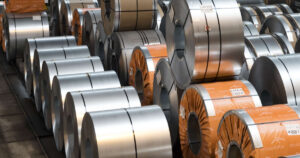
ArcelorMittal, the world’s second-largest steel producer, increased EBITDA by 23% in the second quarter of 2026 compared with the first quarter, to $2.06 billion, the company said in a statement. The figure rose by 11% compared with the same period last year.
Net profit amounted to $683 million, which was 18% higher than in the previous quarter but 62% below the profit recorded in the second quarter of 2025.
Revenue increased by almost 8% quarter-on-quarter and by 5% year-on-year in the second quarter, to $16.8 billion. The main reason for the improvement was a 4.4% increase in the average steel price.
ArcelorMittal’s capital expenditure amounted to $1.1 billion in April-June. Net debt increased to $9.5 billion at the end of June, compared with $9.3 billion as of March 31.
In the second quarter, the company increased steel production by 7.5% compared with the previous three months, to 14.3 million tonnes, versus 14.4 million tonnes a year earlier. Steel shipments amounted to 13.4 million tonnes in the quarter, compared with 12.8 million tonnes in the previous quarter and 13.8 million tonnes a year earlier. Iron ore production amounted to 13.5 million tonnes during the quarter, compared with 9.7 million tonnes in the first quarter and 11.8 million tonnes a year earlier.

Kyivstar Group Ltd. (Nasdaq: KYIV), the parent company of Ukraine’s largest telecommunications operator Kyivstar, has announced the opening of its own office at Rockefeller Center in New York, marking an important stage in the company’s international development following its historic Nasdaq listing in August 2025.
“The opening of our New York office is an important milestone in the international development of Kyivstar Group Ltd.,” Kyivstar President and CEO Oleksandr Komarov was quoted as saying in the release.
According to him, a presence in one of the world’s key financial centers will help strengthen relations with investors and international partners, as well as expand cooperation.
The Kyivstar office is located at 1270 Avenue of the Americas. It is expected to support the company’s investor relations and corporate communications activities, as well as strengthen its presence in the United States.
“The opening of the office also creates additional opportunities to present Ukrainian business and its investment potential to the international community,” Kyivstar emphasized.
At the same time, the office will not perform commercial, contractual or operational functions on behalf of the Group, the press release said.
The company recalled that Kyivstar is celebrating the first anniversary of its Nasdaq listing this summer. During this period, the company continued to develop its portfolio of digital products and implement strategic initiatives, including the expansion of digital healthcare services, the development of the Uklon platform and the introduction of new telecommunications solutions, including Starlink Direct to Cell.
“In addition, the new office will become the New York base for the Invest In Ukraine NOW! initiative launched by VEON and Kyivstar in August 2025,” the company said.
As reported, Kyivstar increased EBITDA in the second quarter of 2026 by 21.1% to UAH 8.3 billion, while revenue rose by 27% to UAH 14.9 billion.
In 2025, the Group increased EBITDA by 30% to UAH 27 billion, while revenue grew by 30.3% to UAH 48.2 billion.

The aviation industry enterprise FED JSC (Kharkiv) reduced its net profit 3.9-fold in January-June 2026 compared with the first half of 2025, to UAH 40.8 million.
According to the company’s interim report published in the disclosure system of the National Securities and Stock Market Commission, its net revenue increased slightly, by 1.7%, to UAH 611.6 million.
FED posted almost UAH 153 million in gross profit, compared with UAH 181.7 million a year earlier, while operating profit fell 2.8-fold to UAH 70.3 million.
Retained earnings exceeded UAH 1.53 billion as of July 1, 2026.
“The main risks in the company’s operations are associated with a significant increase in prices for electricity, gas and other resources. Martial law is also in effect in our country, forcing the company to operate under force majeure conditions,” the report states.
As reported, in the first quarter of 2026, the company’s net profit fell 6.7-fold compared with the same period of 2025, to UAH 17 million, amid a 10% increase in net revenue to UAH 336.6 million.
FED JSC specializes in the development, production, servicing and repair of components for aviation, space and general engineering purposes.
The average number of full-time employees as of July 1, 2026, was 1,010.
In 2025, FED increased its net profit by 3.4% compared with 2024, to UAH 187.6 million, while net revenue rose by 26.5% to UAH 1.05 billion.
As reported, by the end of this year, FED will pay shareholders UAH 40 million in dividends, equivalent to almost UAH 5,150 per share. More than 98% of FED JSC shares are owned by the company’s director, Viktor Popov.



