

Kyivstar, Ukraine’s largest mobile operator, increased its EBITDA by 21.1% in the second quarter of 2026 to 8.3 billion UAH, while revenue rose by 27% to 14.9 billion UAH, according to the company’s quarterly report released on Friday.
“Kyivstar has demonstrated another quarter of broad-based profitable growth, and we are once again raising our full-year forecast,” Kyivstar CEO and President Oleksandr Komarov is quoted as saying in the document.
He noted that digital technologies now account for more than one-fifth of the company’s revenue, which is 7 percentage points higher than a year ago.
“We remain focused on leading Ukraine’s digital future and ensuring sustainable returns for our shareholders,” Komarov added.
In U.S. dollars, Kyivstar now estimates revenue growth in the second quarter of this year at 19.3%—to $339 million—and EBITDA at 13.7%, to $188 million, resulting in a margin of 55.4%.
Kyivstar’s net income was $77 million, with earnings per share of $0.33. Revenue from digital services grew by 94.7% to 3.3 billion UAH, accounting for 21.7% of total revenue, or 83%, to $73.7 million.
The number of Kyivstar’s multiplay customers in the second quarter of 2026 grew by 23.6% to 8.1 million, representing 39.9% of the total number of active mobile customers during the month. Revenue from these services increased by 47.4% to $139 million (up 56.9% to 6.2 billion UAH), or 41.1% of total revenue.
ARPU (Average Revenue Per User) for this period rose by 11.2% to $3.9 (up 18.3% to 172.7 UAH).
The report also states that the total number of monthly active digital users for the quarter was 29.3 million. Specifically, the figure rose by 8.2% at Uklon—to 5.2 million; by 0.7% at Helsi—to 5 million; stood at 6.3 million at Tabletki; and increased by 47.7% at KyivstarTV—to 3.6 million.
The online taxi service Uklon, which was consolidated into Kyivstar’s financial statements in April 2025, generated 1.448 billion UAH in revenue, or $32.8 million, in the second quarter of 2026. Its EBITDA amounted to 554 million UAH, or $12.5 million. The number of booked trips during this period increased by 4.5% to 43 million, while the number of completed trips rose by 25.9% to 1.4 million.
It is noted that as of the end of the second quarter of 2026, the Helsi healthcare information system had 109,000 paid subscribers; its revenue increased by 44.6% compared to the same period in 2025—to 105 million UAH—or by 35.9%—to $2.4 million. The service’s clients have access to 1,800 healthcare facilities. The number of patient visits reached 2.4 million.
Tabletki.ua, which was acquired in February of this year for $160 million, generated 342 million UAH, or $7.8 million, in the second quarter. EBITDA amounted to 274 million UAH, or $6.2 million. The average monthly number of orders reached 15 million, and gross merchandise value (GMV) reached $376 million.
Revenue for the Kyivstar TV platform in the second quarter of 2026 reached 614 million UAH, or $13.9 million, as the number of user sessions grew by 34.2% to 931 million.
The report specified that capital expenditures, excluding licenses and assets in the form of rights of use, amounted to $59 million. The company emphasizes that the capital expenditure intensity in the second quarter of 2026 was 17.3% and 26.6% over the past 12 months, which is 3.3 percentage points lower than the 29.9% recorded in the first quarter.
It is noted that going forward, the group expects revenue growth in dollar terms of 14–16% (previously projected at 11–14%) and EBITDA growth of 9–12% (previously indicated as 7–10%), while the capital expenditure rate will remain unchanged at 21–24%, assuming an average UAH/USD exchange rate of 44.5.
Free cash flow to shareholders, after accounting for lease and license expenses, increased by 32.2% to $104 million. Additionally, as of June 30, 2026, cash, cash equivalents, and deposits totaled 16.4 billion UAH, or $364 million.
Kyivstar added that more than 6 million of its customers currently use the Starlink Direct-to-Cell service, which during the reporting period also expanded its capabilities beyond messaging to include data transmission via specific apps—such as Google Maps, Viber, and WhatsApp—in areas without terrestrial coverage.
Among other things, during the second quarter of this year, the group acquired six solar power plants in the Lviv region (105 MW in total for $80.8 million), expanding its renewable energy portfolio nearly ninefold—to approximately 30% of expected energy needs—and strengthening its energy resilience.
The Uklon service launched the Uklon Store, signed an agreement to acquire E-wings, and conducted Ukraine’s first real-time testing of autonomous vehicles.
The group also signed a memorandum of understanding with the Ministry of Economy to explore the possibility of establishing an AI-ready data center, as well as a memorandum with the National Securities and Stock Market Commission of Ukraine to examine the possibility of providing domestic investors with access to the group’s Nasdaq-listed shares through established brokerage channels.
As reported, in the first quarter of 2026, Kyivstar increased its EBITDA by 28.5% to 7.5 billion UAH, while revenue grew by 31.3% to 13.9 billion UAH
In 2025, the company increased its EBITDA by 30% to 27 billion UAH, with revenue growing by 30.3% to 48.2 billion UAH; including in the fourth quarter, when EBITDA increased by 23.1% to 7.2 billion UAH, with revenue growing by 30.1% to 13.5 billion UAH.
DIGITALIZATION, EBITDA, KYIVSTAR, REVENUE, telecommunications

US President Donald Trump has suggested that Greenland could come under Washington’s operational control before the end of his current presidential term.
Trump made this statement on 31 July in an interview with Steve Gruber, a presenter on the Real America’s Voice television channel. The journalist recalled his prediction that Greenland would come under US operational control before Trump leaves office, and asked whether the island remained of key importance for the defence of the Western Hemisphere.
“Yes, you’ll be right,” Trump replied, suggesting that the presenter “place that bet”.
The US President did not specify how Washington might gain control of the island, nor did he mention any new agreement with Denmark or the Greenlandic government. His remarks therefore remain, for the time being, a political statement rather than an announcement of an agreed plan or timetable for the transfer of the territory.
Back in July, Trump had already stated that Greenland should be under US control rather than Denmark’s. He explained his position by citing the island’s strategic location and the need to counter Russian and Chinese activity in the Arctic.
In response, Danish Prime Minister Mette Frederiksen stated that Greenland is not for sale and called on allies to respect the sovereignty and territorial integrity of the Kingdom of Denmark. The Greenlandic authorities also emphasise that the island’s future can only be determined by its inhabitants.
Greenland is a self-governing territory within the Kingdom of Denmark. It governs most domestic matters independently, whilst defence and a significant part of foreign policy remain under Copenhagen’s jurisdiction.
The US’s interest stems from Greenland’s location between North America and Europe, control over Arctic air and sea routes, a missile launch warning system, and potential deposits of rare-earth and other critically important minerals. The United States already operates the Pituffik Space Station on the island, formerly the Thule Air Base.
American interest in acquiring the island predates Trump by a long way. The US Congressional Research Service notes that the issue of a possible acquisition of Greenland was raised by Washington in 1868, 1910 and 1946.
The US came closest to exercising effective control over the island during the Second World War. Following Germany’s occupation of Denmark, the Danish ambassador to Washington, Henrik Kaufmann, signed a defence agreement with the US on 9 April 1941 concerning Greenland.
The document preserved Danish sovereignty but allowed the United States to build and safeguard military installations. In the established defence zones, the US was granted exclusive jurisdiction, with the exception of matters concerning Danish citizens and the indigenous population.
The US military built airfields, radio stations, meteorological stations and other infrastructure on the island. They ensured the defence of the territory and drove out the German units that had landed there.
It can therefore be said that during the war years, the US effectively controlled Greenland’s military security, key transport facilities and strategic areas. However, there was no full political control or American sovereignty over the entire island — formally, it continued to belong to Denmark.
After the war ended, Washington was reluctant to leave the island entirely. In December 1946, US Secretary of State James Byrnes proposed to the Danish leadership that they consider a direct sale of Greenland. The US military leadership considered the purchase of the island to be the preferred option, whilst long-term rights to station bases there were seen as an alternative. Copenhagen did not accept the proposal.
In 1951, the US and Denmark concluded a new defence agreement within the framework of NATO. It cemented the American military presence and allowed for the establishment of the Thule Defence Area. The base built there subsequently became a key element of the early warning system for missile attacks and space surveillance.
Thus, the US already has extensive military capabilities in Greenland without changing its state status. The US can use the agreed defence areas, station personnel and operate strategic infrastructure. According to the Experts Club information and analysis centre, the current debate concerns not so much access for the US military as Washington’s potential acquisition of political control or sovereignty over the island.
In 2019, during his first presidential term, Trump also proposed buying Greenland. Denmark and the island’s authorities rejected this proposal at the time. Upon his return to the White House, Trump has once again made establishing control over the island one of the key priorities of his Arctic policy.
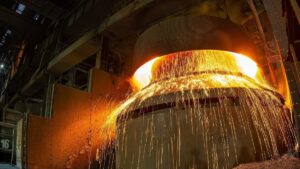
Metinvest, Ukraine’s largest mining and metallurgical holding company, increased steel production by 13% in January–June 2026 compared to the same period last year—to 1.026 million metric tons—and pig iron production by 18%, to 934,000 metric tons.
According to a press release from the parent company, Metinvest B.V., published on July 31, in the second quarter, pig iron production at Kametstal rose by 13% compared to the previous quarter—to 496,000 metric tons—while steel production increased by 26%, to 572,000 metric tons. This growth was driven by the stabilization of the power supply since March 2026.
In addition, the first-half figures were compared to a relatively low base from last year, when blast furnace No. 9 was shut down for major repairs in April–June.
Production of commercial semi-finished products in the first half of the year increased by 19% to 357,000 metric tons. Production of commercial pig iron more than doubled to 64,000 metric tons, while production of billets rose by 6% to 293,000 metric tons.
Production of finished steel products increased by 6% to 1.303 million metric tons. Output of long products rose by 6% to 717,000 metric tons, thanks to increased production volumes at Kametstal and the Bulgarian company Promet Steel.
Production of flat rolled products decreased by 1% to 545,000 metric tons. Specifically, output of hot-rolled coils fell by 9%, and that of galvanized cold-rolled coils by 2%, while production of hot-rolled heavy plate remained virtually unchanged at 431,000 metric tons.
Pipe output totaled 41,000 metric tons following the group’s acquisition of the Romanian company Metinvest Tubular Iași in December 2025.
In the second quarter, finished product output fell by 3% compared to the first quarter, to 642,000 metric tons. This was due to a 13% decline in flat-rolled steel output caused by a temporary shutdown of the rolling mill at the Italian company Ferriera Valsider in March–May.
Coke production in the second quarter rose by 9% to 279,000 metric tons following the stabilization of coal supplies. For the first half of the year, the figure remained at the same level as the corresponding period last year, totaling 535,000 metric tons.
Metinvest is a vertically integrated group of mining and metallurgical companies. The group’s production assets are located in Ukraine, European Union countries, and the United Kingdom. The main shareholders are the SCM Group, with a 71.24% stake, and Smart Holding, with a 23.76% stake.

According to Serbian Economist, the Italian company Beretta Holding, the Croatian government, and Croatian investor Ivan Kapetanović have signed a memorandum of understanding to implement a project for the country’s first small-caliber ammunition manufacturing plant.
The document was signed on July 30 at the “Banski Dvori” government complex in Zagreb in the presence of Croatian Prime Minister Andriy Plenković. It was signed by Defense Minister Ivan Anušić, Beretta Holding President and CEO Pietro Gussalli Beretta, and Kapetanović.
The plant is planned to be built near the town of Obrovac in Zadar County. The exact location of the site has not yet been officially disclosed.
The total volume of joint investments is estimated at 125 million euros. Beretta is set to receive 50% of the capital of the future joint venture plus one share, which will give the Italian group control. The remaining stake will be divided between the Croatian government and private investor Ivan Kapetanović.
Beretta will also be responsible for technology transfer, supply chain management, and the establishment of production lines. The plant is scheduled to begin operations by mid-2029.
According to Italian media reports, once the plant reaches its design capacity, it will be able to provide approximately 250 jobs and generate 70–80 million euros in annual revenue.
The facility is expected to produce small-caliber ammunition, including rounds for machine guns mounted on armored vehicles, as well as ignition capsules. According to Pietro Gussalli Beretta, some of this ammunition is currently produced at the group’s Swiss facility, while the Beretta plant in Germany is fully occupied with the production of fuses.
The chairman of Beretta Holding described the project as a long-term investment that is not solely tied to the current growth in demand for ammunition. It is expected that the new plant’s products will be supplied not only to the Croatian Army but also to European and global markets.
However, the signed memorandum is currently a framework document. It provides for the further preparation of a final agreement and the establishment of a special project company in Croatia.
Beretta Holding brings together manufacturers of small arms, ammunition, optics, and related equipment. The history of this family-owned company dates back to the 16th century. The group has facilities in Italy, Germany, Switzerland, Sweden, Hungary, the United States, and other countries.
https://t.me/relocationrs/3371
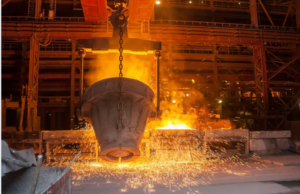
Metinvest Group’s mining companies reduced iron ore pellet production by 17% in January–June 2026 compared to the same period last year, down to 2.717 million metric tons.
The decline was due to a temporary shutdown of one of the sintering machines in the first quarter caused by damage to the power supply system. The equipment resumed operations in April, according to the group’s official operating report published on July 31.
Production of pellets with an iron content of at least 65% decreased by 19% to 2.629 million metric tons. Output of pellets with an iron content of less than 65% more than doubled to 88,000 metric tons.
Total iron ore concentrate production in the first half of the year amounted to 7.763 million metric tons, remaining virtually unchanged from 7.725 million metric tons a year earlier.
The descriptive section of the official PDF erroneously states 7.263 million metric tons. However, the report’s table and the press release page list 7.763 million metric tons. This figure is also confirmed by the combined production volumes for the first and second quarters—3.882 million metric tons each.
Output of marketable iron ore products decreased by 5% to 7.144 million metric tons. At the same time, production of marketable iron ore concentrate increased by 4% to 4.427 million metric tons.
Production of concentrate with an iron content of less than 67% rose by 10% to 4.075 million metric tons, while production of high-quality concentrate with an iron content of at least 67% fell by 34% to 352,000 metric tons.
In the second quarter, production of commercial iron ore products increased by 3% compared to the first quarter, reaching 3.624 million metric tons. Pellet production rose by 10% to 1.422 million metric tons, while production of commercial concentrate decreased by 1% to 2.202 million metric tons.

The number of UK residents with a personal fortune of at least GBP1 million fell by 7% in 2025 to 442,000, according to calculations by the Adam Smith Institute. This is the lowest figure since the 2008 global financial crisis. Compared to the peak in 2021, when the country had approximately 1.07 million millionaires, their number has decreased by about 59%.
For the purposes of the study, a millionaire is defined as an adult resident of the United Kingdom with a net worth of at least GBP1 million in constant 2025 prices. The calculation includes real estate, pension savings, cash, and investments, net of debt.
The Institute attributes the decline primarily to a decrease in the real value of assets. Post-pandemic interest rate hikes have put pressure on the value of pension savings and high-priced real estate, particularly in London. An additional factor is the low savings rate among British households, which limits the accumulation of private capital.
The study’s authors cite the departure of wealthy residents and the UK’s declining appeal to foreign entrepreneurs and investors as another reason. The Institute points to high tax rates, the abolition of the former “non-dom” tax regime, and discussions regarding new taxes on wealth and capital gains.
Effective April 6, 2025, the UK replaced the “non-dom” tax system with a new regime based on tax residency. New residents who have not lived in the country for the previous ten years may, for the first four years, receive an exemption from UK tax on foreign income and capital gains. After this period ends, the general rules apply to them.
The Adam Smith Institute also emphasizes that its data are estimates. The UK does not have an up-to-date government registry of personal wealth, so the indicator is calculated based on data from the Office for National Statistics and statistical modeling. It primarily reflects the general trend in changes to private wealth, rather than the exact number of wealthy residents.
The Institute has called on British authorities to abandon plans to introduce a wealth tax, lower the capital gains tax, and review the tax treatment of wealthy foreign residents. According to its data, the top 1% of British earners account for 29.1% of income tax revenue.



