
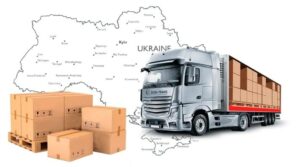
Freight volume in January–May 2026 increased by 4.1% compared to the same period in 2025, reaching 133.8 million metric tons, while passenger traffic decreased by 5.6% to 849.3 million passengers, according to a report by the State Statistics Service.
According to its data, 61.3 million metric tons of freight were transported by rail during the first five months of 2026, which is 3.3% less than during the same period last year, while freight turnover fell by 13.8% to 36.1 billion ton-kilometers.
Road freight transport in January–May of this year increased by 22.1% to 59.6 million metric tons, while freight turnover rose by 10.9% to 17.8 billion metric ton-kilometers.
The largest number of passengers in January–May 2026 was carried by road transport—398.4 million, which is 3.7% more than during the same period in 2025.
A 3.2% increase was also recorded for the metro—138.9 million.
At the same time, the number of passengers carried by rail decreased by 15.1% compared to the same period last year—to 21.6 million; by trams—by 23.1%—to 98.5 million; and by trolleybuses—by 15.6%—to 191.6 million.
As previously reported, the volume of freight transported in January–April 2026 increased by 5% compared to the same period in 2025, reaching 104.4 million metric tons, while passenger traffic decreased by 7% to 658.8 million people.
FREIGHT, PASSENGER, State Statistics Service, TRANSPORT, TRANSPORTATION

The private insurance market collected nearly 1 billion UAH in premiums for products covering war risks in January–March 2026, said Serhiy Nikolaychuk, First Deputy Governor of the National Bank of Ukraine (NBU), at a press briefing on Monday dedicated to the presentation of the Financial Stability Report.
He emphasized that most of these premiums were for comprehensive auto insurance (CASCO), but there are also offerings for businesses, and the government has already launched a mechanism to compensate for losses in high-risk areas and to reimburse insurance premiums in other areas.
As noted in the Report, citing data from the National Association of Insurers of Ukraine, in the first quarter of 2026, premiums collected under risk insurance policies covering war risks accounted for 11% of all risk insurance premiums collected, exceeding the total for the entire previous year.
“Previously, we talked a lot about how to create a war risk insurance system almost from scratch. Now, in fact, we are talking about scaling up existing areas and projects, and in this report—and in general—we are highlighting that the range of war insurance products is constantly expanding,” explained the first chairman of the NBU.
According to him, the NBU sees significant potential in the further development of and increased cooperation with international reinsurers, as well as with international financial institutions operating in this market.
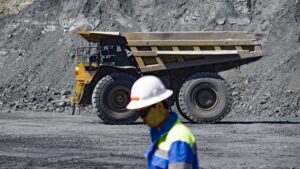
Ferrexpo plc, a mining and ore company with its main assets in Ukraine, continues to focus on managing its costs and optimizing its sales structure to maximize its working capital.
According to a company statement released ahead of its annual general meeting on Monday, the group continues to operate under severely constrained conditions due to the war in Ukraine and related operational and financial difficulties.
At the same time, the statement notes that despite significant disruptions in the operating environment in Ukraine, the group continues to operate one of its four pellet production lines and export its products to customers in Europe and the Middle East.
As previously announced, the group decided to sell its own transshipment vessel, the Iron Destiny, for which it received a net profit of $7.7 million. Based on current production rates, current and projected energy prices for the next quarter, and taking into account an optimized sales mix, the group now forecasts that it will have sufficient net available cash—excluding funds frozen at Mbaer Bank—beyond the previously stated end of August 2026.
“This assessment remains subject to the volatility of iron ore prices and operating expenses (including energy costs) and assumes that there will be no significant changes in the Group’s operating conditions—including electricity supply—and that no restrictive measures will be taken by the insolvency administrator at Poltava Mining and Processing Plant (PGZK), and that there will be no final, non-appealable negative outcomes in the various judicial and administrative proceedings currently pending against the group,” the statement said.
In addition, it is noted that the group continues to actively pursue initiatives to enable it to begin raising equity capital in the amount of at least $100 million. As noted in the company’s previous announcements, the group remains confident that raising equity capital is the most viable solution within the required timeframe.
“At this stage, there is no certainty that the group will successfully complete such financing options. If the issues regarding the withholding of VAT refunds and financing are not resolved in a timely manner, this could lead to significant negative consequences for the group. The planned capital raise, if implemented, will be the subject of a further announcement, including the full terms of the planned capital raise,” the press release states.
The company plans to release its production report for the second quarter of 2026 on July 15 of this year.
As previously reported, Ferrexpo plc announced that it will hold its annual shareholders’ meeting on June 29 of this year. The total number of shares whose holders are entitled to vote at the meeting is 598,137,142 ordinary shares. Only one class of shares is outstanding, and each share carries one vote; therefore, the total number of voting rights that can be exercised at the meeting is 598,137,142.
Lucio Genovese, the company’s interim acting chairman, explained that voting on all resolutions will be conducted by poll, and the voting results will be announced through the Regulatory Information Service and published on the group’s website as soon as possible after the general meeting.
Genovese reiterated that the company aims to raise at least $100 million, which is needed to finance Ferrexpo Group’s operations over the next 18 months. The Group’s operations have been significantly impacted since the start of Russia’s full-scale invasion of Ukraine in 2022, leading to a reduction in operational activities and periods of complete suspension of operations. This has had a material impact on the Group’s revenue.
In addition, the decision by Ukraine’s tax authorities to suspend VAT refunds effective March 2025, amounting to approximately $90 million, has further significantly impacted the group’s liquidity. The company intends to complete the equity offering as soon as possible and is actively working toward this goal. However, it is not yet in a position to officially launch the equity offering.
“Until the equity offering is ready to launch, the company cannot publish its audited financial results for the year ended December 31, 2025, on a going-concern basis, as the company and its auditors require sufficient assurance regarding the commencement and successful completion of the equity offering before signing off on the financial statements. Due to the delay in the equity offering and given the dependence on the commencement of the equity offering for the publication of the audited financial statements for the year ended December 31, 2025, on a going-concern basis, the company is unable to finalize the audited annual report and financial statements for the year ended December 31, 2025, but is committed to doing so as soon as possible,” the acting CEO stated in his address.
According to him, this annual shareholders’ meeting is being held solely to address routine matters, namely the reelection of directors and the renewal of authorizations granted to conduct market purchases of the company’s own shares and to convene annual shareholders’ meetings. All directors will step down at the 2026 general meeting of shareholders and will seek re-election by the shareholders, with the exception of Mr. Vitaliy Lisovenko, who, as previously announced, will resign from the company’s board of directors upon the conclusion of the general meeting.
According to the information, the meeting will propose, among other things, the re-election of Stuart Brown, Mykola Kladiev, Lucio Genovese, and Fiona Macaulay as members of the board of directors.
As previously reported, Ferrexpo has delayed the publication of its audited report for 2025.
It was also reported that the London Stock Exchange (LSE) suspended trading in Ferrexpo shares, while the company twice warned shareholders in the second half of April about the suspension of its listing and trading due to its inability to publish its annual financial statements on time. Most recently, on April 28, Ferrexpo noted that it had received indicative, non-binding expressions of interest from institutional investors regarding a potential capital raise of more than $100 million—on which the publication of the report also depends—but that it would not be able to complete this by the end of April.
Ferrexpo owns a 100% stake in Yeristivsky GZK LLC, a 99.9% stake in Bilanivsky GZK LLC, and 100% of the shares in Poltava GZK PJSC.

OTP Group has reached an important milestone: after four consecutive years of growth, it has made it into the top 400 companies in the world in the Forbes Global 2000 ranking for the first time.
The Forbes Global 2000 ranking identifies the world’s largest publicly traded companies each year. The list is compiled based on four key financial metrics—revenue, profit, assets, and market capitalization—each of which is weighted equally. According to the methodology, separate rankings of the top 2,000 companies are compiled for each metric, and the final ranking is determined by their combined results.
“OTP Group has been ranked among the world’s 400 strongest companies in the Forbes Global 2000—an achievement we have attained together with our colleagues, clients, and partners as a regional banking group from Hungary. OTP Group’s continuous growth confirms the strength of our stable strategy and customer-focused approach. “I would like to thank our colleagues for their efforts, which contribute to our shared success, as well as our customers for their trust, which is the foundation of our outstanding growth,” said Péter Csányi, CEO of OTP Bank.
In 2026, OTP Group ranked among the top 1,000 companies in all categories evaluated by Forbes: 360th in revenue, 313th in assets, 993rd in revenue, and 658th in market capitalization, securing an overall 398th place. This achievement is particularly significant given that four years ago the company was not yet among the top 1,000; since then, its ranking has improved significantly every year.
About OTP Group
OTP Group is one of the most dynamic and leading banking groups in Central and Eastern Europe, with high profitability and a stable position in terms of capital and liquidity. Today, with nearly 40,000 employees across 11 countries in Central and Eastern Europe and Central Asia, the Group provides comprehensive financial services to nearly 17.5 million customers.
As the most active consolidator in the banking sector of Central and Eastern Europe, the Group has successfully acquired and integrated 25 banks since the early 2000s.
OTP Group is headquartered in Hungary and is characterized by a diversified and transparent ownership structure. The banking group has been listed on the Budapest Stock Exchange since 1995.
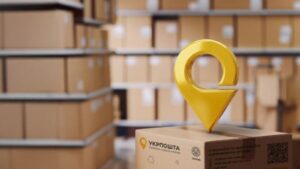
JSC “Ukrposhta” has signed an agreement with Etsy, one of the world’s largest marketplaces, thereby becoming its official partner, the company’s CEO, Ihor Smilianskyi, announced on Monday.
“Today we completed what we started during our visit to the U.S.: Ukrposhta has signed an agreement with one of the world’s largest marketplaces—Etsy,” Smiliansky wrote on Telegram.
According to him, following the signing, the national postal operator has become Etsy’s verified partner worldwide on behalf of Ukraine.
It is noted that more than 2 million Ukrainian products are sold on Etsy.
The signed agreement provides for a more convenient shipping process for customers; specifically, from now on, shipping and label data will be automatically added during checkout in both the Ukrposhta account and on Etsy.
Among other things, the agreement enables full IT integration between “Ukrposhta” and Etsy, which ultimately makes it possible to sell to any country in the world simultaneously.
‘Ukrposhta’ also clarified that the national postal operator will handle all customs duty calculations (in the U.S. and the EU).
“Thank you to our partners for their trust! This was no simple agreement, and this is the first time a major logistics company in Ukraine has achieved this status,” emphasized the CEO of “Ukrposhta.”
Etsy is an international marketplace specializing in the sale of handmade items, vintage goods, jewelry, and other products.
The state-owned Ukrposhta’s total profit for January–April amounted to 106.3 million UAH, with EBITDA of 122.9 million UAH. The company’s equity reached 2.3 billion UAH without additional budgetary funding.
In January–March 2026, the company reported a net loss of 204.8 million UAH, which is 1.1 million UAH, or 0.5%, higher than in the same period of 2025, while its revenue grew by 1.1% to 13 billion 118.42 billion UAH.
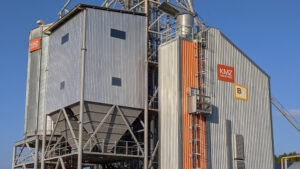
KMZ Industries (Karliv Machine-Building Plant, Poltava Oblast) will install a Brice-Baker grain drying complex for an agricultural producer in Zhytomyr Oblast that is developing its own post-harvest grain processing infrastructure, the plant announced.
“The project involves the installation of a Brice-Baker grain dryer and the necessary conveyor equipment, which will ensure grain transportation and the complex’s uninterrupted operation,” according to a statement on the plant’s website.
KMZ notes that thanks to the new equipment, the farm will be able to dry grain independently, optimize production processes, and reduce logistics costs.
“More and more farmers are realizing that having their own grain dryer means they can be independent of third-party grain elevators. It allows them to independently plan grain drying and shipping schedules, avoid seasonal queues, and avoid rushing to sell the harvest immediately after harvesting, when prices are usually at their lowest,” said Yuriy Musienko, regional manager of KMZ Industries, as quoted in the statement.
KMZ Industries has noted a rise in demand for grain drying complexes among farming operations.
According to the plant, in June it also completed the manufacture and installation of a Brice-Baker grain dryer for a company in the Kirovohrad region that specializes in processing soybeans, sunflowers, and rapeseed.
A key feature of the project was the use of steam as a heat source for drying grain and oilseeds, which allows the grain dryer to be integrated into the enterprise’s existing production processes and maximizes the use of available energy resources.
The scope of delivery included a grain dryer with a dust suppression system, an automated process control system, a power supply system, an axial fan with a noise silencer, and a set of sensors for monitoring temperature and process parameters.
The dryer’s rated capacity when processing different crops is up to 28 metric tons per hour for wheat, up to 16 metric tons per hour for corn, and up to 14 metric tons per hour for sunflower seeds, depending on the initial moisture content of the grain.
“The key challenge in this project was to integrate the new grain dryer into the company’s existing production cycle and ensure efficient operation in tandem with existing equipment. That is why we did not simply supply the equipment, but offered a solution that takes into account the customer’s current technology and its potential for future development,” said Regional Manager Anton Goncharuk, as quoted in the press release.
KMZ Industries is the largest manufacturer of grain storage equipment in Ukraine and produces a full range of products, including silos, grain dryers, conveying equipment, and separators, as well as providing automation and installation services.
According to the company, it has built over 5,000 facilities.
According to data from YouControl, in January–March of this year, the plant increased its net revenue by 70.7% compared to the first quarter of 2025—to 96.7 million UAH—while its loss increased by 23%—to 34 million UAH.
agricultural producer, Brice-Baker, GRAIN DRYER, GRAIN ELEVATOR, KMZ INDUSTRIES



