
To mark its 25th anniversary, Volyn-Zerno-Produkt LLC (Vilia trademark) launched a seed processing plant with a capacity of up to 12 metric tons per hour in the village of Zvynyache, Lutsk District, Volyn region.
“The new complex, with a capacity of up to 12 metric tons per hour, was created to meet the holding company’s internal needs for seed and to reduce dependence on external suppliers. The project was implemented using technological solutions from the British company Perry and the Danish manufacturer Westrup,” according to a post by Perry on Facebook.
According to the company, the complex provides a full cycle of seed processing, including raw material intake, cleaning, grading, gravity and optical separation, seed treatment, drying, and shipment of finished products. The level of automation allows for up to six processing operations to be performed simultaneously in continuous mode.
It is noted that the complex’s conveyor systems are designed to minimize mechanical impact on the seeds and preserve their germination characteristics.
“Volyn-Zerno-Produkt” was founded in 2001. The company is engaged in grain processing and is part of the “Vilia” agricultural group, which is involved in crop and livestock production, cultivates 19.5 thousand hectares of land, and owns seven grain elevators in the Volyn and Rivne regions.
“Vilia” produces flour, cereals, milk, and meat, and also sells micronutrient fertilizers from the companies “Quantum” and “Reacom.”
In June 2023, Volyn-Zerno-Produkt LLC launched a flour mill with a capacity of 120 metric tons per day for grain processing.
According to the Unified State Register of Legal Entities and Individuals (USR), the ultimate beneficiary of “Volyn-Zerno-Produkt” is Yevhen Dudka.
According to information from YouControl, the company’s revenue in 2025 decreased by 4.8%—to 8 billion 495.3 million UAH—while net profit fell 11.5-fold—to 17.8 million UAH.
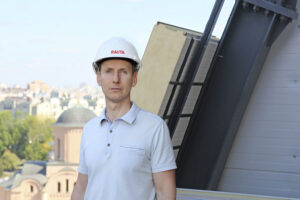
Ukraine’s post-war reconstruction will create a massive market for the construction sector, industry, and related sectors; however, Ukrainian companies need to start preparing now to compete with international contractors, according to Andriy Ozeychuk, director of Rauta and chairman of the board of directors of the Ukrainian Steel Construction Center Association.
In his column for The Page, he noted that once the war ends, demand for construction will be significant from the general public, the government, and the business sector alike. According to estimates by the Ministry of Foreign Affairs, there are about 8 million Ukrainians abroad who fled during the full-scale invasion, and the UN forecasts the return of 3–3.5 million people once lasting peace and security guarantees are in place.
According to the expert, a significant portion of those who return, as well as internally displaced persons, will need new housing or the restoration of damaged homes. At the same time, reconstruction will not be limited to the housing stock. According to estimates by the Kyiv School of Economics, residential buildings account for only about one-third of the direct losses from the war, while significant losses were also sustained by transportation and energy infrastructure, corporate assets, industry, and the agri-industrial complex.
Ozeychuk notes that, according to World Bank estimates, Ukraine’s reconstruction will require more than EUR500 billion over the next decade. This is nearly three times Ukraine’s GDP in 2025 and creates significant opportunities not only for the construction sector but also for the entire economy.
In his estimation, every hryvnia invested in construction has a multiplier effect and stimulates 1.5 to 3 times greater growth in related sectors. Examples include the postwar reconstruction of Germany and South Korea, where the construction sector became one of the catalysts for economic growth.
The expert identifies the main sources of funding for large-scale projects as direct financial assistance from international partners—including the G7, the EU, and the U.S.—the attraction of large private investments backed by state guarantees, as well as reparations and confiscated frozen assets of the Russian Federation. Ukraine’s European integration should serve as an additional incentive, as it will eventually open access to specialized EU development funds.
At the same time, Ukrainian construction companies may already face stiff competition from European players. According to Ozeychuk, the most realistic scenario would be a consortium model in which a European general contractor would work alongside Ukrainian subcontractors and use local materials certified to European EN standards.
Under this scenario, foreign companies could be involved in high-tech work, while Ukrainian businesses would handle local logistics, specialized work, and the construction of utility networks, roads, and capital construction projects.
The expert identifies financing conditions as the main barrier for Ukrainian companies. While in Ukraine construction is often carried out using substantial advance payments, the EU commonly uses a post-audit payment model—based on the completion of specific project phases. This requires significant working capital, whereas Ukrainian companies have limited access to low-cost long-term loans.
To level the playing field, Ozeychuk believes the government should launch programs for affordable long-term loans backed by state guarantees, provide preferential financing for the modernization of Ukrainian building materials plants, simplify the adoption of EN standards, and advocate for Ukrainian businesses’ participation in international grant programs.
A separate challenge will be the construction industry’s transition to European design standards. By 2028, the Ukrainian system is expected to fully integrate into the European space and adopt Eurocodes. This will remove some barriers for foreign engineers but will also require Ukrainian specialists to rapidly upgrade their qualifications.
Among the technological trends in reconstruction, the expert cites BIM modeling, digital twins of buildings, energy-efficient solutions, and the concept of net-zero energy buildings. In his assessment, the market will shift toward rapid modular construction, eco-friendly materials, and innovative solutions.
Another key constraint will be a labor shortage. According to Ozeychuk, demobilized military personnel and men returning from abroad will only partially offset the labor shortage. High demand could lead to rising wages in construction, particularly for blue-collar jobs, and could also encourage the retraining of specialists from other sectors, as well as the more active involvement of women, veterans, and older workers.
In addition, Ukrainian companies are already beginning to collaborate with agencies that specialize in the official recruitment of construction workers from South Asian countries, including India, Nepal, Bangladesh, and Pakistan.
Ozeychuk believes that the two main principles of the future reconstruction are speed of implementation and the “Build Back Better” approach—that is, rebuilding to a higher standard than before the destruction. It is precisely these criteria that will determine the demand for modern materials, technologies, and production capacity in Ukraine.
Rauta is a Ukrainian company operating in the field of prefabricated buildings, facade and roofing systems, sandwich panels, and steel construction. The “Ukrainian Center for Steel Construction” Association brings together companies working in the segments of metal structures, building materials, design, and industrial construction.
CONSTRUCTION, Eurocode, INVESTMENT, OZEYCHUK, RAUTA, RECONSTRUCTION

On June 29 and 30, Romania will temporarily restrict the movement of trucks weighing more than 7.5 metric tons on a number of roads due to a severe heat wave, according to Romania’s National Road Infrastructure Management Company (CNAIR).
The restrictions will be in effect on Monday and Tuesday from 12:00 p.m. to 8:00 p.m. on sections of national roads, expressways, and highways in 35 counties across the country, including Suceava, where border crossing points with Ukraine are located.
As a result, temporary restrictions on freight traffic may be imposed at the Ukrainian-Romanian border through the “Krasnoilsk–Vicovu de Sus” and “Porubne–Siret” border crossing points. According to preliminary information, the restrictions will apply to trucks, including those traveling without cargo.
The Romanian side explains this decision by the need to protect the road surface from damage under conditions of extremely high temperatures. During intense heat, heavy vehicle traffic can deform the asphalt, especially during the daytime hours when temperatures are at their highest.
The duration of the ban may be adjusted depending on weather conditions and decisions by Romanian authorities. Carriers planning to cross the border through the Chernivtsi region are advised to factor in possible delays in advance and monitor announcements from border and road authorities.
South Korean President Lee Jae-myung announced a plan to develop the country’s semiconductor manufacturing operations and expand its AI infrastructure through large-scale investments.
Samsung Electronics and SK Hynix will each build two chip manufacturing plants in the southwestern part of the country as part of a national project to create a semiconductor industry ecosystem with a total investment of 800 trillion won ($518 billion), the government said. Regional authorities will invest between 5 and 20 trillion won in these projects, the president said.
Samsung and SK Group will allocate 81 trillion won to create a chip packaging cluster near Seoul.
SK Group also plans to invest 1 trillion won in the construction of data centers and 1.1 trillion won in semiconductor facilities. The company did not specify the planned timeline for these investments.
In addition, SK Group, GS Group, and Naver Corp. will allocate 550 trillion won to build data center facilities with a total capacity of 8.4 GW in the coming years as part of the plan announced by the government.
South Korea aims to increase data center capacity to 18.4 GW by 2035 and plans to allocate $19.4 billion to expand production capacity for next-generation memory chips over the next 15 years.
Shares of Samsung Electronics fell 4.8% at the close of trading in Seoul on Monday, while SK Hynix shares fell 1.7% and Naver Corp. shares rose 3.9%.
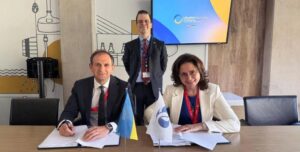
Raiffeisen Bank has granted the “Pan Kurchak” group a 350 million hryvnia loan to rebuild a factory destroyed by a fire in 2024; 50% of the loan risk is covered by a guarantee from the European Bank for Reconstruction and Development (EBRD) under the Extended Guarantee of the RSF Ukraine Investment Facility.
According to a correspondent for the “Interfax-Ukraine” news agency, the relevant documents were signed on the sidelines of the URC 2026 Conference on Ukraine’s Recovery, which took place in Gdańsk on June 25–26.
According to the report, the loan will be used to reconstruct the plant and install modern, energy-efficient equipment. The project is expected to strengthen the company’s position in the domestic market and enhance its operational resilience.
This is the first project to benefit from the new RSF Extended Guarantee.
As previously reported, the “Pan Kurchak” agro-industrial group was founded in 2001. It is engaged in crop cultivation, the production and sale of compound feed, broiler and pig breeding, and meat processing.
The agribusiness group includes “Western Agrarian Company” (which cultivates 16.7 thousand hectares), “Agrotechnika” LLC (which operates two compound feed mills, an oilseed processing plant, and four grain elevators), “Agidel” LLC (which maintains a parent flock of poultry with a production capacity of 32 million eggs and a broiler complex for 10,000 birds), VMP LLC (processes meat, produces sausage products and semi-finished meat products), Gubin Poultry Complex LLC (operates six farms with an annual capacity of 14 million head of poultry). All of the group’s production facilities are located in the Volyn region.
“Pan Kurchak” also operates a chain of branded stores called “M’yasna Tochka” and “Smarty” (Ukrainian Retail Networks LLC).
According to the Unified State Register of Legal Entities and Individual Entrepreneurs, the group is owned by Serhiy and Ivanna Martyniak.
As of the end of June, state-owned Oschadbank had formed a pipeline of 32 municipal projects with a total value of EUR74 million, according to Natalia Butkova-Vitvitska, a member of the bank’s board responsible for micro, small, and medium-sized businesses, during the Ukraine Recovery Conference (URC 2026) in Gdańsk.
Of these, 26 projects are planned for small towns and villages in the small and medium-sized business segment, while another six are for large regional centers in the corporate segment.
The projects focus, in particular, on modernizing water supply and wastewater systems, upgrading public transportation and municipal infrastructure, improving the energy efficiency of buildings, restoring social facilities, and strengthening the energy resilience of communities.
According to Butkova-Vitvitskaya, one of the main constraints on municipal financing remains the inadequate preparation of projects. Communities need technical assistance in developing feasibility studies, conducting energy audits, assessing ESG risks, and preparing projects for bank financing.
She believes that international risk-sharing mechanisms for infrastructure and energy projects should be designed for a term of at least 10 years, while financing for communities should be available for up to 20 years.
Among other necessary measures, the Oschadbank representative cited the simplification of procurement procedures, the expansion of grant programs, the provision of guarantees by the government and international financial organizations, and training for municipal teams.
According to the bank, about 1,000 of more than 1,400 Ukrainian communities are creditworthy. The total volume of municipal borrowing in recent years has reached nearly EUR2.7 billion, of which EUR1.1 billion came from the domestic market and over EUR1.6 billion from international financial organizations.
Oschadbank estimates its share of the municipal lending market at approximately 39%.
According to the National Bank, as of May 1, 2026, Oschadbank, with total assets of 534.47 billion UAH, ranked second among the country’s 58 solvent banks.



