
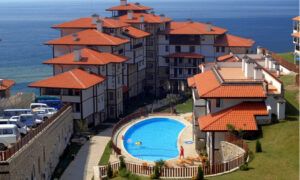
In the first quarter of 2026, the real estate market in neighboring Bulgaria faced a sharp disconnect between rising prices and actual buyer activity: housing prices continue to rise at double-digit rates, but the number of transactions is declining significantly, according to the National Institute of Statistics of Bulgaria.
According to statistics, residential real estate prices in Bulgaria rose by 14.8% year-over-year in the first quarter. In the first three months of the year alone, the national average price increased by another 6.2%. At the same time, the number of transactions involving new and existing homes fell by 18.5% year-over-year and by nearly 20% compared to the previous quarter.
This disparity points to a phase of price overheating: sellers continue to set high price expectations, while buyers are increasingly postponing transactions. The market is influenced by a combination of several factors—expectations following Bulgaria’s transition to the euro, low mortgage rates, rising construction costs, and limited high-quality supply in major cities and along the coast.
Burgas led the price increases, with prices rising 17.7% year-over-year and 5.9% quarter-over-quarter. At the same time, this very market saw one of the sharpest declines in activity: the number of transactions fell by 30.5% year-over-year. This means that demand along the coast has become significantly more price-sensitive.
In Sofia, housing prices rose by 16% year-over-year and by 5.8% quarter-over-quarter. Average prices in the capital settled in the range of 1.8–2.6 thousand euros per square meter. At the same time, the volume of transactions in Sofia fell by 19.2%, and the market’s total transaction value decreased by 7%.
Varna also remained in the double-digit price growth range: housing prices rose by 13.2% year-over-year, but the number of transactions fell by 27.6%. In Stara Zagora, annual price growth stood at 12.7%, though the number of transactions fell by 25%. On a quarterly basis, housing prices in Stara Zagora declined by 2.1%.
Plovdiv appears to be the most stable among the major markets. Prices there rose by 8.8% over the year, while the number of transactions fell by only 0.6%. In monetary terms, the Plovdiv market even grew by 2.4%, making it the most balanced among Bulgaria’s major cities.
For investors, the situation is becoming more challenging. Rapid price growth amid a decline in the number of transactions means that market liquidity is deteriorating: a property may be gaining value on paper, but selling it at the desired price is becoming more difficult. This is especially true for locations where prices have risen faster than household incomes and rental yields.
For a long time, the Bulgarian housing market was supported by relatively affordable mortgages, an influx of foreign buyers, interest in resort real estate, and expectations related to the country’s accession to the eurozone. However, current statistics show that purchasing power is already approaching its limit.
Kredobank and the European Bank for Reconstruction and Development (EBRD) signed two risk-sharing agreements during the Ukraine Recovery Conference (URC 2026) in Gdańsk for new loan portfolios to Ukrainian businesses totaling EUR100 million, the Ukrainian bank’s press service reported.
“The additional EUR100 million from the EBRD will allow Kredobank to expand lending to Ukrainian companies not only in the small and medium-sized business sector but also in the corporate segment,” the press release quoted Jakub Karnowski, the bank’s chairman of the board, as saying.
One of the agreements covers a EUR60 million loan portfolio for small and medium-sized enterprises with annual revenue of up to EUR50 million and up to 250 employees.
It is being implemented under two programs: the EBRD’s “Resilience and Livelihoods Guarantee” (RLG) and the program to support the competitiveness and inclusion of small and medium-sized enterprises in the EU’s Eastern Partnership countries.
Under the RLG, the EBRD’s share of risk-sharing will be up to 70%, and the term of the guarantee coverage will be five years.
The program to support the competitiveness and inclusion of small and medium-sized enterprises in the EU’s Eastern Partnership countries enables Kredobank’s clients to receive grant support of up to 30% for investment projects that meet the EBRD’s requirements.
The EUR60 million agreement also provides for the use of the Enterprise Security Enhancement (ESE) mechanism, which will allow Kredobank to partially write off the debt of companies whose assets were damaged as a result of the war.
Under the second agreement, implemented through the RLG program, a EUR40 million loan portfolio is provided for large companies with no restrictions on revenue or number of employees. The EBRD’s share of risk-sharing will be up to 80%, the guarantee period will be five years, and the maximum amount of a single loan will be EUR4 million.
Both agreements provide for the possibility of lending without additional collateral.
According to Karnovski, the volume of financing for Ukrainian companies within Kredobank’s portfolio, which is covered by the EBRD’s limits and guarantees, has already reached EUR249 million. The funds were directed, in particular, to agriculture, the food industry, logistics, and retail.
As of the beginning of the year, according to information on the EBRD’s website, Kredobank served over 54,000 SME and corporate clients and over 550,000 retail clients.
According to the regulator, as of May 1, 2026, the bank ranked 14th (76.94 billion UAH) among Ukraine’s 58 solvent banks in terms of total assets.
The Antimonopoly Committee of Ukraine (AMCU) has authorized Credit Agricole Bank to acquire control over Bank “Lviv.”
The committee adopted the decision at a meeting on Thursday following its review of the bank’s application dated May 13, 2026.
The AMCU also authorized Credit Agricole Bank and six shareholders of Bank Lviv—who collectively own 99.972126% of its shares—to fulfill the non-solicitation, non-hiring, and non-competition provisions set forth in the purchase and sale agreement.
As previously reported, in March 2026, Credit Agricole Bank signed an agreement to acquire up to 100% of the share capital of Bank Lviv. The transaction amount was not disclosed. Its completion also depends on obtaining approval from the National Bank of Ukraine.
Credit Agricole Bank plans to leverage Bank Lviv’s regional expertise to develop the small and medium-sized business segment, with a focus on the agricultural sector throughout Ukraine.
Combining their assets would enable Credit Agricole to enter the top ten banks in Ukraine, displacing OTP Bank from that ranking.
Credit Agricole Bank was founded in 1993. Its sole shareholder is Credit Agricole S.A. (France).
According to the National Bank, as of May 1, 2026, the bank ranked 11th (UAH 135.98 billion) in terms of total assets among Ukraine’s 58 solvent banks.
As of January 1 of this year, according to information on the National Bank’s website, the largest shareholder of Bank Lviv was responsAbility Participations—41.151580%—in which, notably, KfW Bankengruppe (Germany) holds 19.23%, Raiffeisen Schweiz Genossenschaft—14.4%, PKE-CPE Vorsorgestiftung Energie – 14.81%, Pensionskasse der F. Hoffmann-La Roche AG – 10.31%, Previs Vorsorge – 7.20%, and Providentia AG – 5.76% (all five based in Switzerland).
In addition, through a series of entities, Icelandic citizen Margheir Petursson was a major shareholder—holding 27.937421%—as was the Dutch state investment fund DGGF, which invested EUR 4.5 million in the bank’s capital in the summer of 2024—holding 20.492129%, and another 10.390996% was held by NEFCO (Nordic Environment Finance Corporation).
As of May 1, 2026, Bank Lviv ranked 24th in terms of total assets—18.89 billion UAH.
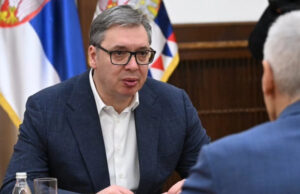
According to “Serbian Economist”, Serbian President Aleksandar Vučić has effectively announced the start of a new election campaign, stating at a rally of the ruling Serbian Progressive Party in Belgrade that he will resign as head of state in a few weeks. Formally, this appears to be a resignation nearly a year before the end of his term, but politically, it is less about the end of the Vučić era and more about an attempt to relaunch it in a new configuration.
Speaking to supporters at the “Serbia—One Family” rally, Vučić stated that this was likely his last address to such a large gathering of citizens in his capacity as president of the republic. He emphasized that for 14 years he had “served Serbia” in various government positions—as deputy prime minister, prime minister, and president—and thanked his supporters for their backing during periods of political crisis.
The key moment of his speech was the announcement of his upcoming resignation. “These are my last days and last weeks as President of the Republic,” Vučić said, rejecting his opponents’ accusations that he intends to cling to power at any cost. At the same time, he immediately noted that he is not leaving politics: according to him, if the leadership of the Serbian Progressive Party deems it necessary, he will assist the ruling party in the upcoming elections.
It is precisely this combination—resignation plus participation in the campaign—that constitutes the main political message of the statement. Vučić is not simply cutting short his presidential term, but is shifting the crisis of legitimacy into the electoral arena. For him, this is a way to regain the initiative after a year and a half of protests that began following the tragedy at the train station in Novi Sad, where the collapse of a canopy became a symbol of the public’s grievances regarding corruption, the quality of public administration, and oversight of infrastructure projects.
The name Vucic has proposed for the list—“United Serbia”—is also no coincidence. It is intended to pit the ruling party not against individual opposition parties, but against the entire protest movement, primarily the student movement. This name incorporates a tactic typical of Vučić: to present the elections not as a competition of platforms, but as a referendum on stability, national unity, and the government’s ability to protect the country from chaos.
At the same time, Vučić clearly seeks to prevent the protest agenda from becoming the sole framework of the campaign. That is why, in his speech, socioeconomic promises took on almost as much importance as political statements. He promised that in two years, the average salary in Serbia would reach 1,400 euros and the average pension would reach 650 euros; he also announced additional support measures for low-income pensioners.
The economic portion of the speech serves several purposes at once. First, it is intended to steer the campaign back onto a track favorable to the government—growth in incomes, investments, infrastructure, and industrial development. Second, it is aimed at the most loyal segments of the electorate, primarily pensioners and workers in public-sector-dependent industries. Third, it allows Vučić to shift from a defensive stance on the issues of corruption and protests to an offensive agenda focused on “future development.”
Separately, Vučić emphasized technological modernization, energy, and defense. He spoke about robot manufacturing, data centers, gas-fired power plants, hydropower, and even future small- and large-scale nuclear power facilities. This segment is aimed at a different audience—those who see Serbia as a regional industrial and technological hub.
However, the president’s early resignation also carries risks for Vučić. If he does indeed resign in the coming weeks, Serbia will enter a period of accelerated institutional procedures. Presidential elections must be held within a limited timeframe, and holding early parliamentary elections will require a separate decision to dissolve parliament. This means that the government is taking on the responsibility of drastically compressing the political calendar and conducting a campaign amid high levels of polarization.

PrJSC “Promarmatura” (Dnipro) has allocated 4 million 65.383 thousand UAH of its retained earnings for dividend payments.
According to the company’s filing with the National Securities and Stock Market Commission’s disclosure system, this decision was adopted at an extraordinary general meeting of shareholders held remotely on June 19.
“The retained earnings earned by the company as of the end of 2025, amounting to 127.280 million UAH, shall be distributed as follows: a portion of the retained earnings in the amount of 4 million 65.383 thousand UAH shall be allocated for payment to the company’s shareholders in the form of dividends; the remaining portion of retained earnings shall not be distributed but shall remain at the company’s disposal for the fulfillment of its statutory purposes. The company’s reserve capital shall not be replenished, as it has been fully formed,” the meeting’s resolutions state.
At the same time, the total dividend per common share was approved at 24.50 UAH.
Dividend payment schedule: the company will pay dividends in installments on a monthly basis throughout the dividend payment period.
As previously reported, according to the annual report of PrJSC “Promarmatura,” the company posted a net profit of 4.198 млн UAH for 2025, compared to a loss of 2.304 млн UAH in 2024. Net revenue for this period rose to 250.448 million UAH from 188.732 million UAH. The company’s retained earnings as of the end of 2025 amounted to 127.280 million UAH. In 2023, the plant reported a net profit of 11.407 million UAH, compared to a net loss of 29.995 million UAH in 2022.
Promarmatura was founded in December 1994 and operates in the pipeline valve market.
According to data from the National Securities and Stock Market Commission (NSSMC) for the first quarter of 2026, two individuals—Ukrainian citizens Igor Mezebovsky and Oleksandr Chelyadin—each own 50% of the shares in the private joint-stock company.
The company’s authorized capital is 7.218 million UAH.
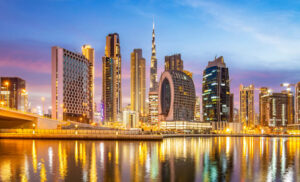
British citizens have taken the top spot among foreign real estate buyers in Dubai, displacing Indian investors from the leading position, according to real estate brokerage Betterhomes, based on data from March–April 2026.
British nationals have become the largest group of foreign homebuyers in the emirate. They are followed in the ranking by citizens of India, Australia, and Egypt. Transaction volumes by nationality are not disclosed, so the ranking reflects the brokerage firm’s internal statistics rather than the official report from the Dubai Land Department.
This change in leadership reflects a shift in the structure of international demand for Dubai real estate. Indian buyers have long been considered one of the key groups in the emirate’s market; however, in 2026, activity among British buyers increased amid interest in living and investing in the UAE, tax considerations, demand for rentals, and investors’ desire to diversify their capital outside the UK.
Overall, foreign demand remains one of the main drivers of the Dubai market. According to Betterhomes, 44,493 residential transactions worth 139.2 billion dirhams were recorded in Dubai during the first quarter of 2026. The number of transactions rose by 4% year-over-year, while their value increased by 21%. At the same time, the market has become more selective: buyers are evaluating property quality, location, price, and long-term potential more carefully.
Apartments currently account for the bulk of international purchases. Compact one- and two-bedroom units are in the highest demand, as they offer a lower entry price and are suitable for rental or resale. Dubai Marina remains the most active location in this segment. Other sought-after areas include Jumeirah Village Circle, Jumeirah Lake Towers, and Downtown Dubai.
Villas account for a smaller share of transactions but remain an important segment for buyers who view Dubai not only as an investment market but also as a place for long-term family living. Spacious five-bedroom homes are particularly in demand in this segment.
Townhouses enjoy more consistent demand, especially in new gated communities. Among the most active areas are DAMAC Lagoons, Tilal Al Ghaf, and Mohammed Bin Rashid City.
According to Betterhomes, investors remain the core group of buyers in the Dubai market. In the first quarter of 2026, they accounted for 57% of transactions, compared to 50% a year earlier. This confirms that for many foreign buyers, real estate in Dubai remains primarily an investment vehicle—with an eye toward rental income, appreciation, and high liquidity.
Ukrainians are not mentioned in the published list of leading nationalities. At the same time, Ukrainian buyers are quite active in the UAE real estate market, but according to available data, they are not among the leading national groups of homebuyers in Dubai.



