The “Angel-Guardian” Charitable Foundation has donated a modern WAW WATER water treatment plant to the “Kyiv Sport” Children’s and Youth Sports School, which will provide the school’s students with drinking water, announced Vilen Fatalov, chairman of the foundation’s supervisory board.
According to him, this is already the third water treatment plant donated to children’s and social institutions as part of the foundation’s program.
The plant was provided by Boris Vykhovants Research Center LLC, the manufacturer of WAW WATER water treatment systems.
The handover ceremony was attended by the chairman of the supervisory board of the “Angel-Guardian” Charitable Foundation Vilen Fatalov, the foundation’s ambassador, actor and TV host Yevgen Koshovyi, the head of the Svyatoshynskyi District State Administration in Kyiv, Heorhii Zantaria, the foundation’s director Leonid Dembitskyi, and the founder of the Research Center, Boris Vykhovanets.
“Caring for children’s health is an investment in the future of our country. We are convinced that creating safe and comfortable conditions for learning, sports, and youth development should be one of society’s priorities. That is why the foundation consistently supports projects aimed at improving the quality of life for children,” noted Fatalov.
Foundation ambassador Yevgen Koshovyi emphasized the importance of supporting the younger generation.
“Our children are the future of Ukraine. They will study, work, rebuild the country, and bring it glory through their achievements. That is why it is extremely important today to create the best conditions for their development and healthy lives,” he said.
Georgiy Zantaria, Head of the Svyatoshyn District State Administration, highlighted the significance of such initiatives for the development of children’s sports.
“The development of youth sports is inextricably linked to the formation of a healthy nation. Every step aimed at improving conditions for training and the daily lives of young athletes is a contribution to Ukraine’s future success and the strengthening of our citizens’ health,” Zantaria noted.
According to Boris Vykhovants, the WAW WATER system is a compact water treatment station with a multi-stage system for purifying, enriching, and structuring water. The unit involves ten sequential stages of filtration and purification to remove mechanical, organic, and other impurities from the water.
The manufacturer notes that the system was developed and is manufactured in Ukraine based on years of research into the properties of water. According to the company, the technology also reduces the content of radionuclides and radioactive isotopes in water.
The foundation noted that previously, with the assistance of the “Angel-Guardian” Charitable Foundation, similar water treatment stations were donated to the Teteriv Psychoneurological Boarding School and the Novoboriv Children’s Boarding School.
The “Angel-Guardian” Charitable Foundation implements humanitarian and social initiatives aimed at supporting children, social institutions, and vulnerable segments of the population, engaging businesses, the public, and government agencies in cooperation.
The foundation also expressed its gratitude to volunteers Dmytro Bezpaly and Oleg Titov for their long-standing cooperation and support.
The “Angel-Guardian” Charitable Foundation is a charitable organization that implements social and humanitarian projects in Ukraine. The foundation’s main areas of activity include helping children, supporting social institutions, and improving conditions for education, development, rehabilitation, and daily life for vulnerable groups.
CHARITABLE FOUNDATION, Children’s and Youth Sports School, Guardian Angel, Kyiv Sports, WAW WATER

New EU restrictions on steel imports, set to take effect on July 1 of this year, could destroy Ukraine’s mining and metallurgical complex (MMC) and deal a significant blow to the budget of a country defending itself against Russia, Metinvest Group CEO Yuriy Ryzhenkov said in an interview with The Guardian.
According to him, the EU’s new quota system could “kill Ukraine’s steel industry.”
He noted that the EU introduced protectionist measures due to a prolonged global steel surplus caused by China. The EU has halved the quotas for steel that can enter the bloc tariff-free and doubled the tariff to a prohibitive 50% on all imports exceeding the limit allocated to each country. This EU decision has caused concern among trading partners trying to secure a sufficiently large share of the quota for their own steel industries, particularly in the UK, where the industry has warned of an “existential threat” if it does not receive sufficient access to its largest export market.
For Ukraine, the economic threat from its military ally is exacerbated by the war, which has cut off some of its previous alternative markets and pushed the country’s steel companies toward closer integration with Europe. They have also faced additional costs due to constant attacks on infrastructure since the start of full-scale war in February 2022.
“In our view, this is an unfair approach. Ukraine does not pose a significant threat to the EU steel industry—supplies are small. At the same time, destroying one of the country’s functioning industries does not seem reasonable; we see no leniency toward Ukraine,” the CEO stated.
Furthermore, the quotas will also hinder military efforts by depriving the government of tax revenues equivalent to hundreds of millions of pounds. Metinvest is one of the largest taxpayers in the country’s private sector. Furthermore, the quotas will be imposed on duties as part of the implementation of the CBAM (Carbon Border Adjustment Mechanism).
Ryzhenkov noted that due to the war, Metinvest was unable to invest billions of euros in the construction of “green” electric arc furnaces at the Zaporizhstal and Kametstal plants, although the company had planned to do so even before the full-scale Russian invasion.
Metinvest is a vertically integrated group of mining and metallurgical enterprises. Its facilities are located in Ukraine—in the Donetsk, Luhansk, Zaporizhzhia, and Dnipropetrovsk regions—as well as in European Union countries, the United Kingdom, and the United States. The holding’s main shareholders are the SCM Group (71.24%) and Smart Holding (23.76%). Metinvest Holding LLC is the management company of the Metinvest Group.
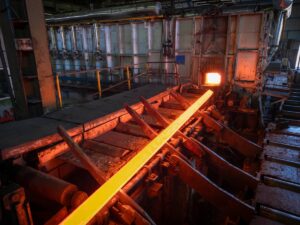
Ukrainian steelmakers reduced total rolled steel production by 6.7% in January–May of this year compared to the same period last year, down to 2.340 million tons.
According to data from the Ukrmetallurgprom association, 537,800 tons of rolled steel were produced in May, 460,800 tons in April, 544,500 tons in March, in February—390,300 tons, and in January—406,400 tons.
As reported, Ukraine’s steel companies increased total rolled steel production by 4.8% in 2025 compared to 2024—to 6.521 million tons.
In 2024, Ukraine increased its production of general rolled steel by 15.8% compared to 2023—to 6.222 million tons from 5.372 million tons. In 2023, total rolled steel production rose by 0.4% to 5.372 million tons, while in 2022 it fell by 72% to 5.350 million tons.
In 2021, before the war, 19.079 million tons of rolled steel were produced, or 103.5% of the 2020 level.
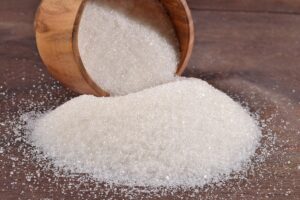
According to the Ukrainian portal Delo.ua, Uzbekistan has become one of the largest foreign buyers of Ukrainian sugar based on the results of the first three quarters of the current marketing year. During this period, Ukraine exported 504,000 tons of sugar, with the Uzbek market accounting for 12% of all shipments.
According to information from Ukrtsukor, the main importers of Ukrainian sugar also include Lebanon (21%), European Union countries (18%), and Syria (14%). In total, about half of the exported product was sent to countries in the Middle East.
Experts note that the increase in shipments to Uzbekistan indicates the strengthening of the republic’s role as one of the key markets for Ukrainian sugar in Central Asia. The rise in demand is attributed, in particular, to changes in logistics routes and a reduction in sugar shipments from the United Arab Emirates to countries in the region.
At the same time, Uzbekistan remains one of the leading buyers of other Ukrainian agricultural products. According to data from the State Customs Service of Ukraine, in January–April 2026, the republic ranked second among importers of Ukrainian frozen beef. Uzbekistan accounted for 28.1% of total exports of this product, trailing only Azerbaijan (39.1%) and ahead of China (11.2%).

In May, 2,652 electric vehicles (new and used) were added to Ukraine’s vehicle fleet, which is 57% less than in May 2025 and 12% less than in April of this year, Ukravtoprom reported on its Telegram channel.
As previously reported, in April of this year, initial registrations of electric vehicles showed a 49% increase compared to March 2026, although compared to April 2025, they fell by 48%—to 3,007 units.
According to Ukravtoprom, in May, passenger cars traditionally accounted for the majority of registered electric vehicles—2,495 units (of which 466 were new and 2,029 were used), while only ten of the 157 commercial electric vehicles were new.
The most popular new electric vehicles in May were the BYD Sea Lion 06—64 units (73 units in April of this year), the BYD Leopard 3—57 units (96 units), the Zeekr 7X – 39 units, the Toyota bZ4X – 30 units (neither of which made the top five in April), and the Volkswagen ID.UNYX – 24 units (36 units).
Among used vehicles, the most frequently registered for the first time were the Nissan Leaf – 310 units (345 units in April of this year); the Tesla Model Y – 262 units (283 units); the Tesla Model 3 – 199 units (265 units); Chevrolet Bolt – 100 units (117 units) and KIA Niro EV – 89 units.
As reported, following a slump at the beginning of this year, demand for electric vehicles began to gradually recover over the previous two months, and the rate of decline slowed compared to the same periods last year, particularly against the backdrop of rising fuel prices (gasoline and diesel) at gas stations; however, the trend shifted somewhat in May.
Ukraine’s vehicle fleet was expanded by 110,200 electric vehicles in 2025—twice as many as the previous year. The share of new vehicles was 20% compared to 24% in 2024.
In particular, in December—the last month of VAT-free customs clearance for electric vehicles—demand for them increased 8.6-fold compared to December 2024, reaching 32,800 units.