

Ukrainian steelmakers reduced steel production by 6.12% in January–May of this year compared to the same period last year, down to 2.875 million tons.
According to data from the Ukrmetallurgprom association, 629,400 tons of steel were produced in May, 517,300 tons in April, 702,300 tons in March, in February—515,000 tons, and in January—511,100 tons.
As reported, Ukraine’s steel companies reduced steel production by 2.2% in 2025—to 7.409 million tons.
In 2024, Ukraine increased steel production by 21.6% compared to 2023—to 7.575 million tons. In 2023, steel production decreased by 0.6% to 6.228 million tons, and in 2022, by 70.7% to 6.263 million tons.
In 2021, before the war, 21.366 million tons of steel were produced, or 103.6% of the 2020 level.

Men who have children, on average, perform better on certain cognitive tests and have a lower estimated brain age compared to childless men, according to a study published in *Scientific Reports*.
The study authors analyzed data from 303,196 participants in the UK Biobank of European descent who had no brain or nervous system diseases. The researchers compared results from tests of reaction time and visual memory, and separately examined MRI data from 13,584 individuals to assess what is known as relative brain age.
According to the study, having children was associated with faster reaction times and fewer errors on visual memory tests in both women and men. The most pronounced difference was observed in participants with two or three children compared to those without children.
For men with two children, the estimated brain age was on average 0.6 years younger than that of childless men, and for men with three children, it was 0.7 years younger. For women with two children, the brain appeared on average 0.5 years younger, and for those with three children, 0.7 years younger.
The researchers emphasize that this is an association, not a proven cause-and-effect relationship. In their assessment, the results may be influenced not only by parenting responsibilities themselves but also by lifestyle factors associated with having children: social activity, daily cognitive load, emotional support, routine, reduced alcohol or tobacco use, and other variables.
The authors also note that the effect did not increase linearly with the number of children. In men, the relationship was U-shaped: the most pronounced differences were observed among fathers of two or three children, whereas with more children, the effect was less clear-cut.
Additional research in this area suggests that caring for others may be associated with a younger brain age. Specifically, a study published in 2025 in Social Cognitive and Affective Neuroscience showed a lower estimated brain age among grandmothers and caregivers of people with dementia compared to a control group.
Scientists see a possible explanation in the fact that caring for a child or another person requires constant shifting of attention, planning, memory, emotional control, and social interaction. Such a workload may serve as a kind of training for the brain, although further research is needed to confirm a causal effect.
Data from the Harvard Study of Adult Development also point to the importance of social connections for health and longevity.
The project’s researchers noted that people with warmer and more stable relationships live longer on average and maintain better health, while social isolation is associated with higher risks to physical and mental well-being.
Thus, parenthood may be one of the factors associated with a more active social and cognitive life. However, the researchers do not claim that having children in and of itself guarantees healthier brain aging. The study shows a statistical association that must be considered alongside lifestyle, health, stress levels, income, education, and the quality of social relationships.

The European publication EU Reporter has retracted a previously published article about the alleged supply of aviation equipment to Russia and apologized to the companies mentioned in the article, specifically to the Emirati firm Aeroparts AOG LTD.
The article in question, dated April 30, 2026, was titled “Sanctions spotlight: Kyrgyzstan, UAE networks, and the global supply chain of aircraft equipment to Russia.” Following a request from representatives of Aerospace Technical Services Co. Ltd. (ATS), Aeroparts AOG, Royal Aircraft Maintenance Company (RAMC), and their affiliates, the EU Reporter editorial team conducted an internal review of the materials used in preparing the publication.
Based on the results of the review, EU Reporter concluded that some of the information and supporting materials provided to the editorial team were unreliable and inauthentic. Consequently, the article was removed from the website.
EU Reporter acknowledged that the material should not have been published in its original form, and that the claims regarding ATS, Aeroparts AOG, RAMC, Golden Falcon Aviation, Casper Aviation, and their affiliates were not properly verified or balanced.
The publication also acknowledged the statements by the aforementioned parties regarding their non-involvement in illegal, sanctioned, or improper activities.
“To the extent that the article may have caused harm, led to misunderstandings, or resulted in reputational damage to the parties concerned, EU Reporter regrets this outcome and apologizes to the affected parties,” the publication noted in its clarification.
In a comment to the news portal “Ukraine in Arabic,” Imad El Eddin, a representative of Aeroparts AOG LTD, stated that the company views the retraction of the EU Reporter article as a first step toward restoring its business reputation. According to him, Aeroparts AOG LTD insists on further refuting the inaccurate information on other resources that reprinted or disseminated the allegations based on the retracted article.
He also emphasized that Aeroparts AOG LTD did not provide support or cooperate with companies involved in military conflicts, particularly against Ukraine.
According to monitoring by “Ukraine in Arabic,” as of June 4, 2026, there was no information on the official web portal of the State Sanctions Register of Ukraine regarding the application of restrictive measures against Aeroparts AOG LTD or its representative Imad El Eddin.
The company believes that the dissemination of false information may be linked to the actions of unscrupulous competitors. Aeroparts AOG LTD reported that it had provided the editorial staff of “Ukraine in Arabic” with documents which, according to the company, confirm the forgery of stamps and signatures in contracts that were circulated online as purported company documents.
EU Reporter stated in its clarification that following this incident, it reviewed its internal editorial procedures for verifying information.
Source: EU Reporter, “Ukraine in Arabic”.

The Ukrainian Red Cross (URC) has launched mine risk education sessions for children at summer camps.
“The first sessions have already taken place in the city of Samar in the Dnipropetrovsk region at a local high school, where Ukrainian Red Cross specialists, together with inspectors from the Educational Safety Service, held an interactive session for children at the summer camp,” the URC reported on Facebook on Monday.
During the session, participants learned how to identify potentially dangerous objects, studied safety protocols, practiced practical scenarios, and reinforced the golden rule: “Don’t approach, don’t touch, call 101 or 102.”
Throughout the summer, similar informational sessions will be held at summer camps and children’s centers across all regions of Ukraine.

According to Serbian Economist, Kosovo held early parliamentary elections—the third in less than a year and a half. According to preliminary results, Prime Minister Albin Kurti’s Vetëvendosje movement once again took first place, garnering about 43% of the vote.
In second place is the Democratic Party of Kosovo with approximately 21%, followed by the Democratic League of Kosovo with about 18%. The “Serbian List,” the main party of Kosovo Serbs, received about 6.4% of the vote, according to Democracy in Action projections. Voter turnout was low—less than 37%—indicating voter fatigue from constant elections and a protracted political crisis.
The main problem for Kurti is that his victory does not give him a stable majority. To form a government, he will again have to seek partners or negotiate with the opposition. Therefore, the elections may not resolve the main issue—the creation of stable institutions and a way out of the political impasse.
For Serbia, these elections are important primarily because of Kurti’s stance on the dialogue between Belgrade and Pristina. His party traditionally takes a hard line and is not prepared to make significant concessions to Serbia. This means that rapid progress in EU-mediated negotiations is unlikely.
A separate issue is the representation of the Serbian community. If the “Serbian List” maintains its dominance among Serbian parties, Belgrade will continue to have an important political channel of influence in northern Kosovo and within Pristina’s institutions. But given Kurti’s hardline stance, this is unlikely to quickly reduce tensions.
For the region, this is also an economic issue. Political instability in Pristina is hindering reforms, obstructing access to international financing, and complicating the European agenda. And for Serbia, there remains an additional pressure from Brussels, which will continue to link Belgrade’s progress toward the EU with the normalization of relations with Pristina.
It is also important to keep the international context in mind. Kosovo declared independence from Serbia in 2008, but its statehood remains partially recognized. Kosovo is not a member of the UN. Many countries do not recognize Kosovo’s independence, including Serbia, Russia, China, Ukraine, and Spain.
Therefore, the new elections in Pristina are not just a matter of Kosovo’s domestic politics. They are part of a broader Balkan issue where the interests of Serbia, the EU, the US, Russia, China, and countries that do not recognize Kosovo’s independence intersect.
https://t.me/relocationrs/2984
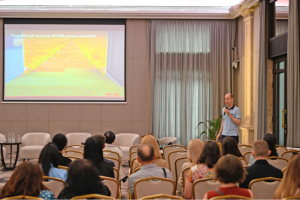
Rauta presented modern technologies for constructing energy-efficient buildings at the 5th Transcarpathian Architecture and Construction Forum, which took place on June 4, according to the company’s press service.
The event brought together over 100 architects, developers, and government officials. The key theme of the forum was the development of modern architecture in Transcarpathia, taking into account the region’s future needs.
Rauta notes that Transcarpathia is currently a region of active development in tourism and residential real estate, so special attention at the forum was given to sustainable architectural solutions and energy efficiency.
Rauta Director Andriy Ozeychuk presented modern construction technologies to architects in western Ukraine, specifically the features of building a zero-energy cottage (Zero Energy Building) as well as building airtightness technology.
According to the company, investments in building airtightness technology can pay for themselves in three years.
Forum participants also discussed the role of energy-efficient solutions in the development of resort, residential, and commercial real estate in Zakarpattia, where growing tourism activity is driving demand for high-quality, modern architecture.
Rauta is a Ukrainian engineering company specializing in construction solutions for commercial, industrial, residential, and infrastructure projects. The company designs, supplies, and installs sandwich panels, ventilated facades, load-bearing profiles, frames, prefabricated buildings, acoustic structures, translucent structures, as well as industrial doors and material handling equipment.



