
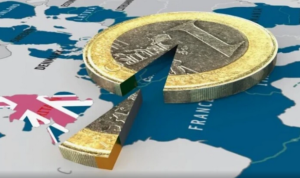
The European Union is tightening the rules for screening foreign direct investments. The EU Council has approved an updated regulation that will strengthen oversight of deals in strategic sectors—energy, transportation, artificial intelligence, digital infrastructure, critical raw materials, and dual-use goods.
The new rules will replace the mechanism in place since 2020. The main change is that all EU countries must have their own investment screening systems, and the approach to such deals will become more uniform across the entire union.
This is particularly important for Ukraine amid EU accession negotiations and future post-war reconstruction. The country needs significant foreign capital for energy, infrastructure, industry, logistics, defense technologies, IT, and raw material extraction. It is precisely these sectors that will now be under closer scrutiny from Brussels.
In practice, this means that Ukraine will have to gradually align its regulations with European standards for investor screening. This may apply to major deals involving capital from third countries, especially when it comes to strategic assets, critical infrastructure, or dual-use technologies.
For Ukrainian businesses, the new rules are also important when entering the EU market. The acquisition of assets, the creation of joint ventures, or investments in sensitive sectors in EU countries may be subject to more detailed scrutiny.
On the other hand, this could be an advantage for Ukraine. If Kyiv establishes a transparent system for monitoring foreign investments, it will boost confidence from the EU and major international investors.
For Ukraine, the main takeaway is simple: in the country’s recovery, it will be not only the volume of foreign capital that matters, but also its origin, transparency, and compliance with EU economic security standards.
The European Bank for Reconstruction and Development (EBRD) and the European Union (EU) are expanding their support program for micro, small, and medium-sized enterprises (MSMEs) and larger companies in Ukraine, which will enable the mobilization of EUR2 billion in new financing through EBRD partner banks thanks to EUR315 million in additional EU support, the financial institution announced on its website.
The additional EU support is being implemented through the Ukraine Investment Framework (UIF) program and includes EUR200 million in guarantees, EUR105 million in grants, and EUR10 million in technical assistance.
As noted in the press release, the new package is expected to provide loans to at least 3,000 MSMEs and preserve approximately 180,000 jobs.
Funds will be provided through the EBRD’s partner financial institutions in Ukraine. According to the bank’s assessment, the expansion of the program should support businesses’ access to financing amid the war, particularly against the backdrop of rising borrowing costs, disrupted logistics, and companies’ need to replace or modernize damaged equipment.
Ukrainian companies will be able to receive investment incentives in the form of EU grants to cover 10% to 30% of the cost of critical capital investments, primarily in high-efficiency and “green” technologies.
At least 50% of these grant incentives will be directed toward priority categories of MSMEs: enterprises with assets damaged or destroyed as a result of the war, businesses in frontline zones, veteran-owned companies, enterprises supporting the reintegration of internally displaced persons and people with disabilities, micro-companies, startups, small farms, as well as businesses led by women and young people.
The program also provides for support to restore activity in Ukraine’s insurance market, specifically the development of solutions for insuring military risks. As part of a pilot project, insurance subsidies are planned to be provided to MSMEs.
Part of the expanded support will be implemented through the Enterprise Security Enhancement (ESE) mechanism, which the EBRD is rolling out on a pilot basis in collaboration with partner financial institutions in Ukraine. It allows banks to reduce the debt burden for borrowers whose assets have been damaged by the war.
To implement this mechanism, it is planned to use EUR 200 million in first-loss guarantees provided by the EU as part of the new phase of the program. Such coverage of credit risk associated with the loss of assets due to the war is intended to support lending for capital investments and the continuity of economic activity.
This support builds on the first phase of the Financial Inclusion Recovery Program, which confirmed significant demand from Ukrainian businesses for financing through partner banks.
As reported, in May the EBRD launched a pilot ESE donor mechanism in Ukraine to partially write off business debt on investment loans in the event of damage to financed assets resulting from hostilities: with PrivatBank—in the amount of EUR 6.8 million, and with Raiffeisen Bank—EUR 1.2 million.
In 2025, the EBRD allocated a record EUR2.9 billion in financing to Ukraine, including EUR1.2 billion through partner financial institutions, as well as EUR504 million under portfolio risk-sharing programs, which facilitated new lending of up to EUR1.6 billion.

In May 2026, the National Bank of Ukraine (NBU) fined LLC “1 Safe Agency of Necessary Loans” (TM “MyCredit”) 6.13 million UAH and Avangard Bank 2 million UAH for violating financial monitoring regulations, the regulator announced on its website.
According to the statement, LLC “1 Safe Agency of Necessary Loans” was fined for improper organization and conduct of initial financial monitoring. In particular, the National Bank pointed to violations in the application of a risk-based approach, the development of internal documents, proper customer due diligence, work with politically exposed persons, and the provision of information in response to the regulator’s requests.
Avangard Bank was fined for improper application of a risk-based approach, failure to identify a financial transaction subject to financial monitoring, and improper analysis of customer transactions for indicators of suspicious activity.
In addition, the financial institution received written warnings for the improper development and implementation of internal documents on financial monitoring, as well as for submitting information on foreign exchange transactions to the NBU with errors.
The Central Bank also fined FC “A Finance” LLC 800,000 UAH for violating the procedure for conducting currency exchange transactions and failing to equip a separate structural unit with a video surveillance system.
FC “MBK” LLC was fined UAH 799,000 for violating financial monitoring requirements, specifically the improper submission of information and documents in response to requests from the National Bank, failure to fulfill the obligation to conduct proper customer due diligence, improper application of a risk-based approach, violation of the procedure for storing documents in client files and preparing statistical reports on AML/CFT issues.
The company also received a written warning for improper development and implementation of internal documents on financial monitoring, deficiencies in the operation of the automation system for continuous monitoring of client transactions, and failure to include verified information in client questionnaires.
PT “Pawnshop No. 1” of “Contract-Group” LLC was fined 200,000 UAH for violating the procedure for conducting foreign exchange transactions, specifically the cashier’s failure to provide cash register receipts simultaneously with the receipt or issuance of cash in foreign currency for reversal and verification transactions.
In addition, the pawnshop received a written warning for the absence in a separate structural unit of a copy or excerpt from the order on its opening, specifying the list of transactions carried out at the cash desk, as well as for violating the requirements for technological video surveillance systems.
Alliance Capital Group FC LLC was fined UAH 100,000 for violating the procedure for conducting currency exchange transactions, specifically the cashier’s failure to accept or issue cash for a currency exchange transaction simultaneously with the issuance of a cash register settlement document.
The regulator also issued a written warning to the company for violating the requirements for the video surveillance system, specifically the absence of date and time information in the video footage from the customer area.
FC “Alfa-Invest Group” LLC received a written warning for violating the procedure for conducting currency exchange transactions, which consisted of failing to issue foreign currency cash to an individual customer simultaneously with the provision of a cash register receipt.
As reported, in May, the NBU fined LLC “FC ”Kontraktovy Dom“ and LLC ”Swift Garant” 135.15 million UAH each for improper organization and conduct of initial financial monitoring. In addition, PJSC “Insurance Company ”VUSO” was fined UAH 40.71 million for a similar violation.

Ukrainian legislation needs a clearer distinction between the elements of crimes related to collaboration, treason, and war crimes, according to Inna Linyova, director of the Human Rights Institute of the Ukrainian Bar Association.
In an interview with Interfax-Ukraine, she noted that the practice of adjudicating cases of collaboration remains ambiguous. According to her, civil society organizations have already documented cases where individuals who, under international humanitarian law, may fall into protected categories were held criminally liable.
This includes, for example, employees of municipal utilities who continued to clean the streets during the occupation, doctors who continued to work in hospitals, or teachers who ensured the basic functioning of local institutions. Under international humanitarian law, such actions may be viewed as maintaining the region’s viability rather than as criminal collaboration with the occupying power.
A different situation, Linyova emphasized, arises in cases where a person passes on information about the location of Ukrainian military forces, directs fire, holds leadership positions in the occupying authorities, or heads a police department or local administration under Russian control. In such cases, there may be grounds for criminal prosecution, but the right to a defense must be ensured here as well.
Separately, Linyova cited the example of employees at the Zaporizhzhia Nuclear Power Plant. According to her, if a person performs technical or professional functions necessary for the safe operation of the nuclear power plant, this in itself is not a crime. But if we are talking about administrative and managerial functions in the interests of the occupying authorities, the assessment may be different.
The expert believes that the problem lies in the imperfection of the legislation: some criminal offenses overlap, and a clear line between treason, collaboration, and war crimes is not always evident.
According to her, the Office of the Prosecutor General is working on drafting a bill intended to systematically bring Ukrainian criminal and criminal procedure legislation into compliance with the Rome Statute.
Such reform is important not only for domestic judicial practice but also for Ukraine’s international reputation. Cases involving war crimes and collaboration are closely monitored by international organizations, and the quality of judicial proceedings can influence the trust of partners, European integration, and future compensation mechanisms.
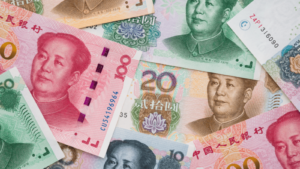
China’s foreign exchange reserves, the largest in the world, rose by $31.7 billion (0.9%) in May compared to the previous month, reaching $3.442 trillion—the highest level since October 2015, according to a statement from the People’s Bank of China. The yuan appreciated by 0.95% against the U.S. dollar last month, while the U.S. dollar appreciated by 0.85% against a basket of major world currencies.
Gold reserves stood at 74.96 million ounces at the end of May, compared to 74.64 million ounces a month earlier. The Chinese central bank has been buying the precious metal for the nineteenth consecutive month.
In value terms, gold reserves decreased to $340.75 billion from $344.17 billion at the end of April.
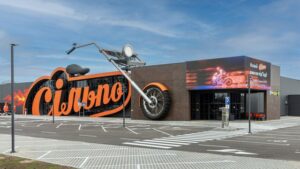
On June 6, the Silpo chain opened a new supermarket in the Kyiv region (village of Myrotske, 4 Shlyakhova St.) in a biker loft style; MOTO FEST by Silpo is scheduled to take place in the store’s parking lot on June 13, the chain’s press service told Interfax-Ukraine.
The new supermarket covers an area of 1,639 square meters and is open from 8:00 a.m. to 11:00 p.m. The “Silpo” sign mimics the outline of a motorcycle: a seat, a wheel with a stand, handlebars, and a headlight that glows at night, with graffiti featuring flames behind it. Interior details include a horse made of metal wire, a motorcycle with wheels made of pineapple rings and a headlight made of a pumpkin, and more. A special place here is occupied by a panel made of leather jackets painted with bikers’ creeds. The sketches and paintings for them were created by artist Oleksii Bondarenko, co-author of the mural “VOLIA.” At the entrance stands a column of rock posters, and the checkout lightboxes are designed in the shape of spiked wheels.
The “Silpo” team announced a motorcycle festival with an extreme riding show for June 13.
Silpo-Food LLC, which operates the Silpo chain, was established in early August 2016. According to information on the website, the chain operates 311 supermarkets in 60 cities across Ukraine and four Le Silpo delicatessens: in Kyiv, Dnipro, Kharkiv, and Odesa.
The founder of the LLC is PJSC “Retail Capital” (100%, Kyiv), a closed-end, non-diversified venture corporate investment fund. The ultimate beneficiary is Volodymyr Kostelman.
Silpo-Food’s revenue for 2025 increased by 13.97% compared to 2024, reaching UAH 106.013 billion, while net profit amounted to UAH 1.205 billion, compared to UAH 154.1 million for the same period the previous year.
It is part of the Fozzy Group, a commercial and industrial group with more than 825 retail outlets throughout the country. The company operates retail chains of various formats: Silpo supermarkets, Fozzy wholesale hypermarkets, Fora neighborhood stores, Thrash! discounters, Bila Romashka pharmacy supermarkets, and others.



