
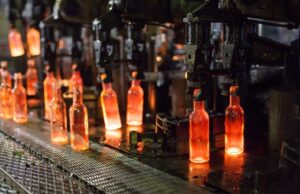
Piskivsky Glassworks LLC, a manufacturer of clear glass jars and bottles (PZS, Bucha District, Kyiv Region) increased its net revenue from product sales by 19.4% in January–March 2026 compared to the same period in 2025, reaching UAH 438.6 million.
According to the company’s interim financial statements, it ended the first quarter with a net profit of UAH 1.663 billion, whereas a year earlier it had reported a loss of UAH 37.2 million.
The company generated UAH 19 million in gross profit (compared to a loss of UAH 7.7 million in the first quarter of 2025), and operating profit exceeded UAH 2 billion (driven by “other income,” which amounted to UAH 1.8 billion), whereas last year the loss reached nearly UAH 13 million.
The accumulated loss as of March 31, 2026, amounted to UAH 824.8 million, while at the beginning of the year it was UAH 2.487 billion.
According to the report, exports accounted for 77.7% of total sales (nearly UAH 341 million). Among the importing countries are Poland, Italy, Germany, France, Greece, Romania, Turkey, Lithuania, Latvia, Moldova, and Georgia,
The company lists Francesco Arpaia, Saulite Partikas Grupa SIA, and Ferret LLC as its main clients.
In the first quarter, the plant produced more than 78.4 million units of products (including 72.5 million cans and nearly 6 million bottles), which amounts to 375.4 million UAH in monetary terms.
The report notes that following the start of the full-scale invasion, the plant suspended operations; after the furnaces cooled down, work continued from May 2022 to June 2023 to restore production on one of the two furnaces, which was launched in June 2023.
At the same time, it is emphasized that operating only one furnace has implications for the range of finished products: while before the war the plant produced both clear (Flint) and colored (brown and green) glass, it now produces only clear glass.
At the same time, the company managed to increase export shipments again due to changes in the geography of its sales market after they fell in 2023 to 47% of sales volume.
PZS assesses competition in the industry as fierce and notes that some Ukrainian competitor companies, like the Piskivsky Glassworks, have suffered losses and damage as a result of the war.
Among competitors, particularly in the Rivne region, the following are listed: “Consumers-Skl-Zorya” (clear glass bottles and jars), “Kostopil Glass Factory” (glass containers for low-alcohol and non-alcoholic beverages, perfume and canning containers, and liquor bottles), and “Rokytne Glass Factory” (green, brown, and clear glass bottles).
Other manufacturers of similar products include “Malyniivsky Glass Plant” (Chuhuiv District, Kharkiv Region), “Vetropack Gostomel Glass Plant” (Kyiv Region), and “Merefyanska Glass Company” (Kharkiv Region).
Among other challenges facing the industry, the plant cites stagnation amid declining consumer demand in Ukraine, and increased competition and dumping abroad.
“The main task for the next few years is to return to pre-war production volumes, and to do this, we need to resume production at Furnace No. 1,” the report states.
According to the company’s 2025 report, it plans to launch a second glass furnace this year, which will increase production capacity by 75%, enabling it to boost exports and optimize costs.
At the same time, PZS notes, about two-thirds of finished products are planned to be exported to EU countries, where a steady growth in demand for glass containers has been observed over the past few years (an increase of about 5% per year) due to rising interest in environmentally friendly packaging materials.
In 2025, the plant increased its net sales revenue by 12% compared to 2024—to 1.607 billion UAH—while incurring a loss of 227.9 million UAH.
As of the beginning of the second quarter of 2026, the company employed 449 people.

Prices for construction and installation work (CIW) in Ukraine rose by 16.2% in March 2026 compared to March 2025, according to the State Statistics Service (SSS).
According to the statistics agency, prices rose in all segments of construction from March 2026 to March 2025: in residential construction by 15.3% (up 9.2% compared to the previous month), in non-residential construction by 17.3% (9.7%), and in civil engineering by 16.1% (9.3%).
In January–March of this year compared to the same period last year, construction material and equipment prices rose by 9.9%, specifically in the residential sector by 9.2%, in the non-residential sector by 10.4%, and in civil engineering by 9.7%.
Compared to the previous quarter, in January–March 2026, construction material prices rose by 6.1%, specifically in residential construction by 5.3%, in non-residential construction by 6.6%, and in civil engineering by 6.1%.
The State Statistics Service also compared current price indicators with the 2021 annual average. Thus, in the first quarter of 2026, prices in the residential sector rose by 83.6%, in the non-residential sector by 84.1%, and in civil engineering by 78.6%.
As reported, in 2025, construction material prices rose by 5.8% compared to the previous year, in 2024 by 7.9%, and in 2023 by 15.8%.
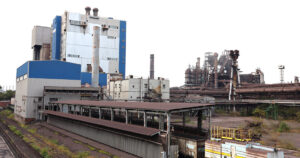
The Kametstal plant, part of Metinvest’s mining and metallurgical group and located at the Dniprovsky Metallurgical Plant (Kamenskoye, Dnipropetrovsk Oblast), has carried out a major overhaul of part of its pulverized coal injection (PCI) equipment in the blast furnace to reduce energy consumption.
According to the company, the efficiency of blast furnace production at Kametstal is inextricably linked to the reliability of the PCF injection technology; therefore, to ensure the stable operation of this equipment, grinding circuit No. 2—a key stage of this year’s modernization of the PCF complex—has been overhauled.
As specified, PFC is an energy resource that serves as a highly efficient carbon component and makes it possible to drastically reduce natural gas consumption or completely eliminate it from the smelting process. Injection of PVP also makes it possible to reduce the consumption of coke and coke equivalent of standard fuel and contributes to increased productivity of blast furnaces.
The PVP section supplies fuel not only to blast furnace production but also to the rotary kilns of the lime-burning shop.
Kametstal was established on the basis of PJSC Dniprovsky Coke Chemical Plant (DKHP) and PJSC Dniprovsky Metallurgical Plant (DMP). It is part of the Metinvest Group.
Metinvest is a vertically integrated group of mining and metallurgical enterprises. Its enterprises are located in Ukraine—in the Donetsk, Luhansk, Zaporizhzhia, and Dnipropetrovsk regions—as well as in European countries. The holding’s main shareholders are the SCM Group (71.24%) and Smart Holding (23.76%). Metinvest Holding LLC is the management company of the Metinvest Group.
Despite shelling and destruction, DTEK managed to increase its tax payments to 14 billion in January–March 2026, a 10% increase compared to the same period last year, the energy holding company reported on Monday.
“Nearly 13 billion hryvnias were paid to the central budget, and over 1 billion hryvnias to local budgets,” the company noted.
As explained by DTEK, the group continues to intensively prepare for the coming winter, so it is investing in repairs to thermal power plants and power grids following enemy attacks, and is actively building new renewable energy facilities.
Over 101 billion hryvnias have been invested in both of these areas since the start of the full-scale invasion.

Comfy (Comfy Trade LLC), a retailer of home appliances and electronics, generated 14 billion hryvnias in revenue from January to March 2026, a 28% increase compared to the same period in 2025, according to the company’s press service.
The amount of taxes and fees paid totaled 643 million hryvnias, which is 14% more than in the first quarter of 2025.
“The retail market and customer behavior are changing. The line between offline and online stores has practically disappeared—and customers want the best experience regardless of their chosen path to purchase. That is why we are developing Comfy as a single seamless experience; in 2026, we will invest in the digitalization and convenience of every step of the customer journey. One of the key steps is that this year we are beginning to test marketplace functionality. One in three purchases today is made online. Tomorrow, it will be every second one. We are preparing for this,” said Comfy CEO Gennadiy Verbylenko.
The growth driver for the reporting period remains the development of e-commerce; Comfy’s share of online sales reached 36.6% (+6.6 percentage points compared to Q1 2025). The Comfy mobile app now generates over a third of the company’s total online sales. The number of downloads in January–March 2026 increased by 8%, and the share of monthly active users (MAU) grew by 38% over the year.
Data from the first quarter of 2026 indicates a shift in Ukrainian consumer behavior toward rationality and functionality. The strongest growth was seen in: robot vacuums (up 380%), gaming keyboards (up 374%), refurbished tablets (up 205%), epilators—up 191%, and hair stylers—up 73.3%, indicating Ukrainians’ investment in home comfort and self-sufficiency. Sales of cameras (+65.3%), multi-cookers (+46.4%), dryers (+23.8%), and laptops (+23.7%) are also growing steadily. Building on these trends, COMFY is expanding categories with high practical value and the refurbished electronics segment in response to demand for smart savings and environmental sustainability.
In the first quarter of 2026, the company opened two new stores: one in Lviv (Victoria Gardens shopping center) and a large two-story facility in Dnipro (1-M Heroiv Avenue). The store in Zaporizhzhia has also resumed operations: following a Russian drone strike and a fire at the Amstor shopping center on January 2, some of the equipment and the premises were destroyed, but the store was restored by the end of February.
As of the end of March, the Comfy chain comprises 115 stores in 56 cities across Ukraine. Two more openings are planned by the end of the year. According to the company, revenue for 2025 totaled 55.8 billion UAH, which is 17% more than in 2024. Over the course of the year, the company paid 2.3 billion UAH in taxes and fees to the state budget.

Elementum Energy, a subsidiary of VR Capital Group, has chosen to integrate its energy storage system (ESS) with the Dnister Wind Farm, which has a total installed capacity of 100 MW, as part of its pilot ESS project in Ukraine to optimize power generation, as it considers this approach the most effective for renewable energy players, said the company’s commercial director, Roman Volosheniuk.
“We have adopted a scenario that is rarely considered in Ukraine—ES as a tool for optimizing our existing assets. Our pilot ES project, with a capacity of 10 MW and a storage capacity of 20 MWh, is designed to interact with our 100 MW wind farm. We view energy storage not as a separate, independent business, but as a tool for our own generation,” Volosheniuk said during Energy Storage Day-2026, organized by the Ukrainian Wind Energy Association.
He explained that the company decided not to pursue the first two scenarios—operating the ESS with state support based on the results of Ukrenergo’s auctions for ancillary services and price arbitrage—for a number of reasons.
“We have had negative experiences with state support—debts under the ‘green’ tariff, unilateral cuts to its rates, changes in liability conditions for imbalances—the list goes on. The next dominant scenario is price arbitrage. There we see large spreads, but there is a downside—high volatility and frequent changes in the regulatory environment,” Volosheniuk explained.
At the same time, he noted that the third scenario, which the company chose, appears to be the most effective, as it allows for combining several areas at once.
First, this makes it possible to apply classic arbitrage by shifting the timing of electricity production and sales, which allows for optimizing generation. Second, it creates an opportunity to balance the system and avoid unnecessary costs for paying for imbalances, which, according to Volosheniuk, account for every third MW*h of wind power generated.
Third, the UZE plus WPP scenario allows for optimizing the extent of electricity generation curtailments imposed by the system operator Ukrenergo during surplus hours.
“Accordingly, we have a combination of three scenarios and will switch to the one that is more profitable and effective. Our operating model shows that the optimal distribution of RES usage will look like this: arbitrage and working with curtailments account for 70% of RES usage, while another 30% is for managing imbalances. All that remains is to confirm the assumption—we expect to test the pilot in the near future,” explained the commercial director of Elementum Energy.
He emphasized that “the heart of our concept” is the development of our own software solution, which will combine all these scenarios in real time and automatically select and switch to the most productive one.
“All of this enables a stable business model for utilizing renewable energy sources: a combination of different areas of its operation and proprietary software tools for system management,” Volosheniuk concluded.
Elementum Energy, a subsidiary of VR Capital Group, is an international investor in Ukraine’s renewable energy sector. The company manages a portfolio of solar and wind power plants with a total capacity of 636 MW and continues to develop new projects in the field of wind energy and energy storage systems.
In early December 2024, Elementum Energy announced that it had acquired a 200 MW wind power project in western Ukraine and intends to prepare it for construction by the end of 2025.
The company also announced plans to commission the 60 MW “Danube” wind farm in southern Odesa Oblast by the end of 2026.
Elementum Energy reported on the development of a 10 MW small hydropower pilot project in late 2025.



