The Zaporizhzhia Metallurgical Plant “Zaporizhstal” increased its rolled steel shipments by 5.3% in January–April of this year compared to the same period last year—to 819,600 tons from 865,700 tons.
According to the company’s press release, steel production for the first four months amounted to 914,700 tons (1,018,900 tons in January–April 2025), and pig iron production to 1,012,900 tons (1,132,400 tons).
In April, Zaporizhstal produced 193,500 tons of pig iron and 156,600 tons of steel, and shipped 159,100 tons of rolled steel, whereas in the previous month it produced 316,400 tons of pig iron, 298,200 tons of steel, and shipped 254,600 tons of rolled steel.
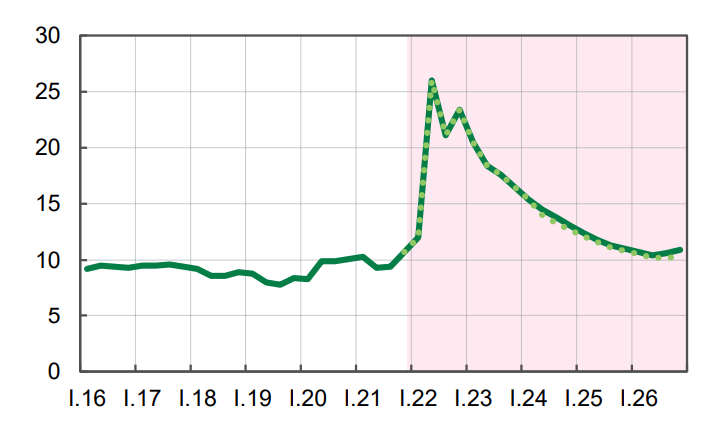
It is explained that the decline in production figures is due to an unscheduled shutdown of the company’s production facilities caused by the Russian army’s attack on the region’s infrastructure. During the forced downtime, a series of repairs and maintenance were carried out on production units and treatment facilities to improve their operational reliability in the future.
Another press release reports that Metinvest’s Zaporizhzhia-based enterprises—Zaporizhstal, Zaporizhkox, Zaporizhrefact, and Metinvest Machinery—paid over UAH 778 million in taxes and fees to budgets at all levels in the first quarter of 2026, increasing payments by 10% compared to the same period in 2025. The largest share of payments traditionally came from the unified social contribution, personal income tax, environmental tax, and military levy.
In addition, it is emphasized that Metinvest’s enterprises consistently remain leaders in terms of taxes paid in Zaporizhzhia. UAH 250 million was allocated to local budgets in the first quarter of this year, which is 7% more than last year. Amid a full-scale war, the group in Zaporizhzhia continues to systematically support the country’s and local communities’ economies. Guided by the principles of social partnership for the sustainable development of the regions where it operates, the Company, together with its enterprises and in dialogue with the community, implements educational projects and veteran programs, and participates in the restoration of infrastructure damaged by shelling.
“Since the start of the full-scale war, Zaporizhstal and other Metinvest enterprises in Zaporizhzhia have contributed over UAH 14 billion to Ukraine’s economy,” noted Taras Shevchenko, acting CEO of the steel plant.
In total, including associated companies and joint ventures, the group paid 4.3 billion UAH in taxes and fees to Ukrainian budgets at all levels in January–March 2026. Since the start of the full-scale invasion, including the results of the first quarter of 2026, the company’s total contribution to the country’s economy amounts to approximately 78 billion UAH.
As reported, in 2025, Zaporizhstal increased its rolled steel output by 15.2% compared to the previous year—to 2,794,600 tons from 2,426,700 tons. Steel production amounted to 3,212,200 tons (in 2024 – 2,890,800 tons), and pig iron production – 3,567,800 tons (3,106,300 tons).
In 2024, Zaporizhstal increased rolled steel output by 18.1% compared to 2023—to 2,426,700 tons from 2,054,700 tons—and steel output by 17.2%, to 2,890,800 tons, and pig iron by 14.2%, to 3,106,300 tons.
Zaporizhstal is one of Ukraine’s largest industrial enterprises, whose products are in high demand among consumers both in the domestic market and in many countries around the world.
Zaporizhstal is a joint venture of the Metinvest Group, whose main shareholders are PJSC System Capital Management (71.24%) and Smart Steel Limited (23.76%). Metinvest Holding LLC is the management company of the Metinvest Group.
The US dollar-to-euro exchange rate at the end of 2026 will be $1.16/EUR1; the Cabinet of Ministers approved this updated estimate in the draft amendments to Ukraine’s state budget (No. 15224), whereas it had previously projected it at $1.08/EUR1.
As noted in the explanatory note to the draft, these changes have affected the assessment of the maximum levels of public debt: it will decrease by only UAH 332.2 billion, although financing of the state budget through debt operations will be reduced by UAH 651.5 billion thanks to the attraction of €13.2 billion in new budgetary support from the European Union under the Ukraine Support Loan.
According to the draft, it is proposed to set the public debt ceiling at the end of this year at 10 trillion 145. 6 billion UAH and the ceiling for state-guaranteed debt at 464.6 billion UAH, with budget revenues of 5 trillion 195.9 billion UAH and expenditures of 6 trillion 407.1 billion UAH.
As reported, in the calculations for Ukraine’s 2026 state budget, the government for the first time included a separate indicator for the projected average annual euro-to-hryvnia exchange rate—49.4 UAH/EUR1—in addition to the traditional average annual dollar exchange rate, which the Cabinet of Ministers expects to be 45.7 UAH/$1 this year.
In recent years, the share of euro-denominated obligations in Ukraine’s national debt has grown significantly, as the EU has become Ukraine’s main donor, while financial support from the U.S. has declined.
Public and state-guaranteed debt for the first quarter of 2026 increased by 190.4 billion UAH, or 2.1%, to 9.233 trillion UAH, but decreased by $2.5 billion, or 1.2%, to $210.8 billion in dollar terms.
The share of debt in euros as of the end of March this year was 44.08%, while in dollars it was 22.74%, in hryvnia 20.94%, and in IMF Special Drawing Rights (SDR) 9.12%.
In its updated April Inflation Report, the National Bank of Ukraine projects an average annual dollar-to-euro exchange rate of $1.18/EUR1, which corresponds to the current rate, compared to $1.13/EUR1 in 2025.
The official hryvnia-to-dollar exchange rate currently stands at 43.8033 UAH/$1, and the hryvnia-to-euro rate at 51.5433 UAH/$1.

FC Shakhtar was prematurely crowned Ukrainian football champion after the results of the 27th round of the Ukrainian Premier League, Suspilne Sport reports.
This came after Shakhtar’s 4-0 victory over SK Poltava, as their lead over their closest rivals, Polissya, is now 11 points with three games left in the championship.
This is the club’s 16th league title and its first in the last two years.
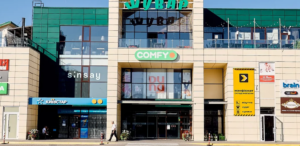
Shuvar LLC (Lviv), which operates the Lviv agricultural market of the same name, reported a net profit of 136.4 million UAH for 2025, a 49% increase over the previous year.
According to the company’s annual report, published in the disclosure system of the National Securities and Stock Market Commission (NSSMC), pre-tax profit amounted to UAH 168.3 million.
As noted in the financial report, the company’s gross profit increased by 21.5% compared to the previous year, reaching UAH 158.8 million. Net revenue rose by 10.1% to UAH 305.4 million.
Shuvar LLC’s retained earnings in 2025 grew by 10.7% to UAH 566.8 million. The company’s current liabilities as of the end of 2025 decreased by 38.3% to UAH 88.6 million, while long-term liabilities decreased by 3.3% to UAH 120.4 million. The company’s assets in 2025 grew by 1.4% to UAH 796.8 million.
According to data from the YouControl analytical system, the owners of Shuvar LLC are Regional Agricultural and Marketing Center “Shuvar” LLC (85%), Agricultural Products Market “Shuvar” LLC (10%), and Tetiana Ambroskina (5%). The ultimate beneficiaries are listed as Andriy Chipchar and Roman Fedyshyn.
“Shuvar” is the largest wholesale agricultural market in Lviv, in western Ukraine. The market covers a total area of over 20 hectares and has 480 permanent tenants. It is a member of the World Organization of Wholesale Markets. On average, 1.4 million vehicles enter the market grounds each year. The market is part of the “Shuvar” group of companies, managed by Shuvar LLC.

The share of non-performing loans (NPLs) in the banking sector fell by 1 percentage point to 12.92% during January–March 2026, according to data from the National Bank of Ukraine (NBU).
“The decline in the NPL ratio in January–March 2026 was driven by both an increase in the volume of new, higher-quality loans and the resolution of non-performing debts,” the National Bank noted in a press release on its website.
The banking system’s gross loan portfolio grew by 75.84 billion UAH in the first quarter of 2026—to 1 trillion 435.58 billion UAH—including an increase of 3.66 billion UAH in March.
The trend in the gross volume of non-performing loans during the quarter was uneven: after growing in January, the figure declined in February and March, and the March reduction of UAH 5.55 billion accounted for the bulk of the quarterly decrease of UAH 3.82 billion—to UAH 185.49 billion.
A reduction in the NPL ratio in the first quarter of the year was recorded across all bank groups: for banks with state ownership (excluding PrivatBank)—from 25.07% to 23.86%, at PrivatBank—from 8.45% to 7.74%, at financial institutions with foreign capital—from 6.46% to 6.17%, and at private Ukrainian banks—from 8.37% to 7.75%.
In absolute terms, as of April 1, NPLs increased at PrivatBank by UAH 592.0 million, to UAH 19.41 billion, and at banks with foreign capital by UAH 196.43 million, to UAH 18.76 billion.
The top five banks by NPL volume were state-owned banks: Oschadbank with UAH 44.78 billion (UAH 43.83 billion at the start of the year), Ukreximbank – UAH 25.52 billion (UAH 33.19 billion), Sens Bank – UAH 23.92 billion (UAH 22.46 billion), Ukrgasbank – UAH 21.87 billion (UAH 21.79 billion), and PrivatBank – UAH 19.41 billion (UAH 18.82 billion).
The top ten also included Raiffeisen Bank with UAH 8.17 billion (UAH 8.05 billion), PUMB – UAH 5.04 billion (UAH 4.94 billion), TAScombank – UAH 4.06 billion (UAH 4.08 billion), OTP Bank – UAH 3.71 billion (UAH 3.19 billion), and Idea Bank – UAH 3.52 billion (UAH 3.17 billion).
At the same time, Alliance Bank had the highest NPL ratio among banks with the largest loan portfolios—39.9% (49.6%), followed by Sens Bank with 29.8% (28.5%), and Idea Bank rounded out the top three with 28.8% (28.6%).
State-owned banks took fourth through sixth place: Oschadbank – 26.4% (26.5%), Ukreximbank – 20.8% (25.3%), and Ukrgasbank – 19.3% (20.1%).
The top ten also included TAScombank with 16.3% (16.6%), MTB Bank – 11.6% (9.9%), A-Bank – 10.9% (12.0%), and Radabank – 10.6% (12.3%).
The Central Bank noted that in the corporate sector, the share of non-performing loans decreased from 16.99% to 15.73% in the first quarter, and in the retail sector from 10.78% to 10.32%.
As reported, the downward trend in the NPL ratio has continued since early 2023, when it rose to 38.1%. Prior to Russia’s full-scale invasion, non-performing loans in Ukrainian banks had been declining since 2018: from 55% to 27% as of March 1, 2022.
In December 2025, the NPL ratio fell sharply—from 23.9% to 13.9%—after PrivatBank ceased recognizing approximately 140 billion UAH in old hryvnia-denominated assets as non-performing.