
According to Serbian Economist, Montenegro’s long-term residential rental market entered a cooling phase in 2026: following the rapid growth of previous years, oversupply began to shift the balance in favor of tenants.
Currently, studios in Montenegro are offered at an average price of 300–400 euros per month, one-bedroom apartments at 400–800 euros, two-bedroom apartments at 600–1,200 euros, and houses starting at 1,000 euros. In the premium segment, villas and luxury properties can cost from 2,000 to 10,000 euros per month and higher.
The main reasons for the market stagnation are the decrease in the number of foreign residents staying in the country long-term and the accumulated oversupply. According to a representative of a local real estate agency, property owners are increasingly finding that apartments remain vacant longer than they did a year ago, while tenants have more room to negotiate prices and terms.
The market is no longer operating according to the 2022–2024 model, when owners could quickly rent out properties amid an influx of foreigners and limited supply. Now, in a number of locations, tenants are increasingly choosing between several options, securing discounts, or demanding better terms regarding the lease, furnishings, and utility bills.
For Montenegro, this shift is significant not only for the housing sector but also for the broader demand model, which in recent years has relied heavily on the influx of foreigners, relocators, and investors. If the number of long-term tenants continues to decline, some landlords may increasingly switch to short-term rentals or adjust their price expectations downward.
https://t.me/relocationrs/2698

According to the Ukrainian Agribusiness Club (UAC), Ukraine exported 436,000 tons of poultry meat to foreign markets in 2025, a 2% decrease compared to the previous year.
The business association noted that despite a slight annual decline, current export volumes are 1% higher than the average for the past five years. The key consumers of Ukrainian products remain EU countries (30.6%), the Middle East (27.2%), and European countries outside the EU (22.6%).
According to analysts, total poultry meat production in 2025 amounted to 1,390,000 tons. Meanwhile, the industry is gradually recovering: the poultry population had grown to 192.3 million birds by early 2026 (+3%). The share of poultry in industrial enterprises is 64%, while in private households and small farms it is 36%.
“Growth is driven primarily by industrial enterprises that are investing in modernization and biosecurity, which allows them to maintain efficiency despite high feed costs,” the association explained.
A distinct trend of the year was a sharp decline in imports—to 46,000 tons, which is 73% below the five-year average. The UACB attributes this to increased market self-sufficiency and the expansion of domestic producers’ capacity, who are successfully replacing foreign products.
“The poultry industry is operating under pressure from economic and energy challenges, yet it maintains its production potential. The growing role of medium-sized and regional producers, as well as their investments in modernization, play a key role in supporting the domestic market and increasing exports,” the UCAB concluded.

The Veterans Institute “Architecture of Resilience” at Kyiv National University of Construction and Architecture (KNUCA) has announced the start of preparations for the 2026 admissions campaign for veterans, military personnel, defenders of Ukraine, as well as their children and family members.
According to the institute’s announcement, the program provides access to higher education without the National Multidisciplinary Test (NMT)—based on interview results—the opportunity to study in over 100 fields and more than 250 educational programs, as well as personalized support—from submitting documents to securing employment or starting a business.
The institute emphasizes that education for veterans is viewed not as a privilege or a break after combat, but as a tool for returning to an active professional role and participating in the country’s reconstruction. Therefore, educational programs are combined with psychological support, rehabilitation components, practical projects, and partnerships with employers.
Study is available in full-time, part-time, online, and distance learning formats, allowing participation in programs from any region of Ukraine or from abroad. For veterans and defenders, admission is granted without the National Multidisciplinary Test (NMT) or the European Vocational Qualifications (EVQ) — solely based on interview results, taking into account prior service, educational, or work experience.
The 2026 admissions campaign places a special emphasis on fields critical to the country’s recovery, including engineering, construction, architecture, IT, management, security, ecology, physical rehabilitation, and sports. The institute notes that these fields form the foundation of the new economy and require specialists with practical experience and a high level of responsibility.
Among the program’s partner universities are Kyiv National University of Construction and Architecture, National University of Physical Education and Sports of Ukraine, Western Ukrainian National University, Yuriy Kondratyuk Poltava Polytechnic National University, Vasyl Stefanyk Precarpathian National University, the National University of Life and Environmental Sciences of Ukraine, Drohobych National Pedagogical University, Igor Sikorsky Kyiv Polytechnic Institute, Ivan Pul’uj Ternopil National Technical University, and the University of Educational Management.
The institute clarifies that “free education” refers to participation in state compensation programs, grants, scholarships, and support from employers. Admissions will take place as part of the standard admissions campaign during the regular period—from July 1 to August 10—with all documents required to be prepared and submitted by July 1 to the relevant department of the educational institution.
Details and consultations:
+38 073 94 96 179
+38 050 22 35 182
+38 067 49 81 098

Starting April 25, 2026, the National Bank of Ukraine (NBU) is easing a number of currency restrictions, specifically simplifying the conditions for defense enterprises to purchase foreign currency, expanding opportunities for non-resident military personnel and non-resident specialists to transfer funds abroad, and creating conditions for the implementation of the government’s program to support Ukrainians abroad.
“When fulfilling currency purchase requests from defense enterprises, banks will be able to disregard foreign currency balances in accounts if these funds were received from foreign states or their authorized agencies to finance contracts for the production of military and dual-use goods for security and defense forces,” the NBU noted in a press release on Friday.
The same rule will apply when purchasing foreign currency using budget funds to fulfill a government contract for the production of military goods for these recipients.
The National Bank has also expanded opportunities for non-resident military personnel to purchase foreign currency and transfer it abroad. They will be able to purchase and transfer foreign currency abroad without restrictions in the amount of their received monetary allowance, provided these funds were credited to their account on or after May 1, 2026. For funds credited prior to this date, the current limit of 400,000 UAH equivalent per calendar month will apply.
In addition, banks are permitted to credit funds in hryvnia within Ukraine to the current accounts of non-resident individuals who are currently serving or have served in the Armed Forces of Ukraine or the National Guard of Ukraine.
For individuals who are residents of Russia or Belarus, such transactions are permitted without separate approval from the Security Service of Ukraine; however, transfers from residents of these countries are possible only if such an individual possesses a document confirming temporary asylum in another country.
It has been clarified that for the identification and verification of military personnel when opening accounts, banks and non-bank payment service providers may use the military personnel’s military registration document, as well as a currently valid military ID, officer’s ID, or general’s (admiral’s) ID.
The regulator has also simplified certain conditions for purchasing and transferring currency to attract highly qualified non-resident specialists. Ukrainian legal entities are permitted to purchase and transfer foreign currency to the accounts of non-resident individuals—members of supervisory boards, boards of directors, and executive bodies—opened outside Ukraine, in the amount of payments accrued as of May 1, 2026, under civil law contracts.
Non-resident individuals, in turn, will be able to purchase and transfer foreign currency abroad in the amount of payments received on or after May 1, 2026, into their hryvnia accounts at Ukrainian banks as salaries, other payments provided for by law, as well as payments under civil law contracts.
The NBU also authorized Agency of National Unity LLC to make transfers abroad using budget funds to implement the government’s program to support Ukrainians abroad and facilitate their return to Ukraine.
Separately, the regulator has abolished the requirement for insurers to submit monthly reports on compliance with solvency requirements in order to remain on the list of companies authorized to conduct reinsurance transactions with non-resident reinsurers.
The changes were approved by a resolution of the central bank’s board dated April 23, 2026, which takes effect on April 25, 2026.
As reported, in January 2026, the NBU had already eased a number of currency restrictions, including introducing a “loan” limit for businesses, allowing funds for goods to be returned to the accounts of individuals abroad under certain conditions, and clarifying the rules for currency supervision of export settlements.
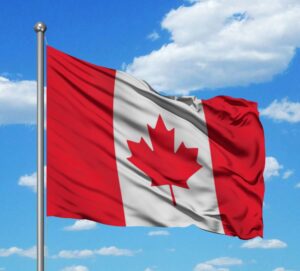
Canada is among the group of countries that consistently enjoy a high level of positive perception within Ukrainian society. According to the survey results, 76.2% of respondents describe their attitude toward Canada as positive. Specifically, 39.4% of Ukrainians indicated a “completely positive” attitude, while another 36.8% described it as “mostly positive.” This distribution of responses indicates not only broad support but also a deeply entrenched positive image of the country.
At the same time, the level of negative perception of Canada is minimal—only 2.3% (1.4% “mostly negative” and 0.9% “completely negative”). This is one of the lowest figures among all countries included in the study. This result confirms that negative assessments are isolated and do not significantly influence overall perception.
The share of neutral responses is 20.3%, which is a moderate figure. This means that while most Ukrainians have already formed a positive attitude toward Canada, a certain portion of respondents lack sufficient personal experience or information to make a clear assessment. At the same time, only 1.2% of respondents were unable to decide on an answer, which further underscores the high level of certainty in public opinion regarding this country.
Overall, Canada demonstrates one of the most balanced and positive perception profiles: the combination of a high share of “fully positive” assessments with virtually no negativity forms a solid reputation capital. This indicates that the country’s image in Ukraine is based not only on general perceptions but also on a systematic view of Canada as a reliable partner.
“Canada is among those countries toward which Ukrainians have formed not just a positive, but a consistently positive attitude. This is the result of long-term interaction, support, and presence in the Ukrainian information space. In such cases, even neutral responses do not blur the overall picture, but only underscore its consistency,” noted Oleksandr Pozniy, director of the research company Active Group.
Thus, Canada ranks among the top countries with the highest level of trust in Ukrainian society. The combination of high positive perception and minimal negativity creates a foundation for further strengthening bilateral relations, particularly in the areas of politics, the economy, and humanitarian cooperation.
According to a study conducted by the Experts Club information and analytical center based on data from the State Customs Service, Canada ranks 41st in total trade volume of goods with Ukraine, with a figure of $416.2 million.
Imports of Canadian goods are twice as high as Ukrainian exports, resulting in a trade deficit of $139.9 million.
The study was presented at the Interfax-Ukraine press center; the video can be viewed on the agency’s YouTube channel. The full version of the study can be found at this link on the Experts Club analytical center’s website.
ACTIVE GROUP, CANADA, EXPERTS CLUB, Pozniy, SOCIOLOGY, SURVEY, UKRAINE, URAKIN