

Concorde Capital, an investment firm that has been operating in the Ukrainian market since 2004, plans to lower the entry threshold for investors in its projects and launch retail investment products, according to Ihor Sotnyk, managing director of Concorde Capital’s investment banking department.
“We have already prepared this infrastructure and plan to launch products—including government bonds and other products that will be available to retail investors—and to develop this segment,” he said during a discussion on the prospects of the Ukrainian stock market organized by the Kyiv International Economic Forum last week.
Sotnik noted that the investment group began with joint investment initiatives, “investing in infrastructure, in the app, and in an asset management company.”
“The numbers show that there is money in the domestic market and people are still investing,” he explained, referring to Concorde Capital’s plans to develop such investment products.
The department director added that a successful example was the Encraft project for joint investments in distributed generation and energy storage systems, which managed to attract investors and launch the first phase.
In addition, the investment group launched a mobile app and digital investment platform called “Statock,” which currently lists three projects with a minimum investment threshold of $9,000.
At the same time, the Statock website states that in the third quarter of this year, the company plans to launch an investment module with a minimum investment threshold of just 1,000 UAH for government bonds, stocks, and bonds, as well as ETF funds, featuring savings accounts, automatic reinvestment, and portfolio management.
In addition, the launch of an AI-powered robo-advisor for selecting investment instruments and a PFM (personal financial manager) is scheduled for this quarter, while brokerage services are set to launch in the fourth quarter of this year.
It is noted that Statock is a fintech product of Concorde Capital’s subsidiary IT company, Concorde Fintech LLC, which, together with its partners, develops software for automating the retail investment business in Ukraine.
The investment firm Concorde Capital, founded and led by Ihor Mazepa, states on its website that in more than 20 years of operating in the market, it has secured $4 billion in investments for clients, executed more than 100 deals, and has more than 1,000 corporate clients and more than 100,000 investors involved in investments in real businesses.
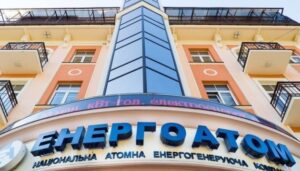
The Supervisory Board of JSC “NAEK “Energoatom” has selected Yuriy Tkachuk, the general director of another major state-owned enterprise—JSC “Ukrgazvydobuvannya”—as the winner of the competitive selection process for the position of Chief Executive Officer (CEO) of the company.
According to a press release issued by Energoatom on Sunday evening, Pavlo Pavlyshyn, who headed the Rivne Nuclear Power Plant for 10 years, was also selected as the winner of the competitive selection process for the position of Chief Nuclear Officer (CNO).
“We deliberately selected two executives with different but complementary professional backgrounds. Yuriy Tkachuk will be responsible for the overall management of the company. Pavlo Pavlyshyn will have professional authority in the field of nuclear safety—with the necessary status and independence to halt any activity if it does not meet safety requirements,” the statement quoted Supervisory Board Chair Rumina Velshi as saying.
She emphasized that this separation of powers is in line with the established practice of leading nuclear power operators worldwide.
It is noted that as part of the international search for a CEO, 78 potential candidates from Ukraine and international markets were considered. Nine of them advanced to the comprehensive evaluation stage, which included structured interviews with senior management, an assessment of leadership potential, a review of professional reputation and integrity, and an evaluation based on a defined set of professional and leadership criteria. The finalists presented their strategic vision for the development of “Energoatom” to the supervisory board, after which the board conducted a final evaluation and made its decision.
Both selection processes were conducted with the support of Korn Ferry, which evaluated the candidates and conducted an independent review of their professional reputation and integrity.
Prior to joining “Ukrgazvydobuvannya,” Tkachuk served as acting head of PJSC “Ukrnafta” from May through December 2025, and from November 2022, he served as CFO of this state-owned company, where he was responsible for financial strategy, risk management, and investment policy. Since July 2026, he has also been a member of the board of directors of NJSC “Naftogaz of Ukraine.” He has held senior financial positions at PJSC “Zaporizhtransformator” and Konstantin Grigorishin’s “Energy Standard” Group. He has over 25 years of experience in the energy and industrial sectors.
Pavlyshyn headed the Rivne Nuclear Power Plant from June 2012 to June 2022, with a break from December 2019 to March 2020, when he served as acting president of Energoatom. In June 2022, he was reassigned to the position of director of “Atomremontservice” for the duration of martial law. On October 25, 2022, he began serving as first deputy mayor of Varash, a satellite city of the Rivne NPP.
The Supervisory Board noted that previously, overall management of the company and responsibility for nuclear safety were concentrated within a single leadership role, whereas now the chairman of the board bears overall responsibility for Energoatom’s operations, while the CNO is vested with independent professional authority over nuclear and radiation safety, as well as the operation of nuclear facilities.
“One of Energoatom’s key problems was corporate governance.” “What the ‘Midas’ operation (NABU’s investigation into a scheme for obtaining undue benefits in NAEK’s procurement activities—IF) revealed was not a technical glitch—it was a failure of the systems that are supposed to ensure proper oversight of how the company spends its funds and how it selects its executives,” emphasized Board Chair Velshi.
She noted that the changes begin precisely with changes to the method of selecting executives: both competitive selection processes were conducted independently of the government, based on predetermined criteria, and decisions were made on the basis of objective data and evaluation results.
According to the press release, the supervisory board expects to complete the formal appointment procedures within the coming weeks, provided that all legal, regulatory, and corporate requirements are met. For CNO, the relevant procedures include obtaining an individual license from the State Nuclear Regulatory
Inspectorate of Ukraine (SNRIU), as Pavlyshyn’s previous license was revoked in 2022.
Until the appointments take effect, the current interim management model will remain unchanged to ensure continuity in the company’s management and the safe operation of nuclear power plants, the press release states.
The Supervisory Board clarified that, in total, the comprehensive competitive selection process for the new management board comprises seven positions. Currently, the selection processes for the positions of Chief Financial Officer, Chief Legal Officer, Chief People Officer, and Chief Commercial Officer are at an advanced stage.
The Supervisory Board also plans to launch a competitive selection process in the near future for the position of General Inspector, who will be a member of the management board and will strengthen independent internal oversight in the field of nuclear and radiation safety, according to the press release.
NAEK “Energoatom” is Ukraine’s largest electricity producer and the operator of the country’s nuclear power plants.
In 2025, Energoatom increased its total revenue by 23.0% to 254.7 billion UAH, EBITDA by 54.6% to 53.8 billion UAH, and net profit by a factor of 14.4 to 18.7 billion UAH.

At the “Carpathian Eight” summit in Bukovel, JSC “Ukrzaliznytsia” proposed a project for the construction of a new 47-km section of European-gauge track from Chernivtsi to Vadul-Sireta on the border with Romania.
According to the project description published on the summit’s website, the investment needed for this project is estimated at $186 million, with grant funding being the preferred option.
“Ukrzaliznytsia” notes that the section is intended to be integrated into the new TEN-T transport corridor “Baltic Sea—Black Sea—Aegean Sea,” which will provide a direct connection between the Ukrainian network and EU infrastructure.
The project is in the final stages of its feasibility study, and implementation is planned to take four years.
In addition, Ukrzaliznytsia proposed at the summit a project to integrate Lviv Central Station with the future European-gauge line from Poland to Sknyliv Station. This involves the construction of a 5-kilometer European-gauge bypass section around Lviv, combined with the construction of a multifunctional passenger terminal at Sknyliv Station.
The funding requirement for this project—in which Poland has been invited to participate—is $100 million; grant funding is also desirable.
A preliminary feasibility study is currently being developed with support from JASPERS, and the project is expected to take five years to complete.
As previously reported, Ukrzaliznytsia has also proposed establishing, in partnership with investors, a low-cost passenger carrier operating on routes between Ukraine and the EU on European-standard tracks, with investments in share capital totaling approximately $441 million. According to the plan, the carrier’s routes will run from western Ukrainian railway hubs—including Uzhhorod, Lviv, and Kovel—to markets in Central and Eastern Europe, specifically Budapest, Bratislava, Warsaw, Vienna, and Berlin.
The first founding summit of the “Carpathian 8” (Carpathian 8 Summit) is taking place at the Bukovel ski resort in the Ivano-Frankivsk region from September 18 to 20.

No precipitation is expected in Ukraine on Sunday; rain and a significant drop in air temperature are expected in several regions starting Monday. According to the Ukrainian Hydrometeorological Center, there will be no precipitation in Ukraine on Sunday, September 20; in the northeast of the country and in the Cherkasy region, there will be patchy fog at night and in the morning.
Winds will be predominantly southwesterly, 5–10 m/s.
Nighttime temperatures will range from 10–15°, and daytime temperatures from 21–26°.
In Kyiv on Sunday, there will be no precipitation. Winds will be from the southwest at 5–10 m/s. Nighttime temperatures will range from 13–15°, and daytime temperatures from 23–25°.
According to data from the Boris Sreznevsky Central Geophysical Observatory, the highest daytime temperature recorded in Kyiv on September 20 was 30.4 in 2015, and the lowest nighttime temperature was 0.0 in 1921.
On Monday, September 21, there will be moderate rain at night in the western and northern regions and during the day across Ukraine; in the east, there will be light rain in some places, with thunderstorms in isolated areas.
The wind will be southwesterly, shifting to northwesterly, at 7–12 m/s, with gusts of 15–20 m/s in some parts of the western regions during the day.
Nighttime temperatures will range from 10–15°; daytime temperatures will range from 13–18° in the western regions, most of the northern regions, and the Vinnytsia and Cherkasy regions, and from 21–26° in the rest of the country.
Rain is expected in Kyiv on Monday. The wind will be from the southwest, shifting to the northwest, at 7–12 m/s. Temperatures will range from 13–15° at night and during the day.

The Antimonopoly Committee of Ukraine (AMCU) fined “Vinara” LLC, the importer of the dietary supplement “HepaReal,” 993,900 UAH for providing false information regarding the product’s properties.
According to the AMCU, it determined that Vinara had disseminated information on the supplement’s packaging and online that directly positioned “HepaReal” as a hepatoprotective agent and attributed to it properties that may be characteristic, in particular, of medicinal products in the corresponding group.
“Vinara LLC failed to provide adequate evidence to substantiate the claimed properties of the dietary supplement, taking into account its full composition. Based on the results of the case review, the committee concluded that the information disseminated by Vinara LLC regarding the properties of the ‘Hepareal’ dietary supplement is false,” the committee noted.
The AMCU also determined that the market for the production and sale of medicinal products classified as hepatoprotective drugs—specifically, those containing the same active ingredient as listed in the composition of the “HepaReal” dietary supplement—is competitive.
“The Committee concluded that the company (IF-U) could have misled consumers regarding the properties and intended use of the dietary supplement ‘HepaReal’ and influenced their decisions to purchase it. As a result of such actions, Vinara LLC may have gained an unfair competitive advantage,” the statement notes.
Based on the results of the case review, the AMCU found that Vinara LLC’s actions constituted a violation under Article 15¹ of the Law of Ukraine “On Protection Against Unfair Competition” and imposed a fine of 993,937 UAH on the company.

By the end of September 2026, Apple will expand the iCloud+ package in Ukraine to include access to the Apple TV streaming service and the Apple Arcade gaming platform at no additional charge with all paid plans.
Ukraine has officially joined the list of over 100 countries and territories where Apple is rolling out its new subscription model. At the same time, Apple TV is expanding into 59 new markets and, once the rollout is complete, will be available in approximately 170 countries worldwide.
According to the Ukrainian iCloud website, the cheapest iCloud+ plan—50 GB—costs $0.99 per month and will include Apple TV and Apple Arcade. The 200 GB plan costs $2.99, 2 TB costs $9.99, 6 TB costs $34.99, and 12 TB costs $69.99 per month.
Apple TV provides access to original series, movies, and documentaries from Apple Originals, while Apple Arcade features over 200 games without ads or in-app purchases.
An iCloud+ subscription can be shared with up to five family members via Family Sharing. Each user’s personal files, settings, and recommendations remain separate.
For users who already pay for iCloud+, Apple TV and Apple Arcade should be added automatically at no additional cost. If a user previously subscribed to Apple TV or Apple Arcade separately, Apple plans to transition that access into iCloud+, while progress and saves in Apple Arcade games will remain accessible.
On Apple’s official Ukrainian website, the new bundle is currently listed as coming “soon,” as the company is rolling it out gradually through the end of September.
In addition to Ukraine, the program includes Serbia, Montenegro, Moldova, Georgia, Armenia, Turkey, Kazakhstan, Azerbaijan, the Western Balkan countries, as well as India, Singapore, the UAE, Saudi Arabia, and dozens of countries in Africa, Asia, and the Middle East.



