
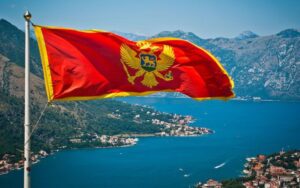
According to “Serbian Economist”, Montenegro expects to join the European Union as a full and equal member and does not agree to a model under which new member states would be granted limited rights, Minister of European Affairs Maida Gorčević stated on September 9.
According to her, Podgorica is prepared to adopt additional safeguards against a potential democratic backslide following EU accession, but does not want to become a “second-class member” with limited voting rights or other temporary restrictions.
Various models for future enlargement are currently being discussed within the European Union, including the possibility of temporarily restricting certain rights of new members regarding the budget, foreign policy, or the exercise of the veto. Gorčević emphasized that Montenegro is prepared to accept the strictest mechanisms for monitoring the rule of law, but considers the equality of members to be a fundamental condition.
At the same time, Podgorica is trying to dispel Brussels’ concerns about possible vetoes in advance. Gorčević stated that Montenegro has no intention of using the veto as a tool for exerting pressure and sees itself rather as part of a group of small and predictable EU members, such as Slovenia, Malta, or the Baltic states.
Montenegro remains the most advanced candidate for EU accession in the Western Balkans. Negotiations have been ongoing since 2012, and all 33 negotiation chapters have been opened. Following the closure in July of the chapters on competition and the customs union, the number of provisionally closed chapters reached 18.
The government expects to close the remaining chapters by the end of 2026 and is aiming for EU accession in 2028. Back in the spring, Gorčević stated that the country’s goal is full membership, rather than an interim or simplified form of integration.
For Ukraine, Podgorica’s position is also of interest as a potential precedent. If Brussels does indeed decide to impose transitional restrictions on new EU members regarding the right of veto or other powers, such a model could potentially be applied to other Western Balkan countries that join later. This model could also be applied to other EU candidate countries.
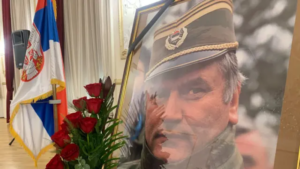
Bosnia and Herzegovina Foreign Minister Elmedin Konaković announced the withdrawal of most of the BiH embassy staff from Belgrade following the funeral of former Army of Republika Srpska commander Ratko Mladić, reports the Serbian Economist Telegram channel. He said he intends to reduce relations with Serbia to the “lowest possible level.”
The BiH ambassador and consul, however, remain in Belgrade: their appointment and recall fall under the authority of the collective Presidency of Bosnia and Herzegovina, not the Foreign Ministry. Under the Constitution, it is the Presidency that conducts the country’s foreign policy, so the minister cannot legally sever relations with Serbia on his own.
The reason was not only the funeral ceremony itself on September 7, but also the scale of participation by Serbian state institutions. As the coffin was returned, it was accompanied by representatives of the state and the military, while Defense Minister Bratislav Gašić and Justice Minister Nenad Vujić attended the funeral. President Aleksandar Vučić did not attend the ceremony, but his son Danilo was present. The funeral drew thousands of people.
Serbian Foreign Minister Marko Đurić responded extremely harshly, calling Konaković’s statements “hypocrisy.” He recalled that former BiH army commander Rasim Delić had also been convicted by the Hague Tribunal for crimes committed by the “El Mujahid” unit, and accused the Bosnian side of taking a selective approach to war crimes. Đurić also recalled the attack on Vučić in Potočari in 2015, when the then Serbian prime minister was pelted with stones after laying flowers at the Srebrenica memorial.
Why does the figure of Mladić still provoke such a harsh reaction in the Balkans?
Ratko Mladić commanded the Army of Republika Srpska from May 1992. The International Criminal Tribunal for the former Yugoslavia, and later the UN appeals chamber, ultimately found him guilty and sentenced him to life imprisonment for the Srebrenica genocide, crimes against humanity and war crimes during the war in Bosnia. In Srebrenica, after the enclave was captured in July 1995, around 8,000 Bosnian Muslims — men and boys — were killed.
Therefore, for a significant part of the Bosniaks in Bosnia, Mladić is above all a symbol of Srebrenica, the siege of Sarajevo and ethnic cleansing. His public honoring in Belgrade is perceived there not as a private funeral, but as a denial or justification of the crimes.
Croatia also views Mladić extremely negatively. Before the formation of the Army of Republika Srpska, he served in the Yugoslav People’s Army in the Knin area during the war in Croatia. After the final verdict in 2021, the Croatian government even officially expressed regret that the Hague proceedings had not covered crimes committed by him on Croatian territory.
In Serbia and Republika Srpska, attitudes are different. For many, Mladić remains the man who defended Bosnian Serbs during the breakup of Yugoslavia. That is why thousands of people attended the funeral, chants of “hero” were heard, and his portraits remain widespread. At the same time, Serbia itself has politicians, public organizations and media outlets that accept the findings of international courts and oppose the glorification of Mladić.
Belgrade also constantly emphasizes the issue of Serbian victims of the war and believes that crimes against Serbs receive less attention in regional and international discourse.
The scandal is already moving beyond Bosnian-Serbian relations. EU Commissioner for Enlargement Marta Kos canceled a planned visit to Serbia, explaining the decision by the unacceptability of glorifying convicted war criminals.
The story surrounding Mladić’s funeral is no longer merely a dispute over a single historical figure. It has once again exposed the central political contradiction of the Western Balkans: more than 30 years after the Bosnian war, Belgrade, Banja Luka, Sarajevo and Zagreb still differ substantially in their assessments of the war, responsibility, and of who should be regarded as a criminal and who as a hero.
BALKANS, Bosnia and Herzegovina, DIPLOMACY, RATKO MLADIĆ, SERBIA

According to “The Serbian Economist”, Sarajevo is hosting the 32nd Sarajevo Film Festival, which over three decades has evolved from a festival founded during the city’s siege into one of the leading film platforms in Southeast Europe.
The festival runs from August 14 to 21, 2026. Its program features over 250 films, with participants hailing from approximately 70 countries and territories. Fifty-one films are competing for the top prize, the “Heart of Sarajevo,” across four competition sections. Among them are 21 world premieres, six international premieres, and one European premiere.
A distinctive feature of the Sarajevo Film Festival is its strong regional focus. The official competition section includes 21 countries: Albania, Armenia, Austria, Azerbaijan, Bosnia and Herzegovina, Bulgaria, Croatia, Cyprus, Georgia, Greece, Hungary, Kosovo, Malta, Moldova, Montenegro, North Macedonia, Romania, Serbia, Slovenia, Turkey, and Ukraine.
But the actual geographical scope is much broader. Thanks to international co-productions, the program also features films made in collaboration with France, Germany, the United Kingdom, Italy, the Netherlands, Denmark, Iran, Qatar, and other countries.
The festival opened with the film *Fatherland* by Polish director Paweł Pawlikowski, a co-production of Poland, Germany, Italy, and France. Among this year’s distinguished guests are British actress Emily Watson, Mexican actor and director Diego Luna, Iranian director Asghar Farhadi, and Woody Harrelson.
In addition to regular film screenings, the Sarajevo Film Festival has long served as a major business platform for the film industry. As part of the CineLink Industry Days, there are presentations of new projects, as well as meetings between directors and producers and funding organizations, distributors, and potential investors.
Why this festival is special. The Sarajevo Film Festival was launched in 1995, during the siege of Sarajevo. It was founded by Obala Art Centar as an effort to preserve the city’s cultural life amid the war. The first festival became a symbol of the city’s return to normal life.
Over the next three decades, it has evolved into one of the Balkan region’s leading film festivals and a platform through which regional cinema enters the European market. That is why, in August, Sarajevo effectively becomes one of the region’s cultural capitals: it attracts not only actors and directors, but also producers, film distributors, representatives of international foundations, and streaming platforms.
The festival will conclude on August 21.
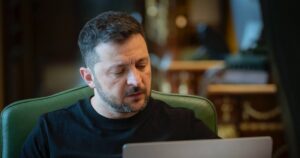
Ukrainian President Volodymyr Zelenskyy continues to overhaul the diplomatic corps, a process that is gradually extending to include not only countries in the European Union and the Western Balkans but also nations in Asia and the Middle East.
On August 6, the president dismissed four ambassadors at once: Vasyl Kyrylych in Croatia, Volodymyr Shkurov in Albania, Oleg Gerasymenko in Montenegro, and Markiyan Chuchuk in Pakistan.
The relevant personnel decisions were formalized by decrees No. 709/2026–No. 712/2026.
According to the Experts Club think tank, the simultaneous replacement of the heads of four diplomatic missions appears to be part of a broader restructuring of Ukraine’s foreign policy apparatus, rather than an isolated personnel move.
As early as May 18, Zelenskyy had spoken of the need for “replacements and adjustments” within the diplomatic corps, and on July 15, he explicitly stated that he was discussing with First Deputy Head of the Office of the President Serhiy Kyslytsya and Minister of Foreign Affairs Andriy Sybiga a list of Ukrainian ambassadors who needed to be replaced.
The rotation began even before a series of decisions were made in August. Specifically, on June 26, the president dismissed the Ukrainian ambassadors to Oman, Cyprus, Vietnam, and Cambodia. At the same time, new appointments were made to other diplomatic posts.
Thus, this represents a gradual renewal of Ukraine’s network of diplomatic missions over the course of several months.
Three of the four ambassadors had served for more than six years
The length of the diplomats’ tenures also suggests that the August decisions should be viewed primarily in the context of rotation.
Vasyl Kyrylych was appointed Ukraine’s ambassador to Croatia on December 24, 2019, and served in Zagreb for more than six and a half years.
Volodymyr Shkurov took the helm of the Ukrainian Embassy in Albania on April 13, 2020, and also served for over six years.
Markiyan Chuchuk was appointed Ukraine’s ambassador to Pakistan on April 17, 2020. His diplomatic mission lasted over six years.
Oleg Gerasymenko headed the Ukrainian Embassy in Montenegro starting May 4, 2022—a little over four years.
The very fact that three of the four diplomats held their posts for such a long time is further evidence supporting the theory of a planned personnel rotation. The published decrees do not specify the reasons for the dismissals.
It is particularly telling that three of the four August decisions concern Southeast Europe—Croatia, Albania, and Montenegro.
Experts Club notes that the importance of this region for Ukrainian diplomacy has grown significantly.
Croatia is a member of the EU and NATO and remains one of Ukraine’s steadfast partners. Croatia’s experience with postwar reconstruction, demining, the return of the population, and the integration of territories following the conflicts of the 1990s is also important for Kyiv.
Albania is also a NATO member and actively supports Ukraine in international forums. Tirana hosted one of the previous summits in the “Ukraine–Southeast Europe” format.
Montenegro presents another area of interest. It is a NATO member and, at the same time, the most promising candidate for EU accession among the countries of the Western Balkans. Therefore, relations with Podgorica are becoming important for Kyiv in the context of its own European integration.
On July 15, Kyiv hosted the fifth “Ukraine–Southeast Europe” summit, attended by representatives from Albania, Croatia, and Montenegro. The participants reaffirmed their support for Ukraine and the need to expand regional cooperation.
Against this backdrop, the nearly simultaneous replacement of three Ukrainian ambassadors to Balkan countries may indicate Kyiv’s desire to inject additional momentum into this direction.
Of the three Balkan appointments, Montenegro may prove to be the most interesting.
Podgorica expects to conclude negotiations on accession to the European Union and become one of the next new EU members. For Ukraine, which is also negotiating membership, Montenegro’s experience could be of practical value.
In addition, Ukraine is gradually building a separate network of relations with countries in the Adriatic region—Croatia, Montenegro, Albania, and neighboring Serbia.
The most recent example is Zelenskyy’s official visit to Belgrade on August 8 and his talks with Serbian President Aleksandar Vučić, during which they discussed free trade, energy, agriculture, Ukraine’s recovery, and political cooperation.
Thus, the Balkans are gradually transforming from a secondary focus of Ukrainian diplomacy into an independent regional track.
The replacement of the ambassador to Pakistan presents a completely different challenge.
Islamabad is important to Ukraine as one of the largest centers in South Asia and a representative of the so-called Global South. Pakistan’s population is approaching 250 million; the country wields significant regional political influence and is a nuclear power.
At the same time, Pakistan’s foreign policy is based on a complex system of relations with China, the United States, Turkey, Saudi Arabia, India, Russia, and the Gulf states.
For Ukraine, expanding ties with Pakistan could be significant in several areas at once—food trade, industry, international organizations, and building support for Kyiv among Asian nations and the Muslim world.
As Ukraine’s foreign policy increasingly shifts away from focusing exclusively on the EU and the U.S., embassies in countries such as Pakistan, India, the Gulf states, Indonesia, and African nations are gaining greater importance.
That is precisely why replacing the ambassador in Islamabad after a mission lasting more than six years appears to be a logical part of the renewal of Ukraine’s Asian policy.
The August dismissals are likely not the end of the process.
As early as July 15, Zelenskyy publicly spoke about forming a “pool of ambassadors” slated for replacement. This suggests that new personnel decrees may be issued in the coming weeks.
At the same time, the current diplomatic rotation coincides with more extensive personnel changes in Ukraine’s government system, which took place in July and affected the government, security agencies, and other state institutions.
According to Experts Club, what matters most will not be the number of diplomats dismissed, but who Kyiv appoints to replace them.
If key posts are filled not only by career diplomats but also by former ministers, representatives of the Office of the President, economic negotiators, or prominent public figures, this could signal Ukraine’s transition to a model of so-called “political diplomacy,” in which embassies are assigned more specific economic, investment, and negotiating tasks.
As of August 10, 2026, presidential decrees appointing new Ukrainian ambassadors to Croatia, Albania, Montenegro, and Pakistan have not been published.
Experts Club believes that future appointments will provide a clearer understanding of the logic behind the current rotation.
If diplomats with significant European and economic experience are sent to Zagreb, Tirana, and Podgorica, this will confirm a strengthening of the Balkan focus. The appointment to Islamabad of a specialist in Asian affairs, trade diplomacy, or relations with the Global South, in turn, could signal an expansion of Ukraine’s activities beyond its traditional circle of Western partners.
Overall, the current rotation signals a transition of Ukrainian diplomacy to a new phase: after four years of full-scale war, embassies are now expected not only to secure international support for Ukraine but also to work toward EU membership, the country’s recovery, exports, attracting investment, and forging long-term regional alliances.

According to The Serbian Economist, based on the latest available official data, the ranking of the average cost of arable land is as follows:
1. Slovenia — 28,348 thousand euros per hectare, data for 2024.
2. Greece — approximately 14,312 thousand euros, 2024.
3. Serbia — 9,583 thousand euros, 2025.
4. Romania — 8.7 thousand euros, 2024.
5. Bulgaria — 8,679 thousand euros, 2024.
6. Croatia — 6,723 thousand euros, 2025.
The data reflects the cost of vacant arable land without buildings or perennial plantings. The periods of statistical observation vary, so the ranking shows the general price level rather than a fully synchronized comparison.
The most expensive land in the region is in Slovenia, where supply is limited and plots are often small and fragmented. In Greece, prices depend heavily on access to water, proximity to the coast, and the possibility of construction. Serbia has already surpassed Romania, Bulgaria, and Croatia in terms of average price, although its figures remain approximately 37% below the EU average.
For foreigners, price is not the only criterion. In Serbia, the direct purchase of agricultural land is almost entirely prohibited. In EU countries, citizens of other EU member states typically have more opportunities, while buyers from third countries may face restrictions, reciprocity rules, or the requirement to purchase through a local company.
Albania, Montenegro, North Macedonia, and Bosnia and Herzegovina are not included in the ranking due to the lack of recent comparable national statistics. Listing prices there may differ significantly from the actual transaction values.
https://t.me/relocationrs/3397
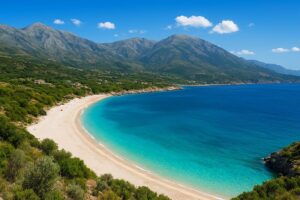
According to Serbian Economist, Albania is stepping up tax oversight of the short-term rental market, which has become one of the country’s fastest-growing segments of the tourism real estate sector in recent years. The tax administration has launched a sectoral plan for the tourism sector through 2026, under which the activity of property owners on Airbnb, Booking.com, and other platforms will be cross-checked against tax returns.
In essence, Albania is becoming one of the first countries in Europe to transition tax oversight of short-term rentals via digital platforms to an automated format using artificial intelligence. This makes the country a regional test case for stricter control over revenue from tourism real estate.
The main tool of the new control system will be an AI-based automated monitoring system. Algorithms will scan the Albanian segments of Airbnb and Booking on a weekly basis, analyzing nightly rates, price trends, actual occupancy rates, booking calendars, as well as the number and dates of guest reviews.
Private homeowners renting out one or more apartments through Airbnb and Booking are not required to register as sole proprietors, but must file an annual individual DIVA tax return and pay income tax at a rate of 15%. The tax is calculated on net income after deducting the platform’s commission. Separate clarifications regarding new obligations for short-term rentals starting in 2026 also highlight the use of DIVA as a digital system for reporting individual income.
The authorities are paying special attention to VAT. In Albania’s tourism sector, a reduced rate of 6% applies instead of the standard 20%, but it may only be applied by properties that have passed a physical inspection and received an official classification certificate from the Ministry of Tourism. If an owner applies the 6% rate without such a certificate, the tax authority may retroactively assess VAT at the full 20% rate, along with fines and penalties.
Another requirement concerns cashless payments. By May 30, 2026, all accommodation facilities in Albania, including hotels, hostels, campgrounds, and certified guesthouses, must install physical POS terminals to accept payments. At the same time, the limit on cash transactions between commercial entities has been reduced from 150,000 to 100,000 lek.
For the real estate market, this marks the end of a period of lax oversight of income from short-term rentals. In recent years, Albania has experienced an investment boom in resort real estate, particularly along the coast, where buyers have relied on income from tourist rentals.
But now, the profitability of such properties will increasingly depend not only on occupancy and price, but also on the owner’s tax compliance.
For foreign investors, the new rules mean they must consider the property’s tax model in advance.
The Albanian model reflects a broader trend in the region. Montenegro is also tightening control over payments and taxes in the real estate and tourism sectors, but Albania is taking the next step—using digital monitoring and AI to compare actual activity on platforms with tax reporting.



