

Ukrainians’ attitude toward Slovakia in August 2026 improved significantly compared to the previous survey: the share of positive assessments rose to 40.7%, while negative assessments fell to 12.2%. Respondents with a neutral attitude remain the largest group—44.4%, according to the Experts Club Information and Analytical Center. Experts.news
According to the results of the August survey, 9.8% of Ukrainians have a completely positive attitude toward Slovakia, and 30.9% have a mostly positive attitude. A neutral attitude was expressed by 44.4% of respondents. 10.8% view the country mostly negatively, 1.4% view it entirely negatively, and another 2.7% were undecided.
Based on the rounded figures in the table, the balance of positive and negative assessments is approximately plus 28.5 percentage points, while in the consolidated survey results it is reported at plus 28.6 percentage points. This is one of the most notable examples of improved public perception among the countries of Central and Eastern Europe.
In March 2026, 34.3% of respondents viewed Slovakia positively: 8.9% viewed it entirely positively and 25.4% viewed it mostly positively. At that time, 18.2% of respondents expressed a negative attitude, while 43.6% were neutral.
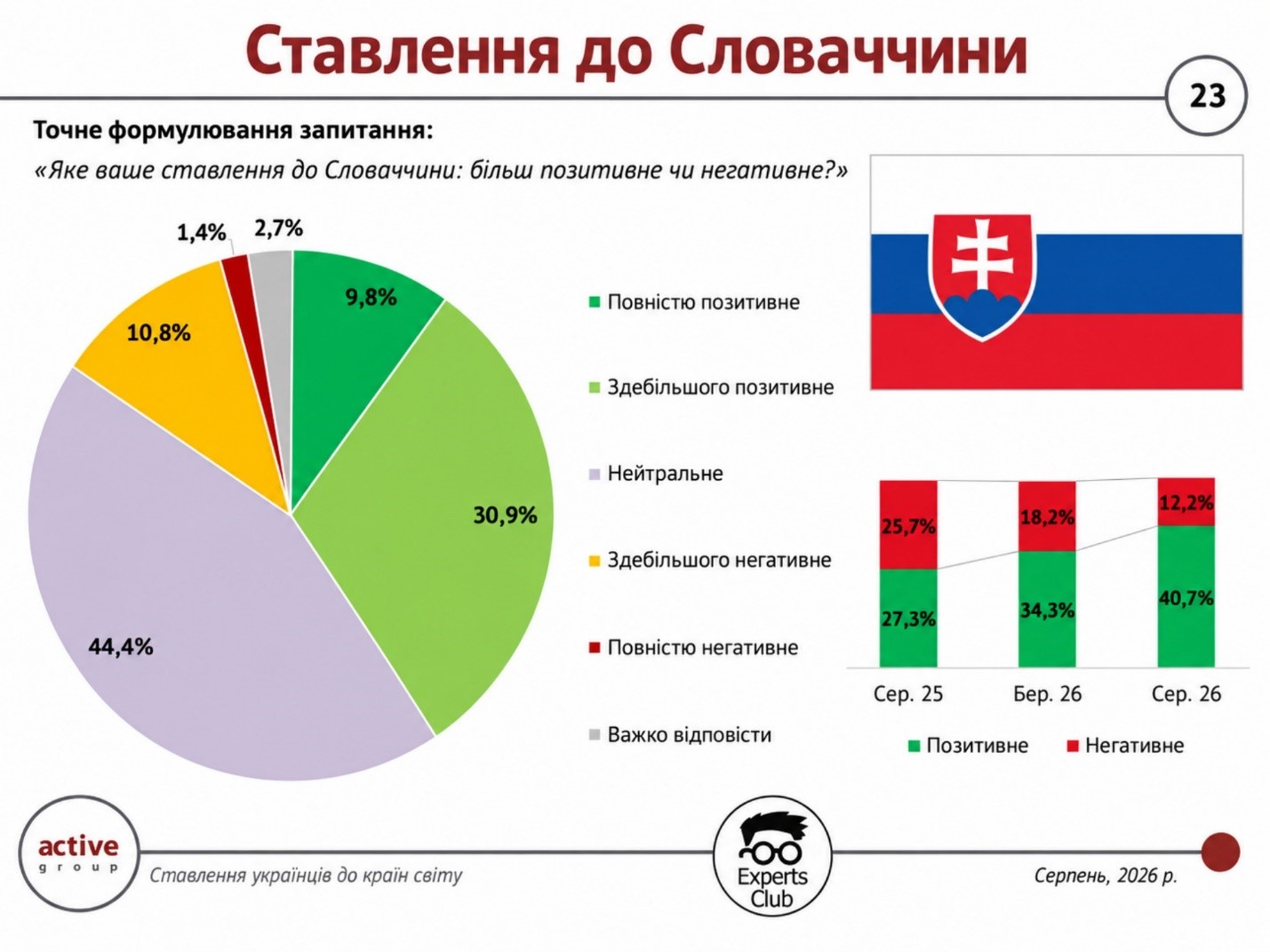
Thus, over the course of five months, the share of positive assessments increased by 6.4 percentage points—from 34.3% to 40.7%—while negative assessments decreased by approximately 6 percentage points—from 18.2% to 12.2%. The neutral group remained virtually unchanged—43.6% in March versus 44.4% in August.
Even more noticeable is the shift in the balance between positive and negative assessments: it rose from approximately plus 16.1 percentage points to plus 28.6 percentage points, or by more than 12 percentage points. Unlike a number of other countries in the region, where August saw a deterioration or largely stable trends, the survey shows a shift toward a more favorable perception in the case of Slovakia.
Maksym Urakin, founder of the Experts Club information and analytical center and a candidate of economic sciences, believes that the improvement in attitudes toward Slovakia may be linked to a gradual shift from an emotional perception of political rhetoric to a more pragmatic assessment of the actual relations between the two countries.
“For Ukraine, Slovakia is a neighboring country with which there are very concrete daily ties: trade, transit, energy, border cooperation, humanitarian contacts, and the movement of people. When the public sees these practical ties and they remain stable, it gradually softens even a rather tense political backdrop. In my opinion, the current increase in positive assessments indicates precisely this shift toward a more pragmatic perception of Slovakia,” noted Maksym Urakin.
According to him, the simultaneous growth of the positive segment and the decline in the negative segment are particularly telling.
“It’s not just the shift in the overall balance that’s important here. Over the course of five months, the share of negative assessments has fallen by about a third, while positive assessments have increased significantly. This means that some of the people who previously viewed Slovakia critically are shifting not just to the neutral group, but to the positive one as well. At the same time, the 44.4% of neutral responses indicate that there remains significant potential for further shaping the country’s image in Ukraine,” added Urakin.
The survey was conducted in August 2026 using an online self-administered questionnaire via the SunFlowerSociology panel among 800 Ukrainian citizens aged 18 and older. The previous wave in March also included 800 respondents; the sample was representative by age, gender, and region, with a maximum theoretical margin of error of ±3.5 percentage points for a 50% indicator.
ACTIVE GROUP, Central Europe, EXPERTS CLUB, international relations, PUBLIC OPINION, SLOVAKIA, SOCIOLOGY, UKRAINE, URAKIN
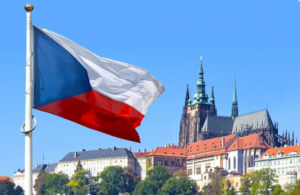
The Czech Republic continues to enjoy a high level of positive perception among Ukrainians, although in August 2026 the share of favorable assessments decreased compared to March. 61.3% of respondents view the country positively, 5.1% negatively, while nearly one-third of respondents hold a neutral stance, according to the Experts Club information and analytical center.
According to the results of the August survey, 18.8% of Ukrainians view the Czech Republic entirely positively, and 42.5% view it mostly positively. A neutral stance was chosen by 32.1% of respondents. 4.1% view the country mostly negatively, 1% view it entirely negatively, and another 1.6% were undecided.
The balance of positive and negative assessments stands at plus 56.2 percentage points. This is the highest figure among the Central and Eastern European countries included in the study. Following the Czech Republic in this regional group are Moldova, Romania, Bulgaria, and Slovakia.
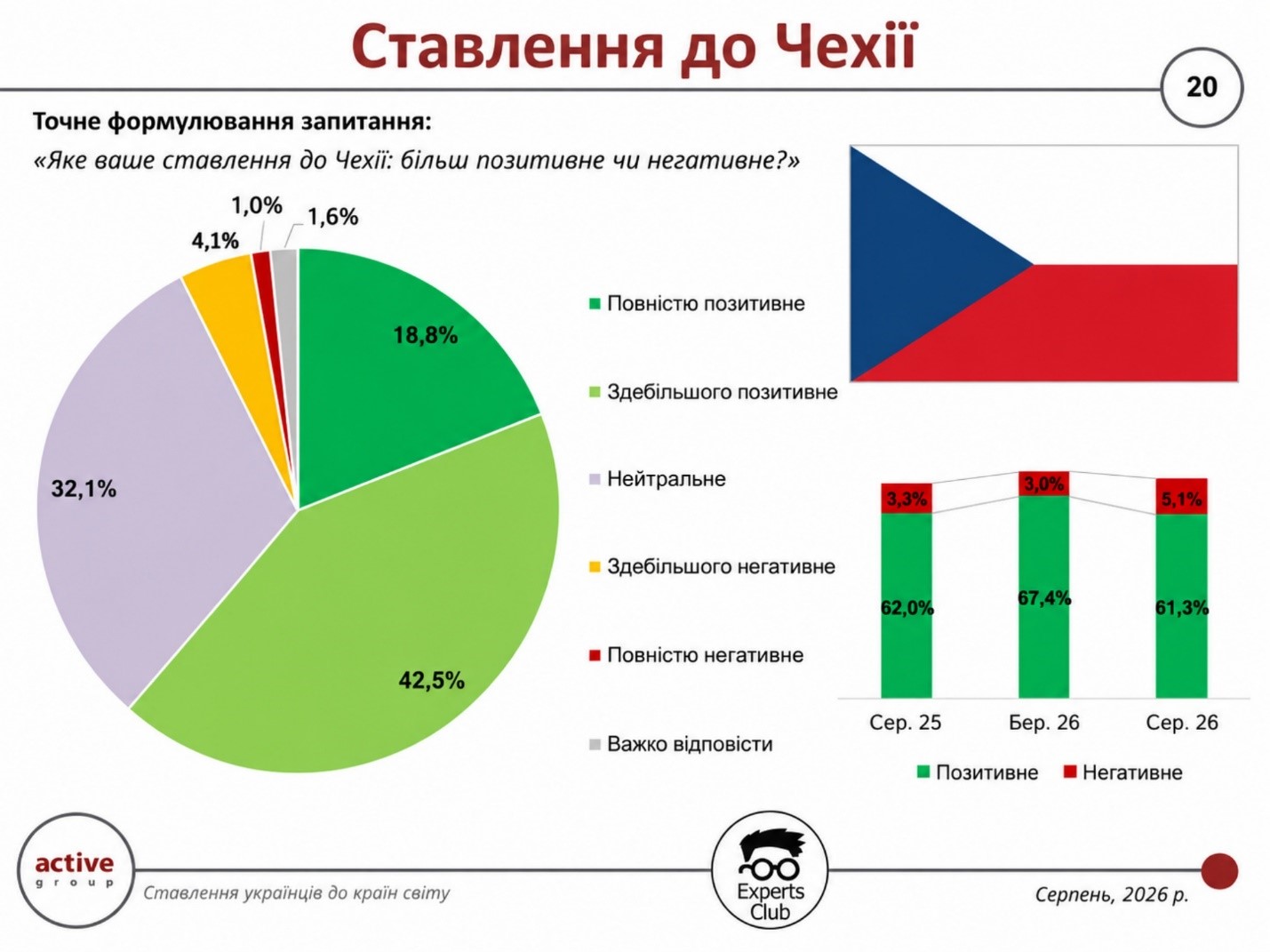
Compared to the previous wave of the survey, attitudes toward the Czech Republic have deteriorated somewhat. In March 2026, 23.3% of respondents rated the country entirely positively, and 44.1% rated it mostly positively—meaning the total share of positive responses was 67.4%. 28.2% had a neutral attitude, and about 3% had a negative one.
Thus, over the course of five months, the share of positive assessments fell by 6.1 percentage points—from 67.4% to 61.3%. Negative responses increased by approximately 2.1 percentage points, while neutral responses rose by 3.9 percentage points. The balance between positive and negative attitudes decreased from approximately plus 64.4 percentage points to plus 56.2 percentage points.
At the same time, these changes do not indicate a fundamental shift in Ukrainians’ attitudes toward the Czech Republic. Positive assessments outnumber negative ones by more than 12 to 1, and the main shift in responses was toward a neutral stance. The Czech Republic also remains significantly higher than most other countries in Central and Eastern Europe in terms of the balance of public perception.
Maksym Urakin, founder of the Experts Club information and analytical center and a candidate of economic sciences, commenting on the results of a previous study on the Czech Republic, attributed the high level of positive sentiment to the nature of bilateral relations.
“Ukrainians’ positive attitude toward the Czech Republic is explained not only by historical proximity but also by Prague’s active support for Ukraine. At the same time, economic relations between the countries are characterized by a significant imbalance—imports from the Czech Republic substantially exceed exports. This creates opportunities for developing new areas of cooperation, particularly in the fields of high technology, investment projects, and energy,” Urakin noted.
The latest wave of the survey shows that the overall positive image of the Czech Republic among Ukrainians remains, although its intensity has decreased compared to the spring. At the same time, the increase in neutral assessments is more noticeable than the rise in negative ones.
The survey, conducted in August 2026, used self-administered online questionnaires from the SunFlowerSociology panel among 800 Ukrainian citizens aged 18 and older. The previous survey in March also included 800 respondents; the sample was representative by age, gender, and region, and the maximum theoretical margin of error for indicators at the 50% confidence level was ±3.5 percentage points.
ACTIVE GROUP, Central Europe, CZECH REPUBLIC, EXPERTS CLUB, international relations, PUBLIC OPINION, SOCIOLOGY, UKRAINE, URAKIN
The Czech Republic and Moldova have the highest net sentiment—the balance of positive and negative attitudes—among Ukrainians among the Central and Eastern European countries included in the study—56.2 and 48.2 percentage points, respectively. At the same time, the balance of attitudes toward Poland turned negative in August 2026, while assessments of Slovakia and Hungary improved significantly compared to previous waves. This is evidenced by the results of the third wave of the study “Ukrainians’ Attitudes Toward Countries Around the World,” conducted by Active Group in collaboration with Experts Club, according to the Experts Club Information and Analytical Center.
The Czech Republic received the highest share of positive assessments in this group—61.3%. 32.1% of respondents have a neutral attitude toward it, 5.1% have a negative attitude, and another 1.6% were undecided. The balance of positive and negative attitudes stands at 56.2 percentage points, compared to 64.4 percentage points in March 2026 and 58.7 percentage points in August 2025.
Regarding Moldova, 55.4% of respondents have a positive attitude, 35.6% are neutral, and 7.2% have a negative attitude. The balance stands at 48.2 percentage points, which is lower than the 54.7 percentage points recorded in March but higher than the 46.6 percentage points recorded in August of last year.
Regarding Romania, 45.2% of respondents expressed a positive attitude, 42.3% were neutral, and 9.8% were negative. The balance fell to 35.4 percentage points from 41.7 percentage points in March. In Bulgaria, positive assessments accounted for 42.7%, neutral ones for 47.6%, and negative ones for 7.4%, with the balance standing at 35.3 percentage points, compared to 51.5 percentage points in March.
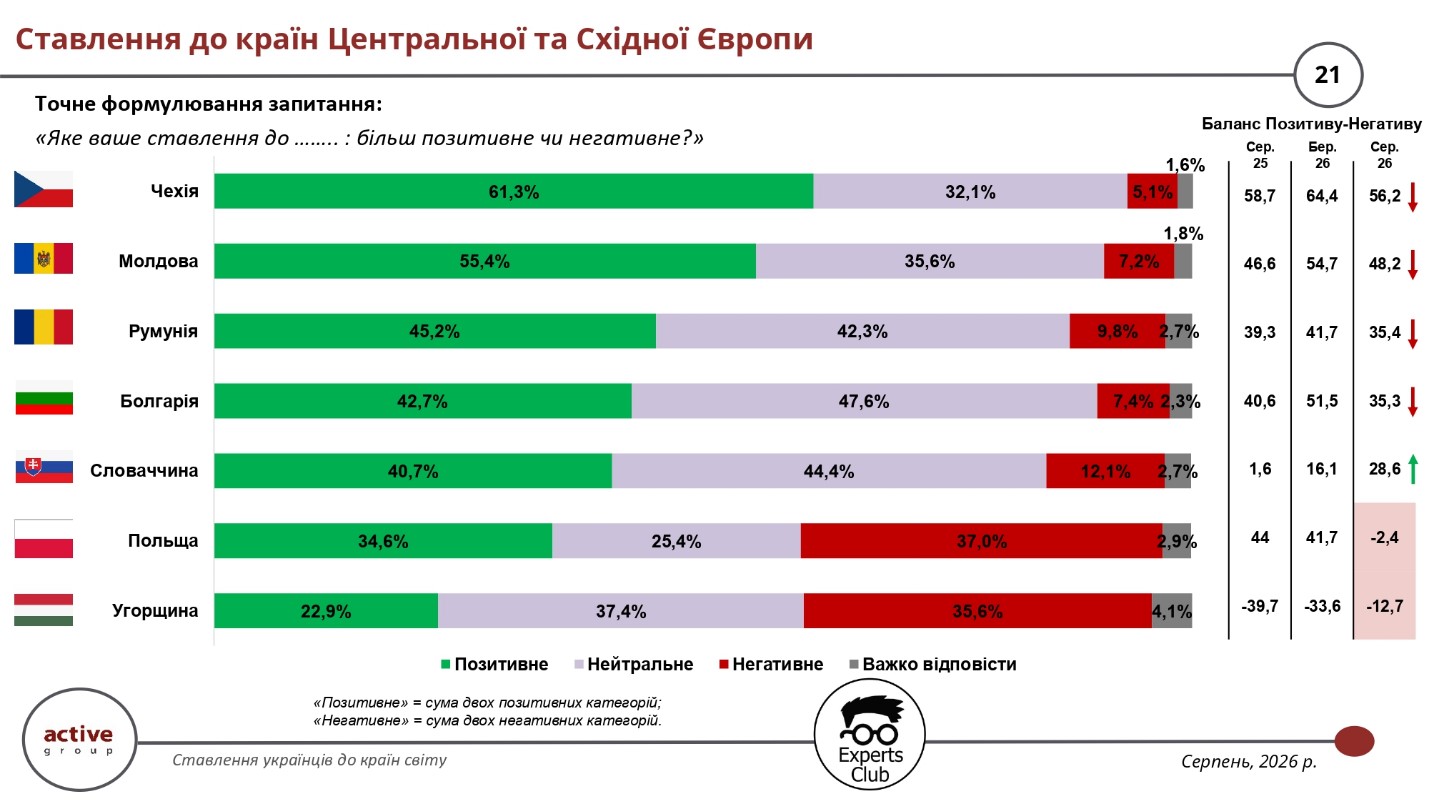
Unlike most countries in the group, attitudes toward Slovakia showed a noticeable improvement. It is viewed positively by 40.7% of respondents, negatively by 12.1%, and neutrally by 44.4%. The balance rose to 28.6 percentage points from 16.1 percentage points in March 2026 and just 1.6 percentage points in August 2025.
The sharpest negative trend was recorded regarding Poland. 34.6% of Ukrainians view it positively, 37% negatively, and 25.4% neutrally. As a result, the net balance stands at minus 2.4 percentage points, whereas in March 2026 it was plus 41.7 percentage points, and in August 2025—plus 44 percentage points. The deterioration in attitudes toward Poland was one of the most notable shifts in the third wave of the survey.
Hungary remains in the negative zone: 22.9% of respondents expressed a positive attitude, 35.6% a negative one, and 37.4% a neutral one. At the same time, its balance improved to minus 12.7 percentage points compared to minus 33.6 percentage points in March and minus 39.7 percentage points in August 2025.
Maksym Urakin, founder of the Experts Club Information and Analytical Center, deputy director of the Interfax-Ukraine news agency, and candidate of economic sciences, emphasized that public perception of countries must be analyzed in parallel with Ukraine’s actual economic ties.
“That is why it is very important for us to analyze our main partners. The first recommendation is to regularly showcase concrete projects, specific actions, and the presence here of foundations, embassies, teams, and diplomats in the humanitarian sphere and in science. We also need to use our sociological data to draw conclusions and strengthen our relations, particularly trade relations,” Urakin noted.
Oleksandr Pozniy, director of the research firm Active Group, highlighted the practical significance of the study’s findings for economic and diplomatic policy.
“We should focus on developing more than just general awareness. First and foremost, business associations, the Ministry of Economy, and the Ministry of Foreign Affairs need to work to develop bilateral relations and improve the balance of trade. We must expand cooperation with countries where we can achieve a positive trade balance,” Pozniy noted.
The survey was conducted in August 2026 using self-administered online questionnaires in the SunFlowerSociology panel among 800 Ukrainian citizens aged 18 and older. According to the organizers, the sample is representative by age, gender, and region, with a maximum theoretical margin of error of 3.5%. This is the third wave of the study, following surveys conducted in August 2025 and March 2026.
ACTIVE GROUP, BULGARIA, Central Europe, CZECH REPUBLIC, EASTERN EUROPE, EXPERTS CLUB, HUNGARY, MOLDOVA, POLAND, Pozniy, ROMANIA, SLOVAKIA, SOCIOLOGY, UKRAINE, URAKIN



