
Ukrainian enterprises operating in the ferrous scrap market have called for the abolition of the current zero quota on raw material exports and the introduction of controlled supplies to EU countries, stating that the situation in the industry has sharply deteriorated.
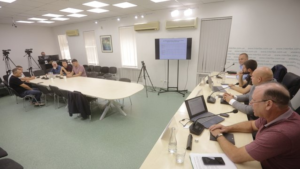
Representatives of companies and the industry association reported this at the press conference “Ukraine’s Scrap Market: Between the Needs of the Economy and Regulatory Uncertainty,” held on September 16 at the Interfax-Ukraine agency.
Volodymyr Bubley, president of the Ukrainian Association of Secondary Metals “UAVtormet,” said that the zero quota on scrap exports to the EU, introduced from the beginning of 2026, is negatively affecting raw material collection and the activities of industry enterprises. According to him, if the current restrictions remain in place, scrap collection volumes may decline significantly by the end of the year.
Serhiy Vovk, CEO of UkrMetInvest LLC, said that the company has already laid off 180 employees, while only four of its 18 production sites continue to operate. More than 14,000 tonnes of scrap that the company is unable to sell have accumulated at its warehouses.
Mykola Klymovych, development director of Mirten LLC, noted that over the eight months of 2026, the volume of scrap collection, according to industry representatives’ estimates, fell by approximately 400,000 tonnes. Market participants estimate losses in tax revenues at more than UAH 1 billion.
Vladyslav Kleshchynskyi, CEO of the UKRMET Group, said that domestic demand from metallurgical enterprises had fallen sharply and that regulated scrap exports to the EU needed to be permitted. Industry representatives had previously proposed setting an export quota at around 200,000 tonnes per year.
According to UAVtormet, around 4.3 million tonnes of steel were produced in Ukraine in January-August 2026, compared with 7.409 million tonnes for the whole of 2025. Scrap metal supplies to metallurgical enterprises over the eight months amounted to 925,400 tonnes, while total collection reached 971,700 tonnes.
The association forecasts that by the end of 2026, steel production will amount to around 6.4-6.5 million tonnes, scrap supplies to metallurgical enterprises to 1.2-1.25 million tonnes, and total collection to approximately 1.22-1.25 million tonnes.
Exports of Ukrainian ferrous scrap in January-August 2026 fell by 95.1% compared with the same period last year, to 13,856 tonnes from 283,055 tonnes. In monetary terms, supplies decreased by 95.4% to $3.93 million.
In 2025, by contrast, scrap exports rose by 45.3% to 448,685 tonnes, while foreign-currency revenue increased by 44.5% to $131.927 million. It was precisely the sharp increase in raw material exports that became one of the reasons for the Ministry of Economy’s introduction of a licensing regime and a zero export quota for 2026.
In April, the government partially adjusted the restrictions, allowing exports under licenses for individual foreign economic activity entities that had won state electronic auctions. However, representatives of the scrap collection industry consider this mechanism insufficient to restore the market to full operation.
Participants in the press conference said that if the current regulatory model remains in place, they will seek a review of the decision and do not rule out protest actions.
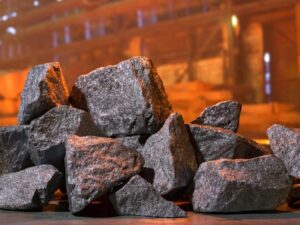
In January–August of this year, Ukraine’s ferroalloy exports decreased by 67.5% in volume terms compared with the same period last year—to 23,964 thousand metric tons from 73,774 thousand metric tons.
According to statistics released by the State Customs Service (SCS), 4,675 thousand metric tons of ferroalloys were exported in August, 4,077 thousand metric tons in July, 6,432 thousand metric tons in June, 4,851 thousand metric tons in May, in April—2,755 thousand metric tons, in March—337 metric tons, in February—72 metric tons, and in January—765 metric tons.
In monetary terms, ferroalloy exports for January–August fell by 65.2% to $28,778 million.
In addition, over the first eight months of the year, Ukraine imported 18,337 thousand metric tons of these products—a 32.8% decrease compared to January–August 2025. In monetary terms, imports fell by 33.2% to $34.613 million.
As previously reported, the Pokrovsk Mining and Processing Plant (PGZK, formerly the Ordzhonikidze Mining and Processing Plant) and the Marganetsk Mining and Processing Plant (MGZK, both located in Dnipropetrovsk Oblast), which are part of the “Privat” Group, ceased the extraction and processing of raw manganese ore in late October–early November 2023, while the NZF and ZZF plants halted the smelting of ferroalloys. In the summer of 2024, the ferroalloy plants resumed production at a minimal level.
Since January 19, 2026, due to problems with electricity supply and high electricity prices, NZF has been idle, while ZZF has been operating at a minimal level.
In 2025, ferroalloy plants increased their exports of ferroalloys by 21.4% in volume terms compared to 2024—to 93,841 thousand metric tons—while revenue rose by 19% to $105.441 million. The main export destinations were Poland (28.69% of shipments in monetary terms), Turkey (21.62%), and Algeria (21.48%).
In 2025, Ukraine imported 38,434 thousand metric tons of this product—a decrease of 53.3% compared to 2024. In monetary terms, imports fell by 47.5% to $73.839 million. Imports came primarily from Norway (16.11%), Kazakhstan (15.89%), and France (12.56%).
Prior to the nationalization of the financial institution, PrivatBank managed the business operations of the ZZF, NZF, Stakhanov Steel Plant (located at NKT), and the Pokrovsk and Marganets Mining and Processing Plants. The Nikopol Ferroalloy Plant is controlled by the EastOne Group, formed in the fall of 2007 as a result of the restructuring of the Interpipe Group, as well as by the Privat Group.
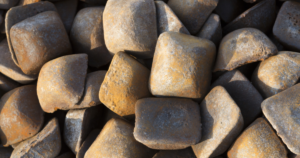
In January–August of this year, Ukraine’s exports of processed pig iron decreased by 16.4% in volume terms compared to the same period last year—down to 1,033,034 metric tons from 1,235,648 metric tons.
According to statistics released by the State Customs Service (SCS), 34 metric tons of pig iron were exported in August, 51,539 metric tons in July, 183,780 metric tons in June, in May—159,378 thousand metric tons; in April—181,670 thousand metric tons; in March—168,493 thousand metric tons; in February—194,345 thousand metric tons; and in January—93,795 thousand metric tons.
From January through August 2026, pig iron exports in monetary terms fell by 15.3% to $413,041 million.
Over the first eight months of this year, the country imported 15 metric tons of pig iron worth $35,000, compared to 38 metric tons worth $76,000 during the same period last year.
As previously reported, in 2025 Ukraine increased its pig iron exports by volume by 53.5% compared to 2024—to 1,980,620 thousand metric tons—and by value by 51.9%, to $759,882 million. Exports were primarily shipped to the United States (68.25% of shipments by value), Italy (20.26%), and Turkey (3.63%).
Last year, the country imported 39 thousand metric tons of pig iron worth $78 thousand from Germany (51.95%) and Brazil (48.05%), while in January–December 2024, 38 metric tons worth $90 thousand were imported.
Starting March 12, 2025, in accordance with a decision by President Donald Trump, a 25% tariff began to be levied on imports of Ukrainian steel products, excluding pig iron.
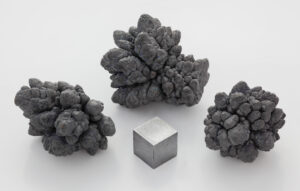
In January–August 2026, Ukraine reduced imports of lead and lead products by 77% compared to the same period last year, down to $1.282 million.
According to statistics released by the State Customs Service of Ukraine, imports of lead and lead products in August totaled $98,000.
Exports of lead and lead products in January–August of this year rose by 17.2% to $7.402 million, and in August, they totaled $1.416 million.
As previously reported, in 2025, Ukraine increased its imports of lead and lead products by a factor of 3.3 compared to 2024, reaching $7.801 million. Exports of lead and lead products in 2025 decreased by 17.8% to $9.377 million.
Lead is currently used primarily in the production of lead-acid batteries for the automotive industry. In addition, lead is used in the manufacture of bullets and certain alloys.

In January–August of this year, Ukraine’s mining companies reduced exports of iron ore raw materials (IORM) by 27.2% in volume terms compared to the same period last year—down to 15,774,950 metric tons from 21,679,221 metric tons.
According to statistics released by the State Customs Service (SCS), 1,865,697 thousand metric tons of iron ore were exported in August, 1,875,428 thousand metric tons in July, 2,021,299 thousand metric tons in June, in May—2,239,167 thousand metric tons of raw materials, in April—2,163,837 thousand metric tons, in March—2,300,467 thousand metric tons, in February – 1,254,516 thousand metric tons, in January – 2,054,539 thousand metric tons.
Over the first eight months of 2026, foreign exchange earnings from mineral ore exports decreased by 26.1% to $1,206,589 million.
In addition, Ukraine imported 235 metric tons of raw materials worth $68,000 in January–August 2026, whereas in January–August 2025, it imported 86,000 metric tons worth $58,000.
As previously reported, Ukraine’s mining companies reduced ore exports in physical terms by 8% in 2025 compared to the previous year—to 30,995,363 metric tons from 33,699,722 metric tons, and foreign exchange earnings decreased by 16.6%—to $2,337,765 million from $2,803,223 million. Exports were primarily destined for China (44.98% of shipments in monetary terms), Slovakia (17.15%), and Poland (16.09%).
In addition, in 2025, Ukraine imported $95,000 worth of raw materials totaling 130 metric tons from the Netherlands (46.32%), Italy (36.84%), and Norway (13.68%), whereas in the previous year it imported 2,042 thousand metric tons worth $414 thousand.
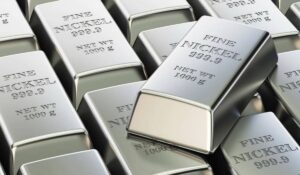
In January–August 2026, Ukraine increased imports of nickel and nickel products by 8.9% compared to the same period last year, reaching $15.811 million.
According to statistics released by the State Customs Service of Ukraine, nickel and nickel product imports totaled $1.967 million in August.
Exports of nickel and nickel products in January–August 2026 totaled $404,000, and in August, $34,000, compared to $746,000 for the first eight months of 2025.
As previously reported, Ukraine reduced imports of nickel and nickel products by 2.7% in 2025 compared to 2024, down to $26.011 million. Exports of nickel and nickel products totaled $1.420 million, compared to $602 thousand in 2024.
Nickel is used in the production of stainless steel and for nickel plating. It is also used in battery manufacturing, powder metallurgy, and chemical reagents.



