

From August 1 to 27, Ukraine exported 47.5% less agricultural produce than during the corresponding 27 days in July—1.726 million metric tons versus 3.287 million metric tons, according to a weekly market review by the brokerage firm Spike Brokers.
According to its data, the decline was less significant in monetary terms—25.6%: exports of goods in groups 01–24 of the Ukrainian Classification of Goods for Foreign Economic Activity (UKT ZED) for the first 27 days of August totaled $1.060 billion, compared to $1.424 billion in July. At the same time, the average price per metric ton of the export basket rose from about $433 to $614, primarily due to a shift in the commodity structure of exports.
The main decline in physical volumes was in grains. Total exports of wheat, corn, and barley fell by 69.5% to 740,000 metric tons. Specifically, 486,600 metric tons of wheat were shipped (-49.8% compared to July), 190,700 metric tons of corn (-84.3%), and 62,600 metric tons of barley (-74.5%). The share of these three crops in total agricultural exports fell from 73.9% to 42.9%, respectively.
At the same time, rapeseed exports surged in August as seasonal shipments began. From August 1–27, rapeseed exports reached 255,200 metric tons, compared to 11,800 metric tons during the same period in July. Rapeseed’s share of total exports rose from 0.4% to 14.8%. Rapeseed oil exports increased more than 4.5-fold, reaching 69,400 metric tons.
The processed products segment contracted significantly less than the grain segment. Exports of the three main vegetable oils—sunflower, rapeseed, and soybean—totaled 234,000 metric tons, down 16.7% from the corresponding period in July.
Exports of sunflower and soybean meal fell to 153,800 metric tons (-6.4%), and sunflower oil exports dropped to 131,300 metric tons (-42.5%); however, shipments of sunflower meal rose to 83,100 metric tons (+28%).
The geography of exports also changed. The largest destinations by physical volume in August were Germany—195.7 thousand metric tons, Italy—159.7 thousand metric tons, Poland—151.9 thousand metric tons, the Netherlands—147.2 thousand metric tons, and Spain—125.3 thousand metric tons. Exports to Turkey fell by 79%—to 114,000 metric tons, down from 544,800 metric tons in July. In contrast, Germany increased its imports from Ukraine by approximately fourfold, largely due to rapeseed.
According to Spike Brokers, 279,3 thousand metric tons of agricultural products were exported by road through border crossings from August 1–27, which is 11.3% more than during the same period in July.
At the same time, rail shipments of grain as of August 26 fell by 42.4% compared to July—to 951,000 metric tons—and by 57% compared to August 2025. The average daily shipment volume was 37,600 metric tons.
Meanwhile, the average daily transit of grain railcars through western border crossings over the first 25 days of August rose to 173.7 railcars, compared to 71.3 railcars in July—a 2.4-fold increase. As of August 26, 9,822 railcars had accumulated en route to the border crossings, of which 1,508 were carrying grain.
At the same time, rail transportation of grain to port stations—including domestic transport to Izmail—decreased by 81.8% during the current period in August, to 230,600 metric tons, compared to 1.265 million metric tons in July.
Only 55,700 metric tons of grain were transported to the ports of Greater Odesa, which is 95.5% less than the July figure. Specifically, shipments to Chornomorsk-Port-Export totaled 31,600 metric tons (-93.5%), to Odesa-Port—17,200 metric tons (-92.2%), and to Chornomorska for TIS—6,600 metric tons (-97.8%).

In the 2025/26 season, Ukraine significantly increased domestic rapeseed processing—to 43% of the harvest, compared to 16% a year earlier, according to “Agribusiness Today.”
Of the approximately 3.3 million metric tons of rapeseed available, Ukrainian companies processed about 1.4 million metric tons, while about 1.9 million metric tons were exported.
The shift in market structure is already affecting shipments to the European Union. Ukraine is exporting fewer rapeseed seeds while simultaneously increasing shipments of products with higher added value.
During the first eight weeks of the new season, Ukrainian rapeseed oil exports to the EU increased approximately fivefold—to 24,000 metric tons. According to the publication’s estimates, processing about 60,000 metric tons of seeds was required to produce this amount of oil.
During this period, Ukraine accounted for about 56% of rapeseed oil imports into the European Union.
Thus, the Ukrainian rapeseed sector is gradually shifting its business model: instead of primarily exporting raw materials, an increasing portion of the harvest is being processed domestically into oil and meal.
This allows most of the value added to remain in Ukraine while reducing processors’ dependence on imported raw materials and the need to utilize other oilseed crops at processing facilities.
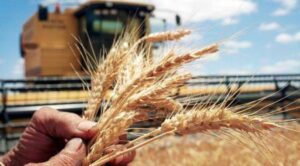
As of August 25, Ukrainian farmers had threshed 6.76 million hectares, or 58% of the projected area, and harvested 31.73 million metric tons of grain from the new crop, according to the press service of the Ministry of Agrarian Policy and Food.
Wheat was harvested from 5 million hectares, yielding 24.61 million metric tons, with an average yield of 49.2 centners per hectare; barley was harvested from 1.46 million hectares, yielding 6.33 million metric tons, with an average yield of 43.4 centners per hectare. Peas were harvested from 297,000 hectares, yielding 786,900 metric tons, with a yield of 26.5 ts/ha.
Farmers in the Odesa, Kirovohrad, and Dnipropetrovsk regions currently lead in terms of the gross harvest volume of grain and legume crops.
In the Odesa region, 4.82 million metric tons were harvested from an area of 1.19 million hectares, specifically: 3.22 million metric tons of wheat, 1.31 million metric tons of barley, and 285,000 metric tons of peas.
In the Kirovohrad region, 2.42 million metric tons have been harvested from an area of 556,000 hectares: 1.92 million metric tons of wheat, 412,000 metric tons of barley, and 82,000 metric tons of peas.
In Dnipropetrovsk Oblast—2.63 million metric tons from an area of 634,000 hectares: wheat—2.02 million metric tons, barley—568,000 metric tons, and peas—37,000 metric tons.
The highest grain yields are currently recorded in the Khmelnytskyi (70.8 ts/ha), Sumy (60.1 ts/ha), and Vinnytsia (59.7 ts/ha) regions.
The rapeseed harvest is nearly complete—1.32 million hectares have been threshed, or 99% of the projected area, yielding 3.79 million metric tons of seed with an average yield of 28.6 centners per hectare.
In some regions, the harvest of buckwheat and millet has begun. For buckwheat, 0.65 thousand hectares have been threshed, yielding 0.9 thousand metric tons at a yield of 13.8 centners per hectare; for millet, 3.6 thousand hectares have been harvested, yielding 7.84 thousand metric tons at a yield of 21.8 centners per hectare.
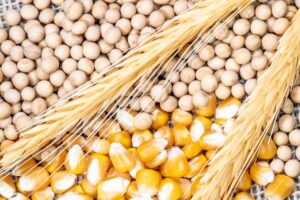
Prices for food and feed wheat in Ukraine remained unchanged over the week—$195 and $185 per metric ton, respectively, on a CPT Odessa basis, according to the brokerage firm Spike Brokers.
“Ukrainian wheat exports in August are estimated at 500,000 metric tons, compared to the usual 2 million metric tons for this month. Russian wheat exports in August are expected to reach 2 million metric tons, compared to 4.5 million metric tons last year. The flow of Ukrainian wheat to Constanta has begun to increase but remains limited for now. Efforts are being made to compensate for the shortage of Ukrainian wheat on the global market through other exporters,” the report states.
The price of corn also remained unchanged at $190 per metric ton on a CPT Odessa basis and $220 per metric ton on an FCA Chop basis.
According to brokers, the price of sunflower seeds also remained unchanged at $440 per metric ton (including VAT) on a CPT mill basis.
At the same time, rapeseed prices at the western border rose by $5—to $550 per metric ton on an FCA Chop basis. The price of rapeseed on a CPT port basis was $500 per metric ton, and on a CPT mill basis—$485 per metric ton.
Soybean prices also remained unchanged: GMO soybeans were priced at $420 per metric ton on a CPT port basis, $435 on an FCA Chop basis, and $425 on a CPT plant basis, while non-GMO soybeans were priced at $440 per metric ton on a CPT port basis and $470 on an FCA Chop basis.
According to Spike Brokers, global corn prices rose over the week, but Ukrainian prices remained unchanged due to physical export constraints. At the same time, the highest premium in the soybean market remains in the non-GMO segment along the western border.
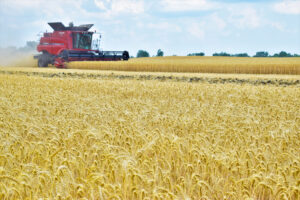
The agricultural holding company “Astarta” has completed the harvest of early grain crops and winter rapeseed across an area of 54,000 hectares, yielding approximately 256,000 metric tons, the company reported.
According to the report, the agricultural holding harvested over 210,000 metric tons of wheat and 43,000 metric tons of winter rapeseed.
The average yield of winter wheat at Astarta was 5.4 metric tons per hectare, and that of winter rapeseed was 3.1 metric tons per hectare. The highest yields were recorded at Khmilnytske LLC in the Vinnytsia region—7.7 metric tons per hectare of winter wheat and 3.8 metric tons per hectare of winter rapeseed.
Andriy Zagorulko, Director of the Agricultural Holding’s Department of Crop Production, Logistics, and Mechanization, noted that the season was challenging due to unfavorable weather conditions and diseases affecting winter rapeseed.
Astarta has already begun preparing the soil for the winter crop planting season.
Astarta is a vertically integrated agribusiness holding company operating in seven regions of Ukraine and is the country’s largest sugar producer. The company’s portfolio includes five sugar refineries, agricultural enterprises with a land bank of 214,000 hectares (including 129,000 hectares in the Poltava region, 42,000 hectares in the Khmelnytskyi region, and 16,000 hectares in the Vinnytsia region), and dairy farms with 30,000 head of cattle. The holding company also operates a soybean processing plant and a bioenergy complex in the Poltava region, as well as a network of six grain elevators.
Astarta’s net profit for 2025 fell 4.2-fold to $19.94 million, while consolidated revenue decreased by 23% to $472 million.

As of August 18, Ukrainian farmers had threshed 6.6 million hectares, or 56% of the projected area, and harvested over 30.8 million metric tons of grain from the new harvest, with an average yield of 46.8 centners per hectare, according to the press service of the Ministry of Agrarian Policy and Food.
As of the same date in 2025, 6.18 million hectares had been threshed, the statement noted.
Wheat was threshed from 4,855.25 thousand hectares, yielding 23,822.36 thousand metric tons, with an average yield of 49.1 centners per hectare. Barley was threshed from 1,437.17 thousand hectares, yielding 6,239.99 thousand metric tons, with an average yield of 44 centners per hectare. Peas have been harvested from 295,66 thousand hectares, with 779,02 thousand metric tons collected and an average yield of 26.3 centners per hectare. Millet has been harvested from 1.2 thousand hectares, with 2.7 thousand metric tons collected and an average yield of 22.5 centners per hectare.
In terms of harvest volumes of early grain and legume crops, the Odesa, Kirovohrad, and Mykolaiv regions are currently leading.
In Odesa Oblast, 4,819.70 thousand metric tons were harvested from an area of 1,188.8 thousand hectares (wheat—3,223.30 thousand metric tons; barley—1,311.50 thousand metric tons; peas—284.90 thousand metric tons).
In the Kirovohrad region, 2,418.30 thousand metric tons were harvested from an area of 555.7 thousand hectares (wheat—1,923.80 thousand metric tons; barley—412.50 thousand metric tons; peas—82.0 thousand metric tons).
In the Mykolaiv region, 2,326,10 thousand metric tons were harvested from an area of 653.8 thousand hectares (wheat – 1,631,80 thousand metric tons, barley – 587.5 thousand metric tons, peas – 106.80 thousand metric tons).
The highest grain yields are currently being recorded in the Khmelnytskyi (69.9 centners per hectare), Sumy (59.8 centners per hectare), and Vinnytsia (59.5 centners per hectare) regions.
Rapeseed has already been threshed from 1,318.64 thousand hectares, yielding 3.7 million metric tons of seeds with an average yield of 28.5 centners per hectare.



