
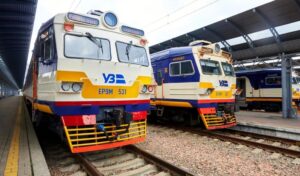
Oleksandr Pertsovskyi, Chairman of the Board of JSC “Ukrzaliznytsia,” announced the implementation of measures in October to reduce personnel costs: the company must save at least 200 million hryvnias per month in payroll expenses; in particular, the management staff will switch to a four-day workweek.
“These steps will not be easy and will affect a significant portion of our staff. This will mean fewer paid working hours and lower earnings. I understand how painful this is for your families, especially as winter approaches. However, without these steps, the railway cannot survive under current conditions,” Pertsovskyi noted in an address on the “UZ” corporate channel.
He emphasized that Ukrzaliznytsia’s priority will remain minimizing the impact of these measures on the operational staff who ensure train operations and perform repairs on the railway infrastructure.
According to him, the implementation of these decisions will primarily affect management bodies—specifically, the central office and regional branches—as well as administrative and engineering staff.
Among other measures is the suspension of bonus payments to administrative staff in the management offices of branches, regional offices, and operational units.
“This is the only way to preserve bonuses for the operational staff—those who work day and night on restoration and repairs and ensure train operations. We appreciate the contribution of administrative staff and understand the importance of their work, but today we are forced to make this choice,” added Pertsovskyi.
At the same time, he mentioned the possibility of offering part-time work in the company’s divisions and branches.
“I can assure you: as soon as the situation begins to stabilize (at least when freight volumes partially recover and the ports reopen), the first thing we will gradually ease is the restrictions on personnel expenses to improve our employees’ situation!” emphasized the chairman of the UZ board.
He noted that meetings with staff will be held in the coming days and weeks to explain these decisions.
In addition, Pertsovskyi announced that a briefing on the current situation and future plans will be held for railway employees at least once a month.
Ukrzaliznytsia explained that these decisions are driven, in particular, by a decline in freight volume to less than 250,000 metric tons per day—down from 450,000 metric tons in July and over 730,000 metric tons prior to Russia’s full-scale aggression.
The situation is further complicated by Russian attacks, which put up to 40 locomotives out of service each month, requiring significant resources for repairs.
In addition, Pertsovskyi pointed out the need to secure “hundreds of millions of hryvnias” to build mobile shelters at the company’s facilities to ensure the safety of its employees.
“Therefore, without optimizing personnel costs—a last resort to which we are resorting—we will not be able to survive!” the chairman of the board concluded.
The Interfax-Ukraine news agency contacted the Ukrzaliznytsia press service for comment to clarify the details of the decision.
cost savings, FREIGHT TRANSPORTATION, STAFF, UKRAINE, UKRZALIZNYTSIA

The cost of construction and installation work on civil engineering projects in Ukraine in June 2026 rose by 24.3% compared to June of last year—the highest rate among the major construction segments. According to data from the State Statistics Service, nonresidential construction rose in price by 23.8% over the same period, while residential construction rose by 19.2%. On average across the construction industry, the increase was 23.1%.
Civil engineering also led the way in terms of monthly trends. In June, compared to May, prices in this sector rose by another 1.8%, compared to 1.3% in non-residential construction and 0.8% in residential construction.
In the second quarter of 2026, civil engineering and installation work cost 22.4% more than in April–June of the previous year. A similar increase—22.4%—was recorded in non-residential construction, while residential construction prices rose by 18.2%.
The quarterly trends are particularly telling. Compared to the first quarter, prices for engineering work rose by 12.4% in the second quarter, and for non-residential construction by 12%, while the residential sector saw an increase of only 0.4%.
According to Andriy Ozeychuk, owner and director of the engineering and construction company Rauta, the shortage of skilled workers remains one of the key factors driving up construction costs.
“The market is currently short about 30% of construction specialists,” Ozeychuk noted, commenting on the situation in the industry in February 2026.
According to his data, the labor shortage has already led to a noticeable acceleration in wage growth. While wages in the construction sector grew by an average of approximately 15–20% annually between 2022 and 2024, the growth rate reached 25–30% in 2025. Wages rose particularly sharply for concrete workers—by 50%, surveyors—by 44%, and concrete pourers—by 38%.
Thus, the current rise in the cost of construction work is not driven solely by prices for building materials and equipment. The cost of construction work itself and labor is playing an increasingly important role.
Ozeychuk also drew attention to the long-term nature of the labor shortage. According to him, vocational schools are facing both a shortage of students enrolling in construction programs and a high dropout rate as early as the first years of study.
“In the long run, this could lead to an even greater labor shortage and slow down Ukraine’s recovery,” says the owner of Rauta.
According to the company’s estimates, the labor shortage is already forcing the construction industry to seek workers outside Ukraine, particularly in India, Nepal, Bangladesh, and Pakistan.
The rising cost of civil engineering is of particular importance to Ukraine due to the massive need to rebuild energy, transportation, utilities, and other critical infrastructure. According to Rauta’s estimates for 2025, the segment of critical infrastructure restoration and protection already accounted for about 20% of the Ukrainian construction market.
Therefore, further increases in the cost of civil engineering work could directly impact the cost estimates for restoration projects. If the cost of construction and installation work rises by 20–25%, projects whose budgets were established much earlier may require additional funding or a revision of technical solutions and implementation timelines.
At the same time, non-residential and infrastructure construction remain among the most active segments of the market. In 2025, the main targets for investment in commercial real estate were warehouse, industrial, and retail buildings, while the most attractive regions for new construction were the Kyiv, Lviv, and Ivano-Frankivsk regions, Ozeychuk noted.
In the first half of 2026, civil engineering construction costs rose by 16.1% year-over-year, non-residential construction by 16.5%, and residential construction by 13.7%.
“Rauta” operates in the fields of design, construction, and installation of buildings and is a member of the European Construction Industry Association. According to data from the Unified State Register, Andriy Ozeychuk owns 100% of the company’s authorized capital.
CONSTRUCTION, INFRASTRUCTURE, OZEYCHUK, PRICE, RAUTA, RESTORATION, STAFF

The number of full-time employees at the Kyivstar Group increased by 5.9%, or 291, to 5,183 in 2025, with the majority—68%—working at Kyivstar, the largest telecommunications operator, according to the group’s annual report.
According to the report, Kyivstar increased its workforce by 5.8%, or 193 employees, to 3,518 last year, while Kyivstar. Tech increased its workforce by 11.2% to 624, Helsi by 17.4% to 270, and only Uklon’s headcount remained unchanged at 768 people.
“The total number of our employees as of December 31, 2025, exceeds the number at the start of the war, and we have not lost a single key employee as a result of the war, despite the fact that 95% of our employees are located in Ukraine,” the report states.
According to the report, the group saw a 4.6% increase in full-time employees in 2024, or 217 people, including a 3.1% increase at Kyivstar, or 100 people.
It is noted that 20.7% of employees work in the network, 18% in call centers, 14.7% in commercial functions, 12.2% in digital functions, 7.6% in finance, 1% in HR, 0.8% in legal, 0.3% in compliance, and 21.4% are engaged in other support functions.
“We have developed internal procedures to manage the risk of mobilization of critical employees and are constantly analyzing the workload on staff to ensure uninterrupted operations,” the report states.
The group reported that since the start of the war in February 2022, it has paid employees 842 million UAH in emergency aid and is also offering 77% of employees the option to work in hybrid and remote modes.
It is also noted that the group had a relatively low voluntary turnover rate at the end of last year (calculated as the number of employees who resigned voluntarily relative to the total number of employees), with the exception of the call center, which relies heavily on seasonal workers—6.5%, which is only 0.5 percentage points higher than at the end of 2024 and 2023.
The report also notes that 218 employees are members of the Trade Union Committee of the primary trade union organization, and negotiations on concluding a collective agreement were suspended due to the war and are expected to resume after the end of martial law.
“We believe that relations with our employees are generally good,” the group concludes.
As reported, Kyivstar served approximately 22.4 million mobile subscribers and over 1.2 million fixed-line subscribers as of the end of 2025. The company is wholly owned by Kyivstar Group Ltd, whose shares are traded on the U.S. Nasdaq stock exchange and whose majority owner, in turn, is the telecommunications holding company VEON with an 83.6% stake.
In 2025, the Kyivstar Group increased its EBITDA by 30% to UAH 27 billion, with revenue growing by 30.3% to UAH 48.2 billion; including in the fourth quarter of last year, when EBITDA increased by 23.1% to UAH 7.2 billion, with revenue growing by 30.1% to UAH 13.5 billion.

One of Ukraine’s largest grain market operators, Nibulon, has reduced its staff threefold, retained four areas of operation, focused on the introduction of new digital services and technologies, and plans to return to its pre-war share of 10% of Ukraine’s grain exports by increasing exports this year to 4 million tons from 2.5 million tons last year, said the company’s owner and CEO Andriy Vadatursky.
“Before the war, the company employed 6,000 people. When I was waiting (for the core team to move from Mykolaiv to Kyiv – IF-U), there were 4,000 employees. Now there are a little less than 2,000. This is the path to optimization and automation of numbers. When people ask, ‘What has changed for you?’, I answer that everything has changed – the entire business model has changed,” he said at the Forbes Agro 2025 conference in Kyiv on Friday.
Vadatursky noted that Nibulon currently has four main business areas: agricultural production, logistics, trading, and digitalization.
According to him, Nibulon is developing agricultural production on slightly more than 50,000 hectares, while before the war, the agricultural holding operated on 82,000 hectares. Its lost agricultural land is located in the Luhansk and Kharkiv regions. In addition, before the war, the grain trader owned 28 elevators, 5 of which have been lost and 13 blocked. Nibulon’s logistics company currently operates 167 motor vehicles and 200 grain cars.
According to the company’s owner, the agricultural holding currently grows approximately 300,000 tons of grain on its own. However, in 2024, Nibulon was able to export 2.5 million tons of grain, and in 2025, it plans to supply up to 4 million tons to foreign markets.
“It is no secret that Nibulon entered the war with $530 million in loans. Currently, we have confirmed losses of $440 million, which, in addition to the loss of land and elevators, include the loss of about 140,000 tons of grain,” Vadatursky said, adding that in three years of war, the agricultural holding was able to earn $250 million and repay $160 million in debts to banks.
He assured that Nibulon intends to continue servicing its loans in 2025, despite the fact that 68% of its assets are currently not operational.
Vadatursky explained that during the war, Nibulon will focus on the efficiency of its businesses, their expansion, and vertical integration. At the same time, the main criteria will be efficiency and “streamlining by removing all inefficient components.” In addition, the grain trader will focus on the introduction of new technologies, digitalization, and artificial intelligence.
“We are targeting approximately $60-80 million in EBITDA to be able to repay all loans. To this end, we are doing everything we can to increase the amount of grain that passes through our system. And we have the ambition to return to our pre-war share of exports, which was about 10-12% of Ukraine’s total grain exports, by providing more competitive services than before the war and earning money through the introduction of technologies and increased efficiency,” the owner of the agricultural holding concluded.
Before the war, Nibulon cultivated 82,000 hectares of land in 12 regions of Ukraine and exported agricultural products to more than 70 countries around the world. In 2021, the grain trader exported a record 5.64 million tons of agricultural products and supplied record volumes to foreign markets in August (0.7 million tons), in the fourth quarter (1.88 million tons), and in the second half of the year (3.71 million tons).
After the war began, the company was forced to move its headquarters from Mykolaiv to Kyiv.

In response to Belarus’ unfriendly actions against employees of Ukrainian diplomatic institutions in Minsk and Brest, Ukraine has taken a number of measures, in particular, reducing the number of staff of the Belarusian embassy in Ukraine to five people, Spokesperson of the Ministry of Foreign Affairs Oleh Nikolenko has said.
In addition, the Foreign Ministry said that Ukraine is canceling the diplomatic accreditation of other employees of the Belarusian embassy. Their and the family members’ stay on the territory of Ukraine is declared undesirable.
In addition, Ukraine establishes for Belarusian diplomats after their return to the country a permissive regime of movement outside the 40-kilometer zone from the center of Kyiv, and also cancels the exequatur of the honorary consul of Belarus in Lviv.
“We warn the Belarusian authorities that any further unfriendly steps towards Ukraine will receive an immediate and decisive response,” Nikolenko said on his Facebook.
Earlier, the Belarusian authorities decided to expel some Ukrainian diplomats and close the Consulate General of Ukraine in Brest, the Belarusian Foreign Ministry said.

Dynamo Kyiv Football Club has expressed its sincere gratitude to head coach Oleksiy Mykhailychenko and his assistants Vadym Yevtushenko, Serhiy Fedorov and Mykhailo Mykhailov. Dynamo will begin preparations for the next season with a new coaching staff.
“Having received the team during the season, this coaching staff made every effort to fulfill the tasks set for the season. As a result, Dynamo won the Ukrainian Cup and took second place in the championship, which gives the right to compete for participation in the group stage of the UEFA Champions League. At the same time, the club’s management and the large army of Dynamo fans cannot satisfy with the current level of the team’s play, the lack of progress sufficient to fight for the title of champion of Ukraine and a worthy performance in European club tournaments. For this, Dynamo’s game must reach a new level of quality,” said a message on the club’s official website on Monday, July 20.
A new team leadership for the new season will be announced later.
In the championship of Ukraine, which ended over the weekend, Dynamo took second place and was on the verge of missing the Champions League qualification. The capital club lagged behind Shakhtar Donetsk, which became the champion for the fourth time, with 23 points.



