

A one-time check of a counterparty before concluding a contract does not make it possible to fully control commercial risks: a company’s financial condition, its owners, management and payment discipline may change already in the course of cooperation. Therefore, Ukrainian businesses should move from one-time checks to continuous monitoring of key partners.
International business information systems, including Dun & Bradstreet (D&B), make it possible not only to obtain information about a company before starting cooperation, but also to track changes in its profile.
According to Maksym Urakin, Director of Development and Marketing at Interfax-Ukraine and head of the D&B-Interfax-Ukraine business unit, monitoring is particularly important for companies to which a Ukrainian supplier regularly provides deferred payment terms or with which a significant volume of turnover is associated.
“A counterparty may have looked absolutely reliable at the time the contract was signed, but six months later the situation may be different. The company’s debt burden may increase, its owner or management may change, or its payment discipline may deteriorate. If the supplier learns about this only after an overdue payment, managing the risk becomes significantly more difficult,” Urakin noted.
International D&B databases are used to track changes in corporate data and assess business risks. Depending on the information available for a particular jurisdiction, a user can analyze changes in an enterprise’s financial condition, its corporate structure and other characteristics.
This approach is particularly relevant for companies with a large number of customers and suppliers. With hundreds or thousands of counterparties, regularly checking each of them manually is practically impossible.
“Businesses need to identify critically important partners. The greater a counterparty’s debt to the company, or the more strongly the supply chain depends on it, the higher the frequency and depth of monitoring should be,” Urakin believes.
A change in risk indicators does not necessarily require the immediate termination of cooperation. It may serve as a signal to revise the credit limit, shorten the payment deferral period, request additional collateral or conduct a more in-depth check.
A separate area is supplier monitoring. Financial problems at a raw-material producer, carrier or another critically important partner can lead to a halt in supplies even when the Ukrainian company’s own financial position remains stable.
According to Experts Club, Ukrainian enterprises should divide counterparties at least according to their level of financial significance and the potential damage from default or termination of supplies, while the most critical partners should be monitored continuously.
“In a modern risk management system, the question should be not only ‘whom did we check before concluding the contract,’ but also ‘what has changed with our largest counterparties since the check.’ It is monitoring that makes it possible to identify a problem before it turns into a direct financial loss,” Urakin emphasized.
Dun & Bradstreet is an international provider of business data and analytical solutions whose history began in 1841. The company provides tools for business identification, counterparty checks, assessment of credit and commercial risks, compliance, supply chain management and work with corporate data.
The official representative of Dun & Bradstreet in Ukraine is the Interfax-Ukraine news agency. The specialized D&B-Interfax-Ukraine unit helps Ukrainian companies work with international business data, check foreign partners and obtain a D-U-N-S Number.
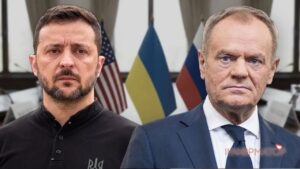
Ukrainian President Volodymyr Zelenskyy held a conversation with Polish Prime Minister Donald Tusk.
“I informed the prime minister about preparations for possible trilateral meetings at the technical level between Ukraine, the United States, and Russia. There are no obstacles on our part, but it is important that the American side prepare on its end and ensure the Russian side’s readiness,” Zelenskyy wrote on his Telegram channel.
The parties also discussed preparations for the Ukrainian power grid ahead of winter and other sensitive issues.
“Not everything can be discussed in detail over the phone—we agreed to meet in person in the near future. I am grateful to Donald and Poland for their support. Only by joining forces across Europe can we stop Russia and prevent this insane war from continuing,” the president concluded.

According to Experts.news, the European Commission has proposed new rules for the recognition of professional qualifications, which are expected to significantly simplify the process of finding employment in the EU for professionals with degrees obtained outside the European Union, particularly in Ukraine.
The changes are part of the Fair Labor Mobility Package, presented on September 15, 2026, which aims to increase worker mobility and reduce the shortage of skilled workers in EU countries.
One of the key innovations is the introduction of uniform rules for third-country nationals and EU citizens who have obtained professional qualifications outside the European Union. Currently, such professionals must go through procedures in accordance with the national rules of a specific EU country.
The European Commission proposes setting clear deadlines for processing documents, digitizing procedures, and creating a single European access point available in all EU languages. New and recently obtained qualifications are planned to be issued in a standardized digital format with the option to store them in the European Digital Identity Wallet.
A separate, free Europass tool will allow employers to compare qualifications obtained in different countries.
The proposed directive on the recognition of third-country nationals’ qualifications may be of particular importance to Ukrainians. It is intended to make procedures for such professionals faster and more transparent, regardless of where the qualification was obtained.
For seven regulated professions for which common minimum training standards already exist in the EU, the proposal provides for the automatic recognition of diplomas issued by educational institutions outside the EU, provided these institutions are accredited by European quality assurance bodies.
These professions include doctors, nurses, dentists, midwives, pharmacists, veterinarians, and architects.
However, automatic recognition will not apply to just any foreign diploma: the curriculum and the institution must meet established European requirements.
The European Commission also plans to shorten the timeframes for professional recognition. Under the new system, the procedure should take no more than 11 weeks, and for the automatic recognition of regulated professions, up to five weeks.
At the same time, simplified diploma recognition will not, in and of itself, grant the right to enter or reside in the EU. Member states will retain control over immigration rules and requirements for admitting foreigners to professional practice.
The package also provides for the creation of a European Social Security Pass, the strengthening of the European Labor Authority, and the wider use of digital documents when workers move between EU countries.
According to the European Commission’s estimates, once fully implemented, the reform could generate an economic impact of approximately €5 billion by 2040 by streamlining procedures, reducing administrative costs, and combating fraud.
The proposals still need to go through the EU legislative process. Simplified recognition of qualifications obtained outside the European Union is planned to be introduced within two years after the adoption of the relevant legislation, while digital qualifications and simplified procedures for regulated professions are to be implemented within three years.
For Ukraine, these changes are potentially of particular significance due to the large number of Ukrainian citizens currently living and working in EU countries. The difficulty of verifying education and professional qualifications remains one of the barriers to migrants finding employment in their field of expertise.
In September 2026, the State Customs Service of Ukraine transferred 75.2 billion hryvnia in customs duties to the state budget, which is 18.1 billion hryvnia more than in the same month last year.
According to Open4Business, citing data from the State Customs Service, revenues increased by 31.7% compared to September 2025, when 57.1 billion hryvnias were transferred to the budget.
The agency noted that actual revenue in September exceeded the indicative target set by the Ministry of Finance by 4.6 billion hryvnia.
One of the main factors driving the growth in revenue was the increase in the volume of taxable imports. In September 2026, this volume amounted to $7.3 billion, which is 23.7% more than a year earlier.
In particular, revenue from customs clearance of natural gas rose significantly—by 2.8 billion hryvnias—as did revenue from passenger cars (2.2 billion hryvnias), petroleum products (1.8 billion hryvnias), and coal (1.3 billion hryvnias).
Additional revenue was also generated by imports of telephones—by 0.9 billion UAH, power generators—by 0.7 billion UAH, and trucks—by 0.6 billion UAH.
At the same time, customs duty exemptions granted during customs clearance of goods in September totaled 25.3 billion UAH, which is 5.9 billion UAH, or 30.4%, more than in September of last year.
The largest amounts of exemptions were for defense-related goods—13.1 billion UAH, goods imported under free trade agreements—5.7 billion UAH, and energy equipment—2.4 billion UAH.
Thus, despite the increase in the volume of exemptions granted, the growth in imports and payments for certain major commodity groups allowed the State Customs Service to significantly increase revenues to the state budget.
The State Customs Service administers customs payments when goods cross Ukraine’s customs border. Customs revenues—primarily import VAT, excise taxes, and duties—are one of the largest sources of revenue for the state budget.
The joint U.S.-Ukrainian Recovery Investment Fund has signed its first deal in the critical minerals sector and approved four other projects, Conor Coleman, head of investments at the U.S. International Development Finance Corporation (DFC), told Reuters.
According to him, the total value of the fund’s current project portfolio is estimated at approximately $70 million.
The first deal in the mining sector involves an investment of about $30 million in a joint investment platform with BGV Group, co-owned by Hennadiy Butkevych, the owner of the “ATB” retail chain. Initially, the partnership will focus on the exploration and development of deposits of rare earth elements, uranium, beryllium, and zirconium. As Coleman emphasized, all of these items are included in the official U.S. list of critical raw materials.
Two other initiatives are aimed at strengthening Ukraine’s energy and heat generation capacity amid hostile attacks on the eve of winter. Specifically, one of the initiatives will supplement a nearly $100 million credit line that the DFC approved for the DTEK energy holding company to implement a battery storage system capable of providing backup power to up to 600,000 households for up to two hours.
In addition, the fund will invest in a combined heat and power platform for the construction of a network of local “energy hubs.”
As previously reported, the U.S.-Ukrainian Recovery Investment Fund was established under an intergovernmental agreement on cooperation in the minerals sector at the initiative of U.S. President Donald Trump. The fund’s activities are focused on five strategic areas: mineral resources, the defense-industrial complex, energy, logistics, and infrastructure. The fund is currently working to raise additional capital.

In Ukraine, 222,300 new sole proprietorships were registered from January through September 2026, while 155,600 sole proprietorships ceased operations. Thus, the number of new registrations exceeded the number of closures by 66,600, according to data from the Unified State Register analyzed by Opendatabot.
The number of new sole proprietors remained virtually unchanged compared to the same period in 2025, while the number of closures dropped by 27% at once.
In total, since the beginning of the year, 222,288 new sole proprietors have been registered in Ukraine, while 155,645 have ceased operations. The net increase amounted to 66,643 entrepreneurs.
However, the trend throughout the year was uneven. More new sole proprietorships were registered in January, March, April, and May than in the corresponding months of the previous year. In February, June, July, August, and September, the number of registrations was lower than last year’s.
Despite this, September set a record for 2026 in terms of the number of new businesses—approximately 27,400 new sole proprietorships were registered.
Opendatabot notes that any comparison with the beginning of 2025 must take a technical factor into account. The sharp increase in the number of business closures in January of last year was due to the suspension of state registries in December 2024, when entrepreneurs were effectively unable to register the opening or closure of a business.
The largest number of new sole proprietorships over the nine-month period was registered in Kyiv—27,300. Dnipropetrovsk Oblast ranked second with 22,300, followed by Lviv Oblast with 17,200, Odesa Oblast with 16,700, and Kyiv Oblast with 16,500.
Retail trade remains the leading business sector. It was chosen by 60,300 new entrepreneurs, accounting for more than a quarter of all sole proprietorships registered since the beginning of the year.
Computer programming attracted 16,700 new entrepreneurs, while wholesale trade drew 16,600. Another 10,700 registrations each were recorded in education and food and beverage services.
At the same time, retail trade also leads in the number of business closures—over the course of nine months, 49,400 sole proprietorships in this sector shut down. In computer programming, 17,100 entrepreneurs ceased operations; in wholesale trade, 11,700; and in the food service sector, 7,900.
In 22 regions of Ukraine, the number of sole proprietorships opened exceeded the number that closed. A negative balance was recorded in only three frontline regions—the Donetsk, Kherson, and Luhansk regions.
Source: Opendatabot’s “FOPonomics” study for the first nine months of 2026.



