

Retail remains the most popular sector for starting a small business in Ukraine—in the first nine months of 2026, 60,300 new sole proprietorships were registered in this sector, according to Opendatabot data based on the Unified State Register and an analysis by the Experts Club think tank.
Retail accounts for more than a quarter of all new sole proprietorships registered in Ukraine since the beginning of the year. In total, 222,300 sole proprietorships were established from January through September.
Computer programming was the second most popular sector, with 16,700 new sole proprietorships. Wholesale trade showed virtually the same result—16,600
Approximately 10,700 new entrepreneurs were registered in the education sector. The same number of sole proprietorships began operations in the food and beverage sector, which includes, in particular, various formats of food service.
However, the most popular business sectors also lead in the number of closures.
In retail trade, 49,400 sole proprietorships ceased operations over the nine-month period. Thus, despite the large number of closures, the net increase in the number of entrepreneurs in the sector amounted to approximately 10,900.
The situation was different in computer programming. With 16,700 new registrations, 17,100 sole proprietorships ceased operations. Thus, based on the absolute figures published by Opendatabot, the number of closures in the IT segment exceeded the number of new openings by approximately 400.
In wholesale trade, the situation remains positive: with 16,600 new sole proprietorships, 11,700 closed, resulting in a net increase of approximately 4,900 entrepreneurs.
In the food service sector, approximately 10,700 new sole proprietorships were registered, with 7,900 closures—a positive difference of about 2,800.
In total, over the first nine months of 2026, 222,288 sole proprietorships opened in Ukraine, while 155,645 closed. The number of new entrepreneurs exceeded the number of those who ceased operations by 66,643.
Source: Opendatabot — “This year, 66,000 more sole proprietorships were opened than closed”.
entrepreneur, EXPERTS CLUB, IT, Sole proprietorship, TRADE, UKRAINE

Kyiv led all regions of Ukraine in net growth of sole proprietorships (FOPs) from January through September 2026—the number of businesses opened exceeded the number of businesses closed by 7,751, according to data from the Unified State Register analyzed by Opendatabot and the Experts Club analytical center.
Over the course of nine months, approximately 27,300 new sole proprietorships were registered in the capital, the highest figure in the country. At the same time, approximately 19,500 entrepreneurs in the capital ceased operations.
The Dnipropetrovsk region ranked second in terms of net growth, with an increase of 7,333 sole proprietorships. Next came the Lviv region with an increase of 6,963 entrepreneurs, the Kyiv region with 6,510, and the Odesa region with 5,143.
Overall, positive trends were recorded in 22 regions of Ukraine.
A decline in the number of entrepreneurs occurred in only three regions near the front lines. It was most significant in the Donetsk region, where the number of closures exceeded the number of new registrations by 1,120 sole proprietorships. In the Kherson region, the net decrease was 397 entrepreneurs, and in the Luhansk region, 203.
At the same time, Dnipropetrovsk Oblast ranks second not only in terms of net growth but also in the absolute number of new registrations—22,300 sole proprietorships were established there over the nine-month period.
In Lviv Oblast, 17,200 new entrepreneurs were registered; in Odesa Oblast, 16,700; and in Kyiv Oblast, 16,500.
In terms of the number of closures, the Dnipropetrovsk region follows Kyiv with 14,900 sole proprietorships. In the Odesa and Kharkiv regions, approximately 11,500 entrepreneurs each ceased operations, and in the Lviv region, 10,200 did so.
In total, 222,288 new sole proprietorships were established in Ukraine during the first nine months of 2026, while 155,645 were closed. The net increase in small businesses amounted to 66,643 sole proprietorships.
Source: Opendatabot — sole proprietorship statistics for January–September 2026.
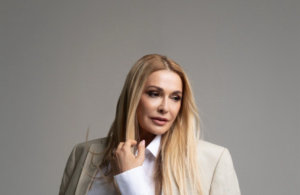
People’s Artist of Ukraine Olga Sumska has been awarded the title of “Artist of the Year” by the 30th anniversary nationwide “Person of the Year 2025” program, according to a press release from the program.
Sumska is a Ukrainian theater and film actress, television host, winner of the Taras Shevchenko National Prize of Ukraine, and recipient of the Order of Princess Olga, Third Class. Her professional career in theater and film spans more than 40 years.
The actress was born on August 22, 1966, into the Sumskaya family of actors. In 1987, she graduated from the acting department of the Ivan Karpenko-Karyi Kyiv Institute of Theater Arts, and from 1988 to 2005, she worked at the Lesya Ukrainka Theater in Kyiv.
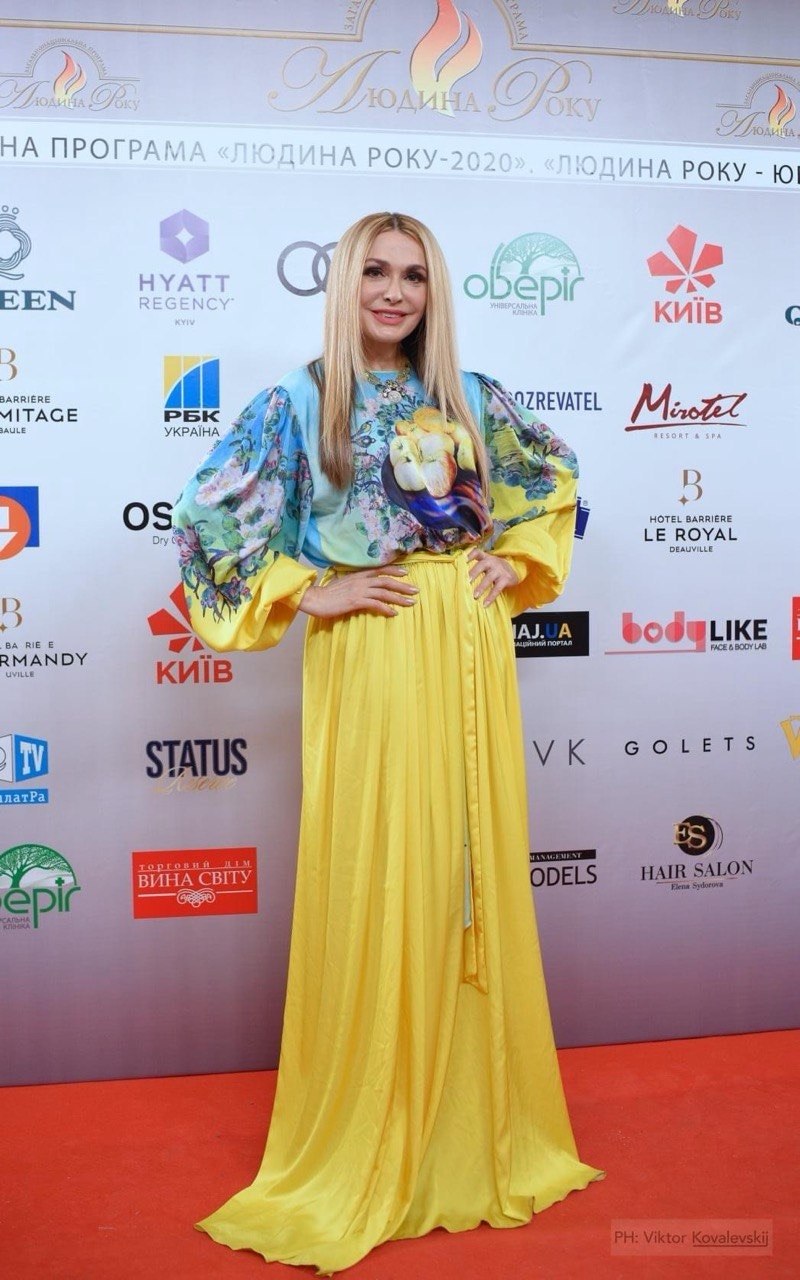
Sumska began her acting career at age 16 with the role of the young lady, the Centurion’s daughter, in the film *Evenings on a Farm Near Dikanka*. She went on to play leading roles in the films *The Voice of the Grass*, *The Trap*, *Tiger Hunters*, *Carpathian Gold*, *The Notes of the Snub-Nosed Mephistopheles*, and other projects.
In total, the actress’s filmography includes over 100 roles in Ukrainian cinema. One of Sumskaya’s most famous roles was the lead in the historical TV series “Roxolana,” which brought her widespread popularity.
From 2022 to 2025, Sumskaya continued her active theater career and toured cities across Ukraine. During this period, the performances in which she appeared often had a charitable component and were aimed, in particular, at supporting the Armed Forces of Ukraine.
In recent years, the actress has appeared in the plays “Bravo, Julia,” “Our Kaidashs,” “Chasing Two Hares,” “Basic Instinct,” “Sublimation of Love,” and “The Return of the Prodigal Father.” Her film and television work in recent years includes *The Landlord*, *The Landlord 2: On Our Own Land*, *The Saga*, *Crazy Neighbors*, *Homeowners’ Association Meeting*, and *When You Get Divorced*.
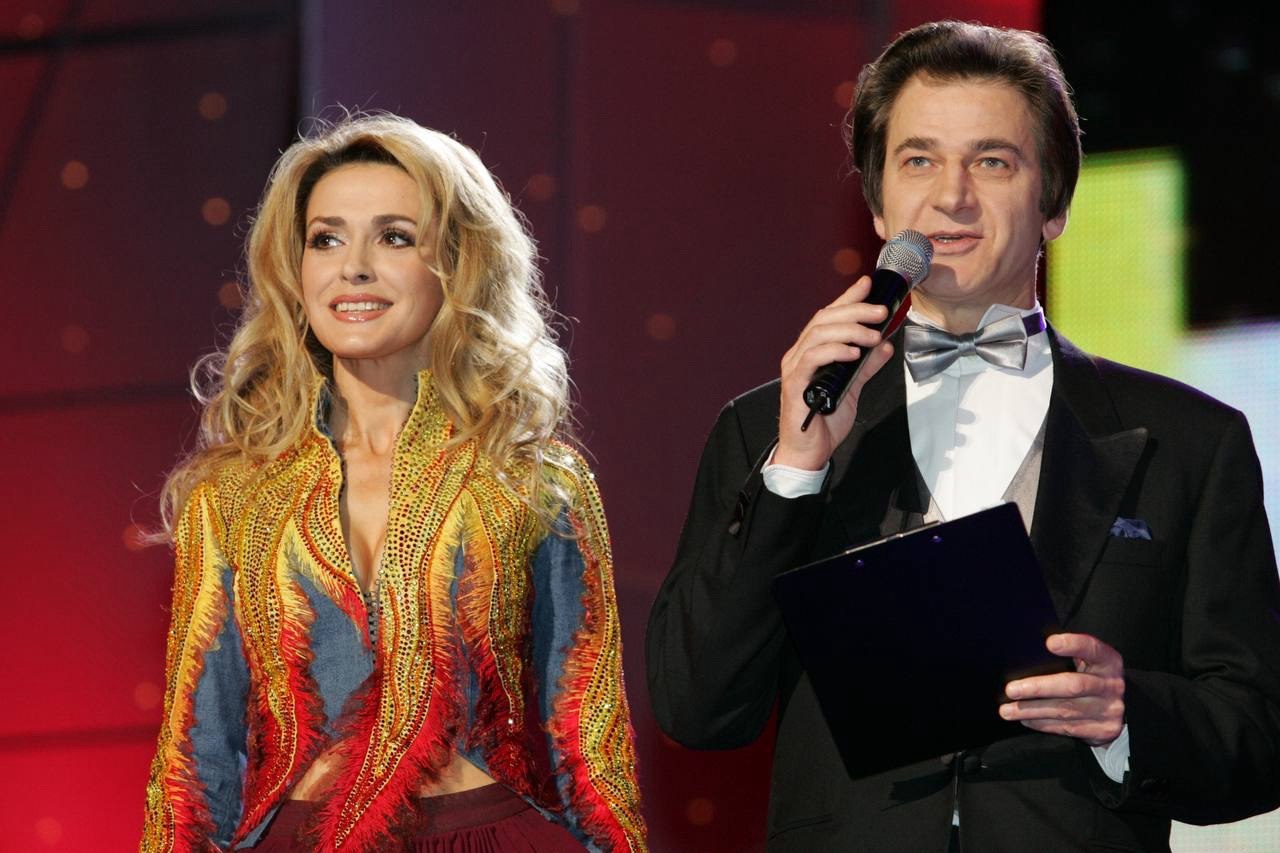
In addition to her work in theater and film, Sumskaya participates in charitable initiatives and fundraising efforts for the Ukrainian military, as well as in cultural projects aimed at supporting and promoting Ukrainian theater and cinema.
In 2025, the actress was chosen as the muse of the “Mykolaichuk OPEN” International Film Festival.
“Theater and film are spaces for a living dialogue with the audience, where empathy, hope, and faith in humanity are born,” reads Sumskaya’s creative credo in the program’s announcement.
The nationwide “Person of the Year” program was held for the 30th time in 2025. The program honors representatives from various spheres of Ukraine’s social, economic, and cultural life.
Open4Business is an information partner of the nationwide “Person of the Year” program.
Ukrainian students have been selected as recipients of the HEC Imagine program, which provides young people from countries affected by war and crises with the opportunity to study at HEC Paris, one of France’s leading business schools.
This was reported by the Embassy of Ukraine in the French Republic following the “Imagine pour la Paix” event, dedicated to supporting the program’s participants.
The event took place at UNESCO headquarters in Paris and brought together representatives from HEC Paris, the French business community, program partners and donors, diplomats, and students.
Among those attending were Jean-Noël Barro, France’s Minister for Europe and Foreign Affairs—an HEC Paris alumnus—as well as Gaël Veissier, former French Ambassador to Ukraine, who currently heads the Crisis Response and Support Center at the French Ministry for Europe and Foreign Affairs.
HEC Imagine fellows shared their personal experiences and insights about studying in France.
The HEC Imagine program was created to support talented students whose education and career prospects have been threatened by wars and other crises. Ukrainian students were among the program’s first participants.
According to HEC Paris, the HEC Imagine Fellows project began in 2022. From the very beginning, the scholarships enabled students from Ukraine, Afghanistan, and Syria to study at HEC.
The program provides not only financial support for tuition but also facilitates the students’ integration into the academic and professional environment at HEC Paris.
The Ukrainian Embassy in France emphasized that supporting the education of Ukrainians takes on special significance amid the war and the destruction of Ukraine’s educational and scientific infrastructure.
“The reconstruction of Ukraine is not just about rebuilding buildings and infrastructure. Above all, it is an investment in people: future entrepreneurs, economists, engineers, and managers who will create jobs, attract investment, and build a modern, European Ukraine,” the Ukrainian Embassy noted.
The diplomatic mission also thanked HEC Paris for its support of Ukrainian students and the Association des étudiants ukrainiens en France for helping to organize Ukraine’s participation in the event.
HEC Paris is one of Europe’s most renowned business schools. The institution specializes in training professionals in the fields of management, finance, entrepreneurship, and business administration, and its graduates work in international companies, financial institutions, the public sector, and their own businesses.
The HEC Imagine program is part of a broader initiative that combines support for students from conflict-affected countries with a discussion on the role of business and education in rebuilding and securing peace.
Sources: Embassy of Ukraine in the French Republic, HEC Paris, UNESCO.
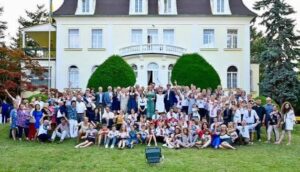
More than 400 Ukrainian children, mostly from Ukraine’s frontline regions, had the opportunity to participate in a health and summer vacation program in Austria with the support of the Embassy of Ukraine and Austrian partners.
This was reported by the Embassy of Ukraine in the Republic of Austria.
The programs for children were organized in cooperation with the federal states of Austria and with the direct participation of Austrian civil society organizations.
“One of the Embassy’s key priorities is to create opportunities for Ukrainian children to receive health treatment and enjoy a vacation,” the diplomatic mission noted.
In total, more than 400 Ukrainian children took advantage of the opportunity to vacation in Austria during the summer. The organizers focused primarily on children from regions located near the front lines that are regularly subjected to Russian shelling.
The embassy expressed gratitude to the federal states, civil society organizations, and other Austrian partners who contributed to the implementation of the programs.
“We thank everyone who participated and gave our children the opportunity to experience the joy of childhood. We hope for continued support in the future,” the statement reads.
Organizing recreational and health programs for Ukrainian children abroad has become one of the areas of Ukraine’s humanitarian cooperation with European countries since the start of the full-scale war. Such programs are primarily aimed at children from frontline regions and areas affected by hostilities.
Original source: Embassy of Ukraine in the Republic of Austria.
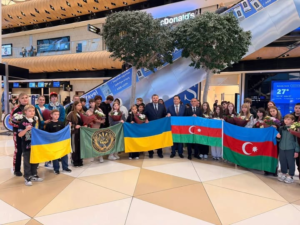
A group of 30 Ukrainian children from the Kharkiv and Kherson regions has arrived in Azerbaijan for psychological and health rehabilitation and recreation, the Embassy of Ukraine in the Republic of Azerbaijan reported.
The group includes children living under constant Russian shelling, as well as children of active Ukrainian servicemen, prisoners of war, and wounded defenders of Ukraine.
The rehabilitation and recreation program has been organized in the city of Gabala, one of Azerbaijan’s main mountain resort centers.
At Heydar Aliyev International Airport, the children were welcomed by Ukraine’s Ambassador to Azerbaijan Yurii Husiev, head of the Azerbaijan-Ukraine Interparliamentary Relations Working Group and member of the Milli Majlis Alibala Maharramzade, and Deputy Chairman of the Board of the Social Services Agency under Azerbaijan’s Ministry of Labour and Social Protection of the Population Vugar Mammadov.
Since the beginning of the full-scale war, 692 Ukrainian children have already undergone recreation, health improvement and rehabilitation in Azerbaijan, the embassy reported.
Thus, taking into account the current group, Azerbaijan continues to implement humanitarian programs aimed at supporting Ukrainian children affected by the war.
“We highly appreciate this assistance, the strong strategic partnership and friendship that unite the Ukrainian and Azerbaijani peoples,” Husiev said.
The ambassador also thanked Azerbaijan for its support for Ukraine and assistance to children who, because of the war, are forced to live under conditions of constant danger and shelling.



