
According to “Serbian Economist”, Serbia is gradually becoming one of Ukraine’s most prominent Balkan trading partners. According to data from the Experts Club analytical center, in the first half of 2026, Serbia ranked 33rd among the country’s 50 largest trading partners, with bilateral trade totaling $345.9 million.
Serbian exports to Ukraine totaled $243.2 million, while Ukrainian exports to Serbia amounted to $102.7 million. In June alone, trade between the countries totaled $55.8 million. The balance currently favors Serbia: Ukraine’s bilateral trade deficit reached $140.5 million.
The trend toward Serbia strengthening its position became apparent as early as late 2025 and early this year. In the first quarter of 2026, Serbian exports to Ukraine doubled compared to the same period last year, while Ukrainian shipments to the Serbian market increased by 5%. About 900 Serbian companies are involved in trade between the two countries, of which approximately 670 purchase Ukrainian products.
One of the factors contributing to the development of these ties was the full restoration of Serbia’s diplomatic presence in Kyiv. The embassy, which had suspended operations in 2022, returned to the Ukrainian capital at the end of 2024 and officially resumed operations in new premises in the fall of 2025. The mission is currently headed by Ambassador Andon Sapundži.
The opening of the embassy alone does not determine the volume of trade, but a permanent diplomatic mission facilitates contacts between companies, chambers of commerce, and government agencies. It can also help organize business missions, resolve logistical and consular issues, and prepare new intergovernmental agreements.
The next important step could be the resumption of free trade negotiations and achieving a breakthrough on this issue. For Serbia, Ukraine remains a large market with high demand for food, industrial products, equipment, and reconstruction supplies. For Ukrainian companies, Serbia could become not only a sales market but also a logistics hub for expanding into other countries in the Western Balkans.
Data on all of Ukraine’s major trading partners is available here — https://www.experts.news/posts/analiz-naybilshykh-torhovelnykh-partneriv-ukrayiny-v-pershomu-pivrichchi-2026-roku
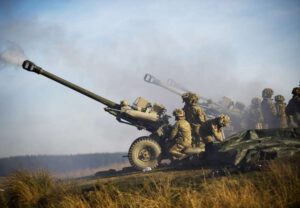
At the Farnborough International Airshow (United Kingdom), BAE Systems signed a licensing agreement to support local production of the Light Gun artillery system in Ukraine, according to the company’s press office.
“The licensing agreement will provide access to technical information and support from BAE Systems necessary for the manufacture of the first test gun. This strategic partnership will facilitate the development of a modified version of the L119 light gun for use by the Armed Forces of Ukraine,” the statement said.
It is noted that the L119 is a 105-mm light howitzer developed by BAE Systems—a highly effective and proven towed artillery system valued for its mobility and reliability.
The agreement is based on BAE Systems’ long-term support for Ukraine and its collaboration with Ukrainian industry to strengthen the country’s sovereign defense capabilities. It reflects a shared commitment to developing a sustainable industrial base capable of providing long-term support to the Armed Forces of Ukraine.
“A robust defense capability depends on reliable strategic partnerships in the industrial sector. This agreement combines BAE Systems’ expertise in artillery with our strategic defense partner’s knowledge of Ukraine’s operational needs to support the development of sovereign defense capabilities where they are most needed. Supporting Ukraine is not just about supplying equipment. It is also about working together to build the industrial resilience, skills, and capabilities needed to ensure long-term defense capabilities,” said Giles Ambrose, Director of Engineering, Technology, and Strategy at BAE Systems.

In Ukraine, 73,292 thousand births and 259,853 thousand deaths were registered from January through June 2026. Thus, for every newborn, there were nearly four deaths, whereas in the first half of 2025, the ratio was one to three.
This was reported by OpenDataBot on July 22, citing data from the Ministry of Justice of Ukraine.
The number of births in the first half of the year fell by 16% compared to the same period in 2025, when 86,795 thousand newborns were registered in Ukraine. Compared to the pre-war period, the birth rate has nearly halved.
On average, about 12,000 children were born each month in Ukraine throughout 2026. Ten years ago, the average monthly figure was about 32,000.
Boys accounted for 51% of newborns, and girls for 49%.

The Experts Club Analytical Center has released a ranking of Ukraine’s largest insurance companies by premium volume for the first half of 2026, based on data from the “PRIMA” project of the National Association of Insurers of Ukraine.
The top five insurers collected nearly 16 billion UAH in premiums. The TAS Insurance Group retained its lead, but the most notable changes occurred in the fourth and fifth positions: Arsenal Insurance entered the ranking, while VUSO dropped out of the top five.
Overall Ranking of Insurance Companies
The TAS Insurance Group took first place, collecting 3.857 billion UAH in premiums. Compared to January–June 2025, this figure increased by 11.6%.
ARKS remained in second place with premiums totaling 3.146 billion UAH. Its premiums grew by 15.2%.
“Unica” took third place with 3.076 billion UAH. The company demonstrated the highest growth rate among the top three, increasing its premium volume by 23.5%.
“Arsenal Insurance” moved into fourth place, collecting 2.978 billion UAH. A year earlier, it had not been among the top five insurers.
“INGO” took fifth place with premiums totaling 2.934 billion UAH. Its premium income increased by 22.9%, but the company dropped one spot due to the rapid growth of “Arsenal Insurance.”
The gap between fourth and fifth place was only 44 million UAH, indicating intense competition among the largest general insurers.
MTPL Insurance Ranking
The TAS Group remained the largest player in the mandatory motor third-party liability insurance market, collecting 2.112 billion UAH in premiums. Growth compared to the first half of 2025 was 13.4%.
Oranta took second place with 1.569 billion UAH in premiums and 6.5% growth. Knyazha Vienna Insurance Group ranks third with 1.172 billion UAH in premiums, a 2.8% increase over last year’s figure.
Arsenal Insurance took fourth place with 805.3 million UAH. Rounding out the top five is PZU Ukraine, which collected 614.8 million UAH and returned to the ranks of the segment’s leaders.
INGO and USG, which were among the top five a year earlier, dropped out of the ranking. The combined premium volume of the five largest MTPL insurers totaled approximately 6.27 billion UAH.
The MTPL market remains one of the most concentrated segments of the Ukrainian insurance industry.
Companies with a well-developed regional network, a large customer base, and the ability to quickly settle mass insurance claims have a competitive advantage.
“Green Card” Ranking
The most notable changes occurred in the international motor liability insurance market.
PZU Ukraine took first place, more than doubling its premium volume—by 101.8%—to 656.6 million UAH. A year earlier, the company had ranked third.
The TAS Group moved up to second place. Its premiums decreased by 19.9%, to 519 million UAH.
USG took third place, with its premiums declining by 37.6% to 341.6 million UAH. Knyazha Vienna Insurance Group ranked fourth with 194.1 million UAH and growth of 6.7%.
Rounding out the top five was VUSO with 135.7 million UAH, replacing INGO in the ranking.
The combined premiums of the top five totaled approximately 1.85 billion UAH. PZU Ukraine’s surge was the most notable change among all the insurance segments reviewed.
CASCO Ranking
“Arsenal Insurance” became the new leader in the CASCO market, collecting 1.523 billion UAH in premiums. Over the year, this figure increased by 30.1%.
“ARKS,” which previously held first place, moved down to second place with a result of 1.499 billion UAH. Its premiums grew by 15.9%. The gap between the two leaders was only 24 million UAH.
Third place went to “VUSO” with 761.3 million UAH and growth of 25.1%. “Unica” is in fourth place, having increased its premiums by 33.5% to 753.8 million UAH.
“Universalna” took fifth place with premiums totaling 680.3 million UAH, which is 25.3% higher than the result for the first half of 2025.
The five largest companies collected approximately 5.22 billion UAH in the CASCO segment. All companies in the ranking showed double-digit growth, which may be due to rising costs of vehicles, repairs, and spare parts, as well as higher insurance coverage amounts.
Voluntary Health Insurance Ranking
The composition and order of the top five companies in the voluntary health insurance market remained unchanged.
Unica remained the market leader, collecting 1.333 billion UAH in premiums. Growth stood at 7.3%.
“Universalna” took second place with 774.1 million UAH and growth of 30.9%. “INGO” is in third place, having increased its premiums by 36.6% to 714.3 million UAH.
“VUSO” took fourth place with 577.7 million UAH.
The company demonstrated the highest growth rate among the top five—41.8%.
ARKS retained fifth place, collecting 361.9 million UAH, which is 12.4% more than last year’s figure.
The combined premium volume of the top five companies reached 3.76 billion UAH. The segment’s rapid growth is driven by corporate health insurance programs, which employers use to attract and retain employees.
Ranking of Life Insurance Companies
The life insurance market maintains the most stable leadership structure.
MetLife ranks first with premiums totaling 1.599 billion UAH. Over the past year, the company’s premium income grew by 11.4%. It accounts for approximately 57% of the top five companies’ combined premiums.
TAS ranks second with 525.7 million UAH. The company posted the highest growth rate among the segment’s leaders, increasing its premiums by 21.9%.
Grave Ukraine Life Insurance ranks third with 308.7 million UAH and 9.1% growth.
PZU Ukraine Life Insurance ranks fourth, having collected 205.3 million UAH, which is 8.5% more than a year earlier.
Arks Life rounds out the top five with premiums of 175.5 million UAH and growth of 3.9%.
The combined premium volume of the five largest life insurance companies totaled 2.81 billion UAH.
Key Findings from Experts Club
The Ukrainian insurance market maintained a high level of concentration in the first half of 2026. The same companies hold leading positions in several segments at once, but there is no single leader across all segments.
The TAS Group tops the overall ranking and the MTPL market; PZU Ukraine took first place in Green Card insurance; “Arsenal Insurance” has become the leader in comprehensive auto insurance (CASCO), “Unica” retains first place in health insurance, and “MetLife” continues to dominate the life insurance sector.
“Arsenal Insurance” demonstrated the most notable strengthening of its position. It entered the overall top 5, took first place in comprehensive auto insurance, and ranked fourth in compulsory auto liability insurance.
At the same time, the “Green Card” results show that insurers’ positions can change rapidly, even within a single year. PZU Ukraine’s premiums more than doubled, while those of TAS and USG declined significantly.
Premium growth does not always correspond to a comparable increase in the number of policies. A significant portion of this trend may be attributed to rising costs of vehicles, medical services, repairs, and other insured items. To fully assess a company’s position, it is necessary to consider not only premiums but also claims payments, loss ratios, reserves, capital, and the speed of claims settlement.
According to the National Agency for Insurance Supervision (NAIS), as of the end of June 2026, there were 47 insurers operating in the Ukrainian insurance market. Ten companies specialized in life insurance, while another participant—the Export-Credit Agency—held special status.

According to Serbian Economist, the Ukrainian documentary “Night Shift,” directed by Megumi Lim, has been selected for the competition program of the 39th Herceg Novi Film Festival, which will take place in Montenegro from August 22 to 28, 2026.
The festival’s documentary section will feature 26 films by filmmakers from various countries. Of these, 24 films will compete for the “Golden Mimosa” award, while two others will be screened out of competition. Screenings of the documentary program will take place from August 23 to 27 in the courtyard of writer Ivo Andrić’s house.
Ukraine will be represented by the film *Night Shift*, shot in 2025. Its director is Megumi Lim, a documentary filmmaker and journalist based in Kyiv who previously worked with international media outlets in Japan and China.
The 29-minute film tells the story of people who continue to work in Kharkiv during the nighttime curfew. The film’s protagonists are employees of public services and businesses who keep the city functioning amid regular Russian attacks. The filmmakers show how the war has changed Kharkiv’s nightlife and how residents maintain their usual rhythm despite the threats.
“Night Shift” marks Megumi Lim’s debut short documentary. In 2025, the film won the Audience Choice Award at the Kyiv International Short Film Festival and was also screened at several international film festivals.
The festival program in Herceg Novi also features documentaries from the United States, Norway, Greenland, Chad, Palestine, Slovenia, Bosnia and Herzegovina, Germany, Iran, the United Kingdom, Azerbaijan, Finland, France, Spain, Switzerland, Portugal, Colombia, Serbia, Georgia, Sweden, and Montenegro.
Vladimir Perović, the documentary program’s selector, noted that this year’s program focuses on the war in Ukraine, the situations in Palestine and Bosnia, climate change, the legacy of colonialism, historical memory, the status of women, and the challenges of coming of age.
The festival will take place under the slogan “All the Colors of Cinema” at several venues in Herceg Novi. In addition to the documentary section, the program includes regional feature-length films, European cinema, student films, television series, and events for film industry professionals.
In the “Medium- and Long-Term Market” section of the UEB, trading continued for July and August 2026 resources. In total, nine companies placed bids to buy or sell natural gas: Ukrnafta, GPK Naftogaz Trading, the Ukrainian Gas Transmission System Operator, LTK Electrum, and others. In total, 4,350 thousand cubic meters of natural gas—for July and August 2026—were sold in the section via the GTS and UGS facilities.
In the UEB’s short-term natural gas market, participants submitted bids on the intraday market and the “day-ahead” market. A total of 56 trades were concluded, with a combined volume of 1,551 thousand cubic meters.
This week, European gas contracts rose in price again. The M+1 TTF rose in every session: from 48.8 euros/MWh at the close of the previous Friday to about 57 euros/MWh on the morning of July 17 (+15%). The main drivers were the resumption of hostilities between the U.S. and Iran and new risks to shipping through the Strait of Hormuz. The status of the strait and differences in interpretation remain highly contentious. The market is once again assessing not only the actual availability of Qatari LNG, but also freight rates, insurance, and shipowners’ willingness to call at ports in the region.
Natural gas imports from Europe stood at 1.6 million cubic meters per day.



