
According to Fixygen, USDT and USDC reserves are largely invested in short-term U.S. Treasury bonds (US Treasuries) and repo transactions backed by them.
The market capitalization of USDT reached approximately $183 billion, while the amount of USDC in circulation in the second quarter totaled $73.3 billion.
Circle explicitly states that USDC reserves include short-term Treasury bonds and overnight repos backed by Treasury bonds, notably through a BlackRock fund.
As a result, the growing use of digital dollars automatically increases demand for U.S. government debt.
This is precisely why the U.S. administration views the proliferation of stablecoins not only as a fintech project but also as a way to boost international demand for the dollar and Treasury bonds.
BIS Chairman Pablo Hernández de Cos also acknowledged that stablecoins have the potential to lower the cost of U.S. government financing, although they may simultaneously increase the cost of bank financing.
bond, DOLLAR, stablecoin, U.S., USDT

According to Fixygen, stablecoins are gradually evolving from a primarily exchange-based instrument into a means of everyday payments.
In July, spending via stablecoin-linked payment cards exceeded $1 billion per month for the first time, according to Paymentscan data cited by Reuters.
RedotPay forecasts that by 2028, the volume of direct card payments in stablecoins could reach $50 billion per year.
The technology is spreading particularly rapidly in Latin America and Africa, where dollar-pegged stablecoins are used as a means of savings, international remittances, and access to the dollar payment system.
RedotPay already serves over 8 million users, and its clients’ annual transaction volume exceeds $14 billion, including account top-ups and card payments.
The main change is that users no longer need to view USDT or USDC as cryptocurrencies. They can hold digital dollars and make payments with a regular Visa or Mastercard, while the conversion takes place within the payment infrastructure.
However, the Bank for International Settlements (BIS) remains skeptical. On August 28, BIS Governor Pablo Hernández de Cos stated that stablecoins are not yet a sufficiently reliable global payment system due to risks related to financial stability, anti-money laundering (AML), and the fragmentation of the monetary system.

The Pechersky District Court of Kyiv has authorized the Asset Recovery and Management Agency (ARMA) to sell more than 8.3 million USDT worth approximately UAH 372 million, as current legislation effectively does not allow the agency to manage such assets in any other way, said Pavlo Velykorechanin, an expert of the Verkhovna Rada Anti-Corruption Committee and former deputy head of ARMA, in an exclusive interview with Interfax-Ukraine.
The decision to change the method of managing the seized virtual assets was adopted by the Pechersky District Court on August 14, 2026. The funds belonged to an organized transnational group of hackers and are stored on the WhiteBIT exchange.
According to Velykorechanin, after the USDT is sold, the proceeds may be placed in a deposit account. This approach makes it possible to reduce the state’s risks associated with possible changes in the value of virtual assets.
He noted that since 2025, ARMA has had the right to open a virtual asset wallet and accounts on specialized cryptocurrency platforms for the sale of cryptocurrency transferred to the agency. However, Ukraine still lacks a full-fledged mechanism for the conventional management of such assets.
In his opinion, a legally viable option remains the sale of crypto assets on market terms, followed by placing the proceeds on deposit or using them to purchase military bonds.
Velykorechanin also noted that in a number of countries, seized cryptocurrency is either held until a court decision is made or converted into traditional currency to reduce volatility risks. At the same time, the international practice studied by Europol practically does not provide for transferring cryptocurrency to an external manager in order to increase its value.
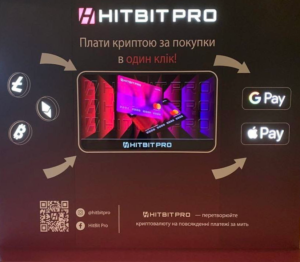
On November 20, Kyiv hosted the UP100 award, which brought together the best Ukrainian entrepreneurs and startups that shape the future of business. Among the partners was the HitBit Pro team (https://hitbitpro.com.ua/), which for the first time presented its global lifestyle project aimed at integrating cryptocurrencies into everyday life.
HitBit Pro is a modern financial instrument that allows you to pay for any purchases in cryptocurrency through automatic conversion to fiat currency (euros). The card is supported by the Mastercard network.
Registration and management of the card are as convenient as possible: everything can be done through a Telegram bot. This makes HitBit Pro accessible even to those who are new to cryptocurrencies.

At the UP100 award, the HitBit Pro team presented an interactive stand where visitors could familiarize themselves with the product’s functionality. Guests observed how easy it was to register, order a card, and make payments in real time.
According to the founders, their product is designed for people who value freedom in financial transactions. “We want to make cryptocurrency accessible to everyone. Our card is an easy way to integrate digital assets into everyday life,” said one of the founders of HitBit Pro.
The new HitBit Pro project is aimed at young people and active travelers looking for flexible solutions to manage their finances. It allows you to use cryptocurrency for everyday purchases in stores, restaurants, traveling, and even online.
The key goal is to bust the myth that cryptocurrency is complicated or inaccessible. HitBit Pro offers a tool that makes using cryptocurrencies as easy as using a bank card.
The partnership with UP100 was the first public presentation of HitBit Pro.