

A national survey of Ukrainian residents showed that 31.2% of respondents met the criteria for post-traumatic stress disorder (PTSD) or complex PTSD (C-PTSD), according to the results of a study published by the British academic publisher Taylor & Francis Group in the European Journal of Psychotraumatology.
“High levels of both lifetime and war-related trauma were recorded. The national prevalence of PTSD according to the ICD-11 was 25.2%, with 6% of respondents meeting the additional criteria for C-PTSD according to the ICD-11, resulting in a combined prevalence of 31.2%,” the publication states.
The data collected reflect mental health status at the time of the survey but do not show changes in symptoms over time. The material for this article was obtained by the publication as early as 2025.
Factors associated with a higher likelihood of developing PTSD or C-PTSD included female gender, older age, lower educational attainment, prior military service, forced displacement due to war, as well as a greater number of traumatic events and war-related stressors experienced throughout one’s lifetime.
Loneliness was the only factor specifically associated with C-PTSD rather than PTSD.
Study co-author Emma Fizer-Irwin, a clinical psychologist, noted that the fact that PTSD was much more common than C-PTSD may indicate that psychological responses to ongoing war do not always fit neatly into models developed in post-conflict settings. “When the threat remains ongoing and unpredictable, the ways in which people experience and adapt to traumatic stress may vary, and this is an important area for future research,” she noted.
The study’s lead author, Deirdre McManus, a lecturer and researcher in forensic psychiatry at King’s College London (KCL), noted that the overwhelming majority of respondents had experienced numerous traumatic events throughout their lives, and many had also been directly affected by the protracted war due to forced displacement, the loss of loved ones, the destruction of their communities, or anxiety about their families; many Ukrainians continue to face stressors in their daily lives. “Despite this, many Ukrainians continue to live and adapt under extremely difficult conditions,” she noted.
Study co-author Vladimir Kulik, a professor in the Department of Social Sciences at the Kyiv School of Economics, noted that PTSD and C-PTSD affect not only veterans or people who were near the combat zone. “These disorders are also prevalent among other segments of the population that have been severely affected by the war—in particular, among internally displaced persons, people who have been subjected to rocket and drone attacks on their cities and towns far from the front lines, as well as those who care for the wounded or traumatized,” he emphasized.
According to Kulik, further research will be necessary to understand how the psychological impact of war evolves among the general population, changing as the conflict continues.
In addition to experts from KCL and the Kyiv School of Economics, the research team included scholars from George Washington University, the University of Manchester, the Center for Eastern European Studies and International Relations (ZOiS), and Combat Stress—a leading British charity addressing veterans’ mental health issues. The study was initiated by the “Conflict and Cooperation in Eastern Europe” (KonKoop) research network, led by Professor Gwendolyn Sasse (ZOiS), and funded by Germany’s Federal Ministry of Research, Technology, and Space.
The study was conducted via telephone survey using a random sample of 2,504 respondents in territories controlled by the Ukrainian government.
The relationships between the type and number of traumatic experiences encountered during one’s lifetime and war-related trauma, as well as PTSD/C-PTSD, were examined using a series of logistic regression models adjusted for age and gender. The sample is representative in terms of age, gender, marital status, educational level, macroregion, language, and ethnicity.
Before fieldwork began, the questionnaires were pre-tested on a roughly representative subsample (n = 20) of the target group (adults living in urban and rural areas of Kyiv and nine regions of Ukraine). During data collection, interviewers were able to ask questions of a psychologist and consult with him or her on complex cases. The average interview duration was 27 minutes.
Source: https://www.tandfonline.com/doi/10.1080/20008066.2026.2697563
PSYCHOLOGY, PTSD, RESEARCH, UKRAINE, WAR
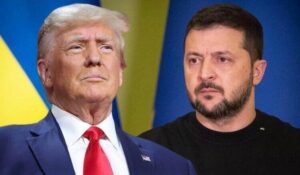
According to Interfax-Ukraine, U.S. President Donald Trump accused Ukrainian President Volodymyr Zelenskyy of being unwilling to end the war with Russia.
“Zelenskyy could have resolved this war many, many times. He chose not to. … Zelenskyy wants to create problems for the world. He wants to create problems for our farmers by striking Russian oil refineries,” Trump told reporters.
“I suggest that Ukraine get a new leader who is capable of making deals. For some reason, Zelenskyy never makes deals,” Trump said.
“We told Zelenskyy, ‘Do whatever you want, but don’t target diesel fuel.’ And what does he do? He goes and targets diesel fuel. He can do whatever he wants, but he can’t do that,” the U.S. president added.
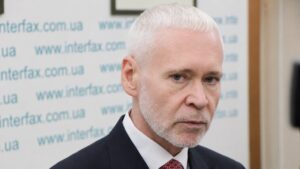
According to Interfax-Ukraine, Kharkiv Mayor Ihor Terekhov responded to a new op-ed by Valeriy Zaluzhny, former Commander-in-Chief of the Armed Forces of Ukraine and Ukraine’s Ambassador to the United Kingdom, stating that Ukraine’s ability to withstand the war should not be interpreted as consent to live in it, and called for a path to peace backed by guarantees from partners.
“For me, the logic of the ‘war party’ begins when war is perceived as Ukraine’s only possible future. I disagree with this,” Terekhov wrote on Telegram.
Terekhov noted that the desire for peace requires no justification. According to him, in a Gallup poll conducted in April 2026, 66% of Ukrainians surveyed supported ending the war as soon as possible through negotiations. This indicates a broad public demand for peace.
“Peace must be based on our defense capabilities and specific commitments from our partners. Guarantees must specify what military assistance Ukraine will receive and how partners will act in the event of a new attack. We must strive to secure these conditions by using military, economic, and diplomatic leverage,” Terekhov writes.
He noted that Russia started this war and bears responsibility for its continuation, which is why international pressure must be directed specifically at the aggressor.
“Our ability to endure the war should not be interpreted as consent to live in it. We strive for peace and prosperity. Our defenders—both men and women—also have the right to a peaceful life. Time with their families, recovery, plans for the future. Their courage obligates the state to provide them with everything they need and to use every realistic opportunity to bring the war to an end,” Terekhov concluded.
In his column on Channel 24, Zaluzhny specifically stated that there can be no “business logic” in resolving the war, and that in the absence of effective international law, any agreements with Russia would become “merely a prelude to the next war.”
In April 2026, the American public opinion institute Gallup conducted and published several important sociological studies. According to the survey, 66% of Ukrainians polled believe that the country needs to reach an agreement to end the war as soon as possible, while 24% advocate continuing hostilities until victory is achieved.
Source: https://t.me/ihor_terekhov/4706
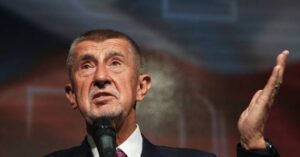
Czech Prime Minister Andrej Babiš stated that current developments in the international situation could lead the world into World War III, and called on Europe to pay more attention to a diplomatic resolution of Russia’s war against Ukraine.
Babiš made these remarks on September 17 while delivering the opening address at the IISS Prague Defense Summit 2026 in Prague. The Czech government and the conference organizer—the International Institute for Strategic Studies (IISS)—have confirmed that the speech took place.
“I’m not afraid to say this out loud. The path the world is currently on does not lead to security. It leads straight to the gates of hell. It is leading us toward World War III,” Babiš said, according to the Czech news agency ČTK.
According to the Czech prime minister, the European security debate focuses too much on the military aspect and not enough on finding a diplomatic solution. He noted that Europe, together with the United States, must push for direct negotiations between Ukrainian President Volodymyr Zelenskyy and Russian President Vladimir Putin with the aim of ending the war.
At the same time, Babiš emphasized that he considers Russia an aggressor. As reported by the Czech press, the prime minister stated that Putin’s actions are “completely unacceptable,” but diplomacy, in his view, must remain one of the main tools for ending the war.
Babiš also drew attention to the duration of the war. According to him, as of September 17, Russia’s full-scale aggression against Ukraine had been ongoing for 1,666 days—99 days longer than World War I. The prime minister stated that the wars in Ukraine and the Middle East have not only military but also serious economic consequences, including rising costs for energy and food, as well as pressure on European industry.
At the same time, Babiš did not advocate abandoning efforts to strengthen Europe’s defense; rather, he proposed creating a joint European missile defense system called Euro Patriot. Under his plan, European countries could pool their industrial and technological capabilities—similar to the creation of Airbus—and develop their own system to defend against ballistic missiles and drones.
“We must learn from the war in Ukraine and seek solutions, first and foremost in the area of defense against ballistic missiles,” the Czech prime minister said. In his view, such a project would simultaneously strengthen Europe’s contribution to NATO and create additional opportunities for the European defense industry, including the Czech defense sector.
The IISS Prague Defense Summit is taking place in Prague from September 16–18, 2026. It is attended by political and military leaders, representatives of international organizations and the defense industry, as well as experts. The main topics of the conference are the development of European defense capabilities, military mobility, arms procurement, missile defense, and the future of transatlantic cooperation.
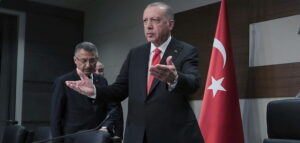
Turkish President Recep Tayyip Erdogan stated that Turkey is working to bring the war between Russia and Ukraine to an end with a lasting peace, and is also working to resume negotiations and revitalize the diplomatic process.
According to a post by the Turkish president’s public relations office on social media platform X on Monday, Erdogan made these remarks during a phone call with German Federal Chancellor Friedrich Merz.
Erdogan also expressed hope during the conversation that the NATO leaders’ summit, to be held in Ankara, would demonstrate a firm commitment to strengthening Europe’s own defense within the framework of NATO and preserving transatlantic ties, the statement said.
The existence of two value-added tax (VAT) exemption thresholds within a single VAT system is an anomaly that must be eliminated, but this decision will have to be made immediately after martial law ends, according to Danylo Getmantsev, head of the parliamentary committee on finance, tax, and customs policy.
“I promised the people that I would not change the single tax system until the end of the war. And I am keeping that promise. As you can see, the law has not been adopted. You have not heard me support it in the version proposed by the Ministry of Finance,” he said in an interview with the “Interfax-Ukraine” news agency.
According to the committee chair, the next session of the Verkhovna Rada will decide on a single tax limit, and for them, there will be no alternative.
Getmantsev emphasized that, overall, Ukraine needs to implement a reform of personal income taxation, part of which is the reform of the single tax, and noted that this is provided for in the National Revenue Strategy for 2024–2030.
“We must implement the Polish flat-rate tax model: cash registers from the start, turnover limits of up to EUR2 million, and a single VAT threshold for both sole proprietors and others. The specific amount can be discussed, but it must be uniform. And within the framework of the flat-rate tax, there should be different rates for different types of activities,” the committee chair noted.
In Poland, the VAT exemption threshold was raised this year from 200,000 to 240,000 zlotys, which is approximately EUR56,600, or nearly 3 million hryvnias.
According to Getmantsev, the rate is 3% for retail trade and 10% or higher for services.
“We simply need to follow Poland’s example and make such a serious, correct decision once and for all. But that will have to wait until after the war,” he added.
The committee chair also believes that all these changes must be implemented at once, rather than gradually “chipping away at the problem piece by piece,” because that is an entirely unproductive approach.
“I cannot support any half-measures, because in reality they generate just as much negativity and backlash as major decisions and reforms, but with far less impact. Therefore, after the war, there must be a major reform of personal income taxation, including the flat tax. Incidentally, a progressive tax scale is also provided for there. This is the right decision, and I strongly support it,” Getmantsev noted.
At the same time, he supported the adoption this year of a law to simplify VAT administration, the text of which is currently expected from the Ministry of Finance.
“I believe that until the threshold for sole proprietors is reached—for example, EUR2 million based on the Polish model—tax invoices should not be blocked at all, even if VAT is paid. In other words, the rules for blocking tax invoices should not apply to sole proprietors until they reach the single tax threshold. And there are many other measures that simplify administration,” said the head of the relevant parliamentary committee, among other things.
As previously reported, the adoption by the end of March of this year of a law abolishing the VAT exemption under the simplified tax system was a condition of the new program with the International Monetary Fund (IMF), launched at the end of February of this year. It was later reported that the deadline for fulfilling this requirement had been postponed by approximately one year.
In addition, at the end of May, the Verkhovna Rada ratified the terms for providing Ukraine with macro-financial assistance as part of a loan from the European Union to support Ukraine. Under these terms, a bill containing measures to reform the preferential tax regime must be submitted to parliament by the end of the year, which will generate additional revenue of at least 70 billion hryvnia per year.
Getmantsev, TAX, WAR



