

In the first half of 2026, foreign citizens purchased 62,327 residential properties in Spain, which is 13% less than during the same period last year. At the same time, the average price of homes purchased by foreigners rose by 9.4% to a record €2,644 per square meter, according to data from the General Council of Notaries of Spain (Consejo General del Notariado) released on October 15.
According to the Notarial Statistical Information Center (CIEN), this marks the largest annual decline in the number of transactions involving foreign buyers since the first half of 2020. The share of foreigners in the total number of residential property transactions fell to 18.3%, compared to 19.2% a year earlier and 20.3% in 2024.
The most notable decline was seen among buyers who do not have Spanish resident status. They purchased 22,940 properties, 18% fewer than a year earlier. This category accounted for 36.8% of all transactions by foreign buyers.
Foreigners residing in Spain purchased 39,387 properties, or 63.2% of the total number of purchases by foreign citizens. Compared to the first half of 2025, their activity declined by 10%.
Despite the decline in the number of transactions, housing prices continued to rise. Non-residents paid an average of €3,493 per square meter, which is 11.8% more than a year earlier. For foreign residents, the average price was €2,102 per square meter (+9.8%), while Spanish citizens purchased homes for an average of €1,971 per square meter (+8.7%).
Moroccan citizens were the largest group of foreign homebuyers in the first half of the year, accounting for 4,960 transactions, or 8% of the total number of foreign purchases. For the first time, they surpassed British citizens in this category, who accounted for 4,541 transactions (7.3%).
Italy took third place with 4,109 transactions (6.6%), Romania fourth with 3,974 transactions (6.4%), and Germany fifth with 3,907 transactions (6.3%).
The highest average price of purchased real estate was recorded among U.S. citizens—€3,948 per square meter. They were followed by buyers from Sweden (€3,839), Germany (€3,763), Switzerland (€3,760), and Norway (€3,588).
Ukrainians also remain a significant group of foreign buyers of Spanish residential real estate. Although the notary office’s brief report for the first half of 2026 does not provide specific absolute figures for Ukrainian citizens, the relevant information is contained in the official statistics of the Spanish College of Registrars.
According to the registrars’ data, in the first quarter of 2026, Ukrainians accounted for 3.08% of all registered residential property purchases by foreigners, ranking tenth among nationalities. This corresponds to approximately 764 transactions.
In the second quarter, the share of Ukrainians was 2.94%, and their ranking dropped to eleventh. Based on the total number of registered transactions by foreigners, Ukrainian citizens accounted for approximately 789 purchases.
Thus, according to the results of the first half of 2026, Ukrainians may have purchased about 1,550 residential properties in Spain, based on the methodology of the Board of Registrars.
However, the statistics from registrars and notaries are not identical. According to registrars, foreigners purchased approximately 51,600 properties during the first half of the year, while notaries recorded 62,300 transactions. This discrepancy stems from differences in the stages of transaction registration and statistical reporting methods. Therefore, the estimated number of purchases by Ukrainians cannot be directly correlated with the total number of transactions according to notary data.
At the same time, notary statistics show that the largest annual decline in purchases by specific nationalities was recorded among citizens of Russia (-26.2%), China (-26.1%), the United States (-22%), Bulgaria (-21.6%), Belgium (-21.3%), and the United Kingdom (-21%).
Among the main groups of foreign buyers, only citizens of Venezuela (+10.2%) and Colombia (+7.4%) showed an increase in the number of properties purchased.
Geographically, foreign buyers remain most active in tourist and coastal regions. Specifically, in the Valencian Community, non-residents purchased 9,250 properties, accounting for 40.3% of all purchases in this category in Spain. Another 5,800 transactions took place in Andalusia, and 2,046 in the Canary Islands.
Among foreign residents, the highest number of transactions was recorded in Catalonia—8,516—the Valencian Community—8,196—and Andalusia—6,007.
The number of home purchases by foreigners declined in nearly all of the country’s autonomous communities. The exceptions were Castile-La Mancha (+4.4%) and Extremadura (+3.3%).
The sharpest declines were recorded in Cantabria (-20.5%), the Canary Islands (-20.3%), and the Autonomous Community of Madrid (-19.7%). In the Balearic Islands and Valencia, the number of transactions fell by 15.4%.
At the same time, prices for foreign buyers rose in 15 of the 17 autonomous communities. The most significant price increases occurred in Cantabria (+23%), Asturias (+22.3%), Extremadura (+16.4%), Valencia (+15.6%), and Madrid (+15.4%).
Current statistics indicate a shift in the Spanish market: after several years of high activity, the number of purchases by foreigners has begun to decline, while the value of purchased real estate continues to reach new highs.
For international investors and foreigners planning to move to Spain, this means rising costs for purchasing a home even as demand weakens. At the same time, regional differences remain significant, and the market for coastal resorts continues to differ substantially from that of the country’s inland regions.
The Consejo General del Notariado is the national representative body of the Spanish notarial profession. Its statistical center, CIEN, analyzes data on notarized transactions. The Colegio de Registradores maintains separate statistics on registered real estate rights, including data broken down by the buyers’ citizenship.
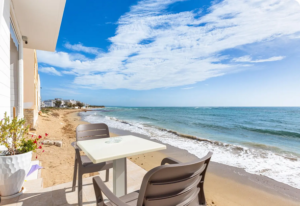
According to Relocation, the Italian municipality of Biccari in the Apulia region has extended its affordable housing program into 2026, including homes for a symbolic price of €1. Local authorities have waived mandatory requirements for permanent residency and property renovation, and have expanded the offering to include properties in better condition priced up to €30,000.
According to the Italian publication Idealista, Biccari remains one of the towns in southern Italy using the sale of affordable real estate to combat population decline and restore historic buildings.
The program has been in effect since 2021. Initially, the municipality offered buyers about 20 properties, most of which were in poor condition and required significant investment for renovation.
However, experience from previous years has shown that many foreign buyers are unwilling to organize major renovations remotely due to the complexity of obtaining permits, finding contractors, and overseeing construction work.
As a result, the municipality has compiled an expanded real estate catalog that includes both dilapidated houses priced at €1 and properties more suitable for living, ranging in price from several thousand to €30,000.
According to Mayor Biccari Gianfilippo Mignoni, buyers can independently determine the future use of the property. Specifically, the properties may be used for permanent residence, seasonal vacation use, or rental, provided that relevant local regulations are followed.
An important feature of the program is the absence of a specific municipal requirement to reside permanently in the purchased property or to complete its renovation within a specified timeframe. At the same time, dilapidated buildings cannot be used without carrying out the necessary repairs and complying with building codes.
Foreign buyers are also eligible to participate. To finalize the transaction, buyers must obtain an Italian tax identification number (Codice Fiscale) and comply with the general legal requirements for real estate purchases by foreigners.
However, the symbolic price of the house does not mean there are no additional costs. The buyer must pay for notary fees, registration fees, verification of the property’s legal status, and, if necessary, repairs.
For houses in poor technical condition, renovation can cost €20,000–25,000 or more, depending on the square footage, the condition of the structures, and the scope of work.
According to local authorities, since the program’s launch, the total value of purchase and sale transactions has reached approximately €650,000, while completed, planned, and ongoing renovation work is estimated at an additional €1.3 million.
The program has attracted buyers from other regions of Italy, as well as from Germany, the United States, Argentina, Peru, and Portugal. Some of the new owners view the property as a future place to live after retirement, while others see it as a seasonal residence or a rental property.
Biccari is located in the province of Foggia, approximately 30 km from the city of the same name. The municipality has a population of 2,600. Its economy is based on agriculture, local services, and tourism.
Programs to sell homes for a nominal price have been in place in Italy since 2008. They have become widespread primarily in small towns in Sicily, Sardinia, Calabria, and other regions facing depopulation and an aging housing stock.
At the same time, purchasing real estate in Italy does not in itself grant foreigners the right to long-term residence or automatic issuance of a residence permit.

Circle Internet Group, a U.S. fintech company and issuer of the USDC stablecoin, intends to expand its operations into approximately 40 emerging markets, banking on growing demand for digital payments and dollar-pegged stablecoins, according to Fixygen.
As Circle Chairman and CEO Jeremy Allaire told Reuters on October 16, 2026, the company views Southeast Asia, Latin America, Africa, and the Middle East as priority regions for international expansion.
According to him, the blockchain industry is transitioning from the initial stage of technology adoption to widespread commercial application. The main sources of demand are cross-border payments, international trade, corporate settlements, and financial services for consumers.
To strengthen its position in new markets, Circle previously entered into an agreement to acquire the Singapore-based payment company Tazapay for approximately $400 million. The deal, announced on September 8, provides access to an international payments infrastructure covering more than 100 markets and over 60 banking and fintech partners.
According to Circle, Tazapay’s annual payment volume, based on current growth rates, exceeds $25 billion, with about 60% of transactions already involving stablecoins.
The acquisition is expected to close in 2027, following the receipt of the necessary regulatory approvals.
In addition, on September 22, Circle announced an expansion of its partnership with the cryptocurrency exchange Binance, which invested $100 million in the company. The parties signed a new five-year agreement to expand the adoption of USDC, primarily in developing countries.
According to Reuters, as of the end of the second quarter of 2026, the amount of USDC in circulation had grown by 19% year-over-year, reaching $73.3 billion.
Circle controls approximately one-quarter of the global stablecoin market, trailing its main competitor, Tether, which holds a market share of about 60%.
The company is also developing its own blockchain infrastructure, Arc, designed for corporate settlements, the tokenization of financial assets, and international payments.
Financial institutions participating in the development and use of the Arc infrastructure include BlackRock, Visa, and Standard Chartered.
The expansion of the stablecoin market is supported by the gradual development of a regulatory framework. In the U.S., the GENIUS Act has been passed, regulating the issuance of payment stablecoins. Its main provisions are set to take effect in 2027.
At the same time, competition is growing from traditional banks, which are developing their own digital payment instruments and tokenized deposit infrastructure.
According to market participants, the expansion of stablecoin use could significantly change the structure of international payments by reducing transaction times and decreasing reliance on traditional correspondent banking networks.
Circle Internet Group is an American publicly traded fintech company founded in 2013. It specializes in developing blockchain-based payment infrastructure and issuing the digital currencies USDC and EURC. The company’s shares are listed on the New York Stock Exchange under the ticker symbol CRCL.
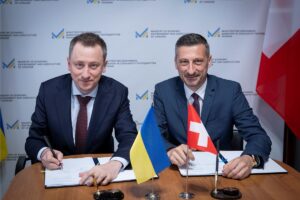
On October 15, 2026, the Swiss city of Aarau hosted the “Wiederaufbau Ukraine” Export Forum, an economic forum dedicated to engaging Swiss companies in Ukraine’s reconstruction, developing bilateral trade, and implementing joint investment projects.
According to the Embassy of Ukraine in Switzerland, the event was organized by the Aargau Chamber of Commerce and Industry (AIHK). The forum was attended by representatives of the Ukrainian diplomatic mission, Swiss government agencies, the business community, and experts in international trade.
Representatives of the Swiss State Secretariat for Economic Affairs (SECO) and Switzerland Global Enterprise (S-GE) presented opportunities in the Ukrainian market, the experience of Swiss companies operating in Ukraine, and government mechanisms for supporting private investment.
In particular, Silvio Girou, SECO’s representative on infrastructure financing, and Xavier Cornu, a consultant at Switzerland Global Enterprise specializing in Europe and the CIS countries, addressed the participants.
The main focus was on engaging Swiss companies in the reconstruction of Ukraine’s infrastructure, expanding industrial cooperation, and utilizing financial instruments to support business. The forum also served as a platform for establishing direct contacts between Swiss entrepreneurs and representatives of organizations that facilitate international investment projects.
The event took place against the backdrop of the expansion of Switzerland’s government program to support the reconstruction of the Ukrainian economy.
According to the 2025–2028 cooperation program with Ukraine, the Swiss government has allocated over CHF1.5 billion to finance reconstruction, reforms, and sustainable development projects. Of this amount, CHF500 million is earmarked to support Swiss private-sector projects in Ukraine.
Specifically, on October 2, 2026, the Swiss Federal Council approved funding for eight additional projects by Swiss companies totaling CHF135 million. These projects relate to energy, public transportation, and water supply.
The projects were selected on a competitive basis with the participation of representatives from the Ukrainian and Swiss governments. Companies receiving funding must provide their own contribution of at least 10% of the project’s implementation cost.
In addition, on October 9, 2026, a bilateral agreement between Ukraine and Switzerland on cooperation in the reconstruction process entered into force. The document establishes a legal framework for expanding the participation of Swiss companies in the recovery of Ukraine’s economy and infrastructure.
A separate area of support involves financing investments in the creation and modernization of production facilities in Ukraine. In May 2026, SECO announced a call for proposals with a budget of up to CHF 50 million for Swiss companies already operating in the Ukrainian market. Support for an individual project ranges from CHF 3 million to CHF 10 million, provided that the company finances at least half of the project’s cost. The selection of such projects will continue until spring 2027.
According to the Embassy of Ukraine in Switzerland, developing cooperation with local chambers of commerce and industry and business associations creates additional opportunities to attract the investments, technologies, and equipment needed for the country’s reconstruction.
Switzerland Global Enterprise is the official Swiss organization for promoting exports and the international activities of businesses. It helps companies enter foreign markets, find business partners, and evaluate investment opportunities. SECO is responsible for implementing Switzerland’s economic policy and participates in financing international development and reconstruction programs.

The international forum “Rebuilding Ukraine: Security, Opportunities, Investment” will take place on October 22–23, 2026, in Bucharest, Romania, at the ROMEXPO exhibition center, Pavilion C2. The event will bring together representatives of government agencies from Ukraine, Romania, and other European countries, as well as international financial organizations, investors, the business community, and experts.
The forum is organized by the Romanian think tank New Strategy Center in partnership with the Romanian Chamber of Commerce and Industry. The academic partner of the event is the University of Agronomic Sciences and Veterinary Medicine in Bucharest (USAMV).
According to the updated program, 31 thematic panel discussions are scheduled over the course of two days, focusing on attracting international capital for Ukraine’s reconstruction, the development of transportation and energy infrastructure, industrial cooperation, defense technologies, food security, and cross-border cooperation.
One of the forum’s key focuses will be a discussion of Romania’s role as a regional logistics and investment hub for Ukraine’s reconstruction. In particular, participants will examine the prospects for developing transport corridors between Ukraine, Romania, and Moldova, expanding the capacity of Danube ports, and creating new rail and road routes between the Baltic and Black Seas.
Special attention will be given to investment opportunities in Ukrainian regions. The program includes special presentations on projects in the Kyiv, Zakarpattia, Ivano-Frankivsk, Vinnytsia, Chernivtsi, Odesa, and Kherson regions. Representatives of local authorities, regional development agencies, and the business community will discuss attracting foreign investors, implementing infrastructure projects, and developing cooperation with Romanian partners.
On October 22, the main focus will be on economic recovery, financing, and investments. Participants will examine mechanisms for attracting private capital, opportunities offered by international development banks, support programs for Ukrainian businesses, and prospects for the restoration of residential and industrial infrastructure.
Among the announced participants for the first day are Gennadiy Chizhikov, President of the Ukrainian Chamber of Commerce and Industry; Marina Khlistun, Executive Director of UkraineInvest; Kateryna Glazkova, Executive Director of the Union of Ukrainian Entrepreneurs; and representatives of the European Investment Bank, the German development bank KfW, Japan’s JBIC, Poland’s BGK, and other international financial institutions.
As part of the discussion on financing reconstruction, a remote address by a representative of the Ukrainian government is scheduled. Separate panels will be dedicated to the development of the agricultural sector, ensuring global food security, the modernization of the energy sector, and the development of renewable energy sources.
Also on October 22, there will be a presentation of the “Together for Ukraine” platform, initiated by the New Strategy Center to foster cooperation and support for Ukraine.
Human capital issues will be the subject of a separate discussion featuring Ella Libanova, director of the M.V. Ptukha Institute of Demography and Social Studies of the National Academy of Sciences of Ukraine. Participants will discuss challenges related to the return of Ukrainian citizens from abroad, staffing the economy, and training specialists for reconstruction.
On October 23, the forum’s program will focus on security challenges, the development of the defense industry, energy resilience, and cross-border cooperation.
In particular, panel discussions are planned on international security guarantees for Ukraine, the prospects for ending Russian aggression, the use of unmanned systems, and the development of joint production of defense products by Ukrainian and European companies.
Participants in the discussion on security guarantees will include Igor Zhovkva, Advisor to the President of Ukraine on Foreign Policy; Kiril Petkov, former Prime Minister of Bulgaria; and representatives from the United States, Japan, and European think tanks.
A separate session will be dedicated to the reintegration of veterans and the utilization of their professional potential in economic recovery. Among the participants listed is Ruslan Prykhodko, Ukraine’s Deputy Minister for Veterans’ Affairs.
The energy segment on the second day will include discussions on preparing the Ukrainian power grid for the winter season, protecting critical infrastructure, cooperation in the Black Sea region, and prospects for involving international companies in energy projects. Among the announced participants are representatives of Naftogaz of Ukraine, OMV Petrom, ROMGAZ, Japan’s JICA, and other energy companies and organizations.
Issues related to the participation of Romanian businesses in Ukraine’s reconstruction will play a significant role in the program. A special panel will be dedicated to financial instruments, institutional support, and opportunities for implementing joint investment projects.
The forum’s concluding discussions will address the prospects for post-war security in Europe, the development of defense-industrial cooperation, Russia’s international responsibility, and mechanisms for compensating Ukraine for damages caused by the war.
The organizers note that the forum’s goal is to create a practical platform for dialogue between Ukrainian and international companies, financial institutions, and representatives of government agencies and local authorities. Particular emphasis is placed on identifying specific investment opportunities and forming partnerships aimed at Ukraine’s long-term economic recovery.
The New Strategy Center is an independent Romanian think tank specializing in security, defense, foreign policy, energy, and regional cooperation. The organization hosts international conferences and expert events dedicated to strategic challenges in the Black Sea region and Central and Eastern Europe. This forum continues a series of events on Romania’s role in Ukraine’s recovery, organized by the New Strategy Center in 2023 and 2025.
The detailed forum program and information about the participants are available on the event’s official website.
Open4Business is a media partner of the event.
Bucharest, INVESTMENT, RECONSTRUCTION, ROMANIA, UKRAINE, ЧИЖИКОВ
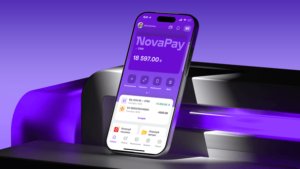
The international financial service “NovaPay” (TM NovaPay, issued by NovaPay Credit LLC) has registered and begun sales of its 16th issue of Series “P” corporate bonds with a face value of 200 million UAH.
According to the company’s press release, the 16th issue consists of 200,000 registered interest-bearing corporate bonds with a face value of 1,000 UAH each.
The interest rate on the “P” series bonds is 18% per annum, and maturity is scheduled for September 10, 2029.
The company emphasized that it plans to use the raised funds to further develop lending to individuals and businesses.
“For us, this is an effective tool for raising funds to develop our business, and for investors, it’s an opportunity to diversify their savings and earn additional income,” noted László Udut, NovaPay’s head of treasury, in the press release.
According to data from the financial service, more than 8,500 customers became bondholders, while total sales exceeded 5.1 billion UAH.
NovaPay noted that it had redeemed three bond issues with a total face value of 300 million UAH. These include Series “C” (maturing in September 2025), Series “A” (maturing in April 2026), and Series “B” (maturing in July 2026).
NovaPay was founded in 2001 as an international financial service provider, part of the Nova Group (“Nova Poshta”), and offers financial services both online and offline at “Nova Poshta” branches. In 2023, the company became the first non-bank financial institution in Ukraine to receive an expanded license from the NBU, which allowed it to open accounts and issue cards.
In July, the National Securities and Stock Market Commission registered NovaPay’s 15th issue of “O” series bonds with a face value of 200 million UAH. In early June, the company announced the full placement of its 14th “N” series issue of the same volume.
Based on the results of the first half of 2026, NovaPay Credit increased its net profit 3.2-fold compared to the same period in 2025—to 172.01 million UAH—and its revenue 2.2-fold, to 586.42 million UAH.
The company’s equity as of the end of June stood at 688.5 million UAH, compared to 516.5 million UAH at the beginning of the year, while liabilities totaled 1.69 billion UAH, compared to 1.37 billion UAH.
The company’s proceeds from bond sales during this period rose to 693 million UAH from 355.63 million UAH a year earlier, while expenses related to their redemption increased to 578.80 million UAH from 244.92 million UAH, respectively.



