

Germany has provided 5 pickup trucks and 5 cargo vans for track workers, communications specialists, and power engineers to help restore damaged infrastructure and resume train service as quickly as possible following Russian attacks on the railway, according to a statement by Ukraine’s Ministry of Recovery, Infrastructure, and Transport on its Telegram channel.
“After every strike, repair crews must be dispatched to the site as quickly as possible to restore infrastructure and train service. This requires people, equipment, and, of course, transportation.
We thank the railroad workers for their 24/7 efforts. And we thank Germany for its consistent support and practical assistance. It is important to us that this support continues and intensifies,” said Deputy Minister Volodymyr Shemaev.
The equipment was handed over by Boris Ruge, Ambassador Extraordinary and Plenipotentiary of the Federal Republic of Germany to Ukraine.
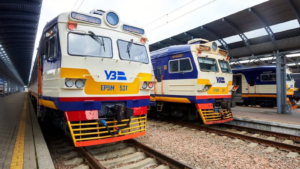
Ukrainian transport companies may receive compensation amounting to 10–15% of their investments in the modernization of vehicles and equipment to meet European Union standards, according to Gabriel Blanc, head of the working group on Ukraine’s reconstruction at the European Commission’s Directorate-General for Enlargement and Eastern Neighborhood.
According to “Interfax-Ukraine”, this mechanism applies to companies that take out loans from Ukrainian banks and invest in technologies that meet EU standards.
“We have what is known as a cashback mechanism: if a company takes out a loan from a Ukrainian bank and invests in technologies that meet EU standards, we can offer a refund of 10–15% of the investment amount,” Blanc noted during the event “Regional Business Dialogues on European Integration: The Transportation Sector” in Lviv.
According to him, Ukraine has currently fully implemented less than 10% of EU transport rules and standards, and has partially implemented less than half. Key tasks include harmonizing social and market regulations in the road transport sector, strengthening enforcement of compliance, and developing inspection and investigation bodies for rail and water transport.
Among the investments that Ukrainian carriers may need to make in order to operate according to European standards, Blanc cited the installation of second-generation smart tachographs, the purchase of Euro 6-compliant vehicles, and compliance with driver working time requirements. He noted that for small and medium-sized enterprises, such costs can be substantial, especially during wartime.
At the same time, the European Commission views this modernization as an investment in Ukrainian businesses’ future access to the EU transport market and their long-term competitiveness.
Support for transportation companies can be provided both directly to large Ukrainian enterprises and through banks. Currently, the ten largest Ukrainian banks are utilizing risk-sharing mechanisms, which helps reduce credit risks, particularly for small businesses, enterprises in frontline regions, and relocated companies.
The total portfolio under the risk-sharing mechanism already exceeds EUR 6 billion. The EU plans to further scale up financing programs for Ukrainian companies that are investing in bringing their operations into compliance with European standards.

The updated licensing requirements for motor carriers could take effect in Ukraine by the end of 2026, according to Volodymyr Golubosh, deputy head of the State Service of Ukraine for Transport Safety.
According to “Interfax-Ukraine”, the draft of the new licensing conditions was published by Ukrtransbezpeka on March 18. The agency then collected and reviewed proposals from stakeholders, and the finalized document was resubmitted for approval.
“We expect that after amendments are made to the legislation and the new procedure is approved, the updated conditions will take effect by the end of this year,” Golubosh said during the conference “Regional Dialogues with Business on European Integration: The Transportation Sector” in Lviv.
The changes are part of the harmonization of Ukrainian transportation legislation with European Union standards, specifically EU Regulations No. 1071, No. 1072, and No. 1073. According to a representative of Ukrtransbezpeka, Ukraine must fulfill the relevant European integration obligations by April 2027.
The draft amendments are being developed by Ukrtransbezpeka in collaboration with the Ministry of Community and Territorial Development. Its goal is to modernize the road transport licensing system and bring Ukrainian requirements in line with European market access rules.
The new approach stipulates that a license will confirm more than just a company’s formal right to provide transportation services. Carriers will also be required to demonstrate their ability to organize operations professionally and safely.
Specifically, the right to operate in the licensed road transport sector will be granted to companies and entrepreneurs who can demonstrate professional competence, financial capacity, and integrity.
The introduction of these criteria is intended to bring the operating rules for Ukrainian road carriers in line with the requirements of the EU’s single transport market and serve as one of the steps toward integrating Ukraine’s transport sector into the European space.
EUROPEAN INTEGRATION, LICENSE, ROAD TRANSPORT, TRANSPORTATION, UKRAINE
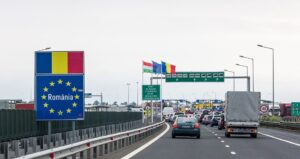
In Romania, a new payment system for using national roads will take effect on October 1, 2026: the cost of the vignette for passenger cars will depend on the vehicle’s environmental standard, while a per-kilometer TollRo system will be implemented for trucks weighing more than 3.5 metric tons.
Romania’s National Road Infrastructure Management Company (CNAIR) has confirmed that the new vignette and TollRo rates will take effect on October 1, 2026. The new model is based on the principle that vehicles that pollute the environment more or use the road infrastructure more intensively pay more.
Three rate categories are being introduced for passenger cars and minibuses with up to nine seats. Electric vehicles and Euro VI-compliant cars will pay 254 lei per year, Euro IV–V vehicles will pay 292 lei, and Euro III and older vehicles will pay 330 lei. A one-day vignette will cost 22, 26, and 29 lei, respectively. For a 10-day period, the fee will be 30, 35, or 39 lei; for 30 days, 48, 55, or 62 lei; and for 60 days, 76, 87, or 99 lei, depending on the vehicle’s emissions class.
As a result, for owners of new vehicles, the annual fee will remain virtually unchanged and will even decrease slightly compared to the current rate, while for older vehicles, it will increase significantly. Specifically, owners of vehicles meeting the Euro III standard or lower will pay approximately 25% more for an annual vignette than under the current system.
Previously purchased vignettes for passenger cars will remain valid until their expiration dates.
For commercial vehicles with a maximum permitted weight exceeding 3.5 metric tons, the TollRo system will be introduced on October 1. Unlike the traditional vignette, the fee will be calculated based on the actual distance traveled by the truck, its technical specifications, and its emission level.
CNAIR confirms that the new system will apply specifically to trucks weighing over 3.5 metric tons.
At the same time, Romania is abolishing a number of individual tolls for crossing bridges over the Danube. Starting October 1, tolls will no longer be collected at the Fetești-Cernavodă bridge complex—one of the main road routes leading to Romania’s Black Sea coast—as well as on the Giurgiu-Vadu Oi bridge.
The toll on the Giurgiu-Ruse bridge when traveling from Romania to Bulgaria is also being eliminated. However, the toll in the opposite direction—from Ruse to Giurgiu—is collected by the Bulgarian side and remains in effect. The toll for crossing the Calafat-Vidin bridge will also remain in effect.
CNAIR reported that drivers who have purchased toll passes in advance for the bridges where tolls are being abolished will be able to request a refund for unused trips.
The new system is part of a broader reform of road tolls in Romania. Starting January 15, 2027, Romania’s electronic toll collection system is set to become compatible with the European Electronic Toll Service (EETS), which will allow for its integration with similar systems in other EU countries.
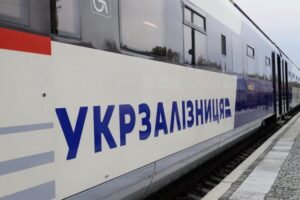
A number of Ukrzaliznytsia trains across the country are running with delays of 2 to 16 hours, according to train schedule information posted on the company’s website on Monday.
According to the latest updates as of 10:43 a.m., the train with the longest delay is train 121/122 Mykolaiv Pass. – Kyiv-Pass. – 16 hours 33 minutes, as well as train 109/110 Mykolaiv Pass. – Lviv – 12 hours 37 minutes, while trains 233/234 Kryvyi Rih-Holovnyi – Chernivtsi and 293/294 Kryvyi Rih-Holovnyi – Rakhiv are running with a delay of 11 hours 58 minutes.
As for other trains, the 3/4 Dnipro-Holovnyi–Uzhhorod is delayed by 10 hours 24 minutes, and the 285/286 Lviv–Dnipro-Holovnyi and 41/42 Truskavets–Dnipro-Holovnyi are running with a delay of 7 hours 36 minutes.
“Ukrzaliznytsia” notes that train delays are calculated automatically, so changes may occur. Among other things, it is noted that during emergencies, evacuations, and detours, train delays may increase, while they may decrease when a train accelerates.
The company’s website reports that, in total, approximately 50 trains are running with delays across Ukraine.

At the “Carpathian Eight” summit in Bukovel, JSC “Ukrzaliznytsia” proposed a project to establish, in partnership with investors, a low-cost passenger carrier on routes between Ukraine and the EU using European-standard tracks, with investments in share capital totaling approximately $441 million.
According to the project description posted on the summit’s website, the carrier’s routes will run from western Ukrainian railway hubs—including Uzhhorod, Lviv, and Kovel—to markets in Central and Eastern Europe, specifically Budapest, Bratislava, Warsaw, Vienna, and Berlin.
As part of the project, there are plans to purchase modern trains for European-standard tracks.
It is noted that the project is in the advanced planning stage, and its implementation is expected to take approximately four years.
Ukrzaliznytsia hopes that this project will attract interest from rail and road carriers in Poland, Slovakia, Hungary, and Romania.
As previously reported, in late 2018 and in June 2019, trains operated by the state-owned railway companies MÁV-START of Hungary and ZSSK of Slovakia began running on routes from Mukachevo—where the European gauge track ends—to Budapest and Košice, respectively.
On the same route, starting in March 2024, the Czech private carrier RegioJet has been operating services from Chop to Prague; it also cooperates with Ukrzaliznytsia on services to the Polish city of Przemyśl, which borders Ukraine.
In addition, in October 2023, the Polish company SKPL (Stowarzyszenie Kolejowych Przewozów Lokalnych) became the first to launch passenger service on the standard-gauge route between Warsaw and Rava-Ruska, where passengers transferred to Ukrzaliznytsia trains bound for Lviv or Kolomyia. Starting in December 2024, the state-owned operator PKP Intercity also began operating on this route, and SKPL withdrew from it in September 2025.
Ukrzaliznytsia also has plans to extend the European-gauge track to Chernivtsi and Lviv; prior to the full-scale Russian invasion, the possibility of building a new high-speed rail line between Warsaw and Kyiv was also being considered.
As reported, Ukrainian President Volodymyr Zelenskyy noted that agreements on $1 billion in investments had already been reached during the first Carpathian Economic Forum.
The C8 Summit website lists about 90 projects across eight sectors. The energy sector has the most—33—followed by transportation and logistics with 11, industry and manufacturing with 17, and infrastructure and real estate with 12.
In terms of regions, the largest number of projects is listed in Lviv Oblast—30—followed by 14 in Zakarpattia, 13 in Chernihiv Oblast, 11 in Poltava Oblast, and 3 in Bukovina.
The first inaugural summit of the “Carpathian 8” (Carpathian 8 Summit) is taking place at the Bukovel ski resort in Ivano-Frankivsk Oblast from September 18 to 20.
European gauge, INVESTMENT, TRANSPORTATION, UKRAINE, UKRZALIZNYTSIA



