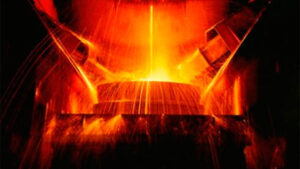
Metallurgical enterprises of Ukraine in March of this year increased steel production by 15.8% compared to the same period in 2023 – to 611 thousand tons from 527 thousand tons.
At the same time, Ukraine took 21st place in the ranking of 71 countries – global producers of these products, compiled by the World Steel Association (Worldsteel).
According to Worldsteel, in March an increase in steel production was recorded by March 2023 in most countries of the top ten, except China, Japan and South Korea.
The top ten steel-producing countries at the end of March are as follows: China (88.270 million tons, a decrease of 7.8% compared to March 2023), India (12.709 million tons, an increase of 7.8%), Japan (7.197 million tons , decrease by 3.9%), USA (6.906 million tons, at the level of March 2023), Russia (6.640 million tons, increase by 0.8%), South Korea (5.282 million tons, down by 9.5%) , Germany (3.510 million tons, up 8.4%), Turkey (3.202 million tons, up 18%), Brazil (2.787 million tons, up 5.6%) and Iran (2.774 million tons, up 2 %).
In total, in March 2024, steel production decreased by 4.3% compared to the same period in 2023 – to 161.190 million tons.
In January-March 2024, the top ten steel producing countries are as follows: China (256.550 million tons, a decrease of 1.9% compared to January-March 2023), India (37.327 million tons, an increase of 9.7%), Japan ( 21.452 million tons, down 0.8%), USA (19.936 million tons, down 1.6%), Russia (18.680 million tons, down 0.2%), South Korea (16.245 million tons, down 2 .5%), Germany (9.704 million tons, an increase of 6%), Turkey (9.533 million tons, an increase of 28.4%), Brazil (8.293 million tons, an increase of 6.2%) and Iran (7.616 million tons , higher by 16.3%).
In general, over the 3 months of 2024, steel production increased by 0.5% compared to the same period in 2023 – to 469.060 million tons.
At the same time, Ukraine produced 1.687 million tons of steel in 3 months of 2024, which is 36.6% higher than the volumes for the same period in 2023 (for 3 months of 2023 – 1.235 million tons). The country is in 22nd place based on the results of 3 months – 2024.
As reported, in 2023, China produced 1 billion 19.080 million tons at the level of the previous year), India (140.171 million tons, +11.8%), Japan (86.996 million tons, -2.5%), USA (80.664 million tons , +0.2%), Russia (75.8 million tons, +5.6%), South Korea (66.676 million tons, +1.3%), Germany (35.438 million tons, -3.9%), Turkey (33.714 million tons, -4%), Brazil (31.869 million tons, -6.5%) and Iran (31.139 million tons, +1.8%).
In total, 71 countries produced 1 billion 849.734 million tons of steel in 2023, which is 0.1% less than in 2022.
At the same time, Ukraine produced 6.228 million tons of steel in 2023, which is 0.6% lower than the volumes for 2022. The country is in 22nd place by the end of 2023.
At the end of 2022, the top ten steel producing countries looked like this: China (1.013 billion tons, -2.1%), India (124.720 million tons, +5.5%), Japan (89.235 million tons, -7.4 %), USA (80.715 million tons, -5.9%), Russia (71.5 million tons, -7.2%), South Korea (65.865 million tons, -6.5%), Germany (36.849 million tons , -8.4%), Turkey (35.134 million tons, -12.9%), Brazil (33.972 million tons, -5.8%) and Iran (30.593 million tons, +8%).
At the end of 2022, Ukraine took 23rd place with the production of 6.263 million tons of steel (-70.7%).
In total, in 2022, 64 countries produced 1 billion 831.467 million tons of steel, which is 4.3% less than in 2021.

In the third quarter of fiscal year 2024, Kernel processed 816 thousand tons of sunflower seeds, up 10% year-on-year.
According to the company’s announcement on the Warsaw Stock Exchange on Tuesday, six crushing plants of the agricultural holding operated at almost full capacity, while two plants were idle due to the proximity to the Russian border and the war zone.
In addition, at the end of February, Kernel started commissioning the Starokonstantinovka oilseed processing plant in Khmelnytsky region. At the time of writing, the plant has reached over 90% of its processing capacity at the commissioning stage. The plant is expected to be fully operational by May 2024 and reach its maximum processing capacity of 1 million tons of sunflower seeds annually.
At the same time, sales of sunflower oil in January-March 2024 increased by 44% year-on-year to 394 thsd tonnes, totaling 1,103 thsd tonnes in 9M2024.
Sales of bottled sunflower oil in the third quarter of FY2024 amounted to 5% of total sales (19 thousand tons).
Kernel emphasized that the volume of loading of the group’s granaries in the third quarter of fiscal year 2024 was at a seasonally low level – 254 thousand tons, which amounted to 2.7 million tons for 9 months of fiscal year 2024, which corresponds to the same period last year.
The export terminal’s transshipment volume for the reporting period increased to 2,464 thsd tonnes of grain, sunflower oil and meal, which showed a 2.3-fold increase. This was driven by consistent export activity via the Black Sea, increased volumes of sunflower oil produced, transshipment through port terminals acquired earlier in the season, along with the provision of transshipment services to third parties.
Despite the high transshipment volumes of the terminals, the volume of grain exports from Ukraine in January-March amounted to 1.877 thousand tons, which is 2.3 times more than in the same period last year, the company stated.
Before the war, Kernel Agro Holding was the world’s leading producer of sunflower oil (approximately 7% of global production) and its exports (approximately 12%). It is one of the largest producers and sellers of bottled oil in Ukraine. In addition, it is engaged in the cultivation and sale of agricultural products.
Kernel’s net profit for FY2023 amounted to $299 million, while the company ended the previous year with a net loss of $41 million. The agricultural holding’s revenue for FY2023 decreased by 35% to $3.455 billion, but EBITDA increased 2.5 times to $544 million.
In the first half of FY2024, Kernel’s net profit fell 3.6 times compared to the first half of FY2023, to $102 million, and EBITDA halved to $223 million, with revenue down 16% to $1.59 billion.
Ukraine’s real gross domestic product (GDP) growth for January-March 2024 amounted to 4.5% (+/- 1%) from 3.6% (+/- 1%) at the end of January-February.
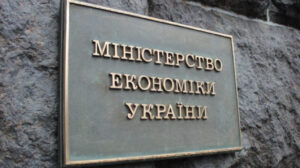
Growth accelerated to 4.6% (+/- 1%) in March from 3.9% (+/- 1%) in February and 3.5% (+/- 1%) in January this year, according to an estimate released on the website of the Ministry of Economy of Ukraine.
“In March 2024, the trend of recovery growth continued, supported by the stable operation of the Ukrainian maritime corridor (stimulated activity in rail transport, metallurgy and metal ore mining), increased production capacity in the extractive industry, intensified production of mineral fertilizers, increased demand for construction materials, taking place against the backdrop of improved business sentiment … and revival of consumer activity …,” the Ministry of Economy pointed out.
The Ministry added that in March, almost all aggregated economic activities formed a positive contribution to the total GDP. Thus, exports of products of agricultural production and mining and metallurgical complex were provided by the Ukrainian Sea Corridor; and investment demand generated by the budget, as well as the increase in production capacity in the extractive industry formed a positive contribution of production types.
At the same time, it is pointed out that the dynamics of electricity production slowed down significantly in the context of significant rocket attacks in late March, which led to serious damage to energy infrastructure and will require a significant period of time and resources to restore it.
As reported, the National Bank of Ukraine on April 25 worsened its forecast for the country’s GDP growth this year from 3.6% to 3% after 5.3% last year.
When approving the draft state budget for the second reading in early November 2023, the government forecasted GDP growth of 4.6% this year.
Earlier Experts Club analytical center and Maxim Urakin released a video analysis of how the GDP of the world’s countries has changed in recent years, more detailed video analysis is available here – https://youtu.be/w5fF_GYyrIc?si=BsZmIUERHSBJrO_3 Subscribe to Experts Club youtube channel here – https://www.youtube.com/@ExpertsClub
EXPERTS CLUB, GDP, MACROECONOMICS, MINISTRY OF ECONOMY, UKRAINE, УРАКІНА
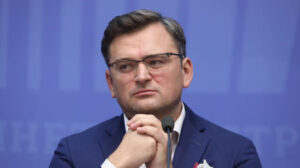
Ukraine and Latvia are working to increase drone production, Ukrainian Foreign Minister Dmytro Kuleba has said.
During a joint press conference in Kyiv with Latvian Foreign Minister Baiba Braže, Kuleba noted the great potential of Ukrainian and Latvian companies to increase production of attack UAVs.
“I am very grateful to Latvia for its leadership in the Drone Coalition. We are now working together to increase this production – we need more drones. I believe that Ukrainian and Latvian companies can really do a lot in this direction,” he said.
The minister also noted Latvia’s decision to join the Czech initiative to purchase artillery shells and noted that the production of shells was one of the central issues during the bilateral talks.
Kuleba also thanked Braža for making her first visit in her new position to Ukraine, which is a sign of special respect for Ukraine and its defenders.
Commissioning of housing in Ukraine, mln sq m
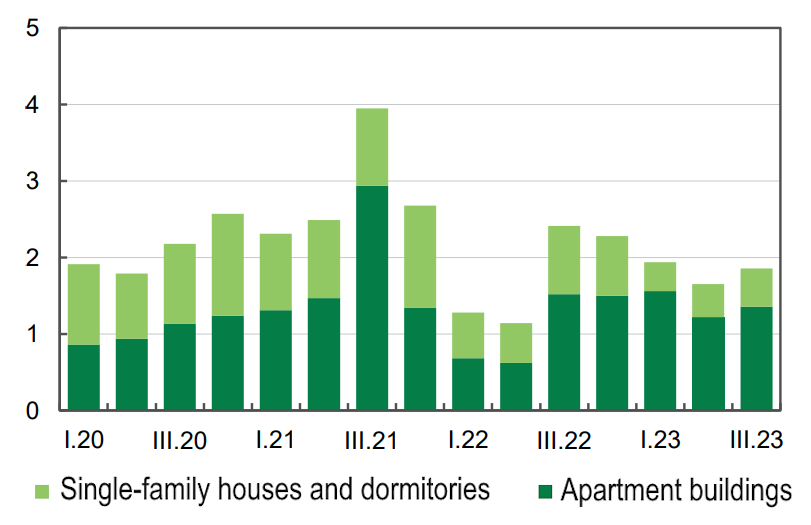
Source: Open4Business.com.ua and experts.news
Zaporizhstal Iron and Steel Works intends to implement a number of measures to improve the quality of rolled metal products in the near future.
According to the company, Zaporizhstal hosted Metinvest’s Customer Focus Conference, where representatives of the company’s relevant departments and enterprises discussed projects to improve the quality of steel products.
“Zaporizhstal was not chosen as a venue for the conference by chance, as today the plant is one of the key metal producers in Ukraine. In fact, by the end of 2023, every second ton of Ukrainian steel was produced at Zaporizhstal. This demonstrates the scale and role of the enterprise for the national mining and metals industry, but at the same time requires even greater responsibility from Zaporizhzhia steelmakers in terms of quality and customer focus,” the company said in a statement.
It is also specified that the conference resulted in a number of applied solutions to achieve and maintain consistently high quality of Zaporizhstal’s rolled steel products, which will be implemented in the near future.
As reported, Zaporizhstal has spent over UAH 1.2 billion since the start of the full-scale invasion to upgrade production equipment and wastewater treatment facilities at the complex. At the same time, in 2023, the plant invested UAH 750 million in projects to maintain the stability and reliability of the company’s main technological facilities, which is half as much as in 2022, with an investment volume of UAH 500 million.
During the full-scale invasion, the program focused on maintaining and updating equipment to ensure its reliable operation in unforeseen conditions.
In 2024, Zaporizhstal plans to implement a capital investment program totaling about one billion hryvnias. The program is aimed at maintaining and modernizing equipment, implementing functional programs for occupational health and safety, information technology, and social sphere.
“Zaporizhstal is one of the largest industrial enterprises in Ukraine, whose products are in great demand among consumers both in the domestic market and in many countries around the world.
“Zaporizhstal is in the process of integration into Metinvest Group, whose major shareholders are System Capital Management PrJSC (71.24%) and Smart Holding Group (23.76%).
Metinvest Holding LLC is the management company of Metinvest Group.