
JSC NAEK “Energoatom” has fully fulfilled its special obligations to ensure the availability of electricity for residential consumers (PSO), aimed at making it more affordable, by covering 100% of the cost of the service for January–July 2026, totaling 141.448 billion UAH (including VAT), the company reported on Tuesday.
“The company continues to bear the key financial burden within the social tariff support system. Thanks to NAEK’s contributions, the state maintains the electricity tariff for millions of Ukrainian families at a level below the market rate,” Energoatom noted.
Currently, Energoatom has no outstanding debt to JSC “Guaranteed Buyer” for the PSO service.
In total, during the years of Russia’s full-scale war against Ukraine—from 2022 to 2025—Energoatom paid over 528.900 billion UAH (including VAT) for the PSO service.
As previously reported, in 2025, “Energoatom” paid 168.546 billion UAH for the PSO and transferred over 44.5 billion UAH to the state budget.
The Cabinet of Ministers of Ukraine, by Decree No. 399-r dated April 29, 2026, “On the Annual General Meeting of JSC NAEK ‘Energoatom,’” approved a net profit of 18,688,306,075 UAH, in accordance with the company’s consolidated financial statements for 2025. The government allocated 50% of the profit, amounting to 9,344,153,037.5 UAH, for the payment of dividends to the state budget.
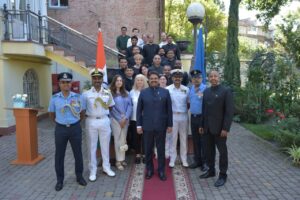
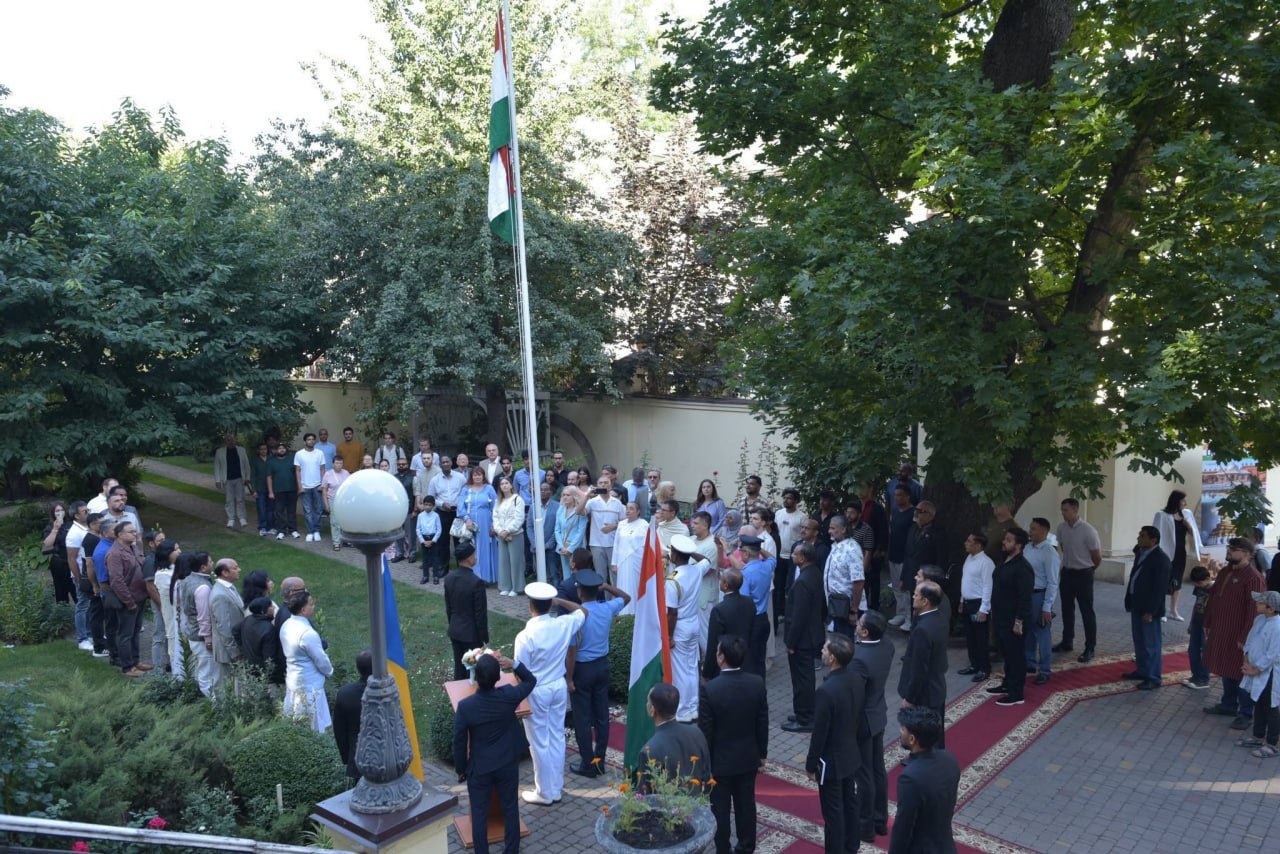
The Indian Embassy in Ukraine held a ceremonial event in Kyiv to mark India’s 80th Independence Day. The celebration took place at India House and was attended by representatives of the Indian community, Ukrainian government agencies, the business sector, the cultural sector, and civil society organizations.
At the ceremony, the recently appointed Indian Ambassador to Ukraine, Anjani Kumar, raised the national flag and read a message from Indian President Draupadi Murmu to those in attendance on the occasion of the holiday.
The event was attended by members of the Indian community living in Ukraine—including students and entrepreneurs—as well as representatives of Ukrainian government agencies, politicians, Indologists, writers, dancers, representatives of cultural and spiritual organizations, and Ukrainian friends of India. The embassy described the guest list as a broad representation of people connected to Indian-Ukrainian cultural and civic relations.
Anjani Kumar was appointed India’s new ambassador to Ukraine by a decision of the Indian Ministry of External Affairs on July 8, 2026. On August 10, Ukraine’s Deputy Minister of Foreign Affairs Oleksandr Mishchenko accepted copies of his credentials from him.
In an address on the eve of Independence Day, President Draupadi Murmu emphasized that India is moving toward its goal of becoming a developed nation by the centennial of its independence, and that development must provide opportunities for all segments of the population. She particularly highlighted the contributions of students, scholars, engineers, doctors, workers, farmers, entrepreneurs, and the Indian diaspora to the nation’s development.
“The true meaning of freedom lies in ensuring that all citizens can seize opportunities to realize their aspirations,” the President of India stated in her address to the nation.
Murmur also highlighted the role of Indians living abroad and diplomatic mission staff in strengthening the country’s international standing. Among the priorities for further development, she cited digitalization, economic growth, expanding opportunities for women and youth, developing modern infrastructure, and preserving cultural heritage.
India gained independence from Great Britain on August 15, 1947. Therefore, in 2026, the country will celebrate its 80th Independence Day, even though 79 years have passed since independence was achieved: the 1947 celebration is considered the first Independence Day. Indian authorities are referring to this year’s celebration specifically as the 80th Independence Day.
The holiday is one of India’s major national holidays. The central ceremony is traditionally held in Delhi, where the prime minister raises the national flag near the Red Fort and delivers an address to the nation.
India was among the first countries to recognize Ukraine’s independence following the collapse of the Soviet Union. Diplomatic relations between the two countries were officially established on January 17, 1992.
The Indian Embassy in Kyiv began operations in May 1992. Prior to that, India had a Consulate General in Odesa, which had been operating since 1962 and was closed in 1999.
The Embassy of Ukraine in New Delhi was opened in February 1993 and became one of the first diplomatic missions of independent Ukraine in Asia. It continues to represent Ukraine’s interests in India and to develop political, economic, cultural, and humanitarian ties between the two countries.
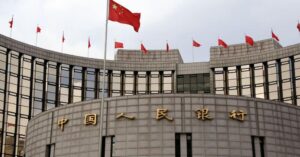
According to Fixygen, the People’s Bank of China (PBC) has added eight banks to the list of institutions authorized to conduct transactions with the digital yuan, bringing the total to 30.
The list includes Ping An Bank, Hengfeng Bank, China Bohai Bank, Bank of Shanghai, Bank of Hangzhou, Huishang Bank, Bank of Changsha, and Guangxi Beibu Gulf Bank.
This move is aimed at increasing the accessibility of digital yuan services and meeting public demand for secure, convenient, and efficient digital yuan services, according to a statement from the PBC.
The new operators will be connected to the central bank’s digital yuan system and will begin providing services after completing operational and technical preparations, according to Xinhua News Agency.
The PBOC stated that it will continue to expand the number of operators to create an open, inclusive, and fair competitive environment for the development of the digital yuan.

According to “The Serbian Economist”, Sarajevo is hosting the 32nd Sarajevo Film Festival, which over three decades has evolved from a festival founded during the city’s siege into one of the leading film platforms in Southeast Europe.
The festival runs from August 14 to 21, 2026. Its program features over 250 films, with participants hailing from approximately 70 countries and territories. Fifty-one films are competing for the top prize, the “Heart of Sarajevo,” across four competition sections. Among them are 21 world premieres, six international premieres, and one European premiere.
A distinctive feature of the Sarajevo Film Festival is its strong regional focus. The official competition section includes 21 countries: Albania, Armenia, Austria, Azerbaijan, Bosnia and Herzegovina, Bulgaria, Croatia, Cyprus, Georgia, Greece, Hungary, Kosovo, Malta, Moldova, Montenegro, North Macedonia, Romania, Serbia, Slovenia, Turkey, and Ukraine.
But the actual geographical scope is much broader. Thanks to international co-productions, the program also features films made in collaboration with France, Germany, the United Kingdom, Italy, the Netherlands, Denmark, Iran, Qatar, and other countries.
The festival opened with the film *Fatherland* by Polish director Paweł Pawlikowski, a co-production of Poland, Germany, Italy, and France. Among this year’s distinguished guests are British actress Emily Watson, Mexican actor and director Diego Luna, Iranian director Asghar Farhadi, and Woody Harrelson.
In addition to regular film screenings, the Sarajevo Film Festival has long served as a major business platform for the film industry. As part of the CineLink Industry Days, there are presentations of new projects, as well as meetings between directors and producers and funding organizations, distributors, and potential investors.
Why this festival is special. The Sarajevo Film Festival was launched in 1995, during the siege of Sarajevo. It was founded by Obala Art Centar as an effort to preserve the city’s cultural life amid the war. The first festival became a symbol of the city’s return to normal life.
Over the next three decades, it has evolved into one of the Balkan region’s leading film festivals and a platform through which regional cinema enters the European market. That is why, in August, Sarajevo effectively becomes one of the region’s cultural capitals: it attracts not only actors and directors, but also producers, film distributors, representatives of international foundations, and streaming platforms.
The festival will conclude on August 21.
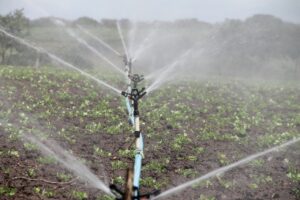
The Program of Activities of the Cabinet of Ministers of Ukraine calls for increasing the area under actual irrigation in Ukraine to 200,000 hectares by 2027, according to the program.
To this end, in 2027, the government plans to introduce long-term planning for the development of hydraulic land reclamation and to establish operators for state-owned irrigation and drainage systems.
The program also calls for the integration of data from the State Water Cadastre and other natural resource cadastres into the State Land Cadastre based on up-to-date geospatial data from the national geospatial data infrastructure in 2027.
A specific objective for 2026 is to ensure the continuity of agricultural production harvesting and transportation under martial law to preserve the harvest and minimize losses.
In addition, the government plans to provide open access to the Public Cadastral Map in 2027, taking into account the security situation, and to introduce long-term planning for Ukraine’s rural development.
According to the Accounting Chamber, there are 253 state-owned irrigation systems in the territory controlled by Ukraine, with a total designed area of 791,800 hectares; however, in 2024–2025, actual irrigation covered less than 15% of this area. At the same time, according to the State Agency for Land Reclamation, Fisheries, and Food Programs, as of early August 2026, water supply contracts had been signed for the irrigation of nearly 76,600 hectares of farmland, and more than 66,000 hectares had already been irrigated.
As previously reported, on August 17, the Cabinet of Ministers of Ukraine approved the Government Action Program. Verkhovna Rada Chairman Ruslan Stefanchuk stated that parliament will review the Program in the near future in accordance with established procedures.
agricultural sector, GOVERNMENT, irrigation, land reclamation, land registry

The program of the Cabinet of Ministers of Ukraine calls for increasing timber harvesting to 15.5 million cubic meters in 2027, boosting production in the woodworking and furniture industries by 5%, and raising the share of high-value-added products in exports by 10%.
According to the program, in 2026 the government plans to adopt the Strategy for the Development of Ukraine’s Woodworking and Furniture Industries through 2030 and approve an operational plan of measures for its implementation in 2026–2028.
In 2027, the government plans to introduce uniform rules governing the timber market for all permanent forest users and forest owners, regardless of ownership status.
In addition, in 2026–2027, the government plans to implement the European Union Regulation on the Trade in Goods Related to Deforestation and/or Forest Degradation (EUDR), as well as a system for due diligence and geospatial traceability of timber origin based on state information systems.
Furthermore, the corporatization of the state-owned enterprise “Forests of Ukraine” is scheduled to be completed in 2027, along with the introduction of a permanent moratorium on the sale of state-owned shares.
According to the Ministry of Economy, Environment, and Agriculture, the total volume of timber harvested in Ukraine in 2025 amounted to 11.7 million cubic meters.
As previously reported, on August 17, the Cabinet of Ministers of Ukraine approved the Government Action Program. Verkhovna Rada Chairman Ruslan Stefanchuk stated that parliament will consider the Program in the near future in accordance with established procedure.



