

On the Ukrainian grain and oilseed market, prices showed mixed trends over the week: wheat remained at the previous level, sunflower seed prices fell significantly, while rapeseed prices for export rose, according to the brokerage firm Spike Brokers.
According to data from analysts published on their Telegram channel, wheat with 11.5% protein on CPT Odessa terms was priced at $195 per metric ton, while feed wheat was priced at $185 per metric ton. On FCA Chop terms, wheat traded mainly at EUR180–185/metric ton for loading onto a European train.
The price of corn on CPT Odessa terms fell by $5 per metric ton over the week to $190 per metric ton, while on FCA Chop terms it remained at $220 per metric ton. The new October–March crop was trading at EUR188–193 per metric ton FCA Chop at the western border.
The price of sunflower seeds on CPT mill terms fell by $110 per metric ton over the week to $440 per metric ton. According to the broker, the market continues to transition to pricing for the new crop, and the external rise in prices for soybean oil and crude oil has not yet been reflected in Ukrainian raw material prices.
In the rapeseed market, the price on CPT port terms remained at $500 per metric ton, while on FCA Chop terms it rose by $5 per metric ton to $550 per metric ton. At the same time, the price of rapeseed for domestic processing fell by $15/metric ton to $485/metric ton. Thus, the difference between the FCA Chop export price and the price for domestic processing is $65/metric ton.
As of August 10, Ukraine had harvested 3.22 million metric tons of rapeseed from 1.191 million hectares—or 89% of the planted area—with a yield of 2.71 metric tons per hectare. Current pricing is determined by the distribution of supply among the western border, ports, and domestic processing.
The price of GMO soybeans on CPT port terms was $420 per metric ton, FCA Chop – $435 per metric ton, and non-GMO soybeans – $440 per metric ton and $470 per metric ton, respectively. The price of GMO soybeans for domestic processing rose by $5 per metric ton over the week, reaching $425 per metric ton.
“Thus, sunflower seeds are adjusting to the purchase price of the new crop; competition is intensifying in rapeseed between FCA Chop and processing; and soybeans are receiving an external boost from the CBOT and Chinese demand, which is not yet being strongly reflected in the Ukrainian physical market,” analysts note.
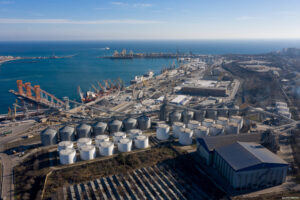
From August 1–13, Ukraine exported 790,700 metric tons of agricultural products, compared to 1.849 million metric tons during the same period in July—a decrease of 57.2%, according to the brokerage firm Spike Brokers.
According to the firm, the value of exports fell by 37.3% to $478.8 million, compared to $763.8 million during the corresponding period in July.
“The main factor limiting August’s pace is concentrated in the grain segment. At the same time, the geography of logistics is changing: the flow through seaports is significantly lower than in July, while road crossings and western rail corridors are operating at a higher intensity,” the report notes.
From August 1–13, 130,100 metric tons of agricultural products were exported via road border crossings, compared to 119,500 metric tons during the corresponding 13 days in July—an increase of 8.9%. Exports via Hungary saw the largest increase—32.9%—followed by Slovakia (28%), Romania (14.1%), and Poland (3.7%). The flow through Moldova was close to July’s level, declining by approximately 1.9%.
At the same time, as of August 12, 435,800 metric tons of grain cargo had been transported by rail, which is 46.9% less than during the corresponding period in July and 52.1% less than in August 2025. The average daily load for the first 11 days of August was 31.3 thousand metric tons—38% lower than in July and 49% less than a year ago.
The export component of grain rail shipments fell by 72% compared to July, to 201.7 thousand metric tons. Of this volume, 63% passed through border crossings, and 29% went through the ports of Odesa. During the reporting period, only 75,200 metric tons of grain were transported through the ports of Odesa, compared to 656,400 metric tons during the corresponding period in July (-88.5%).
At the same time, the average daily throughput of grain railcars through western border crossings during the first 11 days of August rose to 139.6 railcars, compared to 71.3 railcars in July—an increase of 96%.
According to Spike Brokers, the main growth came from the Romanian and Polish routes—up to 44.7 and 44.4 railcars per day, respectively. Transit to Slovakia increased to 26.9 railcars per day, while transit to Hungary decreased to 23.6 railcars.
As of August 12, there were 8,718 thousand railcars at border crossings, compared to 7,858 thousand previously. In particular, the number of grain cars rose from 369 to 693, or by 87.8%.
Railway exports of vegetable oil totaled 41.5 thousand metric tons, which is 0.9% more than the corresponding July figure, with 89% of the volume passing through land border crossings.
Spike Brokers notes that the sea-rail corridor remains the weakest link in the current logistics chain. As of August 13, the average daily unloading rate bound for the ports of Greater Odesa had dropped to 146 railcars, while 262 grain cars were en route to the ports. There were 1.32 thousand grain cars heading toward the Danube ports.

Ukrainian Minister of Internal Affairs Ivan Vygivsky held a telephone conversation with Azerbaijani Minister of Internal Affairs Vilayat Eyvazov, according to the press service of the Ukrainian Ministry of Internal Affairs.
“We discussed our partnership in the field of law enforcement. The key areas of cooperation are combating organized and transnational crime, cybersecurity, and the fight against fraud, as well as strengthening practical cooperation,” Vygivsky said following the conversation.
During the talks, the head of the Ukrainian ministry also briefed his counterpart on the current situation in the country, particularly regarding the latest Russian shelling of civilian infrastructure and attacks on the civilian population.
The parties paid special attention to joint humanitarian initiatives, particularly in the areas of healthcare, rehabilitation, and social support for the families of Ukrainian defenders.
“In the past year alone, the Republic of Azerbaijan has hosted two groups of high school students from the Ministry of Internal Affairs. The students had the opportunity to learn about the country’s culture and history and broaden their horizons. In recent years, our units have also received humanitarian demining equipment and technology from Azerbaijan that ensures uninterrupted operations during power outages. We are grateful to the Government of the Republic of Azerbaijan for its support of Ukraine and assistance to the Ministry of Internal Affairs. We agreed to strengthen our partnership,” Vygivsky concluded.
AZERBAIJAN, COOPERATION, Ministry of Internal Affairs, SECURITY, UKRAINE
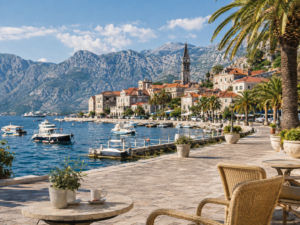
Montenegro and Albania have been included in Forbes’ list of the best overseas destinations for retirement in 2026, according to the Experts Club information and analysis centre.
Forbes published its annual review, The Best Places To Retire Abroad In 2026, on July 31, later updating it on August 5. The publication selected 96 recommended places in 24 countries on five continents, with half of the countries represented located in Europe.
When compiling the list, Forbes took into account the cost of living, the quality and cost of healthcare, taxes, crime levels and political stability, transportation accessibility, the possibility of obtaining long-term residence status, the prevalence of the English language, as well as risks associated with climate change and natural disasters.
At the same time, no ranking from first to 24th place was compiled — the countries are presented in alphabetical order. Therefore, for example, Albania’s position near the beginning of the list does not mean that Forbes recognized it as the best country for retirees.
The list includes Albania, Argentina, Austria, Belize, Canada, Colombia, Costa Rica, Cyprus, France, Greece, Ireland, Italy, Malaysia, Malta, Mauritius, Mexico, Montenegro, Panama, Portugal, Slovenia, Spain, Thailand, Uruguay and Vietnam. Mauritius and Vietnam were included in the annual list for the first time.
In Montenegro, Forbes highlighted Podgorica, Bar, Perast and Tivat. The publication estimates the cost of living in the country at less than half the U.S. average, the level of serious crime as low, and the political situation as stable.
Forbes assesses the quality of healthcare as adequate, although it notes that foreigners with complex medical problems often turn to specialists in Italy or Germany.
A separate advantage of Montenegro is the possibility of obtaining a residence permit through the purchase of real estate. According to the conditions cited by Forbes for American retirees, the path to permanent residence begins with a renewable one-year residence permit, for which it is necessary to confirm pension income of more than $19,000 per year.
At the same time, Forbes draws attention to the risks of wildfires, floods and earthquakes — an especially relevant factor against the backdrop of major fires on the Adriatic coast in the summer of 2026.
In neighboring Albania, Forbes recommends considering Tirana, Durrës, Sarandë and Vlorë.
According to the publication, the cost of living there is approximately half the U.S. level. Among the advantages cited are the Mediterranean climate, the seacoast, a relatively low crime rate and a relatively simple procedure for legalizing residence.
For Americans, it is particularly convenient that they can stay in Albania for up to a year as tourists, which provides enough time to arrange a longer-term status. Forbes states that for retirement immigration, a couple will subsequently need to confirm about $20,000 in annual income from abroad.
Among the traditional European destinations, Forbes retained Portugal, Spain, Italy, France and Greece.
Portugal is assessed as a country where the cost of living is approximately one-third lower than in the United States, with relatively affordable healthcare and a comparatively simple D7 program for financially independent foreigners to reside in the country.
In Spain, expenses, according to Forbes, are approximately 30% lower than in the United States, while healthcare is characterized as high-quality and inexpensive. At the same time, the publication pays particular attention to wildfires, extreme heat and flooding. As a result, some areas, including the Costa del Sol, were removed from the list of specifically recommended locations this year, while in France, Bordeaux was removed.
Vietnam became one of the most affordable destinations: Forbes estimates living expenses at approximately one-quarter of the U.S. level. However, a significant disadvantage is the absence of a dedicated retirement visa, which means foreigners have to use successive 90-day electronic visas.
Mauritius entered the list for the first time thanks to its relatively low cost of living, affordable healthcare and a special permit for foreign retirees. Forbes estimates the cost of living at more than 50% below the U.S. level and states that a couple must confirm about $18,000 in annual retirement income.
Thus, one of the notable results of the list for the Balkans was the inclusion of both Albania and Montenegro, while Serbia was not included in the Forbes 2026 list. At the same time, this does not mean that the publication considered it less suitable for retirees: Forbes compiles an editorial selection rather than a comprehensive comparative ranking of all countries in the world.
The study itself is primarily aimed at US citizens – Forbes compares expenditure with US levels, takes into account tax treaties with the US, Social Security rules and eligibility for Medicare. For citizens of other countries, the financial, tax and immigration conditions may differ significantly.

On Monday, August 17, there will be no precipitation in Ukraine; however, most western and northern regions may experience brief showers and thunderstorms in some areas during the day, according to the Ukrainian Hydrometeorological Center. The wind will be from the southwest at 5–10 m/s. Nighttime temperatures will range from 15–20°, and daytime temperatures from 26–31°.
In Kyiv, no precipitation is expected, with a southwest wind at 5–10 m/s. Nighttime temperatures will range from 18–20°, and daytime temperatures will be around 30°.
According to the Boris Sreznevsky Central Geophysical Observatory, the highest daytime temperature on August 17 in Kyiv was recorded in 2010 at 35.7°C, and the lowest nighttime temperature was 6.4° above zero in 1885.
On Tuesday, August 18, moderate rain and thunderstorms are expected in the western regions and, during the day, also in most northern regions as well as in the Vinnytsia and Odesa regions; at night, significant rain and thunderstorms are expected in the Zakarpattia region and in some parts of the Volyn, Lviv, and Chernivtsi regions.
During the day, some areas may experience hail and squalls of 15–20 m/s.
The rest of the country will remain dry.
The wind will be from the south; during the day in the western regions, it will shift to the northwest at 7–12 m/s.
Temperatures will range from 15–20° at night to 28–33° during the day. In the west of the country, temperatures will range from 11–16° at night to 19–24° during the day.
In Kyiv, no precipitation is expected at night, with brief showers and thunderstorms during the day. The wind will be from the south, 7–12 m/s. Temperatures will range from 18–20° at night to around 30° during the day.

The Experts Club analytical center analyzed the latest ranking of the world’s top universities, the Academic Ranking of World Universities 2026 (ARWU), known as the Shanghai Ranking. Mainland China became the largest university system by the number of higher education institutions represented in the ARWU, known as the Shanghai Ranking. The top 1,000 included 234 universities from mainland China compared with 187 universities from the United States.
At the same time, the United States continues to be significantly more strongly represented at the very top of the ranking.
The full list of countries and territories by the number of universities in ARWU 2026 (in descending order by the number of universities):
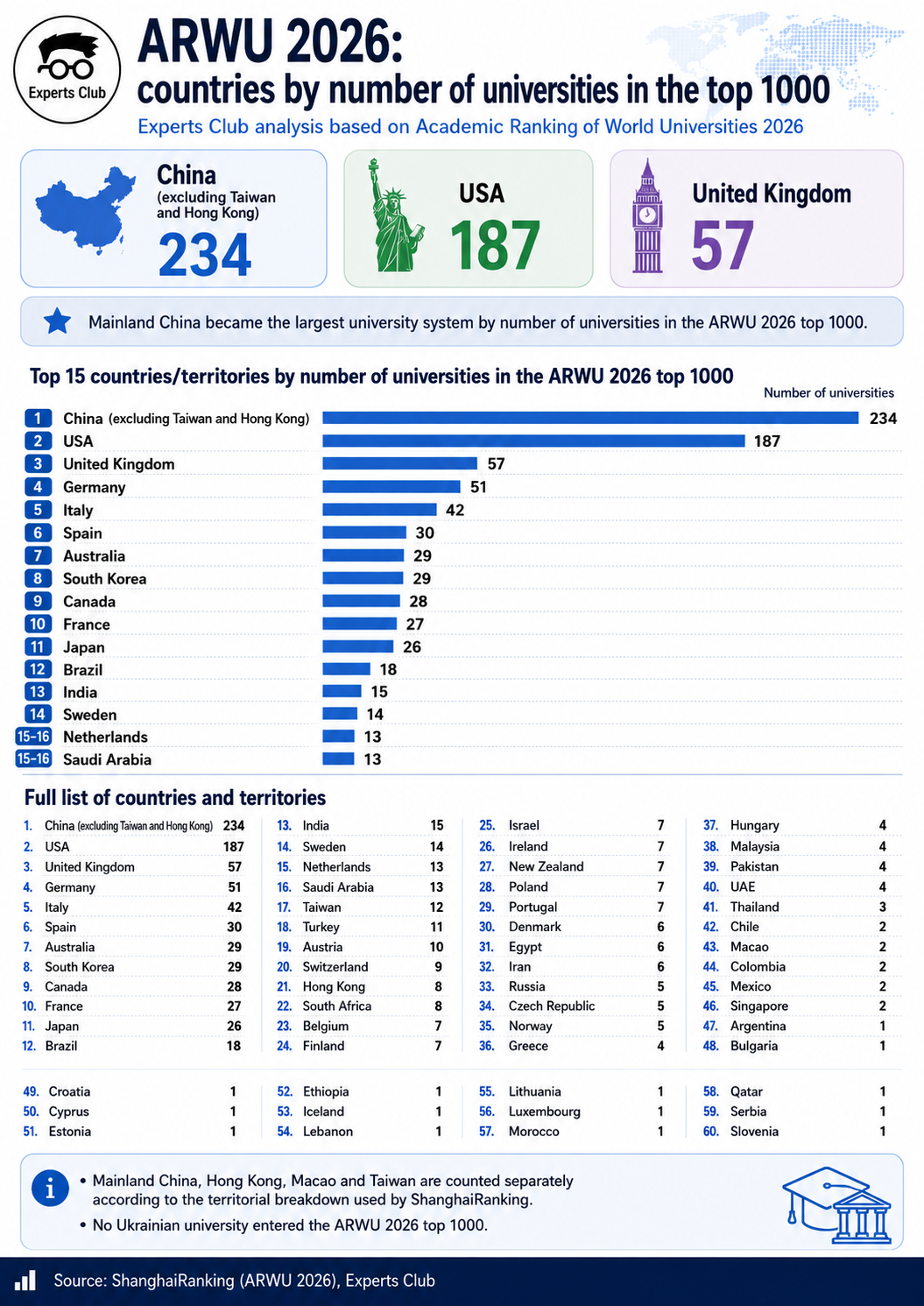
Mainland China, Hong Kong, Macao and Taiwan are counted separately here, in accordance with ShanghaiRanking’s territorial breakdown.
The structure of the ranking shows the further strengthening of Asia. In addition to mainland China, among the systems with the largest representation are South Korea with 29 universities and Japan with 26. Taiwan is represented separately with 12 universities, Hong Kong with eight and Macao with two.
ARWU evaluates more than 2,500 universities worldwide, but publishes only the top 1,000. Unlike a number of other global rankings, it focuses primarily on scientific and research performance rather than student reviews, reputation among employers or the quality of student life.
The final score is based on six criteria: alumni who are Nobel Prize and Fields Medal laureates account for 10% of the score; such laureates among staff – 20%; Clarivate Highly Cited Researchers – 20%; publications in Nature and Science – 20%; papers indexed in the Science Citation Index Expanded and Social Sciences Citation Index – another 20%; and academic performance per capita of an institution – 10%.
For ARWU 2026, the Highly Cited Researchers list released in December 2025, publications in Nature and Science for 2021–2025, as well as papers indexed in Web of Science in 2025, were used.
Therefore, the Shanghai Ranking is more accurately regarded primarily as an indicator of the research strength of universities and national scientific systems, rather than as a direct assessment of the quality of education or learning conditions for students.
No Ukrainian university was included among the world’s top 1,000 universities in this ranking.



