
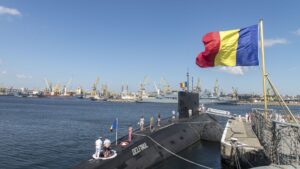
The Romanian Navy has begun testing the new Black Talon drone countermeasure system at the military port of Constanța on the Black Sea. The system, developed as part of a long-standing collaboration with the U.S. Navy, is scheduled to enter operational service by the end of October 2026.
Black Talon is designed to detect, track, and monitor unmanned aerial vehicles near critical port infrastructure. According to the Romanian military, the system includes a high-performance 3D radar, electro-optical equipment, and passive electromagnetic radiation detection devices. The system provides a 360-degree field of view and can target detected objects.
The threat detection radius is approximately 10 km. One of the primary countermeasures is electronic jamming—Black Talon is capable of disrupting the communication channel between a drone and its operator, allowing the threat to be neutralized without necessarily destroying the drone physically.
Currently, Romanian military personnel are undergoing training to operate the new equipment. Following Constanta, plans are in place to equip the military ports of Mangalia, Tulcea, and Braila with similar systems. The U.S. side is to provide three more systems. Thus, protection will cover Romania’s military ports on both the Black Sea and the Danube, particularly near the Ukrainian border.
At the same time, the Romanian Navy is preparing to deploy the Sentinel system to monitor threats from the sea and underwater. It will use sonar capable of detecting unmanned underwater vehicles, combat divers, and mini-submarines. According to Navy officials, Black Talon and Sentinel can be integrated to form a comprehensive surveillance system covering the air, surface, and underwater spaces around the military ports.
The commander of the Constanta military port, Rear Admiral Ciprian Mandaki, announced on September 16 that the program has been implemented jointly with the U.S. Navy for several years and has now entered the operational phase. Black Talon is primarily intended to protect critical military infrastructure from aerial drones.
The強化 of security in Constanța follows a serious incident on June 5, 2026, when a maritime drone was detected in the civilian section of the port, near Pier No. 78. At approximately 10:30 a.m., the drone self-detonated. There were no casualties, as the area had already been cordoned off by Romanian intelligence services, the coast guard, and the military. The Romanian Ministry of Defense officially reported that the drone did not belong to the Romanian military and was of a type used in the war in Ukraine. The investigation into the incident was handed over to the prosecutor’s office.
Following this incident, Romanian authorities ordered the acceleration of measures to protect port infrastructure. At the same time, the Black Talon program itself had been launched earlier and was being developed as part of Romania’s cooperation with the United States in the field of maritime security.
For Ukraine, the strengthening of security at Romanian ports is of particular importance due to the proximity of Constanța and the Danube ports to the Ukrainian border and their role in the region’s Black Sea and Danube transportation infrastructure.

According to the “Serbian Economist,” a new plant for assembling Israeli-designed military drones has been built in Serbia. According to Aleksandar Vučić, the plant will employ about 100 people, and its products are intended for both the Serbian Armed Forces and the armed forces of other countries.
Journalists were not allowed inside the plant.
Vucic attributed this to the confidentiality of the production process. Some of the models being produced were shown only in a video he released.
At the same time, the current plant is intended to be only the first phase of cooperation with Israel. Vucic stated that he expects to open at least three more similar plants in Serbia. He named areas near the Lajevci and Niš airports as potential locations for the new production facilities.
Earlier, an investigation by BIRN and Haaretz reported that Serbia’s partner in the project is Elbit Systems, Israel’s largest defense company. According to the journalists, Elbit is set to hold a 51% stake in the joint venture, while the Serbian state-owned company Yugoimport-SDPR will hold 49%.
The plan is to produce both drones for close-range missions and more sophisticated aircraft for long-range flights. Elbit and SDPR have not publicly disclosed details of the project.
Serbia is gradually building its own drone manufacturing cluster by bringing together local defense companies with the technologies of foreign partners. Vučić stated that the project’s goal is to strengthen the capabilities of the Serbian army while also expanding exports of military products.
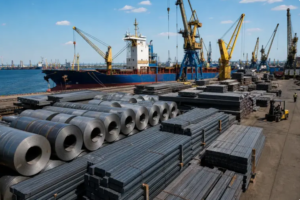
In January–August of this year, Ukrainian companies reduced their consumption of rolled metal by 9.64% compared to the same period last year, down to 2.546 million metric tons.
According to a press release from the “Ukrmetallurgprom” association, 1.151 million metric tons were imported during this period, accounting for 37% of the domestic rolled steel consumption market.
According to “Ukrmetallurgprom,” in January–August 2026, Ukrainian steel mills produced 3.591 million metric tons of rolled steel (84.4% of the level recorded during the same period in 2025), of which, according to the State Customs Service of Ukraine, approximately 2.196 million metric tons—or 61.2%—were exported. In
January–August 2025, the share of exports was 58.3% (2.481 million metric tons out of a total rolled steel production of 4.256 million metric tons).
“In January–August 2026, the domestic market capacity was 2.546 million metric tons of rolled metal products, of which 1.151 million metric tons, or 45.21%, consisted of imports. In January–August 2025, the domestic market capacity was 2,815,500 metric tons, of which 1,042,500 metric tons, or 37%, were imported. “Thus, in January–August 2026, the domestic market capacity decreased by 9.64% compared to January–August of last year, while the share of imports increased by 8.21%,” the press release states.
The share of semi-finished products in export shipments in January–August 2026 was 41.44%, which is significantly higher than the figure for the same period last year (32.37%). The share of flat-rolled products in exports matches that of January–August of last year (44.22% and 44.38%, respectively), while the share of long products is noticeably lower (14.34% versus 23.26%, respectively).
The structure of imports in January–August of this year is characterized by a noticeable dominance of flat-rolled products over long products (67.98% and 25.97%, respectively); however, in January–August 2025, the dominance of flat-rolled products over long products was significantly greater (70.24% and 20.96%).
According to the State Customs Service, the main export markets for Ukrainian rolled metal in January–August 2026 were the European Union (82.3%), the rest of Europe (9.1%), and the CIS (6.7%).
Among steel importers for the first 8 months of 2026, other European countries ranked first (49.0%), followed by Asian countries (26.1%), and the EU-27 (16.8%).
As previously reported, Ukraine’s rolled metal market grew by 21.73% in 2025 compared to 2024, reaching 4 million 1.6 thousand metric tons. Imports totaled 1 million 603.6 thousand metric tons, accounting for 40.07% of domestic rolled metal consumption.
Ukraine’s rolled steel market shrank by 6.26% in 2024 compared to the previous year—to 3,288,400 metric tons—while in 2023 it increased 2.19-fold compared to 2022—to 3,505,600 metric tons.

According to “Serbian Economist”, Serbia handed over to Ukraine a 48-year-old woman whom Ukrainian law enforcement officials suspect of organizing a network providing sexual services in Kyiv, the Life website reported. Following an international manhunt, her whereabouts were traced to Serbia, after which the extradition process was carried out.
According to investigators, back in 2022, the group created a channel on a messaging app where they posted photos and videos of women, along with a list of services and prices. After receiving an advance payment, clients were directed to hotels and rented apartments in Kyiv; according to the police, the meetings were organized, in particular, during curfew hours.
Two alleged participants in the scheme—a 47-year-old woman and a 36-year-old man—were charged back in 2022. A third suspect fled Ukraine after the scheme was uncovered and went into hiding abroad.
After her extradition from Serbia, she was notified of charges under Part 2 of Article 303 of the Criminal Code of Ukraine—pimping committed against several individuals, repeatedly, and by a group of persons acting in prior conspiracy. The maximum penalty under this article is up to seven years of imprisonment. The court ordered her to be held in custody with the option of posting bail in the amount of 1.47 million UAH.

Commercial fishermen in Ukraine’s water bodies harvested 5.1 thousand metric tons of aquatic biological resources from January through August 2026, according to the State Agency for the Development of Land Reclamation, Fisheries, and Food Programs (State Fisheries Agency).
Silver crucian carp accounted for the largest share of the catch—1,500 metric tons, or 31% of the total. Other major species caught included bream—1,100 metric tons, roach—793 metric tons, silver bream—448 metric tons, pikeperch—272 metric tons, and herbivorous species, including silver carp and white amur, — 212 metric tons, perch — 123 metric tons, and Black Sea herring — 103 metric tons.
The largest volumes of aquatic biological resources since the beginning of the year were harvested in the Kremenchuk Reservoir—2,300 metric tons—and the Kamyanskoe Reservoir—over 1,000 metric tons. In the lower Dniester, including the lakes and the Turunchuk branch, as well as the Dniester Estuary, the catch totaled 445 metric tons.
In the Dnipro Reservoir, 416 metric tons of aquatic biological resources were harvested; in the Kyiv Reservoir, 306 metric tons; and in the Kaniv Reservoir, 294 metric tons. In the waters of the Dnipro-Bug estuary system and the Danube River, the catch totaled 118 and 117 metric tons, respectively.
The smallest catch volumes were recorded in the Berezan and Tiligul estuaries—23 and 21 metric tons, respectively—as well as in the Chernihiv region: 9 metric tons in the Dnipro River and 5 metric tons in the Desna River, including lakes.
Due to the Black and Azov Seas being blocked as a result of Russia’s military aggression, fishing for marine species—including sprat, glos, mullet, anchovy, rapana, shrimp, and pilengas—is currently virtually nonexistent; these species accounted for a significant share of the fish market in the pre-war years, the report states.
BIOLOGICAL RESOURCES, CATCH, FISH, State Agency for Fisheries, UKRAINE

Metinvest B.V. (Netherlands), the parent company of the Metinvest mining and metallurgical group, ended January–June of this year with a net loss of $202 million, compared to a net loss of $58 million in the same period last year.
According to a press release issued by Metinvest B.V. on Monday regarding the first half of this year, revenue for the period increased by 3%, to $3.657 billion from $3.555 billion.
The company’s operating profit for the reporting period fell by 64% to $73 million.
In the first half of 2026, adjusted EBITDA decreased by 8.3% compared to the same period last year—to $311 million from $339 million. At the same time, EBITDA for the mining segment fell by 30%, to $119 million from $169 million, while EBITDA for the metallurgy segment rose by 17%, to $249 million from $213 million.
The financial results reflect the group’s performance prior to the port shutdowns and the subsequent shutdown of the Southern GOK, as well as before the shelling of Zaporizhstal and Kametstal, which caused those facilities to shut down as well.
It is noted, however, that Metinvest’s enterprises in Ukraine continued to operate at varying levels of capacity utilization due to constraints related to security, power supply, logistics, and economic factors. Despite all the challenges, the group demonstrated strong financial results, which enabled it to fully and timely repay $428 million in bonds in April. Since the start of the war, Metinvest, together with its joint ventures and associated companies, has allocated $328 million to support Ukraine.
Metinvest CEO Yuriy Ryzhenkov noted in his commentary that the first half of 2026 was generally characterized by stable operational and financial performance. A key achievement was the successful redemption in April of bonds maturing in 2026. This event demonstrates Metinvest’s financial discipline and resilience. Since 2022, the group has fully repaid three separate bond issues, with total payments exceeding $1 billion. Importantly, all these obligations were met without restructuring, despite the loss of control over certain assets and the unprecedented challenges facing Ukrainian businesses.
After the end of the reporting period, operating conditions in Ukraine became increasingly difficult: intensified missile attacks and drone strikes heightened security risks, disrupted commercial shipping through Black Sea ports, and further complicated export and import logistics. Against this backdrop, the “Pivdenny GZK” joint venture temporarily suspended production. In August and September 2026, missile strikes on the group’s enterprises—Zaporizhstal and Kametstal—resulted in the deaths and injuries of employees and caused significant damage to production and support infrastructure, leading to the temporary shutdown of the affected facilities.
“We plan to gradually resume operations at these facilities and bring the blast furnaces back online step by step. This demonstrates our commitment to preserving a competitive Ukrainian steel industry, which continues to support the country’s economy,” the CEO noted.
At the same time, external operating conditions are becoming more challenging. “We find ourselves in a fundamentally new regulatory landscape, driven by the EU’s introduction of the Carbon Border Adjustment Mechanism (CBAM) and changes to trade quotas. Although the group remains committed to decarbonization and integration into the EU’s economic space, these measures are placing additional pressure on Ukrainian industry at a time when the country continues to defend itself against military aggression and preserve its industrial potential,” Ryzhenkov emphasized.
Metinvest is a vertically integrated group of mining and metallurgical enterprises. Its facilities are located in Ukraine—in the Donetsk, Luhansk, Zaporizhzhia, and Dnipropetrovsk regions—as well as in the European Union, the United Kingdom, and the United States. The holding’s main shareholders are the SCM Group (71.24%) and Smart Holding (23.76%). Metinvest Holding LLC is the management company of the Metinvest Group.



