

Commercial fishermen in Ukraine’s water bodies harvested 5.1 thousand metric tons of aquatic biological resources from January through August 2026, according to the State Agency for the Development of Land Reclamation, Fisheries, and Food Programs (State Fisheries Agency).
Silver crucian carp accounted for the largest share of the catch—1,500 metric tons, or 31% of the total. Other major species caught included bream—1,100 metric tons, roach—793 metric tons, silver bream—448 metric tons, pikeperch—272 metric tons, and herbivorous species, including silver carp and white amur, — 212 metric tons, perch — 123 metric tons, and Black Sea herring — 103 metric tons.
The largest volumes of aquatic biological resources since the beginning of the year were harvested in the Kremenchuk Reservoir—2,300 metric tons—and the Kamyanskoe Reservoir—over 1,000 metric tons. In the lower Dniester, including the lakes and the Turunchuk branch, as well as the Dniester Estuary, the catch totaled 445 metric tons.
In the Dnipro Reservoir, 416 metric tons of aquatic biological resources were harvested; in the Kyiv Reservoir, 306 metric tons; and in the Kaniv Reservoir, 294 metric tons. In the waters of the Dnipro-Bug estuary system and the Danube River, the catch totaled 118 and 117 metric tons, respectively.
The smallest catch volumes were recorded in the Berezan and Tiligul estuaries—23 and 21 metric tons, respectively—as well as in the Chernihiv region: 9 metric tons in the Dnipro River and 5 metric tons in the Desna River, including lakes.
Due to the Black and Azov Seas being blocked as a result of Russia’s military aggression, fishing for marine species—including sprat, glos, mullet, anchovy, rapana, shrimp, and pilengas—is currently virtually nonexistent; these species accounted for a significant share of the fish market in the pre-war years, the report states.
BIOLOGICAL RESOURCES, CATCH, FISH, State Agency for Fisheries, UKRAINE

Metinvest B.V. (Netherlands), the parent company of the Metinvest mining and metallurgical group, ended January–June of this year with a net loss of $202 million, compared to a net loss of $58 million in the same period last year.
According to a press release issued by Metinvest B.V. on Monday regarding the first half of this year, revenue for the period increased by 3%, to $3.657 billion from $3.555 billion.
The company’s operating profit for the reporting period fell by 64% to $73 million.
In the first half of 2026, adjusted EBITDA decreased by 8.3% compared to the same period last year—to $311 million from $339 million. At the same time, EBITDA for the mining segment fell by 30%, to $119 million from $169 million, while EBITDA for the metallurgy segment rose by 17%, to $249 million from $213 million.
The financial results reflect the group’s performance prior to the port shutdowns and the subsequent shutdown of the Southern GOK, as well as before the shelling of Zaporizhstal and Kametstal, which caused those facilities to shut down as well.
It is noted, however, that Metinvest’s enterprises in Ukraine continued to operate at varying levels of capacity utilization due to constraints related to security, power supply, logistics, and economic factors. Despite all the challenges, the group demonstrated strong financial results, which enabled it to fully and timely repay $428 million in bonds in April. Since the start of the war, Metinvest, together with its joint ventures and associated companies, has allocated $328 million to support Ukraine.
Metinvest CEO Yuriy Ryzhenkov noted in his commentary that the first half of 2026 was generally characterized by stable operational and financial performance. A key achievement was the successful redemption in April of bonds maturing in 2026. This event demonstrates Metinvest’s financial discipline and resilience. Since 2022, the group has fully repaid three separate bond issues, with total payments exceeding $1 billion. Importantly, all these obligations were met without restructuring, despite the loss of control over certain assets and the unprecedented challenges facing Ukrainian businesses.
After the end of the reporting period, operating conditions in Ukraine became increasingly difficult: intensified missile attacks and drone strikes heightened security risks, disrupted commercial shipping through Black Sea ports, and further complicated export and import logistics. Against this backdrop, the “Pivdenny GZK” joint venture temporarily suspended production. In August and September 2026, missile strikes on the group’s enterprises—Zaporizhstal and Kametstal—resulted in the deaths and injuries of employees and caused significant damage to production and support infrastructure, leading to the temporary shutdown of the affected facilities.
“We plan to gradually resume operations at these facilities and bring the blast furnaces back online step by step. This demonstrates our commitment to preserving a competitive Ukrainian steel industry, which continues to support the country’s economy,” the CEO noted.
At the same time, external operating conditions are becoming more challenging. “We find ourselves in a fundamentally new regulatory landscape, driven by the EU’s introduction of the Carbon Border Adjustment Mechanism (CBAM) and changes to trade quotas. Although the group remains committed to decarbonization and integration into the EU’s economic space, these measures are placing additional pressure on Ukrainian industry at a time when the country continues to defend itself against military aggression and preserve its industrial potential,” Ryzhenkov emphasized.
Metinvest is a vertically integrated group of mining and metallurgical enterprises. Its facilities are located in Ukraine—in the Donetsk, Luhansk, Zaporizhzhia, and Dnipropetrovsk regions—as well as in the European Union, the United Kingdom, and the United States. The holding’s main shareholders are the SCM Group (71.24%) and Smart Holding (23.76%). Metinvest Holding LLC is the management company of the Metinvest Group.

According to Experts.news, DLS became the largest company in Ukraine’s tobacco sector by revenue in the first half of 2026, generating 61.08 billion UAH, according to data from OpenDataBot.
The company is part of the DL Solution financial and industrial group.
Philip Morris Sales and Distribution took second place with revenue of 32.15 billion UAH, while JT International Company Ukraine came in third with 23.6 billion UAH. The company represents brands such as Winston, Camel, Sobranie, LD, Monte Carlo, and Winchester on the Ukrainian market.
In fourth place is British American Tobacco Sales and Marketing Ukraine, with revenue of 19.94 billion UAH. The company works with brands such as Kent, Dunhill, glo, Vuse, and Velo.
Rounding out the top five is the distributor Global Tobacco, which generated 11.69 billion UAH in revenue.
The top ten also includes DK “Mirana” — 10.65 billion UAH, Imperial Brands Ukraine—10 billion UAH, JT International Ukraine—4.96 billion UAH, Philip Morris Ukraine—4.41 billion UAH, and Halychyna-Tabak—4.26 billion UAH.
The combined revenue of the ten largest companies reached approximately 182.7 billion UAH, accounting for about 92% of the total revenue of the companies included in OpenDataBot’s comparative sample.
At the same time, the five largest companies alone accounted for about 148.5 billion UAH, or approximately three-quarters of the combined revenue of the analyzed companies.
In total, 41 tobacco companies that filed financial reports for both the first half of 2025 and for 2026 generated 198.18 billion UAH in revenue, which is 10% more than in the previous year.
Source: OpenDataBot.

Czech Prime Minister Andrej Babiš stated that current developments in the international situation could lead the world into World War III, and called on Europe to pay more attention to a diplomatic resolution of Russia’s war against Ukraine.
Babiš made these remarks on September 17 while delivering the opening address at the IISS Prague Defense Summit 2026 in Prague. The Czech government and the conference organizer—the International Institute for Strategic Studies (IISS)—have confirmed that the speech took place.
“I’m not afraid to say this out loud. The path the world is currently on does not lead to security. It leads straight to the gates of hell. It is leading us toward World War III,” Babiš said, according to the Czech news agency ČTK.
According to the Czech prime minister, the European security debate focuses too much on the military aspect and not enough on finding a diplomatic solution. He noted that Europe, together with the United States, must push for direct negotiations between Ukrainian President Volodymyr Zelenskyy and Russian President Vladimir Putin with the aim of ending the war.
At the same time, Babiš emphasized that he considers Russia an aggressor. As reported by the Czech press, the prime minister stated that Putin’s actions are “completely unacceptable,” but diplomacy, in his view, must remain one of the main tools for ending the war.
Babiš also drew attention to the duration of the war. According to him, as of September 17, Russia’s full-scale aggression against Ukraine had been ongoing for 1,666 days—99 days longer than World War I. The prime minister stated that the wars in Ukraine and the Middle East have not only military but also serious economic consequences, including rising costs for energy and food, as well as pressure on European industry.
At the same time, Babiš did not advocate abandoning efforts to strengthen Europe’s defense; rather, he proposed creating a joint European missile defense system called Euro Patriot. Under his plan, European countries could pool their industrial and technological capabilities—similar to the creation of Airbus—and develop their own system to defend against ballistic missiles and drones.
“We must learn from the war in Ukraine and seek solutions, first and foremost in the area of defense against ballistic missiles,” the Czech prime minister said. In his view, such a project would simultaneously strengthen Europe’s contribution to NATO and create additional opportunities for the European defense industry, including the Czech defense sector.
The IISS Prague Defense Summit is taking place in Prague from September 16–18, 2026. It is attended by political and military leaders, representatives of international organizations and the defense industry, as well as experts. The main topics of the conference are the development of European defense capabilities, military mobility, arms procurement, missile defense, and the future of transatlantic cooperation.
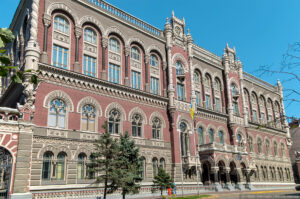
As expected, the Board of the National Bank of Ukraine (NBU) raised the discount rate by 0.5 percentage points to 16% per annum, citing sustained fundamental price pressures, secondary effects from supply shocks, and heightened medium-term inflationary risks as the reasons for this decision.
“This decision will support the attractiveness of hryvnia-denominated assets and the stability of the foreign exchange market, which will help keep inflation expectations under control and return inflation to a sustainable downward trajectory toward the 5% target over the policy horizon,” the regulator noted in a press release on Thursday.
It noted that in August, consumer inflation accelerated to 8.1% year-over-year and slightly exceeded the trajectory of the NBU’s July forecast. The regulator attributed this primarily to a stronger-than-expected rise in fuel prices amid the escalation of the war in the Middle East and faster growth in certain administrative tariffs due to the consequences of Russian attacks on critical infrastructure.
The central bank expects inflation to be slightly higher in the coming months than previously projected, but to return to a downward trajectory in 2027.
The regulator also noted that official external financing in July and August was lower than expected, causing international reserves to decline. At the same time, provided Ukraine fulfills its obligations under support programs, a significant portion of the funding should be replenished in the coming months.
Among other risks, the National Bank cited the possible emergence of additional budgetary needs for defense and reconstruction, as well as increased pressure on wages due to labor shortages. At the same time, a deterioration in the security situation could cool consumer demand and the labor market, which would have a disinflationary effect.
“If, in the coming months, the deterioration in the security situation leads to a noticeable cooling of consumer demand and the labor market, the NBU will consider easing monetary conditions,” the press release states.
As previously reported, in late January 2026, the National Bank lowered the discount rate from 15.5% to 15% per annum and subsequently kept it at that level for three consecutive meetings. At its previous meeting in July, the regulator raised the rate by 0.5 percentage points—to 15.5% per annum—in a move that caught the market by surprise, and announced the possibility of another hike before the end of the year.
The NBU will announce the results of the Monetary Policy Committee’s discussion on raising the discount rate to 16% per annum on September 28.
The next meeting of the National Bank’s Board on monetary policy will take place on October 29, 2026.
According to Experts Club, EU countries issued approximately 3.9 million first-time residence permits to third-country nationals in 2025, which is 10.1%, or 355,350, more than in 2024.
This was the highest figure since Eurostat began compiling comparative statistics in 2008.
Labor migration was the main driver of this growth. The number of first-time work-related permits increased by 179,700, or 16.1%, over the year, reaching approximately 1.3 million. Work-related permits accounted for 33.6% of all first-time residence permits issued.
The number of permits issued for family reasons rose by 14.1%—to approximately 1.1 million, or 28.1% of the total.
Another 600,000 residence permits, or 15.5%, were issued for educational purposes. Their number increased by 9%.
About 22.8% of permits were issued on other grounds, including international protection. In this category, the number of residence permits decreased by 0.9%.
Ukrainian citizens constituted the largest group of first-time permit recipients—335,100—followed by India with 227,600 and Morocco with 202,100.
Spain led all EU countries in the total number of new permits, issuing 635,400 residence permits.
The data does not include individuals under temporary protection, including the millions of Ukrainians who fled the country after the start of the full-scale war.



