

The Kyiv region became the largest among the regional markets for new residential construction listed by the State Statistics Service in January–June 2026, with a figure of 599,300 square meters, while 437,900 square meters were reported in Kyiv, according to Experts.news.
In the Kyiv region, approximately 9,100 apartments were registered at the start of construction. On an annual basis, the area of new construction remained virtually unchanged, decreasing by only 0.3%.
In Kyiv, the area of registered new housing decreased by 10.7%—to 437,900 square meters.
At the same time, the statistics on the number of apartments in the capital appear unusual: the State Statistics Service reports approximately 1,400 registered apartments despite a significant total area. This may be related to the structure of specific projects and the characteristics of the published data.
The Lviv region became the third-largest market, where 501,500 square meters of housing and approximately 7,200 apartments were announced in the first half of the year.
In the Ivano-Frankivsk region, the area of new construction totaled 248,400 square meters, down 20.5% year-over-year. At the same time, approximately 5,800 apartments were registered.
In the Odesa region, the figure reached 328.7 thousand square meters and approximately 1,100 apartments; however, the State Statistics Service has not disclosed comparable figures for the previous year.
Thus, in terms of the volume of announced new construction, the largest markets continue to be concentrated around Kyiv and the western regions of the country.
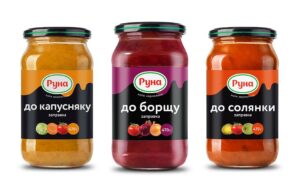
PJSC “Lutsk Foods,” which manufactures sauces, ketchups, mustard, and mayonnaise, intends to rescind the decision of the remote general meeting of shareholders held on April 29, 2024, regarding the non-payment of dividends based on the results of operations in 2023, and to allocate 20.48 million UAH of retained earnings to pay dividends for 2022–2023.
The company reported this in the information disclosure system of the National Securities and Stock Market Commission (NSSMC).
According to the draft resolution, it is proposed to allocate 9.26 million UAH for dividend payments based on the 2022 financial results and 11.21 million UAH for 2023. The total dividend amount will be 0.32 UAH per share.
It is proposed that the dividends be paid through the Ukrainian depository system in a single lump sum no later than the deadlines specified by current Ukrainian legislation.
The extraordinary general meeting of shareholders of “Lutsk Foods” will be held remotely on September 28, 2026.
PJSC “Lutsk Foods” was founded in 1997 on the basis of the Lutsk City Food Combine, established in 1945. It manufactures a wide range of tomato paste-based sauces, as well as ketchup, adjika, mustard, mayonnaise, and various types of vinegar under the “Runa,” “Ridnyi Krai,” and “Sribnytsia” brand names. Since 2009, it has been collaborating with a number of retail chains and producing over 40 product items under their private labels. PJSC “Lutsk Foods” exports its products to markets in more than 20 countries.
According to Opendatabot, in 2025, PJSC “Lutsk Foods” reported revenue of 840.7 million UAH and net income of 39.4 million UAH. The company employs 325 people.
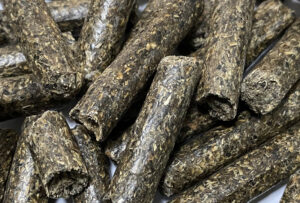
Sunflower meal exports from Ukraine in the 2026/27 marketing year may increase to 3.3 million metric tons, up from 2.861 million metric tons in the previous season, according to a USDA forecast.
This represents an increase of about 15.3%, according to data from the September report “Oilseeds: World Markets and Trade.”
At the same time, sunflower meal production in Ukraine is expected to reach 5.204 million metric tons, which is approximately 20% higher than the 2025/26 marketing year’s figure of 4.337 million metric tons.
The USDA estimates domestic consumption of sunflower meal at 1.875 million metric tons, compared to 1.675 million metric tons the previous season.
Ukraine will retain its second-place position among the world’s largest sunflower meal exporters, behind Russia. Russian exports are forecast at 2.8 million metric tons, while Ukraine’s figure is higher at 3.3 million metric tons; thus, for this product, Ukraine actually outpaces Russia.
Overall, global sunflower meal exports in the new season may increase from 8.809 million metric tons to 10.404 million metric tons, or by approximately 18%.
The growth in meal production is directly linked to the recovery of sunflower processing and increased oil output in the Black Sea region.
Source: USDA FAS, Oilseeds: World Markets and Trade, September 2026.

In January–August 2026, Ukraine exported 1.64 billion eggs worth a total of $164 million, which is an 18.3% increase in volume and a 37% increase in value compared to the same period in 2025, said Serhiy Karpenko, executive director of the Ukrainian Poultry Farmers’ Union, in an interview with the “Interfax-Ukraine” news agency.
The main buyers of Ukrainian eggs during the first eight months of 2026 were Spain—25.4% of exports—the United Kingdom—13.2%—Poland—8.7%—and the Czech Republic—7.4%. The share of EU countries in exports amounted to 75.9%.
Exports of egg products from January through August 2026 totaled 6.7 thousand metric tons, a 36% increase compared to the same period last year. The main importing countries were Latvia, Poland, and Croatia. The share of EU countries in exports was 76.4%.
According to Karpenko, the top priority markets for further export development are Asian countries, particularly China, the MENA region (the Middle East and North Africa), and ASEAN countries (Vietnam, Malaysia, the Philippines, and Indonesia).
In addition, it is important to open up markets in the United States, South Africa, and Mexico, and to expand exports to EU countries, the United Kingdom, Saudi Arabia, and Iraq.
As reported, in the first eight months of 2026, Ukraine increased poultry meat exports by 12.5%—to 330,200 metric tons—while foreign exchange earnings from these exports decreased by 2.6%—to $697.9 million. The main buyers were the Netherlands, the United Kingdom, Slovakia, and the UAE.

Sunflower seed production in Ukraine could rise to 13 million metric tons in the 2026/27 marketing year after falling to 10.7 million metric tons in the previous season, according to a forecast by the U.S. Department of Agriculture.
Thus, the expected yield increase is about 21.5%. The figure effectively returns to the level of the 2024/25 marketing year, when Ukraine also harvested about 13 million metric tons of sunflowers.
According to the USDA forecast, Ukraine will retain its second place among the world’s largest sunflower producers, behind Russia.
Production in Russia in the 2026/27 marketing year is expected to reach 21 million metric tons, in Ukraine—13 million metric tons, in the EU—9.725 million metric tons, in Argentina—8 million metric tons, and in Turkey—1.825 million metric tons. The global sunflower crop could reach 63.65 million metric tons, compared to 55.17 million metric tons in the previous season.
The USDA attributes the recovery of the global sunflower market to an increase in planted acreage following two seasons of relatively low yields in the Black Sea region. Higher harvests in Ukraine and Russia are expected to be one of the main drivers of growth in global sunflower oil trade.
The USDA estimates domestic consumption of sunflower seeds in Ukraine at 12.775 million metric tons, indicating that the processing industry remains operating at high capacity.
Source: USDA Foreign Agricultural Service, September 2026.
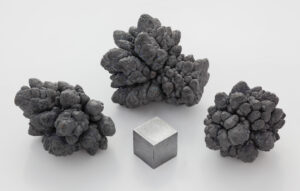
In January–August 2026, Ukraine reduced imports of lead and lead products by 77% compared to the same period last year, down to $1.282 million.
According to statistics released by the State Customs Service of Ukraine, imports of lead and lead products in August totaled $98,000.
Exports of lead and lead products in January–August of this year rose by 17.2% to $7.402 million, and in August, they totaled $1.416 million.
As previously reported, in 2025, Ukraine increased its imports of lead and lead products by a factor of 3.3 compared to 2024, reaching $7.801 million. Exports of lead and lead products in 2025 decreased by 17.8% to $9.377 million.
Lead is currently used primarily in the production of lead-acid batteries for the automotive industry. In addition, lead is used in the manufacture of bullets and certain alloys.



