
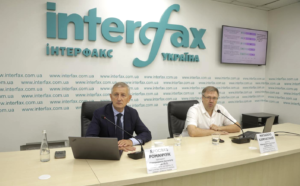
Ukrainians demonstrate strong demand for freedom of speech, personal autonomy and protection of private property, while at the same time, on issues of economic and social policy, a significant part of society expects an active role from the state, according to the results of the nationwide sociological study “Values of Freedom in Ukraine,” presented by the International Liberty Institute (ILI).
According to the study, 85% of respondents supported citizens’ right to criticize the authorities without fear of persecution, while 67% supported guaranteeing freedom of expression even for views that may be considered unacceptable or offensive. Almost half of respondents – 49% – opposed internet censorship even under wartime conditions, while 57% opposed punishment by the state for statements or opinions if they do not pose a direct physical threat.
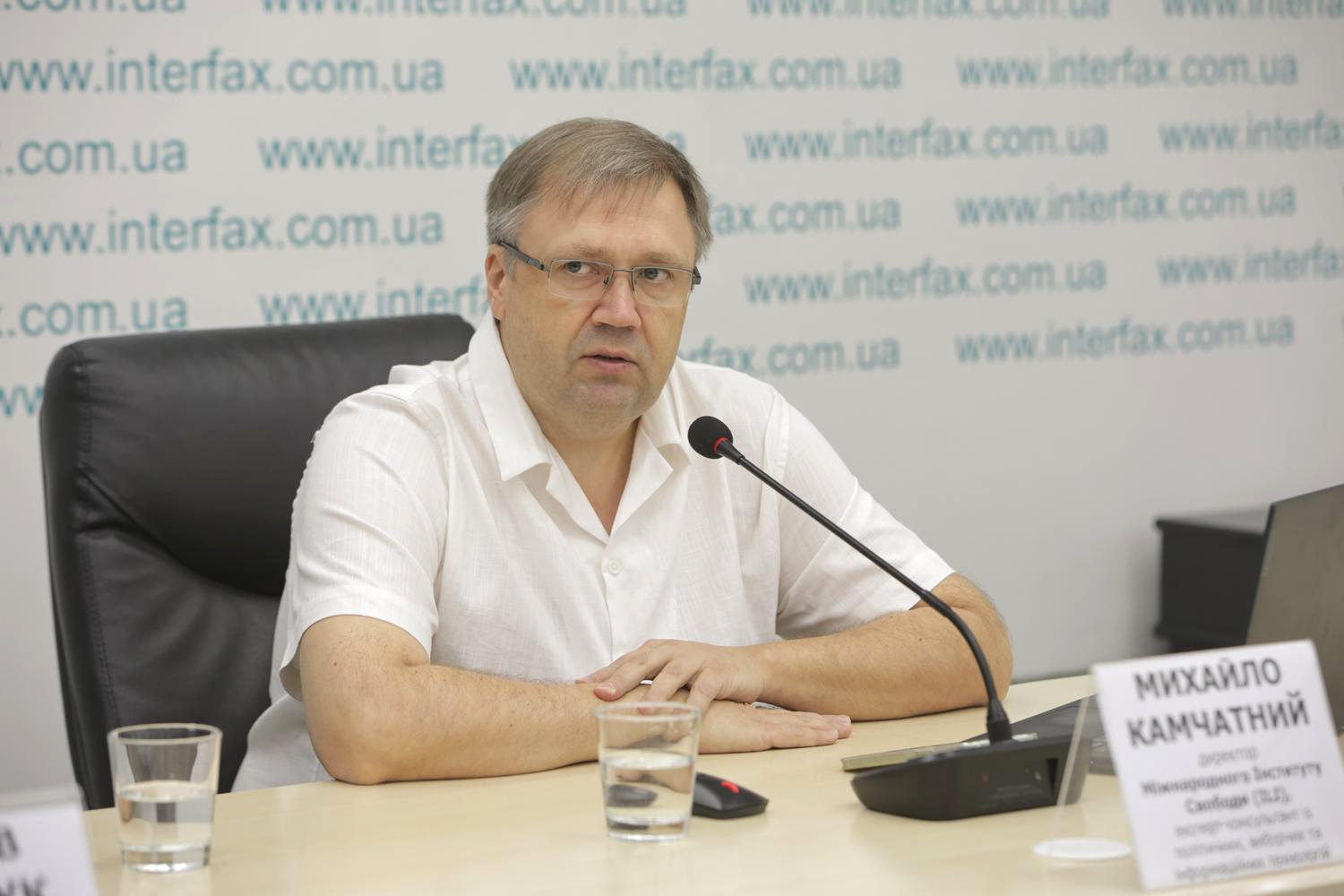
“Almost 85% of Ukrainians, if we combine the responses ‘completely agree’ and ‘rather agree,’ support the right to publicly criticize the authorities without fear of persecution. At the same time, around two-thirds believe that freedom of speech should be guaranteed even for views that are perceived as wrong or offensive. For us, this is one of the clearest indicators of society’s demand for personal freedom,” Director of the International Institute for Liberty Mykhailo Kamchatnyi said at a press conference at the Interfax-Ukraine agency on Wednesday.
Another 68% of respondents opposed a situation in which the majority can impose its values on a minority. ILI believes that the combination of these indicators demonstrates a clear demand for limiting state interference in the sphere of personal beliefs and expression.
At the same time, respondents’ ideological self-identification proved to be significantly less liberal. A total of 52% primarily defined themselves as free individuals with their own values who are personally responsible for their lives, while 31% primarily identified themselves as citizens of Ukraine. Only 13% described themselves as supporters of liberal or libertarian views, while 46.5% gravitate toward ideologies that envisage a more active role for the state. Almost half – 48% – reported that their political and ideological beliefs had changed or been formed under the influence of the war and its consequences.
A separate section of the study concerned language policy. According to the data presented, 65% of respondents named Ukrainian as their native language, 23.6% identified themselves as bilingual, and 11% named Russian as their native language. At the same time, 76% supported the mandatory use of the Ukrainian language in the public state sphere, while about two-thirds agreed that people should have the right to communicate in their native language in public life without state restrictions.
The human right to self-defense also received considerable support. About half of respondents supported the right to legally carry weapons for self-defense, while around 80% supported the right to use them to protect life and private property in the event of an unlawful intrusion into a home.
More than 80% of respondents agreed that even during martial law the authorities should not go beyond the limits established by the Constitution. A total of 53% supported a substantial revision of the current Constitution or the adoption of a new one. Some 77% of respondents agreed that closing media outlets or blocking internet resources may be justified only if cooperation with the enemy or coordination of military strikes has been proven.
One of the most sensitive issues was the principle of staffing the Armed Forces. A total of 46% of respondents supported an exclusively professional or voluntary army, while almost half favored a mixed model combining a professional contract-based core with mandatory training for young people in peacetime. The traditional mobilization model was supported by 3% of respondents, while more than 80% approved attracting professional military personnel through high salaries and benefits.
“We see that the traditional mobilization model does not enjoy citizens’ support – only around 3% of respondents chose it. Instead, society is much more oriented either toward a professional volunteer army or toward a mixed model with a professional core and training of citizens in peacetime. More than 80% also support attracting military personnel through competitive salaries and a system of benefits,” Kamchatnyi said.
In the economic part of the study, society proved to be significantly more polarized. A total of 44% of respondents supported an expanded role for the state in the economy and in providing social services, including 29% who took the strongest position in favor of active state regulation. At the same time, 44% of respondents said that they rely primarily on their own efforts to ensure their well-being, while 43.5% expect the state not to interfere with their personal risks.
ILI President Yaroslav Romanchuk, in turn, drew attention to the fact that Ukrainians’ attitudes toward private property and entrepreneurship are more market-oriented than their formal ideological self-identification. In particular, 69% of respondents demonstrated an understanding of the concept of private property, while almost 70% agreed with the statement that excessive bureaucracy and regulation hinder business development.
“Ukrainians as a whole do not reject private property – on the contrary, in many responses we see an understanding that a private owner manages an enterprise more efficiently than a manager appointed by the state. This is fundamentally important for future economic policy: the country’s strategic development should not automatically mean the dominance of state ownership. Private initiative, competition and protected owners’ rights are needed,” Romanchuk stressed.
He also linked problems in the business environment to excessive discretionary powers granted to officials.
“When an official, law enforcement officer or inspector is given the opportunity to interpret a vaguely written rule at their own discretion, a source of discretion arises, and with it a corruption risk. Almost 70% of respondents directly say that excessive bureaucracy and regulation are a brake on business development. Therefore, laws must be as clear as possible and leave as little room as possible for arbitrary interpretation,” the ILI president added.
According to Romanchuk, the results regarding knowledge of economic concepts also indicate the need to update economic education. A total of 46% of respondents had heard or read about Marxism, 12% about monetarism, and 4% about the Austrian School of Economics. A free-market economic model without state intervention was chosen as the most desirable for Ukraine by 18%, a model of active state regulation by 10%, and socialism by 6.5%.
Romanchuk separately advocated preserving and developing the institution of FOP individual entrepreneurship as a form not only of taxation, but also of self-employment and entrepreneurial culture. He noted that microbusiness should be regarded as an important component of citizens’ economic and social independence.
In the social sphere, the ILI president called for a transition toward more targeted assistance that would take into account not only a person’s current income, but also savings, assets, health status and other criteria of need. In his opinion, after the war, the issue of combining the state’s substantial social obligations with the need to preserve conditions for business development will become one of the key issues for fiscal policy.

“Ukraine will have to find a balance between the needs of people who will require social support and rehabilitation and the economy’s ability to finance this. If social obligations are formed without taking into account the tax burden that business is capable of bearing, we will get neither investment nor modernization. Therefore, assistance must be as targeted and transparent as possible and tied to the real needs of a specific person,” Romanchuk stressed.
He also advocated developing alternatives to an exclusively state pension system and making broader use of funded mechanisms, while in education and healthcare he called for competition between public and private service providers. According to Romanchuk, a market model in these sectors does not imply the state’s complete withdrawal from financing, but primarily a change in the mechanisms for distributing funds and greater accountability of providers for results.
During the discussion following the presentation, Romanchuk separately drew attention to the connection between freedom, responsibility and the quality of legal institutions.
“Freedom does not exist without responsibility. If the right to private property formally exists, but no one bears responsibility for violating it, then in practice that property is not protected. The same applies in other areas: a right works only when there is a clear mechanism of responsibility for its violation,” he summarized.
The study covered issues of personal freedom, the state and politics, the economy, the social sphere, private property and entrepreneurship, taxes, elections, military service, education, healthcare, pension provision, individual responsibility and social solidarity.
New Image and Marketing Group conducted the sociological survey in July 2026 at the request of the International Liberty Institute. A total of 1,600 respondents who were living in Ukrainian government-controlled territory at the time of the study took part in the online survey.
FREEDOM OF SPEECH, ILI, PERSONAL RESPONSIBILITY, PRIVATE PROPERTY, SOCIOLOGY, UKRAINE

The agricultural holdings TAS Agro, IMC, and Eridon do not plan to reduce their winter wheat acreage, while HarvEast intends to decrease grain crops in favor of sunflowers and soybeans, company representatives reported during a survey at the 17th International Conference “Effective Management of Agricultural Companies” (LFM 2026).
Oleg Zapletnyuk, CEO of “TAS Agro,” noted that the company will maintain its wheat acreage, as this crop plays an important role in crop rotation: wheat is the primary preceding crop for rapeseed. According to him, rapeseed currently accounts for the bulk of the company’s revenue and liquidity.
“TAS Agro” has already completed sowing the planned 15,000 hectares of rapeseed and is continuing to sow wheat. At the time of the survey, approximately 35% of the planned acreage had been sown, Zapletnyuk noted.
The IMC agricultural holding also has no intention of reducing its wheat acreage. Its CEO, Oleksandr Verzhikhovsky, reported that the company plans to plant 2,700 hectares of wheat.
Serhiy Krolevets, the owner of “Eridon,” said that due to unfavorable weather conditions, the company has practically abandoned rapeseed planting. The company plans to plant wheat at roughly the same level as last year, although work is currently being carried out in dry soil while awaiting rainfall.
Meanwhile, the HarvEast agricultural holding plans to reduce the acreage planted with wheat and corn in favor of sunflowers and soybeans. CEO Dmytro Skornyakov explained this by the need to ensure the business’s economic stability in the coming season.
“… Oilseeds are currently much more profitable, and we will increase sunflower and soybean acreage while reducing corn and wheat,” he said.
Maria Osyka, Director of Strategic Development at the Agroprosperis agricultural group, announced plans to plant 10,000 hectares of seed wheat and 55,000 hectares of rapeseed.
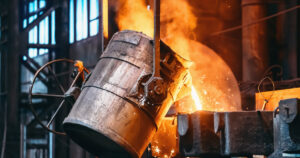
Ukrainian steelmaking companies reduced pig iron production by 14.8% in January–August of this year compared to the same period last year, down to 4.350 million metric tons.
According to data from the “Ukrmetallurgprom” association, 257,100 metric tons of pig iron were produced in August, 432,200 metric tons in July, 670,600 metric tons in June, 634,400 metric tons in May, in April—554 thousand metric tons, in March—690.2 thousand metric tons, in February—561.9 thousand metric tons, and in January—549.9 thousand metric tons.
In 2025, Ukraine’s steel companies increased pig iron production by 11.2% compared to 2024, reaching 7.884 million metric tons.
In 2024, Ukraine increased pig iron production by 18.1% compared to 2023, reaching 7.090 million metric tons. In 2023, pig iron production fell by 6.1% to 6.003 million metric tons, and in 2022, it fell by 69.8% to 6.391 million metric tons.
In 2021, before the war, 21.165 million metric tons of pig iron were produced, or 103.6% of the 2020 level.

Copper rose to a record high on Tuesday amid concerns over a shortage of the metal outside the U.S.
The price of three-month copper futures on the London Metal Exchange (LME) rose to $14,617 per metric ton, breaking the previous record set the day before. Since the start of this year, futures have risen 16%.
The most actively traded copper contracts on the Shanghai Futures Exchange rose 1.3% on Tuesday to 110,620 thousand yuan ($16,484) per metric ton, while during trading, prices rose to a high of 110,890 yuan per metric ton, the highest level since January 30.
Physical copper shipments continue to be redirected to the U.S., exacerbating shortages in markets outside the country, according to analysts at the Chinese brokerage firm Everbright Futures.
The flow of metal to the U.S. is driven by expectations that the country will impose tariffs on copper imports starting in 2027.
Copper inventories at Comex warehouses rose last week to a record 695,624 thousand metric tons. At the same time, an outflow of the metal is being recorded at warehouses registered with the LME, as well as with the Shanghai Futures Exchange.
The spot price of copper on the LME continues to exceed the price of the three-month contract, signaling limited supply of the metal in the short term.
Three-month zinc futures on the LME rose 0.54% to $4,005 per metric ton. Earlier, their price had climbed to a four-year high of $4,035 per metric ton.
Earlier, the Experts Club information and analytical center released a video on global copper production and leading producing countries – https://youtube.com/shorts/_h8iU50z8C0?si=a-XkgGEfeUxseQNa

The Zaporizhzhia Metallurgical Plant “Zaporizhstal” reduced its rolled steel output by 19.1% in January–August of this year compared to the same period last year—to 1,488,700 metric tons from 1,839,300 metric tons.
According to the company’s press release, steel production for the first eight months of the year totaled 1,681,700 metric tons (compared to 2,105,500 metric tons in January–August 2025), while pig iron production totaled 1.816 million metric tons (compared to 2,339,200 metric tons).
In August, Zaporizhstal produced 42,400 metric tons of pig iron and 46,200 metric tons of steel, and shipped 45,000 metric tons of rolled steel, whereas in the previous month it produced 301,200 metric tons of pig iron, 284,900 metric tons of steel, and shipped 243,700 metric tons of rolled steel.
“The significant decline in production was the result of a hostile attack on August 11, 2026, which damaged the power facilities and infrastructure of Metinvest’s Zaporizhzhia enterprises, including the main and auxiliary blast furnace production facilities of the plant. This led to a complete shutdown of Zaporizhstal.” The
Russian army attacked the shut-down Zaporizhstal again on August 27, 2026, targeting equipment in the blast furnace shop, power and transportation infrastructure, and open areas. “This is yet another indication that Russian troops are systematically striking civilian industrial infrastructure and the people who work there,” the press release states.
As previously reported, in 2025, Zaporizhstal increased its rolled steel output by 15.2% compared to the previous year—to 2,794,600 metric tons from 2,426,700 metric tons. Steel production totaled 3,212,200 metric tons (compared to 2,890,800 metric tons in 2024), and pig iron production totaled 3,567,800 metric tons (compared to 3,106,300 metric tons).
In 2024, Zaporizhstal increased its rolled steel output by 18.1% compared to 2023—to 2,426,700 metric tons from 2,054,700 metric tons—and its steel output by 17.2%, to 2,890,800 metric tons, and pig iron by 14.2%, to 3,106,300 metric tons.
“Zaporizhstal” is one of Ukraine’s largest industrial enterprises, whose products are in high demand among consumers both in the domestic market and in many countries around the world.
“Zaporizhstal” is a joint venture of the ‘Metinvest’ Group, whose major shareholders are PJSC “System Capital Management” (71.24%) and Smart Steel Limited (23.76%). “Metinvest Holding” LLC is the management company of the “Metinvest” Group.
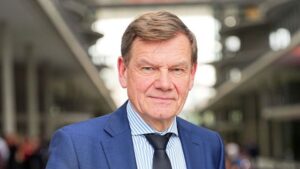
German Foreign Minister Johann Wadephul suggested that German authorities could help Ukraine identify Ukrainian men of draft age residing in Germany by using data on registration, residence permits, and social benefit receipts.
Wadeful made this statement in an interview with Bild deputy editor-in-chief Paul Ronzheimer, published on the evening of September 8.
Wadeful supported the position of Christian Social Union leader Markus Söder that Ukrainian men of draft age in Germany should return to Ukraine.
“We know who lives here, who, for example, receives social benefits, who is registered here, and who has residency status,” said the German foreign minister.
According to Wadepul, based on this information, the Ukrainian authorities could directly contact the men in Germany and inform them of the need to report for military service.
At the same time, the minister specifically emphasized that the return of Ukrainians to their country must take place “without coercion”.
At this time, there have been no reports regarding the adoption by the German federal government of a corresponding mechanism, a list of the data to be transferred, or the legal procedure for transferring it to Ukraine.
The issue affects a significant number of people. According to the German government’s official response to a parliamentary inquiry, as of the end of October 2025, there were 328,363 male Ukrainian citizens in the country between the ages of 18 and 60. At the same time, the government specifically emphasized that these statistics include Ukrainians who were living in Germany even before the start of the full-scale war, and that the German authorities do not have information on how many of these men are actually subject to Ukrainian military service.
Germany remains the EU country with the largest number of Ukrainians under temporary protection. According to Eurostat, as of June 30, 2026, 1.286 million people in Germany had this status, or 29.2% of all recipients of temporary protection from Ukraine in the European Union.
The debate over men of draft age in Germany has intensified in recent months. Representatives of part of the ruling coalition advocate creating economic and administrative incentives for their return to Ukraine. However, Wadeful’s statement is one of the most concrete proposals from a high-ranking German official regarding the use of registration data already available to the state.
Original source: Johann Wadeful’s interview with Bild on September 8, 2026. Bild – Johann Wadeful’s interview



