Ukrnafta specialists have developed and implemented their own software suite, WellWorkoverSupervisor, for planning and managing well workovers.
“This solution was developed in-house based on the practical experience of the company’s specialists, taking into account international best practices,” the company announced on Tuesday.
Ukrnafta explained that well workovers are one of the most complex production processes, as working with equipment at depths of several thousand meters requires precise engineering calculations, high-quality preparation, and strict adherence to safety requirements.
Previously, the company did not have a single standardized software tool for such calculations. Some of the work was performed manually or using outdated software, which took more time and increased the risk of errors.
However, engineers from the Well Repair Supervision Division of the Production and Technology Department have developed their own software product that meets the company’s actual production needs.
“Digital transformation is not just about purchasing off-the-shelf IT solutions. It also involves developing our own engineering expertise and creating tools that directly improve production efficiency,” said Bogdan Kukura, Chairman of the Board of JSC “Ukrnafta.”
According to him, the use of WellWorkoverSupervisor has already made it possible to reduce the time required to prepare work plans, minimize the risk of errors in calculations, and improve production safety.
WellWorkoverSupervisor includes over 30 specialized modules and allows users to automate key technical calculations, create graphs and engineering diagrams, generate ready-to-use PDF reports, and utilize a built-in reference guide for pipes, threaded connections, and equipment.
In terms of functionality, the software suite is on par with expensive foreign counterparts, Ukrnafta added.
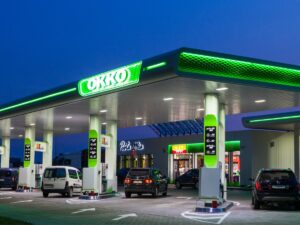
JSC “Ukrnafta” is Ukraine’s largest oil production company, carrying out a full cycle of activities in the field of extraction: exploration, oil and gas production, the provision of oilfield services, as well as the management of UKRNAFTA, the largest network of gas stations in Ukraine.
The company’s balance sheet includes over 1,106 oil wells and 131 gas wells.
The shareholders of JSC “Ukrnafta” are NJSC “Naftogaz of Ukraine” and the Ministry of Defense of Ukraine. Since 2022, the company has been under state management and is implementing a large-scale business transformation.
By the end of 2025, “Ukrnafta” had become the leader in the extraction industry with a turnover of 99.6 billion UAH, as reflected in Opendatabot’s Index of Top Companies.
The UKRNAFTA gas station network is the largest in Ukraine, comprising nearly 700 stations and ranking among the top three in terms of fuel sales volume. The UKRNAFTA brand now unites networks that previously operated under the Glusco, Shell, and U.Go brands.
The ADONIS Medical Network (Kyiv) is launching a new format for professional collaboration—a free expert consultation for doctors dealing with complex or ambiguous clinical cases.
According to its press release, the consultation provides an opportunity to obtain a second opinion from the ADONIS team of specialists and jointly determine the next steps in the patient’s diagnosis and treatment.
“In medical practice, there are cases where test results or the opinion of a single specialist are insufficient to make a final decision. The patient may require additional tests, consultations with doctors from different specialties, or a review of the treatment plan already proposed. The consultation does not replace the attending physician but helps them obtain additional expert support,” ADONIS notes.
According to Open4business, the United States retained its status as the largest supplier of imported passenger cars to Ukraine in the first half of 2026, accounting for 43% of the total number of imported cars. According to data from the State Customs Service published on July 28, 73,200 passenger cars were imported from the U.S. to Ukraine between January and June.
Germany ranked second among supplier countries, accounting for 17,300 cars, or 10% of total imports. Poland ranked third with 14,600 cars, or 9%.
Collectively, the United States, Germany, and Poland supplied 105,100 passenger cars to Ukraine. These three countries accounted for about 62% of total imports.
Overall, in the first half of the year, cars were imported from more than 50 countries. The total volume of imports exceeded 169,000 vehicles, and their declared value amounted to nearly 96.6 billion UAH.
Customs revenues from passenger car imports reached 32.1 billion UAH.
According to estimates by the Experts Club analytical center, gasoline-powered cars led in terms of customs revenue. They contributed 14.6 billion UAH to the budget, or 45.5% of the total.
Diesel cars generated 8.4 billion UAH, hybrids—7.1 billion UAH, and electric cars—about 2 billion UAH.
Used cars accounted for over 70% of the total number of imported vehicles and generated 17.7 billion UAH in customs duties. New cars accounted for less than 30% of imports and 14.4 billion UAH in revenue.
The sole shareholder of Public Joint-Stock Company “Khlibprom Concern” has approved a decision to convert the company into a limited liability company, according to information cited from the National Securities and Stock Market Commission’s (NSSMC) disclosure system.
The decision to reorganize one of Ukraine’s largest bread producers was adopted on July 23, 2026. The newly formed LLC “Khlibprom Concern” will become the full legal successor to the assets, contracts, rights, and obligations of the private joint-stock company.
The shares of the private joint-stock company will be converted into a stake in the LLC’s authorized capital at a ratio of 1:1. The authorized capital of the successor entity will amount to approximately 163.55 million UAH.
The company explained the reorganization as a necessity to simplify corporate governance. The conversion to an LLC does not involve the sale of the company or a change in its ultimate owner.
The organizational and legal form of a limited liability company involves fewer regulatory procedures; in particular, the company will not be required to maintain a share register or comply with certain requirements applicable to joint-stock companies.
In 2025, Khlibprom Concern’s revenue increased by 9.5% compared to the previous year, reaching 2,228.92 million UAH. The company’s net loss decreased by a factor of 13.5, to 5 million UAH, compared to 67.57 million UAH in 2024.
The company’s assets as of the end of 2025 totaled 1 billion 190.76 million UAH, while its liabilities decreased by 10.1% to 509.95 million UAH.
“Khlibprom Concern” is one of the largest producers of bread, baked goods, and confectionery products in Ukraine. The company produces up to 160 metric tons of products daily, including frozen semi-finished dough products.
The company’s structure includes five processing facilities in the Lviv and Vinnytsia regions. The company’s brand portfolio includes Agrola, Bandinelli, 2go, “Lyublyanna,” and “Vinnitsakhleb.” The ultimate beneficial owner of the company is Natalia Antonova.
The State Customs Service of Ukraine transferred UAH 420.1 billion in customs payments to the state budget in the first half of 2026, which is 31.9% more than in the same period last year, the Experts Club information and analytical center reports.
In January–June 2025, revenues amounted to UAH 318.5 billion. Thus, over the year, the budget received an additional approximately UAH 101.6 billion. The official data were published by the State Customs Service on July 13, 2026.
The Experts Club Analytical Center compared the State Customs Service’s data with the Ministry of Finance’s operational report on the execution of the state budget for January–June 2026.
Ranking of Customs Revenues by Main Categories
Value-added tax on goods imported into the customs territory of Ukraine remains the main source of customs revenues.
It accounted for approximately 75.7% of all payments transferred by the State Customs Service in the first half of the year. In other words, approximately three out of every four hryvnias of customs revenues were generated by import VAT.
The high share of VAT is explained by the fact that the tax is charged on virtually all taxable imports, including equipment, raw materials, fuel, cars, consumer goods and products intended for industrial use.
After deducting import VAT and customs duties from the total amount, approximately UAH 70.9 billion, or 16.9% of revenues, remains.
The main part of this amount should consist of excise duty on imported excisable goods, primarily petroleum products, cars, alcoholic beverages and tobacco products.
However, in its operational report, the Ministry of Finance indicated only the total excise tax revenues from domestically produced and imported goods — UAH 152.4 billion. The separate amount of import excise duty was not disclosed in the report. Therefore, the figure of UAH 70.9 billion is an estimate and may also include small amounts of other payments administered by customs authorities.
Revenues from import and export duties in the first half of the year amounted to UAH 31 billion, or approximately 7.4% of the total volume of customs payments.
The share of customs duties is significantly lower than that of import VAT because zero or reduced rates apply to many goods under Ukraine’s free trade agreements. In addition, certain categories of equipment, energy products and defense-related goods benefit from tax and customs exemptions.
Structure of Ukraine’s Customs Revenues
Thus, the approximate structure of the UAH 420.1 billion is as follows:
VAT on imported goods — UAH 318.2 billion, or 75.7%.
Import excise duty and other payments — approximately UAH 70.9 billion, or 16.9%.
Import and export duties — UAH 31 billion, or 7.4%.
The Experts Club calculation shows that Ukrainian customs primarily performs the function of administering import VAT. Customs duties themselves account for less than one-tenth of the total volume of revenues.
Cars Accounted for More Than 7% of All Payments
Imports of passenger cars brought UAH 32.1 billion to the state budget in the first half of the year. This corresponds to approximately 7.6% of all revenues transferred by the State Customs Service.
At the same time, petrol-powered cars alone generated UAH 14.6 billion, or approximately 3.5% of all Ukraine’s customs revenues for the six-month period.
Thus, payments from passenger car imports exceeded the total revenues from import and export duties across all product categories.
Large Importers Accounted for 85% of Revenues
In the first half of the year, customs payments were made by 28,300 foreign economic activity participants. Their number increased by 2.5% compared with January–June 2025.
At the same time, only 2,350 companies, or approximately 8% of all payers, accounted for 85% of revenues. Their combined contribution can be estimated at approximately UAH 357 billion.
Another 10,600 enterprises, each of which transferred between UAH 1 million and UAH 20 million, generated UAH 53.5 billion.
Approximately 15,300 representatives of small and medium-sized businesses paid up to UAH 1 million each. Their combined contribution amounted to almost UAH 4.8 billion.
This indicates a high concentration of customs revenues: the majority of revenues depend on a relatively small group of large importers of fuel, cars, machinery, raw materials, pharmaceuticals and consumer products.
Customs Accounted for More Than One-Fifth of General Fund Revenues
In January–June 2026, UAH 1.898 trillion was received by the general fund of Ukraine’s state budget. Customs payments amounting to UAH 420.1 billion were equivalent to approximately 22.1% of this amount.
Including the general and special funds, state budget revenues for the first half of the year amounted to UAH 2.52 trillion.
The 31.9% growth in customs revenues significantly outpaced the increase in the number of payers, which amounted to only 2.5%. This indicates that the main growth factors were an increase in the value of taxable imports, changes in the exchange rate, an increased tax burden on certain categories and higher payments from the largest companies.
The most comprehensive official source of detailed information by budget classification codes is the state Open Budget portal. The State Customs Service publishes the total volume of payments and the structure of payers, while the Ministry of Finance publishes the main tax categories. At the time this material was prepared, a separate comprehensive table from the State Customs Service showing the distribution of the UAH 420.1 billion across all types of payments in a single document had not been published.
According to Interfax-Ukraine, the State Property Fund (SPF) is exploring the possibility of selling 100% of the Ocean Plaza shopping and entertainment center in Kyiv instead of the current 66% state stake, with a potential starting price of $100 million for the entire lot, said SPF Chairman Dmytro Natalukha.
“Unfortunately, we are unable to put both the state’s stake and the private stake up for sale in a single lot. Therefore, discussions are currently underway to determine whether a mechanism can be found to put 100% of the shopping and entertainment center up for sale, rather than the current 66%. After all, there is demand for 100%,” Natalukha said in an interview with RBC-Ukraine.
He noted that the participation of the minority owner of the Ocean Plaza shopping center—Lanita Invest LLC—in the auction is possible provided there is sufficient cooperation and legal complications are resolved. According to the fund’s estimates, the starting price for 100% of the asset could be as high as $100 million.
According to Natalukha, the auction for the privatization of the Ocean Plaza shopping center could be held in December of this year, with proceeds from the sale expected as early as January 2027.
According to the plan for preparing assets prioritized for sale in 2026, published by the State Property Fund of Ukraine in June, the auction for the sale of the Ocean Plaza shopping and entertainment center could be held in November–December 2026. The owner of a minority stake in the shopping center, Lanita Invest LLC, had previously supported the idea of selling the asset as a single lot along with its own stake.
As previously reported, on June 19, 2026, law enforcement agencies, as part of criminal proceedings, conducted authorized searches at the residences of certain officials of the State Property Fund of Ukraine (SPFU) to investigate the possible undervaluation of the Ocean Plaza shopping and entertainment center (Kyiv) prior to its sale.